Community Solar Programs: Participate Without Rooftop Panels
Community solar programs let renters and shaded-roof homes go solar. Call 8332123715 for expert guidance on enrolling without rooftop panels.

By Julia Walsh
Learn more about Solar Panel Installation and Repair for guides, costs, and what to expect.
Compare Solar Panel Installation and Repair Pros Near You
Enter your ZIP code to compare top-rated local professionals and request free quotes.
Not every home is built for solar panels. Renters cannot drill into a roof they do not own, many condos and townhomes share structures that make individual installations impractical, and a large share of residential roofs are shaded, aging, or oriented away from the sun. Yet the financial and environmental benefits of solar power are not reserved for people with perfect roofs. Community solar programs exist precisely for this gap, and they let you participate in a shared solar farm while the electricity you use still comes from the grid. This article explains how community solar programs work, how to participate without rooftop panels, what the savings realistically look like, and the pitfalls to watch for before you sign anything.
What Community Solar Actually Is
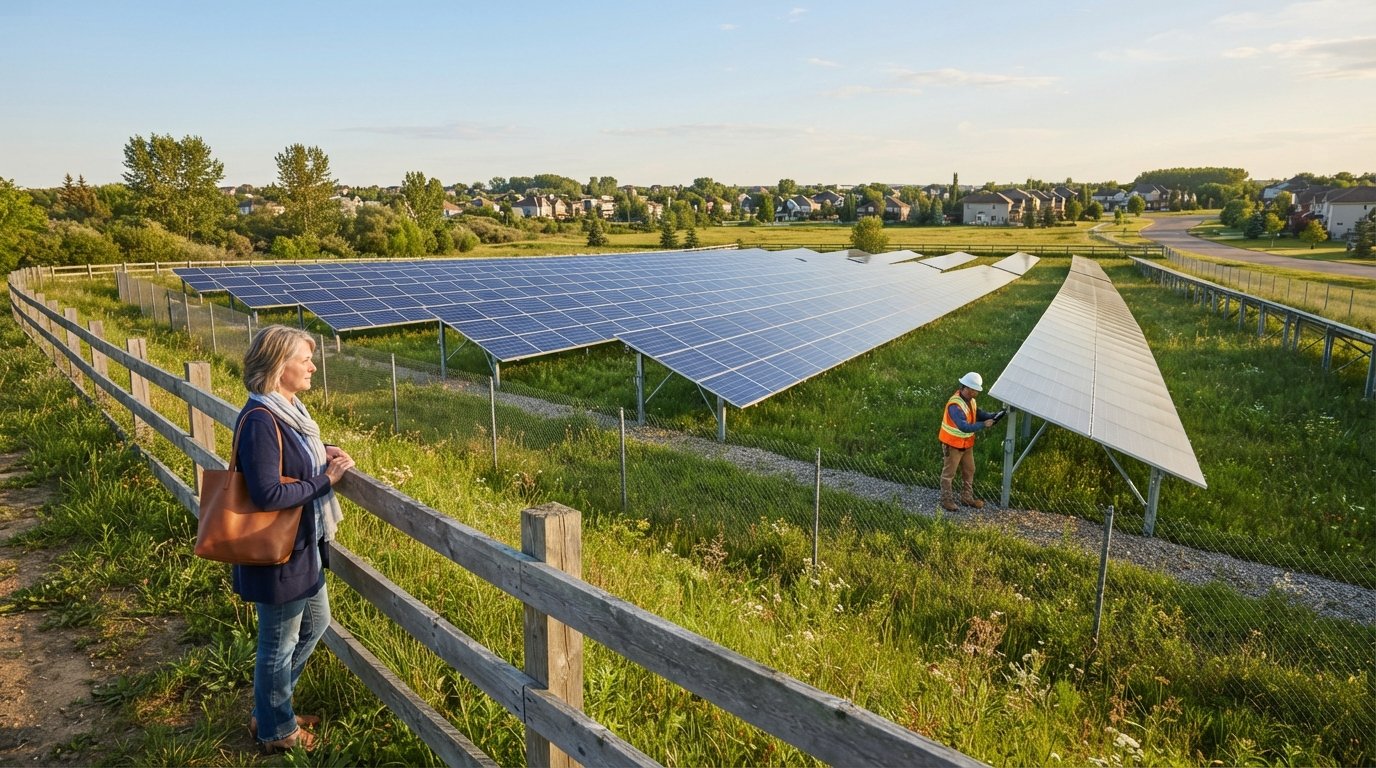
A community solar program, sometimes called a solar garden or shared solar project, is a centralized solar array whose output is divided among multiple subscribers. Instead of installing panels on your own property, you buy or lease a share of a larger off-site system. The project generates electricity, feeds it into the local utility grid, and the utility credits the value of that electricity to the subscribers' accounts. You keep your existing utility relationship, your existing meter, and your existing service panel. Nothing gets mounted on your house.
The key distinction is that community solar is a subscription, not a construction project. There is no site survey, no permit paperwork with your city, no interconnection study, and no roof warranty conversation with a contractor. For renters, apartment dwellers, and homeowners with problematic roofs, this removes the single biggest obstacle to going solar. Depending on your state and utility, you may be able to subscribe to a project that is already operating, meaning your credits can start showing up within one or two billing cycles.
It helps to separate community solar from two things it is often confused with. First, it is not the same as a rooftop lease or power purchase agreement, where panels are installed on your property and you pay for the power they produce. Second, it is not the same as buying renewable energy certificates, which support renewable generation somewhere on the grid but do not change your utility bill. Community solar is designed to deliver a measurable credit on your monthly statement, which is why it appeals to households that want tangible savings rather than a symbolic gesture.
Who Qualifies for Community Solar Programs
Eligibility rules vary by state and by individual project, but the broad categories are more welcoming than most people expect. The most common requirement is simply that you are a customer of the utility the solar farm serves. In many programs, renters and homeowners qualify on equal footing because the subscription is tied to an electric account, not to property ownership. That single design choice is what makes community solar programs how to participate without rooftop panels such a practical question for so many households.
Beyond the basic utility requirement, programs often layer on additional criteria. Some projects reserve a portion of their capacity for low-to-moderate income households, and those subscribers may receive a higher discount rate. Others are open to any customer in the service territory on a first-come basis. A few states have specific carve-outs for small businesses, nonprofits, schools, and municipal accounts. If you live in an area served by a rural electric cooperative, your co-op may run its own program with its own rules, which can differ significantly from investor-owned utility programs.
Here are the factors that most commonly determine whether you qualify:
- You must have an active electric account with the utility the project serves.
- Your account should be in good standing, meaning no unresolved shutoff or large past-due balance.
- Some projects require you to live within a certain distance of the solar farm or within a specific county.
- Income-qualified projects may ask for documentation such as a recent utility bill and proof of participation in an assistance program.
- Commercial and nonprofit subscribers may need to provide a tax ID or business registration.
If you do not fit a specific project, do not assume community solar is closed to you. New projects come online regularly, and waitlists are common. In states with strong community solar policies, there is often more than one program available to the same address, which means you can compare offers rather than accept the first one you find.
How to Participate Without Rooftop Panels: A Step-by-Step Path
The enrollment process is far simpler than a rooftop installation, but it still rewards careful reading. The goal is to end up with a subscription that produces a genuine net credit on your bill without locking you into terms you cannot exit. The sequence below reflects how most programs operate, though individual projects may compress or reorder a step or two.
- Confirm your utility and state rules. Start by identifying your electric utility and checking whether your state has an active community solar policy. If your state does not, you may still find utility-run or co-op programs, but the options will be narrower.
- Find available projects in your service territory. Project directories, state energy offices, and utility websites list operating and upcoming solar farms. Some states maintain a public map of community solar projects with enrollment status.
- Compare subscription offers. Look at the discount rate, contract length, cancellation terms, minimum bill requirements, and how credits are calculated. A higher headline discount is not automatically better if the contract is long or the exit fees are steep.
- Review the disclosure documents carefully. The subscription agreement should state exactly how your bill credit is determined, what happens if the project underproduces, and whether you can transfer the subscription if you move.
- Enroll and confirm your utility account details. Most programs require your utility account number and service address. Once enrolled, credits typically appear on your bill after the project begins producing and the utility processes the allocation.
After enrollment, the practical experience is mostly passive. You continue paying your utility for the electricity you use, and the solar farm's output generates credits that offset a portion of that cost. In many programs, you also receive a separate invoice from the subscription provider for your share of the solar production, and the discount is the difference between what you pay the provider and what the credits are worth on your utility bill. That two-bill structure is normal, but it is also the source of most confusion, so make sure you understand which entity bills you for what before you sign.
If you want to compare community solar against a rooftop system or explore financing options for either path, a resource like free solar power quotes can help you see how the numbers stack up in your area. The important point is that community solar is not a consolation prize. For many households, it is the only solar option that fits their living situation, and it can deliver real savings without any construction.
The Financial Case: Savings, Credits, and What to Expect
Community solar savings are typically expressed as a percentage discount off the value of the credits you receive. If a program advertises a 10 percent discount, that generally means you pay 90 cents for every dollar of solar credit applied to your bill. Over a year, that can translate into meaningful savings, but the exact amount depends on your usage, your utility's credit rate, and how much of the solar farm's output is allocated to you.
It is important to set realistic expectations. Community solar rarely eliminates your electric bill. In most cases, it reduces the supply portion of your bill, while delivery charges, taxes, and fixed fees remain. A subscriber who uses 1,000 kilowatt-hours per month might see a credit that covers a portion of that usage, with the discount producing savings in the range of a few dollars to a few dozen dollars per month depending on local rates and program terms. The value compounds over time, but it is not a path to a zero-dollar bill.
There are also timing considerations. Solar production peaks in summer in most U.S. regions, which means credits may be larger in high-production months and smaller in winter. Some programs allow credit rollover, so excess credits in sunny months can offset lower-production months. Others reset annually or cap the rollover. Reading the fine print on credit banking is one of the most practical things you can do before subscribing. For a deeper look at how panel condition and maintenance affect production and savings, our guide on cleaning solar panels for efficiency explains why output varies and how to keep a system performing at its best.
Finally, consider the counterfactual. If you cannot install rooftop panels, your alternatives are to keep paying full retail rates or to participate in a shared program. Compared with doing nothing, a well-chosen community solar subscription can lower your annual electricity spend while supporting additional renewable generation on the grid. That combination is why the model has expanded so quickly in states like New York, Illinois, Minnesota, Colorado, and Massachusetts.
State and Utility Variation: Why Location Changes Everything
Community solar is a state-by-state patchwork. Some states have passed laws that require utilities to credit subscribers for shared solar production, which creates a stable market with multiple competing projects. Other states have no enabling legislation, leaving only voluntary utility programs or co-op initiatives. The result is that two households with identical electricity usage can have very different community solar experiences depending on which side of a state line they live on.
In strong markets, you may find dozens of projects open for enrollment, each with slightly different terms. In weaker markets, you may find a single utility program with a waitlist. Rural electric cooperatives often operate their own programs under different rules, and some co-ops have been early adopters while others have been slow to offer shared solar. If you are served by a municipal utility, check directly with the utility because municipal programs are frequently not listed in statewide directories.
This variation also affects how credits are calculated. Some utilities apply credits at the retail rate, which is more valuable to subscribers. Others apply them at a lower avoided-cost rate, which reduces the savings. The difference can be substantial over a year, so it is worth asking the project developer or your utility which rate applies before you enroll. If you are comparing options across states or moving soon, factor in whether your subscription can be transferred to a new address or canceled without penalty.
Risks, Contracts, and Questions to Ask Before You Sign
Community solar is generally low-risk compared with rooftop installation, but it is not risk-free. The most common complaints involve contracts that are difficult to exit, savings that are smaller than advertised, and billing confusion when a separate provider invoice arrives alongside the utility bill. These issues are avoidable with a careful review, but they do require you to read documents that are often longer than they need to be.
Before signing, ask a consistent set of questions. What is the exact discount rate, and is it guaranteed for the full term? What happens if the project produces less electricity than projected? Can I cancel, and if so, what are the fees? What happens if I move within the utility territory, or out of it? Is there a minimum monthly payment or a minimum usage requirement? Who do I contact for billing questions? Getting clear answers to these questions in writing will tell you more about a program than any marketing page.
It also helps to understand the difference between an ownership model and a subscription model. In some programs, you purchase a share of the solar farm outright, which can produce better long-term returns but requires upfront capital and carries more risk. In subscription models, you pay as you go and can often exit with notice. For most households exploring community solar for the first time, subscription models are the simpler starting point. If you are also considering rooftop solar for a property you own, a quote comparison service can help you weigh both options side by side, but for renters and shaded-roof homeowners, the subscription path is usually the only realistic one.
One more practical note: keep your utility account in good standing. If you fall behind on your electric bill, some programs can suspend your subscription or terminate it, which may trigger fees. Community solar works best when your utility account is stable and your usage is predictable. If your usage fluctuates wildly, ask how the program handles months where credits exceed your usage.
Why Community Solar Is Growing and What It Means for You
The growth of community solar reflects a simple reality: most Americans cannot put panels on their own roof, but most Americans can subscribe to a shared project. As states update their policies and utilities expand their programs, the number of available projects continues to rise. That growth is good news for subscribers because competition tends to improve terms, shorten waitlists, and increase the variety of offers available.
For households that have been told they cannot go solar, community solar changes the answer. It offers a way to participate in renewable energy, reduce electricity costs, and support additional clean generation without touching your roof or your property. The enrollment process is straightforward, the ongoing effort is minimal, and the savings, while modest, are real. If you have been waiting for a solar option that fits your situation, this is the one to explore first.