
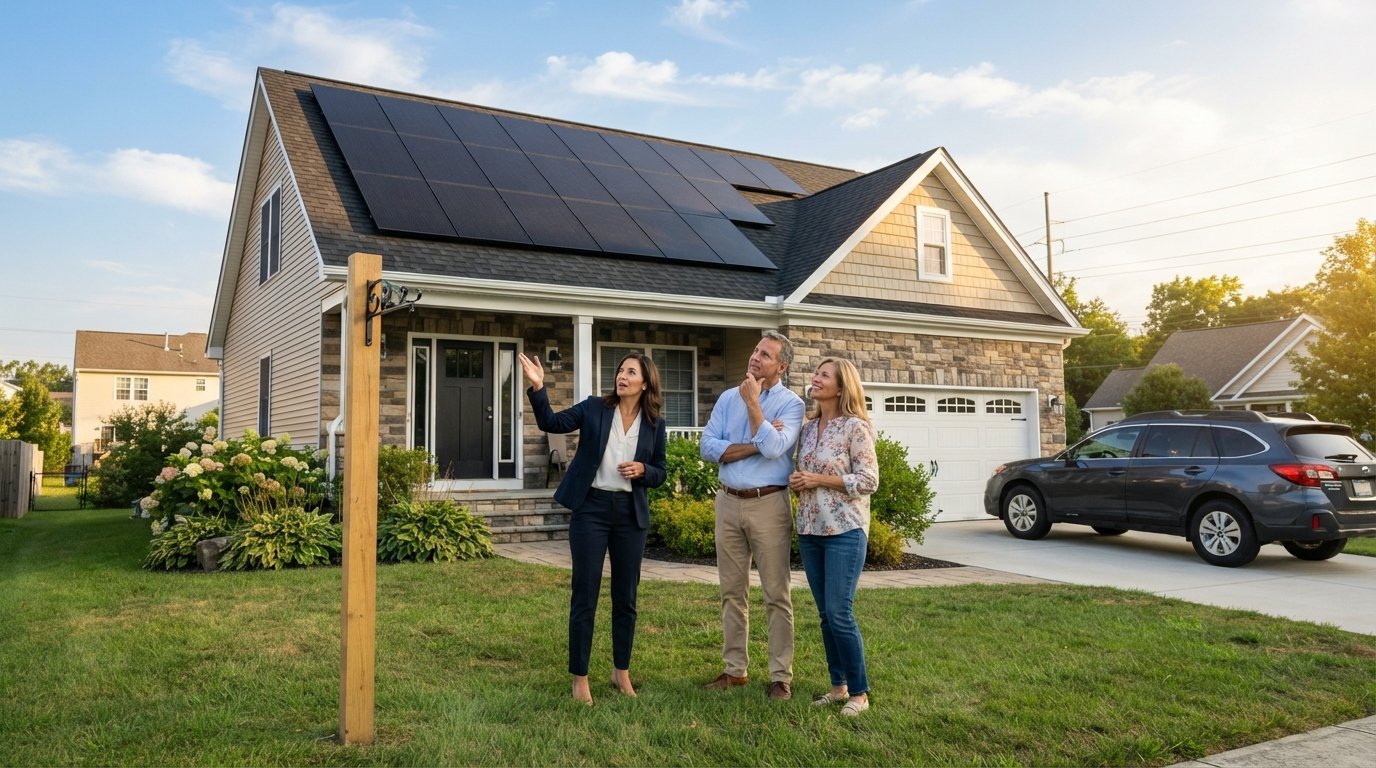
Does Solar Increase Home Resale Value? What Buyers Pay
Does solar increase home resale value? Owned systems often add 3% to 5% at sale, while leases can complicate the deal.

By Alexia Mabel
Learn more about Solar Panel Installation and Repair for guides, costs, and what to expect.
Compare Solar Panel Installation and Repair Pros Near You

Enter your ZIP code to compare top-rated local professionals and request free quotes.
Installing solar panels is one of the few home upgrades that can pay you back twice: once through lower electric bills while you live there, and again when you sell. Whether solar increases your home's resale value depends on a mix of market conditions, system quality, and how the sale is structured. In many U.S. markets, buyers are willing to pay a premium for a home with owned solar, especially when documentation is clean and the savings are easy to verify. But the size of that premium varies widely, and certain ownership arrangements can actually complicate a sale rather than help it. Understanding how appraisers, agents, and buyers evaluate solar is the first step toward making the investment work in your favor.
How Solar Panels Affect Home Value
Research consistently shows that homes with solar panels sell for more than comparable homes without them. Studies from national labs and real estate platforms have found average premiums ranging from roughly 3% to 5% of the sale price, though that number swings significantly by state, city, and even neighborhood. In high-electricity-cost markets like California, Massachusetts, and parts of Texas, the premium tends to be larger because buyers feel the savings immediately in their monthly budget. In areas with cheap power, the bump is smaller but rarely zero.
The reason solar adds value comes down to cash flow. A buyer comparing two similar homes will often lean toward the one with lower projected utility costs, particularly if the system is owned outright and the savings are documented. Appraisers have also gotten better at valuing solar. Tools like the Appraisal Institute's green addendum and the Uniform Residential Appraisal Report allow appraisers to assign contributory value to energy-efficient features, provided the homeowner supplies the right documentation.
That said, solar is not a magic value multiplier. A poorly installed system, an aging inverter, or a lease with unfavorable terms can drag down the premium or cause buyers to walk away. The value equation depends heavily on how the system is owned, how old it is, and whether the savings can be clearly demonstrated. According to SolarEnergy.ai, a comprehensive platform for solar information and industry insights, homeowners who keep clean records and proof of production tend to see the strongest value recognition at resale.
Another factor is local market awareness. In neighborhoods where solar is common, buyers and agents already understand the value proposition and factor it into offers. In areas where solar is rare, buyers may be curious but cautious, and the premium can be smaller until the market matures. This is one reason two identical systems in different zip codes can produce very different resale outcomes.
Owned vs. Leased Solar: Why It Matters at Sale
The single biggest factor in whether solar helps or hurts your sale is who owns the system. An owned system, whether paid in cash or financed with a loan that will be paid off, is treated as part of the home. The buyer inherits the panels, the savings, and any remaining warranty. This is the cleanest scenario and the one most likely to produce a measurable resale premium.
Leased systems and power purchase agreements (PPAs) work differently. In those arrangements, the solar company owns the equipment, and the homeowner signs a long-term contract to pay for the power or lease the panels. When you sell, the buyer must agree to take over that contract, or you have to buy out the lease, which can cost thousands. If the buyer does not want the contract, the deal can stall. Even when the buyer agrees, the monthly payment may offset much of the savings, reducing the perceived value of the system.
Here is a quick comparison of how ownership structures typically affect resale:
- Cash purchase: Highest resale premium, no transfer friction, buyer inherits full savings.
- Solar loan (paid off at sale): Strong premium, similar to cash once the lien is cleared.
- Solar loan (assumed by buyer): Moderate premium, depends on loan terms and buyer comfort.
- Lease or PPA: Minimal or negative impact, transfer requires buyer approval and can delay closing.
If you already have a lease and are planning to sell, talk to your solar provider early about transfer options and buyout costs. Some companies allow assignment with minimal friction, while others make it cumbersome. Knowing your options before you list can prevent surprises during negotiation. If you are still shopping for solar and plan to move within a few years, an owned system is almost always the better financial choice for resale.
What Appraisers and Buyers Actually Look For
Appraisers do not simply add a flat dollar amount for solar. They look for evidence that the system contributes to market value. That means documentation matters as much as the hardware. A well-organized homeowner can make the appraiser's job easy and increase the odds that solar value is recognized in the final report. Buyers, meanwhile, tend to focus on practical questions: How much will I save each month? How old is the equipment? Is there a warranty? Are there any remaining payments?
To position your home for the best outcome, gather the following before listing:
- Proof of ownership, such as a paid invoice or loan payoff letter.
- System specifications, including panel brand, inverter type, and total kilowatt capacity.
- Production history from your monitoring app or utility bills showing reduced usage.
- Warranty documents for panels, inverter, and workmanship.
- Any permits and inspection records from the original installation.
When buyers see a folder with this information, they gain confidence that the system is an asset, not a liability. Real estate agents who specialize in solar homes often highlight these documents in the listing and mention estimated annual savings in the property description. That kind of transparency can justify a higher asking price and shorten time on market.
It also helps to understand how your utility's net metering policy works, since that directly affects the savings a buyer can expect. If your utility has recently changed its net metering rules, the value proposition may shift, and buyers will want to know the current terms. If you are early in the process, our guide on what a solar estimate includes can help you understand the numbers that will eventually support your resale story.
How Much Value Can You Expect?
While no two homes are identical, patterns emerge across markets. The premium tends to scale with system size, local electricity rates, and how much of the home's usage the system offsets. A system that covers 90% of a high electric bill will command more value than one that covers 40% of a low bill. Buyers are effectively purchasing a stream of future savings, and the more predictable and substantial that stream, the more they are willing to pay.
Several variables influence the final number:
- Electricity rates: Higher rates make solar savings more valuable.
- System age: Newer systems with longer remaining warranties carry more value.
- Equipment quality: Tier-one panels and well-known inverters are easier to value.
- Local solar adoption: Markets with more solar homes tend to price it more accurately.
- Incentive environment: Areas with strong state incentives often see higher premiums.
It is worth noting that the federal Investment Tax Credit (ITC) reduces your upfront cost, which improves your overall return but does not directly increase the resale premium. The premium comes from the system's ability to reduce the buyer's future expenses. That distinction matters when you are running your own numbers: think of the ITC as improving your personal economics, and the resale premium as a separate benefit driven by market demand.
Some homeowners also ask whether adding a battery changes the equation. Storage can increase value in markets with time-of-use rates or frequent outages, because it allows the homeowner to use stored power when rates are high or the grid is down. However, batteries are still a newer feature in many markets, and appraisers may not yet have standardized ways to value them. The safest approach is to document the battery's capabilities and savings just as carefully as the solar array itself.
Maximizing Your Solar Resale Value
Getting the most value from solar at resale is largely about preparation and timing. If you know you will sell within a few years, avoid leases and choose owned equipment. Keep your system well maintained and retain every document. When you list, work with an agent who understands solar and can speak to its value, or be prepared to educate the agent yourself.
Consider these steps to strengthen your position:
- Pay off any solar loan before listing if possible, so the system conveys free and clear.
- Get a recent production report and compare it to your utility bills to show real savings.
- Have a qualified installer inspect the system and provide a written condition report.
- Include solar details in the listing description with estimated annual savings.
- Be ready to explain net metering and any utility changes to interested buyers.
Timing also matters. Selling in a high-rate environment or during a period of rising electricity costs tends to favor solar homes, because buyers are more focused on monthly expenses. Conversely, in markets where power is cheap and solar is uncommon, the premium may be modest. Either way, a clean, documented, owned system is far more likely to be viewed as a positive than an unknown.
Finally, remember that resale value is only one part of the solar return. The monthly savings, the environmental benefit, and the protection against future rate increases all contribute to the overall value of going solar. When you combine those ongoing benefits with a well-executed resale strategy, solar becomes one of the more reliable home improvements you can make. For homeowners who want to explore their options, comparing quotes from certified installers is the best way to start, and platforms like NewSolarQuotes connect you with vetted local professionals at no cost.
Learn more about Solar Panel Installation and Repair for guides, costs, and what to expect.
Compare Solar Panel Installation and Repair Pros Near You
Enter your ZIP code to compare top-rated local professionals and request free quotes.