
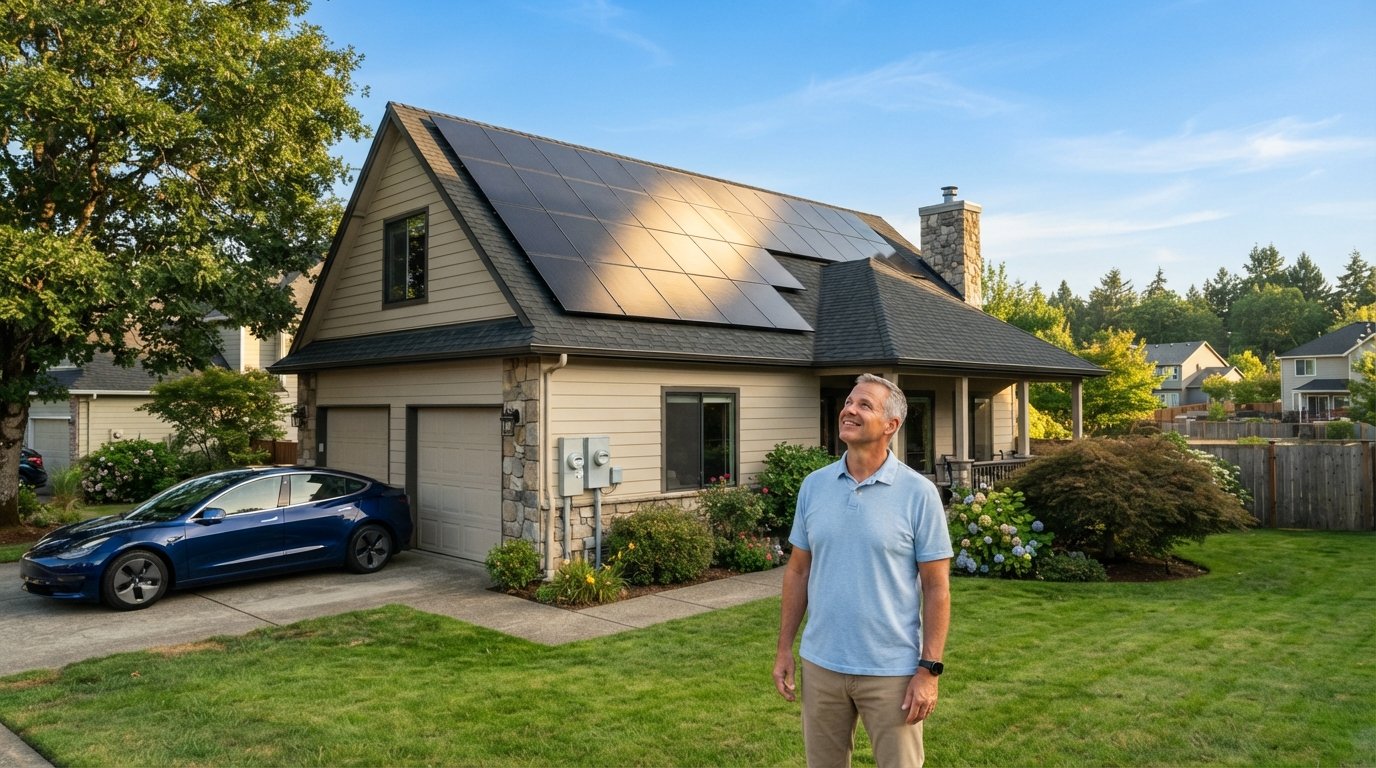
Environmental Benefits of Residential Solar Panels
Learn how residential solar panels cut carbon emissions and air pollution. Call 8332123715 for expert guidance on going green.

By Andy Pearson
Learn more about Solar Panel Installation and Repair for guides, costs, and what to expect.
Compare Solar Panel Installation and Repair Pros Near You

Enter your ZIP code to compare top-rated local professionals and request free quotes.
When you install solar panels on your roof, you are doing more than trimming your monthly electric bill. You are actively reducing the amount of carbon dioxide, sulfur dioxide, and nitrogen oxides released into the atmosphere by fossil fuel power plants. Every kilowatt-hour of solar electricity you generate displaces a kilowatt-hour that would otherwise come from coal, natural gas, or oil. That displacement adds up fast. A typical 6-kilowatt residential system in a sunny state can offset over 8,000 pounds of carbon dioxide each year, which is roughly equivalent to planting 100 trees annually. But the environmental story goes far beyond carbon. It touches water use, air quality, land disturbance, and the long-term health of the communities where we live. This article explores those benefits in depth, explains how they materialize, and helps you understand the real-world impact of going solar at home.
How Residential Solar Panels Reduce Carbon Emissions
The environmental benefits of residential solar panels begin with the way they generate electricity. Unlike coal or natural gas plants that burn fuel to create heat and spin turbines, solar panels convert sunlight directly into electricity through the photovoltaic effect. No combustion means no direct greenhouse gas emissions. When your home uses solar power, the local utility does not need to burn as much fossil fuel to meet demand. This is especially true during peak daylight hours when air conditioners and industrial loads strain the grid.
According to the U.S. Environmental Protection Agency, electricity generation is responsible for about 25 percent of total U.S. greenhouse gas emissions. By shifting a portion of your home energy use to solar, you directly reduce that share. Over a 25-year lifespan, a single residential solar system can prevent hundreds of thousands of pounds of carbon dioxide from entering the atmosphere. That is not a theoretical benefit; it is measurable and cumulative. As more homeowners adopt solar, the collective reduction becomes significant enough to affect regional air quality and climate targets.
The carbon math also improves as the grid gets cleaner. Even though manufacturing solar panels produces some emissions, the energy payback time is typically one to two years. After that, every kilowatt-hour is essentially carbon-free for the remaining 20-plus years of system life. When you request quotes through our Residential Solar Quotes guide, you can compare system sizes and see estimated production, which helps you maximize your carbon offset.
Improving Air Quality and Public Health
Carbon dioxide is not the only pollutant that fossil fuel plants emit. They also release sulfur dioxide, nitrogen oxides, particulate matter, and mercury. These substances contribute to smog, acid rain, and respiratory illnesses like asthma and bronchitis. When you generate your own solar electricity, you reduce demand on those plants, which means fewer of those harmful pollutants enter the air. The health benefits are particularly pronounced in urban areas where power plants often operate near residential neighborhoods.
Reduced air pollution also lowers healthcare costs. Studies have linked fine particulate matter from power plants to heart attacks, strokes, and premature deaths. By adopting residential solar, you are part of a broader shift that lessens the burden on public health systems. This is one of the most tangible environmental benefits of residential solar panels: cleaner air for you, your family, and your community. It is a benefit that does not require you to live next to a solar farm; simply producing your own clean energy at home contributes to the solution.
Moreover, solar panels produce no noise pollution. Unlike backup generators or natural gas peaker plants, they operate silently. That makes them compatible with residential neighborhoods and wildlife alike. The absence of moving parts also means no risk of oil spills or fuel leaks, which can contaminate soil and water.
Conserving Water Resources
Thermoelectric power plants, which include coal, nuclear, and natural gas facilities, withdraw massive amounts of water for cooling. In fact, they are one of the largest users of freshwater in the United States. That water is often returned to rivers and lakes at higher temperatures, which can harm aquatic ecosystems. Solar photovoltaic panels, by contrast, require virtually no water to generate electricity. The only water used is for occasional cleaning, which is minimal and can often be done with rainwater.
By generating your own solar power, you reduce the demand for water-intensive electricity generation. This conservation matters most in arid regions like the Southwest, where water scarcity is a growing concern. Every kilowatt-hour of solar you produce saves roughly half a gallon of water that would have been used at a traditional power plant. Over a year, a typical home solar system can save thousands of gallons. That is a direct environmental benefit that often gets overlooked but is critically important.
Additionally, solar panels do not pollute water sources. There is no risk of coal ash ponds leaching into groundwater or fracking fluids contaminating aquifers. The clean, closed-loop nature of solar energy makes it a safe choice for watersheds and the wildlife that depend on them.
Reducing Land Use and Habitat Destruction
Large-scale energy projects, such as mountaintop removal coal mining or natural gas fracking, can devastate landscapes and fragment habitats. Even utility-scale solar farms require significant land area. Residential solar, however, uses existing rooftops and unused space, avoiding the need to clear new land. By putting solar on your home, you are essentially turning an inert surface into a clean energy generator without sacrificing a single acre of forest or prairie.
This distributed approach also reduces the need for new transmission lines, which often cut through natural areas and require maintenance that can harm ecosystems. When energy is produced where it is consumed, the grid becomes more resilient and less land-intensive. The environmental benefits of residential solar panels thus extend to habitat preservation. You are not just reducing emissions; you are also helping to keep natural landscapes intact for wildlife and recreation.
Furthermore, solar panels can be installed on brownfields or abandoned industrial sites, but residential rooftops are an even lower-impact option. They require no additional land, no new roads, and no disruption to soil. As cities densify, rooftop solar becomes an increasingly valuable tool for meeting climate goals without sprawling into undeveloped areas.
Lowering Your Carbon Footprint: A Step-by-Step Framework
Understanding the environmental benefits is one thing; acting on them is another. Here is a simple framework to maximize your positive impact when you go solar. Each step builds on the previous one, ensuring that your system delivers the greatest possible environmental return.
- Assess your home's solar potential. Use online tools or consult a certified installer to evaluate roof orientation, shading, and local climate. A well-sited system produces more clean energy per panel.
- Size the system to your annual usage. Oversizing can lead to wasted production if your utility does not offer full net metering. Aim to offset 80 to 100 percent of your electricity consumption.
- Choose high-efficiency panels and inverters. More efficient equipment means more kilowatt-hours per square foot, which is especially important if you have limited roof space.
- Add battery storage if possible. Batteries let you use solar power at night, further reducing reliance on fossil fuel plants and increasing your environmental impact.
- Monitor and maintain your system. Regular cleaning and performance checks ensure your panels operate at peak output for decades, maximizing lifetime carbon offsets.
Following these steps helps you avoid common pitfalls like undersized systems or poor installation that can diminish environmental gains. It also positions you to take advantage of federal and state incentives that improve the financial return, making the green choice more affordable. For a deeper dive into financing and savings, explore our SolarEnergy.ai resource, which offers calculators and expert guides.
Beyond Carbon: Other Environmental Advantages
The environmental benefits of residential solar panels also include reduced reliance on extractive industries. Coal mining, oil drilling, and natural gas fracking all have significant ecological footprints, from mountaintop removal to methane leaks. By generating your own power, you decrease demand for these extracted fuels. This reduces the pressure to open new mines and wells, preserving ecosystems and reducing the risk of spills and leaks.
Solar energy also helps mitigate the urban heat island effect. Dark roofs absorb heat, raising local temperatures and increasing cooling demand. Solar panels, especially those with light-colored backsheets, reflect some sunlight and shade the roof, which can lower attic temperatures by several degrees. This reduces the need for air conditioning, which in turn lowers emissions from power plants. It is a positive feedback loop: less cooling demand means less fossil fuel burned, which means cleaner air and a cooler neighborhood.
Finally, solar panels are recyclable. While the recycling industry for solar is still maturing, the materials (glass, aluminum, copper, and silicon) can be recovered and reused. This contrasts sharply with fossil fuels, which are burned once and gone forever. Choosing solar supports a circular economy and reduces the long-term environmental burden of energy production. As recycling infrastructure expands, the lifecycle benefits of solar will only grow.
How Residential Solar Contributes to a Cleaner Grid
Every home that goes solar adds a small power plant to the grid. When thousands of homes do it, the aggregate effect is substantial. Distributed solar reduces the need for utilities to fire up peaker plants, which are often older, dirtier, and less efficient. It also lowers transmission losses because electricity is generated close to where it is used. That means less energy is wasted as heat along power lines, which translates into fewer emissions per kilowatt-hour delivered.
In many states, residential solar also supports net metering, which allows you to send excess power back to the grid. This clean electricity displaces power that would otherwise come from fossil fuels, further cleaning the overall energy mix. As more homeowners participate, utilities can defer or avoid building new fossil fuel plants, locking in environmental benefits for decades. The transition is not just about individual homes; it is about reshaping the entire energy system toward sustainability.
Moreover, solar-ready homes can integrate with smart grids and demand response programs. These technologies optimize when solar power is used, reducing waste and maximizing emissions reductions. The environmental benefits of residential solar panels are therefore both immediate and systemic, contributing to a cleaner, more resilient grid for everyone.
Common Misconceptions About Solar and the Environment
Some people worry that solar panels require more energy to manufacture than they produce. That is outdated. Modern panels have an energy payback time of one to two years, and they last 25 to 30 years. The net energy gain is overwhelmingly positive. Others point to the use of hazardous materials in some panels, but today's mainstream silicon panels are safe and increasingly recyclable. The industry is also developing lead-free and cadmium-free options.
Another misconception is that solar panels harm birds or wildlife. In reality, rooftop solar has negligible impact compared to wind turbines or fossil fuel plants. Birds are far more threatened by habitat loss from mining and drilling than by solar panels on roofs. Finally, some argue that solar is not truly green because of manufacturing emissions. But when you compare the lifecycle emissions of solar (about 20 to 50 grams of CO2 per kilowatt-hour) to coal (over 1,000 grams), the advantage is clear. Solar is one of the cleanest energy sources available.
Addressing these myths helps homeowners make informed decisions. The environmental benefits of residential solar panels are real, measurable, and growing as technology improves and the grid gets cleaner. By choosing solar, you are part of a proven solution to climate change and air pollution.
Ultimately, the environmental benefits of residential solar panels are both personal and planetary. You reduce your carbon footprint, conserve water, improve air quality, and preserve land, all while gaining energy independence and long-term savings. If you are ready to explore solar for your home, start by comparing quotes from certified installers to find the right system for your needs. The planet, and your wallet, will thank you.