
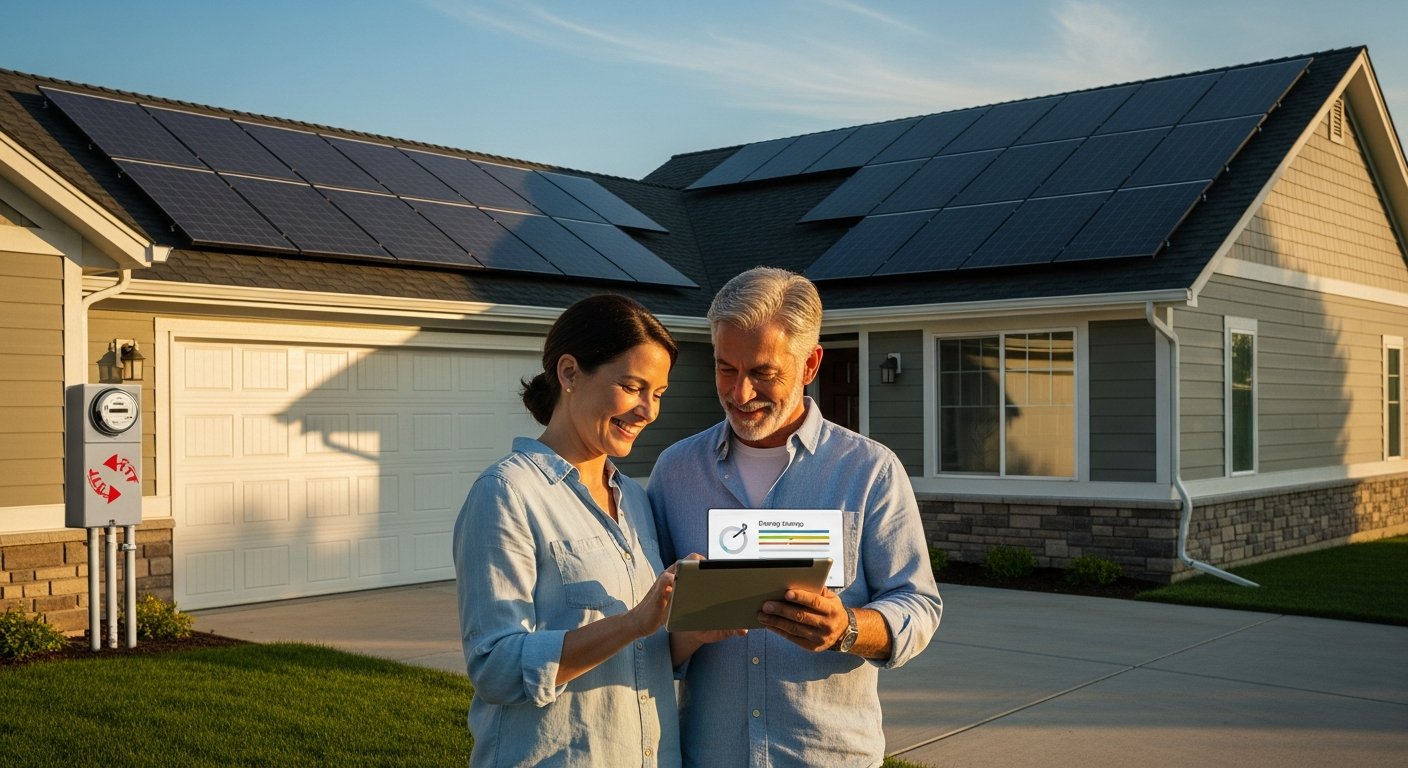
Green Energy 2026: Smart Home Solar Savings
Discover how green energy can cut your electric bills, boost home value, and pay for itself with federal tax credits and smart financing.

By Alex Carter
Learn more about Solar Panel Installation and Repair for guides, costs, and what to expect.
Compare Solar Panel Installation and Repair Pros Near You
Enter your ZIP code to compare top-rated local professionals and request free quotes.
Across the United States, homeowners are facing a familiar dilemma: electricity rates keep climbing, and the traditional power grid shows its age with every storm and heatwave. In this context, green energy has shifted from an environmental ideal to a practical, financial strategy. Solar power, in particular, has matured into a reliable way to cut monthly expenses, increase property value, and reduce reliance on fossil fuels. Yet, for many, the path to going solar is clouded by questions about cost, equipment, and the installation process. This guide cuts through the noise, explaining how green energy works for your home, what it really costs, and how to navigate the journey from first inquiry to flipping the switch on your own clean power system.
The opportunity is substantial. According to the Solar Energy Industries Association, the cost of solar panels has dropped by more than 60% over the last decade, while efficiency has steadily improved. Combined with federal tax credits and state-level incentives, the financial case for solar is stronger than ever. But beyond the numbers, there is a deeper appeal: energy independence. When your roof generates power, you are no longer at the mercy of utility rate hikes. You are producing a tangible asset that pays dividends for 25 years or more. This article will walk you through every stage of the green energy transition, using clear, practical guidance that you can act on immediately.
Why Green Energy Is a Smart Financial Move for Homeowners
The most common question people ask is simple: will solar actually save me money? The answer, for most U.S. homeowners, is a resounding yes, but the details matter. The average American household spends about $1,500 per year on electricity, and that number is rising. A properly sized solar array can offset 80% to 100% of that consumption, effectively locking in your electricity costs for the lifetime of the system. Over 20 years, that can translate into $20,000 to $50,000 in avoided utility costs, depending on your location and energy usage.
Furthermore, green energy increases your home's resale value. Studies from the Lawrence Berkeley National Laboratory show that homes with solar panels sell for a premium of about 4% compared to similar homes without them. In competitive real estate markets, that premium can be $15,000 or more. For a modest upfront investment, you are not only saving on bills, you are building equity. Additionally, many states offer property tax exemptions for the added value of solar, so your assessment won't spike. From a purely financial perspective, solar is one of the few home improvements that pays for itself and then continues to generate returns.
Calculating Your Personal Payback Period
To estimate your own return on investment, you need three numbers: your average monthly electricity bill, the cost of your solar system after incentives, and your local utility's net metering policy. Net metering allows you to send excess power back to the grid for credits, which is essential for maximizing savings. Here is a simple framework to run the numbers:
- Determine your usage: Look at your last 12 months of electric bills to find your annual kilowatt-hour (kWh) consumption.
- Estimate system size: Divide your annual kWh by 1,300 (the average annual production per kW in the U.S.) to get the system size in kilowatts.
- Calculate gross cost: Multiply the system size by the current average cost of $2.75 per watt (before incentives).
- Subtract incentives: Apply the 30% federal tax credit, plus any state or local rebates.
- Divide by annual savings: Divide your net cost by your annual electricity bill to get your payback period in years.
For most homeowners, the payback period lands between 6 and 10 years. After that, the electricity your panels produce is essentially free. Given that modern panels come with a 25-year performance warranty, you are looking at 15 to 20 years of pure savings. The key is to use a reliable calculator, like the one offered by NewSolarQuotes, which factors in your specific address and utility rates to give you a personalized estimate.
Exploring Your Green Energy Options: Solar, Wind, and Hydro
While solar dominates the residential market, it is not the only path to green energy. Depending on your property, wind and micro-hydro systems can be viable complements or alternatives. Each technology has its own strengths, and understanding them helps you make the best choice for your situation.
Solar power is the most accessible and scalable option, fitting on rooftops or open land with minimal visual impact. It works everywhere, though output varies with sunlight. Wind turbines, on the other hand, require consistent wind speeds of at least 9 mph to be cost-effective, and they need substantial space to avoid turbulence from nearby structures. Micro-hydro systems, which use a stream or river on your property, offer the highest energy density but are limited to the small fraction of homes with flowing water access.
For most homeowners, solar is the clear winner due to its flexibility, lower maintenance, and declining costs. However, if you have a windy or water-rich site, a hybrid approach might be worth exploring. Regardless of your choice, the goal is the same: generate clean power on-site and reduce your dependence on the grid. The table below summarizes the key differences to help you evaluate your options:
- Solar: Best for most homes, low maintenance, 25+ year lifespan, works in all climates.
- Wind: Requires zoning approval, taller structures, moving parts, ideal for rural or coastal areas.
- Hydro: Highest efficiency, but needs year-round water flow, complex permitting, limited applicability.
If you are unsure which technology suits your property, NewSolarQuotes offers a free consultation with certified experts who can assess your site and recommend the most efficient solution. Their network covers solar, wind, and hydro, so you get an unbiased recommendation rather than a one-size-fits-all pitch.
Navigating Solar Installation Costs and Financing
The upfront cost of solar is often the biggest barrier, but it is also the most misunderstood. As of 2026, the average price for a residential solar system is between $15,000 and $25,000 before incentives. After the 30% federal tax credit, that drops to $10,500 to $17,500. Many states add their own credits, and some utilities offer performance-based incentives, further reducing the net cost. For example, California's Self-Generation Incentive Program (SGIP) can provide thousands of dollars for battery storage, while New York offers a state tax credit on top of the federal one.
Financing options have also evolved to make green energy accessible to more households. You can choose to pay cash, take out a solar loan, or enter into a lease or power purchase agreement (PPA). Each has trade-offs. Cash purchases offer the highest long-term savings, but require a significant upfront outlay. Solar loans allow you to own the system with zero down and monthly payments that are often less than your old electric bill. Leases and PPAs require no money down and provide immediate savings, but you do not own the system, which means you miss out on tax credits and the increase in home value.
To make the right choice, you need transparent pricing and a clear comparison of offers. That is where NewSolarQuotes excels. Their platform connects you with pre-vetted, certified installers who compete for your business. You receive multiple quotes side by side, allowing you to evaluate equipment quality, warranty terms, and cost per watt without pressure. Here is what to look for in a quote:
- Equipment quality: Panels from Tier 1 manufacturers like Longi, JA Solar, and Q CELLS, and inverters from Enphase or SolarEdge.
- Warranty coverage: A 25-year performance warranty on panels and at least a 10-year warranty on labor.
- Price per watt: Aim for $2.50 to $3.00 per watt before incentives, which is the current national average.
- Financing terms: Look for interest rates below 6% and no prepayment penalties.
Once you select a quote, NewSolarQuotes guides you through the paperwork, permits, and interconnection agreements. Their team coordinates with your utility to ensure a smooth transition to net metering, so you start saving from day one.
Maximizing Savings with Tax Credits and Incentives
The financial landscape for green energy is heavily influenced by government incentives, which can drastically reduce your net cost. The most significant is the federal Investment Tax Credit (ITC), which currently stands at 30% of the total system cost. This credit is available for both solar and wind systems, and it applies to both new and existing homes. There is no cap on the amount you can claim, and it rolls over to future tax years if you cannot use it all at once.
On top of the federal credit, many states offer additional incentives. For instance, California's net metering program, while recently revised, still credits you for excess generation at a wholesale rate. New York, Massachusetts, and Maryland offer state tax credits, while others like Texas and Florida have property tax exemptions. Some utilities also provide rebates for battery storage, which allows you to store excess energy for use during peak times or outages. To capture these savings, you need to research your state's specific policies, or better yet, use a service that compiles them for you.
NewSolarQuotes maintains up-to-date guides for every state, detailing available incentives, eligibility requirements, and application deadlines. Their team can help you identify which programs apply to your project and assist with the necessary paperwork. This ensures you do not leave money on the table, which is a common mistake for first-time solar buyers. With the right combination of credits and rebates, the effective cost of your system can drop by 40% to 50%, making the payback period even shorter.
Choosing the Right Solar Equipment for Your Home
The quality of your solar panels and inverters directly impacts your system's efficiency, reliability, and lifespan. With so many brands on the market, it is easy to feel overwhelmed. However, focusing on a few key specifications can simplify your decision. Panel efficiency, which measures how much sunlight is converted into electricity, is the most critical factor. Higher efficiency panels, like those from SunPower or REC, produce more power per square foot, making them ideal for roofs with limited space. However, they come at a premium price.
For most homeowners, standard efficiency panels (around 20% efficiency) from reliable manufacturers offer the best balance of cost and performance. Brands like Q CELLS, Canadian Solar, and Trina Solar are known for their durability and value. The inverter, which converts DC power from the panels into AC power for your home, is another critical component. Microinverters from Enphase or power optimizers from SolarEdge are the industry standard, as they allow each panel to operate independently, maximizing output even if one panel is shaded.
Battery storage is an optional but increasingly popular addition. Batteries allow you to store excess solar energy for use at night or during power outages, providing true energy independence. The Tesla Powerwall and LG Energy Solution's RESU are two leading options, but their cost can add $10,000 or more to your project. To determine if batteries are worth it, consider your utility's rate structure and your need for backup power. If time-of-use rates are in effect, batteries can shift your consumption to cheaper periods, increasing savings. NewSolarQuotes provides product reviews and comparisons to help you choose the right equipment for your needs and budget.
Working with Certified Installers for a Stress-Free Experience
The installation process is where many homeowners worry about surprises, but it does not have to be stressful. The key is to work with certified, experienced professionals who follow industry best practices. Start by checking that your installer is licensed, insured, and certified by the North American Board of Certified Energy Practitioners (NABCEP). This certification ensures they have the knowledge to design and install systems that meet safety and performance standards.
When you request quotes through NewSolarQuotes, you are automatically connected with vetted installers who meet these criteria. Their network includes companies with a proven track record in your area, so you can trust that they understand local building codes, utility requirements, and climate conditions. The quoting process is transparent: you receive detailed proposals outlining the equipment, timeline, and total cost, with no hidden fees. You can then compare offers and choose the one that gives you the best value, not just the lowest price.
Once you sign a contract, the installation typically takes one to three days, depending on the system size and roof complexity. The installer handles all permits, inspections, and utility paperwork, so you do not have to navigate the bureaucracy yourself. After the system is live, they will walk you through monitoring your production and performance. Most installers offer a workmanship warranty of 10 years, and the equipment warranties cover parts for 25 years, giving you long-term peace of mind.
Overcoming Common Barriers to Going Solar
Even with clear financial benefits, many homeowners hesitate due to misconceptions or logistical concerns. One common worry is that solar panels will not work on cloudy days or in colder climates. In reality, solar panels generate electricity from daylight, not just direct sunlight, so they still produce power on overcast days, albeit at a lower rate. Cold temperatures actually improve panel efficiency, which is why northern states like Massachusetts and Colorado are solar leaders.
Another barrier is the assumption that solar is only for wealthy homeowners. As discussed, financing options like $0-down loans and leases make solar accessible to a wide range of incomes. Plus, the monthly loan payment is often less than the utility bill it replaces, so you save money from day one. For renters or those with unsuitable roofs, community solar programs allow you to subscribe to a shared solar farm and receive credits on your electric bill, with no installation required.
Finally, some homeowners fear the aesthetic impact of panels on their roof. Modern panel designs are sleek and low-profile, and some options, like solar shingles, blend seamlessly with your roof. While these integrated systems are more expensive, they offer a premium look that many find worth the extra cost. If you are concerned about appearance, ask your installer for design simulations to see how different options will look on your home. Ultimately, the environmental and financial benefits far outweigh these minor concerns, and the growing popularity of solar is a testament to its value.
Start Your Green Energy Journey Today
Green energy is no longer a distant ideal; it is a practical, profitable decision that you can make today. By understanding the costs, incentives, and equipment options, you are already ahead of most homeowners. The next step is to get personalized, accurate quotes from trusted installers. NewSolarQuotes simplifies this process, providing you with competitive offers from certified professionals in your area. Their service is free, and there is no obligation to accept any quote.
Imagine a future where your electricity bill is a fraction of what it is today, where your home generates its own power, and where you are contributing to a cleaner planet. That future is within reach. Whether you are driven by savings, sustainability, or security, green energy delivers on all fronts. Take the first step by requesting your free quotes from NewSolarQuotes, and join the growing community of Americans who are taking control of their energy future.
Learn more about Solar Panel Installation and Repair for guides, costs, and what to expect.
Compare Solar Panel Installation and Repair Pros Near You
Enter your ZIP code to compare top-rated local professionals and request free quotes.