How to Choose a Solar Installation Company in 2026
Learn how to choose a trusted solar installation company in 2026, compare quotes, and avoid costly mistakes. Save money and energy with the right installer.

By Alex Carter
Learn more about Solar Panel Installation and Repair for guides, costs, and what to expect.
Compare Solar Panel Installation and Repair Pros Near You
Enter your ZIP code to compare top-rated local professionals and request free quotes.
If you are reading this, you have likely already decided that solar energy makes sense for your home or business. The next step is finding the right solar installation company, and that decision can feel overwhelming. With thousands of installers across the United States, each promising the best equipment and the lowest prices, how do you separate the true professionals from the underqualified contractors? The answer lies in a systematic approach: understanding what defines a reputable installer, knowing which questions to ask, and learning how to compare quotes effectively. This guide will walk you through every step, so you can choose a partner who will deliver a reliable, high-performing system that saves you money for decades.
What Defines a Top-Tier Solar Installation Company
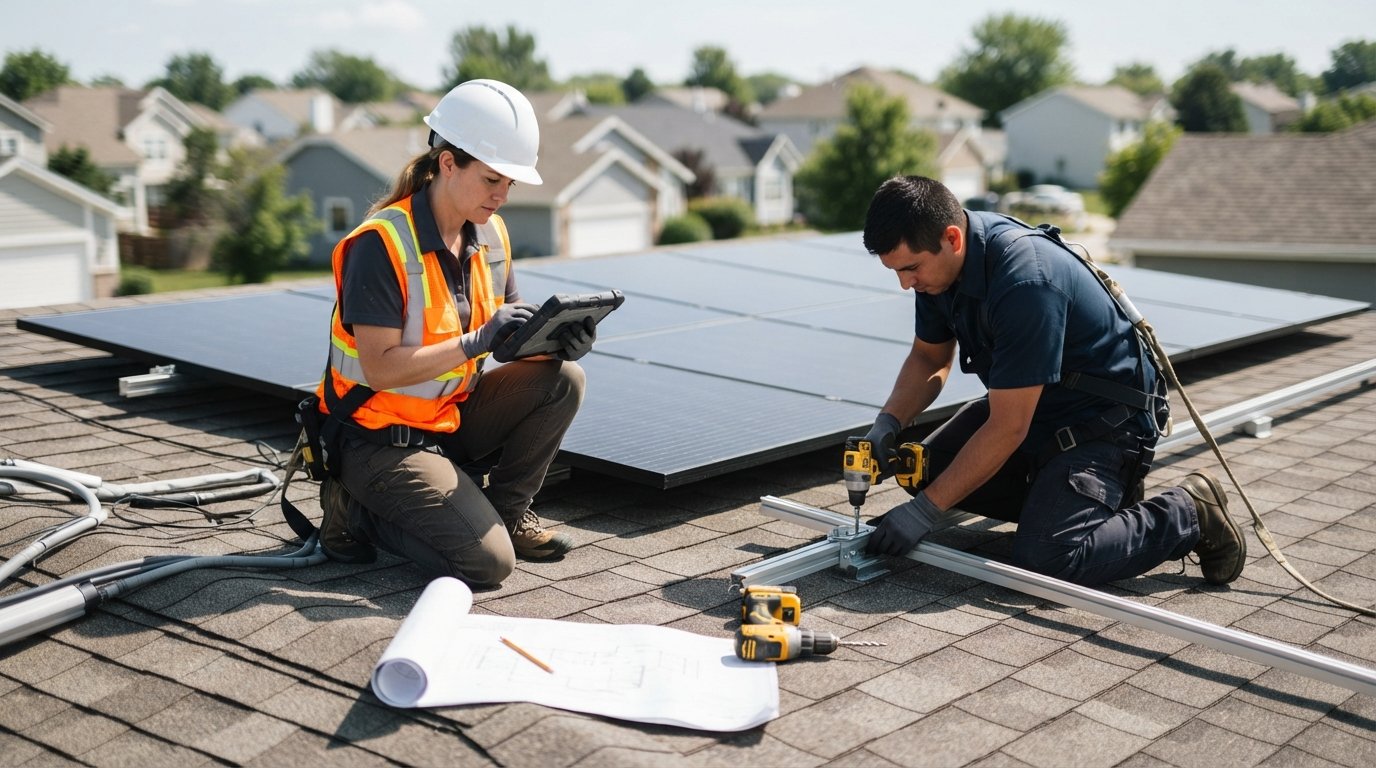
A solar installation company is more than just a crew that mounts panels on your roof. It is a full-service provider that handles system design, permitting, utility interconnection, and ongoing support. The best companies act as project managers, coordinating every detail from the initial site assessment to the final inspection. They also stand behind their work with robust warranties and maintenance plans.
When evaluating installers, look for these core qualities:
- Proper licensing and certification (e.g., NABCEP certification for installers)
- Strong track record with local permits and utility approvals
- Manufacturer partnerships with top-tier panel and inverter brands
- Transparent pricing with no hidden fees
- Comprehensive warranties covering both equipment and workmanship
These characteristics are non-negotiable. A company that lacks any of them may still complete an installation, but you risk facing costly issues later, such as roof leaks, underperforming systems, or a black hole for customer service. Always verify credentials before signing anything.
Why Local Expertise Matters for Your Solar Installation
Solar installation is not a one-size-fits-all service. Your local climate, roof type, utility rates, and state incentives all influence the design and financial return of your system. A national chain might have a recognizable name, but a local or regional solar installation company often has deeper knowledge of your area's specific requirements. They know the local permitting process, they have relationships with inspectors, and they understand the best equipment for your weather patterns.
For example, a homeowner in Arizona needs a system designed to handle extreme heat, which can reduce panel efficiency. A homeowner in Massachusetts must account for snow loads and shorter winter days. Local installers also stay up to date on state-level incentives, such as Massachusetts SMART program or Arizona's net metering policies. This localized expertise can save you time and money, and it often leads to a smoother installation experience.
The Cost of Solar Installation: What to Expect in 2026
Cost remains the biggest factor for most homeowners. In 2026, the average price for a residential solar system in the U.S. ranges from $2.50 to $3.50 per watt before incentives. For a typical 6 kW system, that translates to $15,000 to $21,000. After the 30% federal tax credit, your net cost drops to roughly $10,500 to $14,700. But these are just averages. Your actual price depends on system size, equipment choices, roof complexity, and your location.
To get an accurate estimate, use a solar calculator like the one on NewSolarQuotes. The calculator factors in your address, average electricity bill, and roof orientation to give you a personalized price range. It also shows your estimated payback period and lifetime savings. This data gives you a powerful baseline when you start receiving quotes from installers.
How to Compare Solar Installation Quotes Effectively
Once you have three or more quotes from different installers, you need to compare them on an apples-to-apples basis. Many homeowners make the mistake of only looking at the total price, but that can be misleading. A cheaper quote might include lower-quality panels, a smaller inverter, or a shorter workmanship warranty. A slightly more expensive quote could offer premium equipment and a 25-year labor warranty, which is worth the extra cost.
Use this checklist to compare quotes:
- Verify that each quote specifies the exact panel model, inverter type, and battery (if included).
- Check the production estimate (kWh per year) and see if it aligns with your actual usage.
- Review the warranty terms: equipment (usually 25 years), workmanship (aim for 10+ years), and performance guarantee.
- Look at the timeline: how long will the installation take, and when is the expected completion date?
- Ask about additional fees, such as permit costs, roof penetrations, or electrical panel upgrades.
After comparing these details, you can confidently choose the installer that offers the best value, not just the lowest number. Remember, the cheapest quote can become the most expensive if it leads to poor performance or constant repairs.
Financing Your Solar Installation: Options and Strategies
Even with the federal tax credit, the upfront cost of solar can be significant. Fortunately, there are multiple financing options available. The most common are cash purchase, solar loans, leases, and power purchase agreements (PPAs). Each has its pros and cons, and the right choice depends on your financial situation and long-term goals.
Cash purchase gives you the highest lifetime savings because you own the system outright and pay no interest. Solar loans allow you to spread the cost over 10 to 20 years, with monthly payments that are often lower than your utility bill savings. Leases and PPAs require little to no upfront cost, but you do not own the system, which means you miss out on tax credits and the long-term increase in home value.
Before choosing a financing route, calculate your break-even point and total cost of ownership. A reputable solar installation company will help you understand these numbers, but you should also use independent resources like NewSolarQuotes to verify the math. The goal is to maximize your savings over the 25 to 30 year life of your solar panels.
Top Questions to Ask Every Solar Installation Company
Before you sign a contract, ask these questions to every candidate. Their answers will reveal their professionalism and transparency.
- Are you licensed and insured in my state? Can you provide proof?
- Do you have NABCEP-certified installers on staff?
- How many solar systems have you installed in my area?
- What brands of panels and inverters do you typically use, and why?
- What is included in your workmanship warranty, and how long does it last?
- Will you handle all permits and inspections, or will I need to do that?
- What is your process for handling roof leaks or other issues after installation?
Pay close attention to how they respond. A confident, detailed answer is a good sign. A vague or evasive response should raise a red flag. Also, ask for references from recent customers in your area. A reputable company will happily provide them.
Red Flags to Avoid When Hiring a Solar Installer
Just as there are excellent solar installation companies, there are also scam artists and underqualified contractors. Protect yourself by watching for these warning signs.
- High-pressure sales tactics: If a salesperson pushes you to sign that day, walk away.
- Unrealistic savings estimates: If a quote promises to eliminate your entire electric bill, it is likely inflated.
- No physical address or local presence: A company that operates only over the phone is risky.
- Requests for full payment upfront: Most legitimate installers ask for a deposit, not the full amount.
- Poor online reviews or unresolved complaints with the Better Business Bureau.
Trust your instincts. If something feels off, it probably is. You can always verify an installer's track record by checking online reviews, asking for references, and confirming their license with your state's licensing board.
How NewSolarQuotes Simplifies the Search
At NewSolarQuotes, we understand that finding a trusted solar installation company is the biggest barrier to going solar. That is why we offer a free quote comparison service. When you submit a request through our platform, we match you with up to three pre-screened, certified installers in your area. You receive competing quotes, so you can compare prices, equipment, and warranties side by side, without any obligation.
Our installers are vetted for licensing, insurance, and customer satisfaction. We do not pair you with general handymen or unqualified contractors. Instead, we connect you with specialists who have proven experience in solar design, roof mounting, inverter repair, and panel cleaning. Our goal is to make your solar journey as simple and cost-effective as possible.
Final Thoughts on Choosing the Right Installer
Selecting a solar installation company is a major decision, but it does not have to be stressful. By focusing on credentials, local expertise, transparent pricing, and solid warranties, you can find a partner who will deliver a system that performs for decades. Use the tools and resources available, including cost calculators and quote comparison services, to arm yourself with data. Then, trust your due diligence and choose the installer that offers the best combination of quality, service, and value.
Your investment in solar energy is not just about lowering your monthly bills. It is about increasing your property value, reducing your carbon footprint, and taking control of your energy future. With the right solar installation company by your side, you can enjoy these benefits with confidence. Start your search today, and remember that the best time to go solar is now.