
Hybrid Wind and Solar Home Energy System Design Guide
A hybrid wind and solar home energy system design balances both sources for steadier power and smaller batteries. Learn sizing, costs, and key components.

By Alexia Mabel
Learn more about Solar Panel Installation and Repair for guides, costs, and what to expect.
Compare Solar Panel Installation and Repair Pros Near You

Enter your ZIP code to compare top-rated local professionals and request free quotes.
Imagine a home that keeps the lights on when the grid goes down, slashes your utility bill to near zero, and pays for itself over time. That is the promise of a hybrid wind and solar home energy system design, a setup that combines two of the most abundant renewable resources on the planet. Unlike a standalone solar array, which sits idle after sunset, or a lone wind turbine, which can stall on calm days, a hybrid approach balances their strengths. The result is steadier power production, smaller battery banks, and greater energy independence. This guide walks you through the core principles, components, sizing methods, and practical trade-offs of designing a hybrid system that actually fits your property and budget.
Why Combine Wind and Solar in One System
Solar and wind are naturally complementary. Solar panels peak in the middle of the day, especially during summer months, while wind turbines often generate more at night and during winter storms. By pairing them, you smooth out the gaps that each technology has on its own. A hybrid system can deliver a more consistent flow of electricity to your home, which means you rely less on the grid and can size your battery storage more modestly. For homeowners in areas with strong seasonal variation, this pairing often makes the difference between a system that barely covers your needs and one that genuinely runs your home.
Beyond energy balance, hybrid designs offer resilience. When a storm knocks out power lines, a well-designed hybrid system with battery backup can keep critical loads running. Solar alone may struggle during a multi-day outage if clouds linger, but adding a wind turbine gives you a second generation source that can recharge batteries overnight. That redundancy is why hybrid systems are popular in rural and off-grid properties, though they also appeal to grid-tied homeowners who want greater self-sufficiency.
There is also a financial angle. Many states and utilities offer separate incentives for renewable energy systems, and a hybrid setup may qualify for the same federal tax credit as a solar-only installation. By generating more of your own power across more hours, you reduce the amount you buy from the grid, which improves your return on investment. If you are still weighing the upfront costs, our breakdown of why solar installation costs differ can help you see where your money goes and how to compare quotes fairly.
Core Components of a Hybrid Wind and Solar System
A hybrid system is more than just a solar array and a wind turbine bolted together. It requires a carefully integrated set of components that manage power from both sources, store excess energy, and deliver stable electricity to your home. Understanding each piece helps you evaluate installer proposals and avoid costly mismatches.
The main building blocks include:
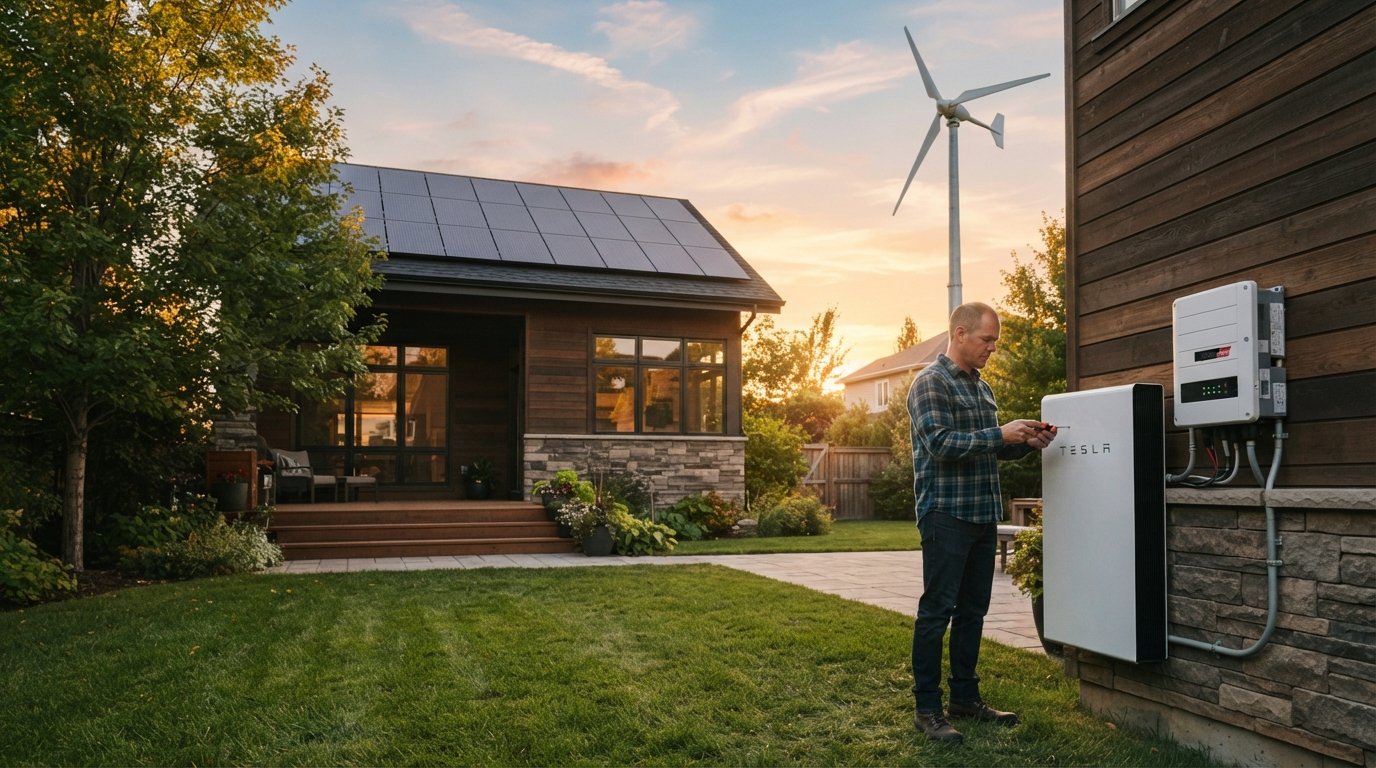
- Solar array: Photovoltaic panels that convert sunlight into direct current (DC) electricity. Mounting can be rooftop or ground-mounted, depending on space and sun exposure.
- Wind turbine: A rotor and generator that produce alternating current (AC) or DC power, depending on the model. Small residential turbines typically range from 1 kW to 10 kW.
- Charge controller: Regulates the voltage and current flowing from both sources to the battery bank, preventing overcharging and extending battery life.
- Battery bank: Stores excess energy for use at night or during outages. Lithium-ion batteries are now common for their efficiency and lower maintenance.
- Inverter: Converts DC power from the batteries or solar panels into AC power that your home appliances can use. Hybrid inverters can also manage grid interaction and generator input.
- Grid or backup generator connection: Optional but useful for grid-tied systems or as a fallback during prolonged low-renewable periods.
Each component must be sized to work with the others. For example, a charge controller that is too small will waste potential energy from your wind turbine, while an undersized battery bank will force you to curtail production. A professional designer will model your local wind and solar resources to find the right balance.
Assessing Your Site: Wind and Solar Resources
Before you buy any equipment, you need to know what your location offers. Solar potential is fairly easy to estimate: most areas have published maps showing average daily sun hours. Wind is trickier because it varies dramatically with height, terrain, and nearby obstructions. A turbine that performs well on a open plain may produce almost nothing in a suburban backyard surrounded by trees and buildings.
To assess wind, you can start with regional wind resource maps from government agencies or universities. But for a truly accurate picture, you should measure wind speed at your proposed tower height for at least a few months. Anemometers and data loggers are available for rent, or you can hire a consultant. As a rule of thumb, small wind turbines need a minimum average wind speed of 10 to 12 miles per hour to be economically viable. If your site falls below that, solar may deserve a larger share of your hybrid design.
Solar assessment is more straightforward. You can use online tools that factor in your address, roof orientation, and shading. Ideally, your solar array should face south (in the northern hemisphere) with minimal shading between 9 a.m. and 3 p.m. If your roof is shaded or oriented east-west, ground mounting may be a better option. Combining a modest solar array with a wind turbine can help compensate for a less-than-perfect solar site, as long as you have good wind.
Sizing Your Hybrid System for Real-World Loads
Sizing is where many DIY designs go wrong. You need to match generation to your actual electricity consumption, not just guess based on square footage. Start by gathering 12 months of utility bills to find your average daily kilowatt-hour (kWh) usage. Then decide what percentage of that load you want the hybrid system to cover. For a grid-tied system with net metering, you might aim for 80 to 100 percent. For an off-grid cabin, you need to cover 100 percent plus a margin for cloudy or calm spells.
Next, estimate how much energy each source can produce. A 5 kW solar array in a sunny climate might generate 20 to 25 kWh per day, while a 5 kW wind turbine in a good wind site might produce 10 to 15 kWh per day, though output is highly variable. You can use a simple formula: daily energy = system size (kW) times peak sun hours (for solar) or times equivalent full-load hours (for wind). Your installer will use more sophisticated modeling, but this gives you a ballpark.
Battery sizing follows from your desired days of autonomy. If you want two days of backup for critical loads, you need a battery bank that can supply that much energy without recharging. Lead-acid batteries should not be discharged below 50 percent, so you would double the nominal capacity. Lithium-ion batteries can be discharged deeper, often to 80 or 90 percent, which reduces the physical size and cost of the bank. Keep in mind that oversizing the battery adds cost, while undersizing it leaves you vulnerable during extended bad weather.
Designing the Balance of System for Safety and Efficiency
The balance of system includes wiring, disconnects, fuses, grounding, and monitoring equipment. These components may seem mundane, but they are critical for safety and performance. A hybrid system has multiple power sources, so you need clear labeling and lockout procedures to protect electricians and firefighters. Rapid shutdown devices are now required in many jurisdictions for solar arrays, and similar safety measures apply to wind turbines.
Efficiency matters too. Long wire runs from a distant wind turbine can cause voltage drop, wasting energy. Using higher voltage turbines or burying thicker cables can mitigate this. Similarly, placing the battery bank in a temperature-controlled space improves its lifespan and performance. Monitoring systems let you track production from each source, battery state of charge, and overall system health. Remote monitoring is especially valuable for off-grid systems where a failure could leave you without power.
If you plan to connect to the grid, you will need a hybrid inverter that is certified for grid interaction and complies with local utility rules. Some utilities require a visible AC disconnect and may limit how much power you can export. Your installer should handle the interconnection application, but you should understand the basics so you can ask informed questions.
Costs, Incentives, and Payback for Hybrid Systems
A hybrid wind and solar system typically costs more than a solar-only installation because of the added turbine, tower, and more complex controls. As a rough range, a 5 kW solar array with a 3 kW wind turbine and battery backup might run from $30,000 to $60,000 before incentives, depending on location and equipment quality. That is a wide range because wind turbine costs vary enormously with tower height and permitting requirements.
Fortunately, the federal Investment Tax Credit (ITC) generally applies to both solar and wind equipment, allowing you to deduct a percentage of the installed cost from your federal taxes. Many states and utilities offer additional rebates or production incentives. To maximize your return, you should get multiple quotes and compare not just price but also equipment warranties, installer experience, and expected production estimates. NewSolarQuotes can connect you with certified installers who specialize in hybrid systems, giving you free, no-obligation quotes tailored to your property.
Payback periods for hybrid systems often range from 7 to 12 years, depending on local electricity rates and incentives. Wind turbines have higher maintenance costs than solar panels, so factor in periodic inspections and part replacements. Despite the higher upfront cost, many homeowners find that the resilience and energy independence of a hybrid system justify the investment, especially in areas with unreliable grid power.
Permitting, Zoning, and Installation Considerations
Wind turbines often face stricter zoning rules than solar panels. Height restrictions, setback requirements, and noise ordinances can limit where you can install a turbine. Some neighborhoods or homeowner associations may prohibit them entirely. Before you commit to a design, check with your local planning department and HOA. Solar panels usually have fewer restrictions, but you may still need a building permit and electrical permit.
Installation of a hybrid system is best left to professionals, especially when wind turbines are involved. Tower erection, electrical wiring, and battery bank commissioning require specialized skills and safety equipment. A certified installer will also ensure your system meets national electrical codes and local amendments. If you are handy, you might handle some site preparation or trenching, but the core electrical work should be done by a licensed electrician.
Finally, think about maintenance. Solar panels need occasional cleaning and inspection, while wind turbines require annual checks of blades, bearings, and bolts. Batteries need periodic monitoring and eventual replacement. A well-designed system includes easy access for service and a clear maintenance schedule. By planning for these tasks upfront, you avoid surprises and keep your hybrid system running smoothly for decades.
Making the Most of Your Hybrid Investment
Designing a hybrid wind and solar home energy system is a balancing act between resource availability, budget, and energy goals. The most successful projects start with a thorough site assessment, realistic load analysis, and a clear understanding of how the two sources will work together. By investing time in the design phase, you can avoid oversized components, unnecessary costs, and disappointing performance. Whether you are aiming for full off-grid independence or simply want to reduce your reliance on the utility, a thoughtfully designed hybrid system can deliver reliable, clean power for years to come. To explore your options and get personalized quotes from vetted installers, visit FreeSolarPowerQuotes and take the first step toward energy independence.