
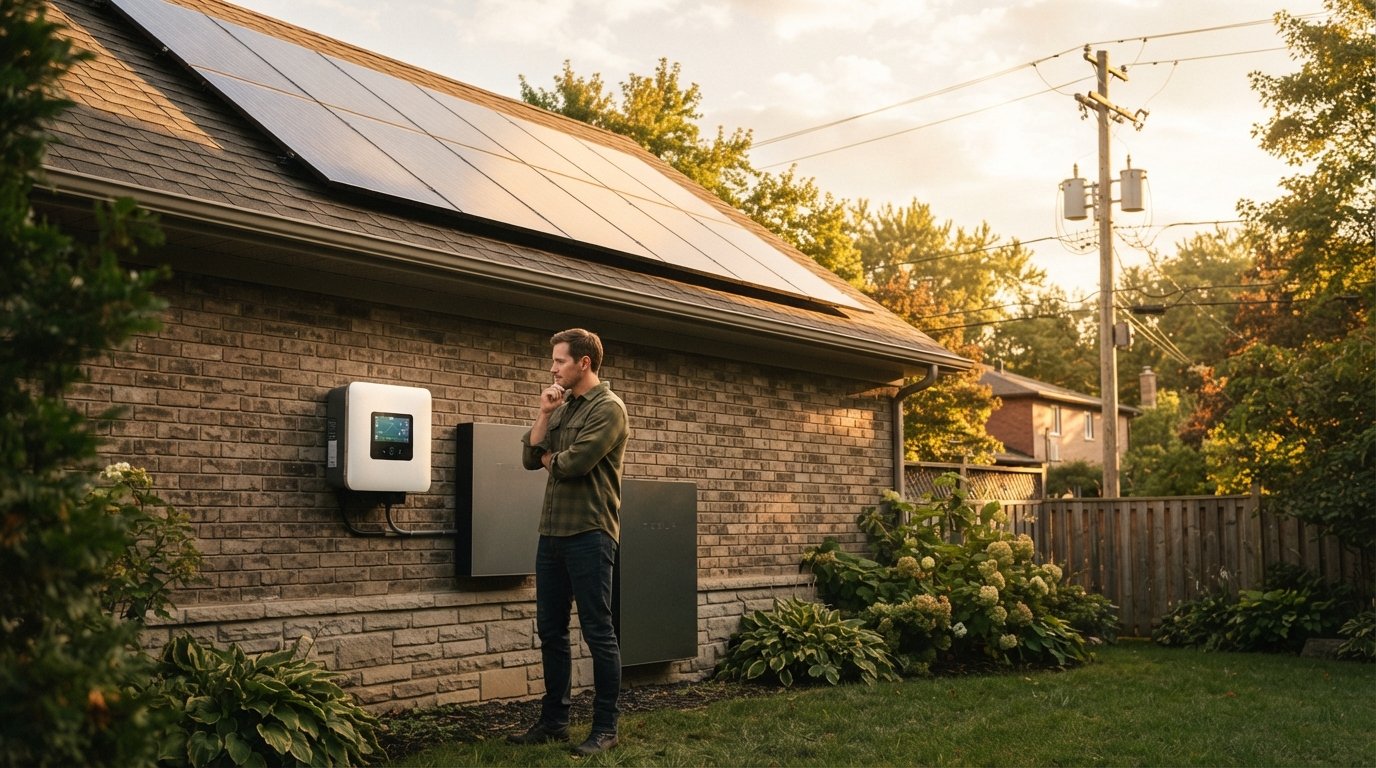
Managing Solar Power Export Limits and Utility Caps
Managing solar power export limits and utility caps is easier with storage and load shifting. Call (833)-212-3715 for expert help.

By Alex Carter
Learn more about Solar Panel Installation and Repair for guides, costs, and what to expect.
Compare Solar Panel Installation and Repair Pros Near You

Enter your ZIP code to compare top-rated local professionals and request free quotes.
Your solar panels are producing more electricity than your home needs, and your utility is paying you less than you expected, or nothing at all. That is the reality for a growing number of solar owners as utilities across the United States impose export limits and caps on residential and commercial solar systems. These policies are often buried in interconnection agreements and net metering rules, but they directly affect how much you save on your energy bill and how quickly your system pays for itself. Understanding why these limits exist and how to work within them is essential for anyone planning a solar installation or trying to maximize the return on an existing system.
This guide explains the mechanics of solar export limits, the reasons utilities impose them, and the practical strategies you can use to capture the value of your solar production even when the grid will not accept it. You will learn how battery storage, load shifting, smart inverter settings, and system sizing decisions interact, and how to choose the right approach for your situation. Whether you are designing a new system or looking for ways to improve an existing one, the goal is the same: minimize wasted production, maximize self-consumption, and protect your financial investment.
What Solar Export Limits and Utility Caps Actually Mean
When your solar panels generate more electricity than your home or business is using at that moment, the excess power flows back onto the utility grid. This is called solar export. In many jurisdictions, utilities are required to credit you for that exported energy through net metering or a similar program. However, utilities and regulators have increasingly placed limits on how much solar power can be exported, either by capping the size of the system that is eligible for export compensation, limiting the total amount of solar that can be interconnected in a given area, or restricting export to specific times of day.
There are several distinct types of limits you may encounter. A system size cap restricts the capacity of solar you can install and still receive full net metering credits. An export cap limits the amount of power you can send to the grid at any given moment, often expressed as a percentage of your system size or a fixed kilowatt threshold. A zero-export requirement prohibits any power from flowing back to the grid, effectively requiring you to consume all solar production on site or store it. Some utilities also impose time-of-day export restrictions, allowing exports only during certain hours when grid demand is high.
These limits are not arbitrary. Utilities manage the grid with a careful balance between generation and demand, and they have legitimate operational reasons for restricting solar exports. Understanding those reasons helps you anticipate what policies might apply to your project and how to design around them.
Why Utilities Impose Export Limits and Caps
The core reason utilities limit solar exports is grid stability. The electrical grid was designed for power to flow in one direction, from large centralized power plants to homes and businesses. When thousands of rooftop solar systems start pushing power back onto the grid, especially during sunny midday hours when demand is moderate, the utility must manage voltage fluctuations, potential back-feeding issues, and the risk of overgeneration. In areas with high solar penetration, these technical challenges become significant.
Another major driver is cost allocation. Net metering programs often credit solar owners at the full retail rate for exported energy, which is higher than the wholesale cost of electricity. Utilities argue that this creates a cost shift, where non-solar customers end up subsidizing the grid infrastructure costs that solar owners are not paying through their reduced bills. While this argument is debated, it has led regulators in many states to revise net metering rules, moving toward lower export compensation rates or requiring solar owners to pay fixed charges.
Finally, some export limits are designed to encourage self-consumption. By reducing or eliminating the value of exported power, utilities and regulators hope to incentivize solar owners to use their own production on site, which reduces strain on the grid and can be more efficient overall. This policy direction is particularly common in states with aggressive renewable energy goals but limited grid capacity to absorb distributed generation.
Common utility justifications for export limits include:
- Voltage management: High concentrations of solar exports can push local grid voltage above acceptable limits, affecting equipment and power quality for all customers.
- Infrastructure cost recovery: Utilities need to recover the fixed costs of maintaining poles, wires, and substations, which are not fully covered when solar owners reduce their bills through exports.
- Grid capacity constraints: Some distribution circuits and substations cannot handle the additional power flow from distributed solar without upgrades, which can be expensive and slow.
- Equity concerns: Regulators may worry that net metering benefits accrue primarily to wealthier households that can afford solar, while costs are spread across all ratepayers.
Regardless of whether you agree with these justifications, they shape the rules you must work within. The practical response is to design your system and your energy usage patterns to maximize the value you get from every kilowatt-hour your panels produce.
Battery Storage: Capturing Production That Would Otherwise Be Lost
The most direct way to deal with export limits is to store excess solar production on site instead of sending it to the grid. Battery storage systems, such as lithium-ion home batteries, allow you to capture midday solar generation and use it later in the evening or during grid outages. When your utility caps or eliminates export compensation, a battery can turn otherwise wasted production into usable energy that offsets your own consumption.
The economics of adding storage depend on several factors: the size of your solar array, your household energy usage patterns, the cost of electricity you are avoiding by not importing from the grid, and the cost of the battery system itself. In areas with high electricity rates and low or zero export compensation, the value of self-consumption is high, which improves the battery payback period. In areas with generous net metering still in place, the battery may be less critical financially, though it can still provide backup power and resilience benefits.
When sizing a battery for export-limited solar, the goal is to shift as much solar production as possible to times when you would otherwise be buying power from the grid. A typical residential battery has a usable capacity of 10 to 15 kilowatt-hours, which can cover a significant portion of evening electricity use for many homes. However, you should carefully analyze your load profile and solar production curve to determine the right size. Oversizing storage leads to unused capacity, while undersizing leaves potential savings on the table.
It is also important to understand how the battery interacts with your inverter and utility rules. Some utilities require special settings or additional equipment for storage systems, and some have separate interconnection processes. Your installer should be familiar with local requirements and should design the system to comply while maximizing self-consumption. For a broader look at how solar energy can be applied and maximized, see our guide on maximizing solar powered energy.
Load Shifting and Energy Management Strategies
Not every solar owner can or wants to install a battery, especially given the upfront cost. Load shifting is a lower-cost alternative that involves changing when you use electricity so that more of your solar production is consumed on site. The basic idea is to run high-energy appliances and systems during the middle of the day when your panels are producing at their peak, rather than in the evening when you would be importing power from the grid.
Common load-shifting tactics for solar owners include scheduling laundry, dishwashing, and electric vehicle charging during solar production hours. If you have a heat pump water heater or a pool pump, you can set timers to run them during the day. Some smart home energy management systems can automatically coordinate these loads based on real-time solar production, ensuring that you are using your own power rather than exporting it at a low or zero value.
Load shifting works best when you have flexibility in when you use electricity. Households with electric vehicles are particularly well suited because EV charging can be a large and flexible load. By charging your car during the day instead of overnight, you can absorb a significant amount of solar production that would otherwise be exported. Similarly, if you have electric space heating or cooling, preheating or precooling your home during solar hours can reduce evening demand.
Energy management systems and smart thermostats can help automate load shifting, but even simple behavioral changes can make a difference. The key is to think of your solar production as a resource to be used first on site, with exports as a secondary benefit rather than the primary goal.
Zero-Export Controls and Smart Inverter Settings
In some cases, utilities require zero-export systems, meaning that no power at all can flow from your solar system back to the grid. This is common in areas with grid constraints or where the utility has determined that exports would cause technical problems. A zero-export system uses controls, often integrated into the inverter or a separate device, to monitor power flow at the point of interconnection and curtail solar production if it would exceed the site's consumption.
Zero-export controls can be implemented in a few ways. The most common approach is to use a smart inverter that can measure the power flow at the utility meter and reduce solar output as needed to prevent export. This allows the system to continue producing power for on-site use while ensuring that no electricity flows back to the grid. Some systems use a combination of inverters and current transformers to achieve the same result.
Smart inverter settings are also relevant for systems that are allowed to export but are subject to limits. Modern inverters can be programmed with export limits, often expressed as a percentage of system capacity or a fixed kilowatt value. These settings ensure that the system complies with utility requirements without manual intervention. In addition, some inverters offer advanced grid support functions, such as volt-watt and volt-var settings, which can help maintain grid stability and may be required by utility interconnection standards.
When considering zero-export or limited-export controls, it is important to work with an installer who understands the local utility's requirements and can configure the system correctly. Improper settings can lead to nuisance tripping or non-compliance, which can delay interconnection approval or result in penalties.
Sizing the Array Down vs Adding Storage
When faced with export limits, one of the fundamental design decisions is whether to size the solar array to match on-site consumption or to add storage to capture excess production. Each approach has tradeoffs, and the right choice depends on your energy goals, budget, and the specifics of your utility's rules.
Sizing the array down means installing fewer panels so that your system produces closer to what you consume on site, minimizing exports. This approach is simpler and often less expensive upfront, since you avoid the cost of batteries and additional equipment. It also reduces the amount of production that is subject to export limits or zero-export controls. However, it may leave you with less solar production overall, which could be a disadvantage if your electricity usage grows in the future or if you want to maximize your renewable energy contribution.
Adding storage allows you to install a larger array and capture excess production for later use, effectively increasing your self-consumption without exporting to the grid. This approach can be more expensive but offers greater energy independence and resilience. It also allows you to take full advantage of your roof's solar potential, which may be important if you have limited space or want to maximize savings over time.
A third option is a hybrid approach: size the array moderately and add a modest amount of storage to capture the most valuable excess production, such as that generated during peak sun hours. This can balance cost and performance, especially in cases where export limits are partial rather than zero.
To decide between these options, consider the following factors:
- Your utility's export rules: Understand exactly what limits apply and how they are enforced. A zero-export requirement may push you toward storage or downsizing, while a partial export cap might allow a larger array with some storage.
- Your energy usage profile: Analyze when you use electricity and how much you could shift to solar hours. High evening usage favors storage, while flexible daytime loads favor load shifting and a moderately sized array.
- Your budget and financing options: Compare the upfront and lifetime costs of downsizing versus adding storage. Incentives for storage, such as the federal investment tax credit, can improve the economics of batteries.
- Your goals: If resilience and backup power are important, storage provides value beyond export management. If minimizing cost is the priority, downsizing may be more attractive.
Many homeowners find that a combination of modest storage and thoughtful load shifting provides the best balance, allowing them to install a reasonably sized array while keeping exports within limits. Your installer can model different scenarios and help you choose the configuration that maximizes your return on investment.
Working with Your Utility and Choosing the Right Installer
Navigating export limits and utility caps requires more than technical knowledge; it also requires understanding the interconnection process and building a good relationship with your utility. Each utility has its own application procedures, technical requirements, and timelines. Some utilities are more accommodating than others, and some offer flexibility or alternative programs for solar owners who are willing to accept certain conditions.
Before you finalize your system design, review your utility's interconnection rules and net metering tariff. Look for details on export limits, system size caps, and any additional requirements for storage or zero-export systems. If the rules are unclear, contact the utility directly or ask your installer to clarify. It is also worth checking whether your state or local government offers incentives for storage or for self-consumption, which can improve the economics of your chosen approach.
Choosing an experienced installer is critical. A good installer will be familiar with local utility requirements, will design a system that complies with export limits while maximizing your savings, and will handle the interconnection paperwork and approvals. They can also advise you on battery options, inverter settings, and load management strategies. To get started, you can request free quotes from vetted installers through FreeSolarPowerQuotes, which connects homeowners with reputable solar professionals.
When comparing installers, ask about their experience with export-limited systems and storage. Request references from customers who have faced similar utility rules. A knowledgeable installer can save you time, money, and frustration by getting the design and paperwork right the first time.
Financial and Practical Considerations for Export-Limited Systems
The financial case for solar changes when export limits are in play. Traditional net metering allowed solar owners to treat the grid as a free battery, exporting excess power and getting credit to use later. With export limits, that model breaks down, and the value of your solar production depends more on how much you can use on site. This means that the payback period for your system may be longer than you initially expected, and the optimal system size may be smaller than what would maximize production.
It is important to model your expected savings carefully, taking into account the specific export rules, your usage patterns, and the cost of any storage or load management equipment. A reputable installer can provide a detailed production and savings estimate that reflects these factors. Be wary of any proposal that assumes full retail credit for all exports if your utility has imposed limits.
Beyond the financials, consider the practical aspects of living with an export-limited system. You may need to adjust your habits to use more electricity during solar hours, or you may rely on a battery to cover evening loads. These changes are manageable for most households, but they are worth discussing with your family or business colleagues before you commit.
Finally, keep in mind that utility rules can change. Policies that are in place today may be revised in the future, either becoming more restrictive or more favorable. Designing a system with some flexibility, such as an inverter that can be reprogrammed or a battery that can be expanded, can help you adapt to future changes without a major overhaul.
Managing solar power export limits and utility caps is ultimately about making informed choices that align with your energy goals and your local rules. By understanding the reasons behind these limits, exploring storage and load-shifting options, and working with experienced professionals, you can design a solar system that delivers strong savings and long-term value, even when the grid will not take all the power you produce. For personalized guidance and quotes from qualified installers, reach out to NewSolarQuotes or call (833)-212-3715 to speak with a solar specialist.
Learn more about Solar Panel Installation and Repair for guides, costs, and what to expect.
Compare Solar Panel Installation and Repair Pros Near You
Enter your ZIP code to compare top-rated local professionals and request free quotes.