
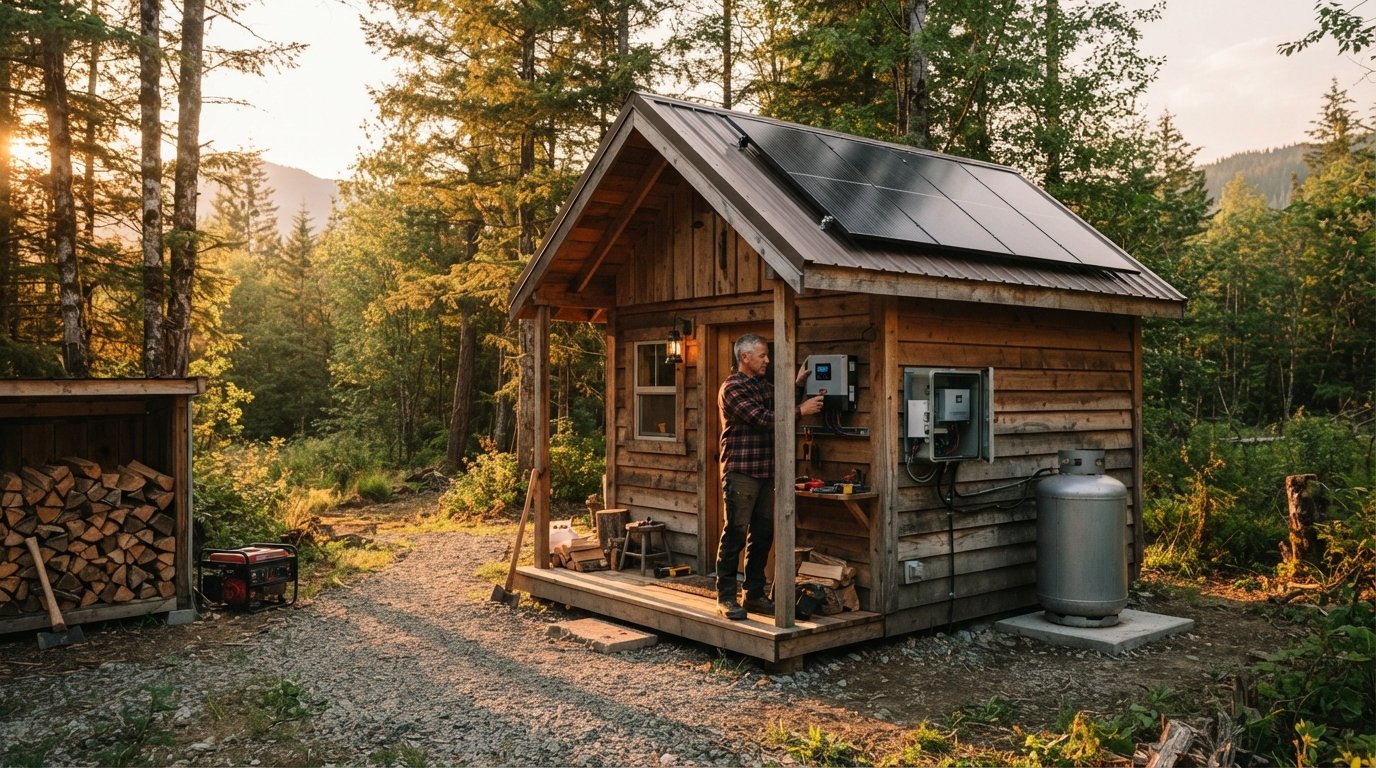
Off Grid Solar System Cost for Cabins and Remote Homes
Off grid solar system cost for cabins and remote homes ranges from $8,000 to $90,000. See what drives the total and how to cut it.
By Scott Thompson
Learn more about Solar Panel Installation and Repair for guides, costs, and what to expect.
Compare Solar Panel Installation and Repair Pros Near You

Enter your ZIP code to compare top-rated local professionals and request free quotes.
Remote living promises quiet mornings, dark skies, and a kind of independence that grid-tied suburbs cannot match. It also comes with one question that stops many buyers cold: what does power actually cost when there is no utility pole in sight? The honest answer is that an off grid solar system costs far less than it did a decade ago, but the number you pay depends on how much energy you use, how much sun your site receives, and how many days of backup you want for cloudy stretches. Understanding the real cost structure before you buy equipment is the difference between a system that runs your cabin for twenty years and one that leaves you running a generator every evening.
This guide breaks down realistic pricing for cabins and remote homes in 2026, explains what drives the total, and shows where you can trim expenses without sacrificing reliability. If you are still comparing general pricing benchmarks before narrowing down to an off grid build, our breakdown of solar system price in 2026 gives useful context for how grid-tied and off grid numbers diverge.
What an Off Grid Solar System Actually Includes
A grid-tied solar installation is simple: panels, an inverter, and a connection to the utility. An off grid system replaces the utility with a battery bank and adds the equipment needed to manage power without any outside support. That added complexity is the single biggest reason off grid solar costs more per kilowatt than a comparable grid-tied array, even though panels themselves have never been cheaper.
Every standalone system, whether it powers a weekend hunting cabin or a full-time remote home, shares the same core components. Each one affects your total budget:
- Solar array: Panels sized to cover daily consumption plus charging losses, typically 20 to 30 percent larger than a grid-tied array for the same load.
- Battery bank: Lithium iron phosphate (LiFePO4) is now the standard for new builds, though some budget projects still use flooded lead-acid.
- Charge controller: MPPT controllers harvest 15 to 30 percent more energy than older PWM models, especially in cold weather.
- Inverter or inverter-charger: Converts DC power to household AC and manages generator or shore power input when available.
- Balance of system: Mounting hardware, wiring, combiner boxes, disconnects, and monitoring equipment.
Because there is no grid to absorb shortfalls, every component must be sized for the worst week of the year, not the average day. That oversizing is intentional and it is the main reason a remote cabin system can cost two to three times what a same-sized grid-tied array would cost before incentives.
Off Grid Solar System Cost for Cabins and Remote Homes: Real 2026 Numbers
For 2026, installed off grid solar pricing generally falls into four tiers based on daily energy consumption. These figures include equipment, professional installation, and basic commissioning, though they exclude any generator you may add as backup. Actual quotes vary by region, site access, and labor rates, so treat them as planning benchmarks rather than fixed prices.
- Small cabin, 1 to 2 kWh per day (lights, phone charging, small fridge): roughly $8,000 to $15,000.
- Mid-size cabin, 3 to 5 kWh per day (adds TV, laptop, water pump, fuller fridge): roughly $15,000 to $30,000.
- Full-time remote home, 8 to 12 kWh per day (well pump, appliances, occasional AC): roughly $30,000 to $55,000.
- Large remote home, 15 to 20+ kWh per day (central AC, EV charging, shop tools): roughly $55,000 to $90,000 or more.
These ranges assume a reasonably sunny location, decent southern exposure, and a battery bank sized for two to three days of autonomy. A site in the Pacific Northwest with heavy winter cloud cover may need 40 to 50 percent more array capacity to hit the same reliability, which pushes the total toward the upper end of each tier. Conversely, a high-desert cabin with excellent sun and modest loads can land at the low end.
It also helps to think in terms of cost per watt. Most 2026 off grid installations land between $3.50 and $6.00 per watt of installed array capacity, compared with roughly $2.50 to $3.50 per watt for grid-tied systems. The premium is almost entirely battery storage, which can account for 40 to 60 percent of total project cost on a full-time home.
The Battery Bank: Your Single Largest Line Item
Batteries dominate off grid budgets, and the chemistry you choose shapes both upfront cost and long-term value. Lithium iron phosphate batteries have largely replaced lead-acid for new installations because they tolerate deeper discharges, need no watering, and last roughly three times as long. That longer lifespan often makes them cheaper per usable kilowatt-hour over a 15-year horizon, even though the sticker price is higher today.
As a rough planning figure, expect to pay $700 to $1,200 per usable kilowatt-hour of lithium storage installed, including racking, cabling, and integration. A remote home needing 24 kWh of usable storage (about two days of average consumption) is therefore looking at $17,000 to $29,000 just for batteries. Lead-acid can cut that upfront figure by 30 to 40 percent, but you will replace the bank sooner and you must design a ventilated, temperature-stable battery room.
Two design choices reliably reduce battery cost without hurting comfort. First, shift heavy loads to daytime, running the well pump, washing machine, or shop tools while the array is producing, so stored energy only covers overnight and cloudy periods. Second, choose efficient appliances and LED lighting from the start; every watt you avoid at the load shrinks the array, the battery, and the inverter simultaneously, compounding savings across the whole system.
How Location and Site Conditions Move the Price
Two cabins with identical floor plans can receive quotes that differ by $15,000 or more, and geography usually explains the gap. Peak sun hours range from about 3.0 in parts of the upper Midwest and Pacific Northwest to over 6.0 in the Southwest. A site with 3.5 peak sun hours needs roughly 70 percent more panel capacity than one with 6.0 to produce the same energy, and that extra array also demands a larger charge controller and more mounting hardware.
Site access matters just as much. Remote properties often require off-road equipment, long cable runs from a sunny clearing to the house, or trenching through rock. Each of these adds labor and materials that never appear in equipment catalogs. Shading from trees is another quiet budget killer: trimming or removing trees may be necessary, and partial shade can force you to split the array into multiple strings with separate controllers.
Climate also influences battery sizing. Cold reduces usable lithium capacity, so unheated battery rooms in northern climates need either insulation and heating pads or a 10 to 20 percent capacity buffer. Hot climates accelerate battery aging, which argues for shaded or conditioned storage. Building these realities into the design from day one is far cheaper than retrofitting after the first winter.
Ways to Reduce Your Off Grid Solar Cost
Off grid power is a pay-now-or-pay-later proposition, but there are legitimate strategies that lower the total without compromising reliability. The most effective approach is to attack consumption before you size equipment, because every kilowatt-hour you eliminate removes cost from the array, battery, and inverter at once.
Proven cost-reduction tactics for cabins and remote homes include:
- Run a load audit first. List every appliance and its daily watt-hours, then eliminate or upgrade the biggest offenders, such as old refrigerators and incandescent lighting.
- Use propane strategically. Cooking, space heating, and water heating are far cheaper on propane than on solar electricity, and they can cut your electrical load by half.
- Buy a quality inverter-charger. It lets you integrate a modest generator for winter backup, which may allow a smaller battery bank than full autonomy would require.
- Phase the build. Start with a core system sized for essential loads, then add panels and batteries as budget allows, provided the inverter and wiring are sized for the final plan.
- Claim available incentives. The federal residential clean energy credit has covered a significant share of off grid solar costs, and some states add their own rebates; verify current rules with a tax professional.
Pairing a smaller battery bank with a generator is one of the most practical compromises for part-time cabins. If you visit mostly in summer, sizing for three days of autonomy is overkill; one day plus a backup generator can cut $8,000 to $15,000 from a mid-size project. For full-time homes, though, generous storage is usually worth the money because generator fuel and maintenance add up quickly over years of daily operation.
Comparing Off Grid Quotes and Avoiding Costly Mistakes
Because off grid design is more custom than grid-tied work, installer quality varies widely and quotes are harder to compare apples to apples. A low bid may simply omit the battery capacity, surge rating, or monitoring you assumed was included. Always ask for an itemized proposal showing array size, battery usable capacity, inverter continuous and surge ratings, and the autonomy days assumed in the design.
It also pays to work with professionals who specialize in standalone systems rather than general electrical contractors. A designer who understands depth of discharge, temperature derating, and generator integration will produce a system that survives real winters, not just a sunny commissioning day. Platforms such as SolarEnergy.ai aggregate solar information and connect homeowners with vetted professionals, which can shorten the search for an installer who actually knows off grid design.
Finally, resist the temptation to buy equipment piecemeal online without a design. Mismatched voltages, undersized wire, and incompatible charge controllers are the most common causes of disappointing off grid performance, and fixing them later often costs more than hiring a designer upfront. A professional plan typically adds 5 to 10 percent to the project but protects the other 90 percent of your investment.
Off grid solar for cabins and remote homes is a significant purchase, but the math has shifted decisively in buyers' favor as battery prices have fallen and lithium technology has matured. A modest weekend cabin can now be powered reliably for the price of a used truck, while a full-time remote home costs roughly what a kitchen remodel would run. Start with an honest load audit, size for your worst week rather than your best, and compare itemized quotes from installers who specialize in standalone systems. Do that, and your remote property can deliver the independence you bought it for, with power that quietly pays you back every month the utility never sends a bill.
Learn more about Solar Panel Installation and Repair for guides, costs, and what to expect.
Compare Solar Panel Installation and Repair Pros Near You
Enter your ZIP code to compare top-rated local professionals and request free quotes.