
Residential Geothermal Heat Pump: Renewable Energy Guide
A residential geothermal heat pump can cut heating and cooling costs by up to 65 percent. This renewable energy guide explains how they work, costs, and incentives.

By Benjamin Kalif
Find Local Pros Near You

Enter your ZIP code to compare top-rated local professionals and request free quotes.
Imagine cutting your home's heating and cooling costs by up to 65 percent while slashing carbon emissions, all with a system that quietly hums beneath your feet. That is the promise of a residential geothermal heat pump, a renewable energy technology that leverages the stable temperature of the earth to heat and cool your home efficiently. Unlike solar panels that depend on sunlight, geothermal systems deliver consistent performance day and night, in any climate. This guide will walk you through how geothermal heat pumps work, what they cost, available incentives, and how to determine if one is right for your property. Whether you are building new or retrofitting an existing home, understanding this technology is the first step toward energy independence and long-term savings.
How Residential Geothermal Heat Pumps Work
At its core, a geothermal heat pump (GHP) does not generate heat by burning fuel. Instead, it moves heat between your home and the ground. The ground maintains a relatively constant temperature, typically between 45 and 75 degrees Fahrenheit depending on your location, just a few feet below the surface. In winter, the system extracts heat from the earth and transfers it indoors. In summer, the process reverses, pulling heat from your home and depositing it into the cooler ground.
The system consists of three main components: the ground loop, the heat pump unit, and the distribution system (ductwork or radiant floor). The ground loop is a series of buried pipes filled with a water-antifreeze solution that circulates to exchange heat. The heat pump unit compresses and expands refrigerant to concentrate the heat, and the distribution system delivers conditioned air or water throughout your home.
There are four common types of ground loop configurations, each suited to different lot sizes and soil conditions:
- Horizontal loops: Trenches 4 to 6 feet deep, requiring significant land area but lower installation cost.
- Vertical loops: Boreholes 100 to 400 feet deep, ideal for small lots but higher drilling costs.
- Pond or lake loops: Submerged coils in a nearby water body, economical if a suitable water source exists.
- Open-loop systems: Using well water as a heat exchange medium, efficient but dependent on water quality and local regulations.
The efficiency of a geothermal heat pump is measured by its coefficient of performance (COP) for heating and energy efficiency ratio (EER) for cooling. Modern units achieve COPs of 3 to 5, meaning for every unit of electricity used, they deliver 3 to 5 units of heat. This far surpasses conventional furnaces and air conditioners, which typically operate at efficiencies below 100 percent. That is why geothermal is considered one of the most efficient renewable energy solutions available today.
Benefits of Geothermal Heat Pumps for Homeowners
Switching to a geothermal heat pump offers a multitude of benefits that extend beyond energy savings. First and foremost is the dramatic reduction in utility bills. According to the U.S. Department of Energy, geothermal heat pumps can reduce heating costs by 30 to 70 percent and cooling costs by 20 to 50 percent compared to traditional systems. For a typical American home, that translates to hundreds or even thousands of dollars saved annually.
Beyond cost savings, geothermal systems provide superior comfort. They deliver consistent, even temperatures without the hot and cold spots common with forced-air furnaces. They also operate quietly, with no outdoor compressor unit to disturb your peace or your neighbors. Because they do not burn fossil fuels, they produce no carbon monoxide or other greenhouse gases on site, improving indoor air quality and reducing your carbon footprint.
Durability is another key advantage. The underground loop is warrantied for 25 to 50 years, and the indoor heat pump unit typically lasts 20 years or more. With proper maintenance, a geothermal system can outlast two or three conventional HVAC systems. Additionally, the federal government offers a 30 percent tax credit for geothermal installations, with no cap, making the upfront investment more affordable. Many states and utilities add their own rebates and incentives on top of that.
Finally, geothermal heat pumps add value to your home. Real estate studies indicate that energy-efficient homes sell faster and for higher prices. A geothermal system is a tangible asset that appeals to environmentally conscious buyers and those seeking predictable energy costs. As you plan your renewable energy upgrade, consider pairing geothermal with solar to maximize savings. For a deeper dive into solar options and how they complement geothermal, explore our guide on how to save on energy bills and gain independence.
Costs and Financial Incentives
The upfront cost of a residential geothermal heat pump system is higher than conventional HVAC, but the long-term savings and incentives often make it the more economical choice over the system's lifespan. A typical installation ranges from $15,000 to $40,000, depending on loop type, home size, and local labor rates. While that may seem steep, the federal tax credit covers 30 percent of the total cost, including installation, with no upper limit. Some states offer additional credits or rebates that can cover another 10 to 20 percent.
To illustrate the financial picture, consider a 2,500-square-foot home in a moderate climate. A vertical loop system might cost $25,000. After the 30 percent federal tax credit, the net cost drops to $17,500. Over 20 years, the energy savings compared to a traditional system could exceed $30,000, resulting in a net positive return. Financing options such as property-assessed clean energy (PACE) loans or home equity loans can spread the cost over many years, often with payments lower than the monthly energy savings.
When evaluating incentives, always verify current programs with your state energy office and local utilities, as they change frequently. The Database of State Incentives for Renewables and Efficiency (DSIRE) is an excellent resource. Also, consult a qualified tax professional to ensure you claim all eligible credits. Keep in mind that the federal tax credit is available for primary residences and certain second homes, but not for rental properties. For commercial installations, different rules apply.
To help you compare the financial impact, here is a simple framework:
- Estimate your current annual heating and cooling costs. Gather 12 months of utility bills.
- Obtain quotes from at least three certified geothermal installers. Ensure they perform a Manual J load calculation.
- Calculate net cost after incentives. Subtract federal, state, and utility rebates from the quoted price.
- Project annual savings. Use the installer's estimates or online calculators, but be conservative.
- Determine payback period. Divide net cost by annual savings to see how many years until you break even.
Most homeowners find that with incentives, the payback period is between 5 and 10 years, after which the system essentially provides free heating and cooling for decades. That is a compelling return on investment, especially when you factor in the environmental benefits.
Is a Geothermal Heat Pump Right for Your Home?
Geothermal heat pumps are not feasible for every property, but they are more versatile than many people assume. The primary requirement is sufficient land area or a suitable water source for the ground loop. Horizontal loops need a large yard, typically at least half an acre. Vertical loops can fit on smaller lots but require drilling equipment and may be restricted by local zoning. If you have a pond or well, an open-loop or pond-loop system might be an option.
Soil conditions also matter. Sandy or rocky soil can increase drilling costs, while clay or loam is easier to work with. A professional site assessment will determine the best loop type for your property. In addition, your home's existing ductwork must be compatible or upgraded. Geothermal systems can also be paired with radiant floor heating, which is highly efficient and comfortable.
Climate is another factor. While geothermal works in all climates, the savings are most dramatic in regions with extreme temperature swings, where traditional systems struggle. In milder climates, the payback period may be longer, but the comfort and environmental benefits remain. If you are also considering solar, combining geothermal with solar panels can create a near-zero-energy home. For more information on integrating renewable systems and maximizing incentives, visit SolarEnergy.ai, a comprehensive platform for solar and renewable energy insights.
Before committing, check local regulations. Some areas require permits for well drilling or ground loop installation. Homeowners associations may have rules about yard modifications. It is also wise to consult with a certified geothermal designer who can perform a load calculation and design a system tailored to your home's specific needs. The Geothermal Exchange Organization (GEO) and International Ground Source Heat Pump Association (IGSHPA) are good resources for finding accredited professionals.
Installation Process and What to Expect
Installing a geothermal heat pump is a multi-step process that typically takes several days to a few weeks, depending on the loop type and site conditions. Here is a general timeline:
- Site assessment and system design: A qualified installer evaluates your property, performs a load calculation, and designs the loop and indoor components.
- Permitting: The installer obtains necessary permits from local authorities, which can take a few weeks.
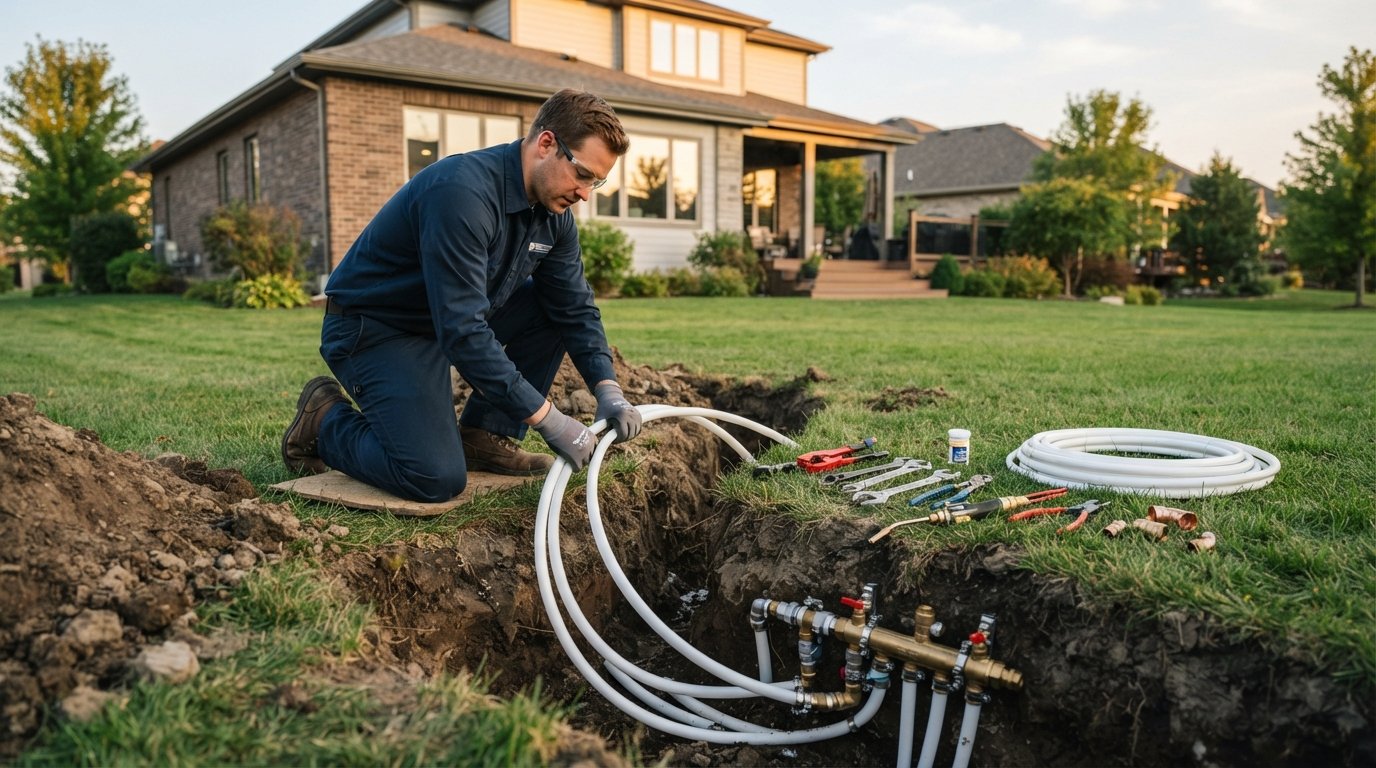
- Ground loop installation: For horizontal loops, trenches are dug; for vertical, boreholes are drilled. Pipes are laid and connected to a manifold.
- Indoor unit installation: The heat pump unit, ductwork, and thermostat are installed inside the home.
- Commissioning and testing: The system is charged with refrigerant, purged of air, and tested to ensure proper operation.
- Landscaping restoration: Any disturbed lawn or landscaping is restored.
During the process, you may need to be without heating or cooling for a day or two, but most installers work to minimize disruption. It is important to hire a certified and experienced installer, as improper installation can reduce efficiency and lead to costly repairs. Ask for references and verify credentials. A well-installed geothermal system will provide decades of reliable service with minimal maintenance, which typically involves changing air filters and having the loop pressure checked every few years.
Maintenance and Longevity
One of the most attractive features of geothermal heat pumps is their low maintenance requirements. The ground loop itself is made of high-density polyethylene pipe that is resistant to corrosion and should last 50 years or more. The indoor heat pump unit has few moving parts and is protected from outdoor weather, so it typically lasts 20 to 25 years, significantly longer than conventional air conditioners or furnaces.
Routine maintenance includes checking and replacing air filters every 1 to 3 months, cleaning the condensate drain, and having a professional inspect the refrigerant charge and electrical components annually. Unlike furnaces, there is no combustion to produce soot or carbon monoxide, so no chimney or vent cleaning is needed. This simplicity translates to lower ongoing costs and fewer headaches for homeowners.
If you are considering a geothermal system, start by getting multiple quotes from certified installers. Compare not just price, but also efficiency ratings, warranty terms, and experience. Take advantage of federal and state incentives to reduce your upfront cost. And remember that a geothermal heat pump is a long-term investment that pays dividends in comfort, savings, and environmental stewardship. With proper planning, you can enjoy the benefits of renewable energy for decades to come.