
Shade Analysis Report for Home Solar: What It Shows
A shade analysis report reveals production loss percentages and optimizer recommendations. Call (833)-212-3715 to discuss your solar options.

By Amelia Griffin
Learn more about Solar Panel Installation and Repair for guides, costs, and what to expect.
Compare Solar Panel Installation and Repair Pros Near You

Enter your ZIP code to compare top-rated local professionals and request free quotes.
You have probably heard that shade is the enemy of solar panels, but you may not realize just how much a single tree branch can cost you over 25 years. A shade analysis report for home solar is the tool that quantifies that impact, turning vague concerns into hard numbers so you can make an informed decision about system design, tree trimming, or even walking away from a problematic roof. This report is not a sales gimmick; it is a technical document that models sun movement, obstructions, and panel performance to predict exactly how much energy your system will produce. Understanding what it shows, and what it does not, puts you in control when comparing installer proposals.
How Installers Model Shade from Trees, Chimneys, and Neighboring Structures
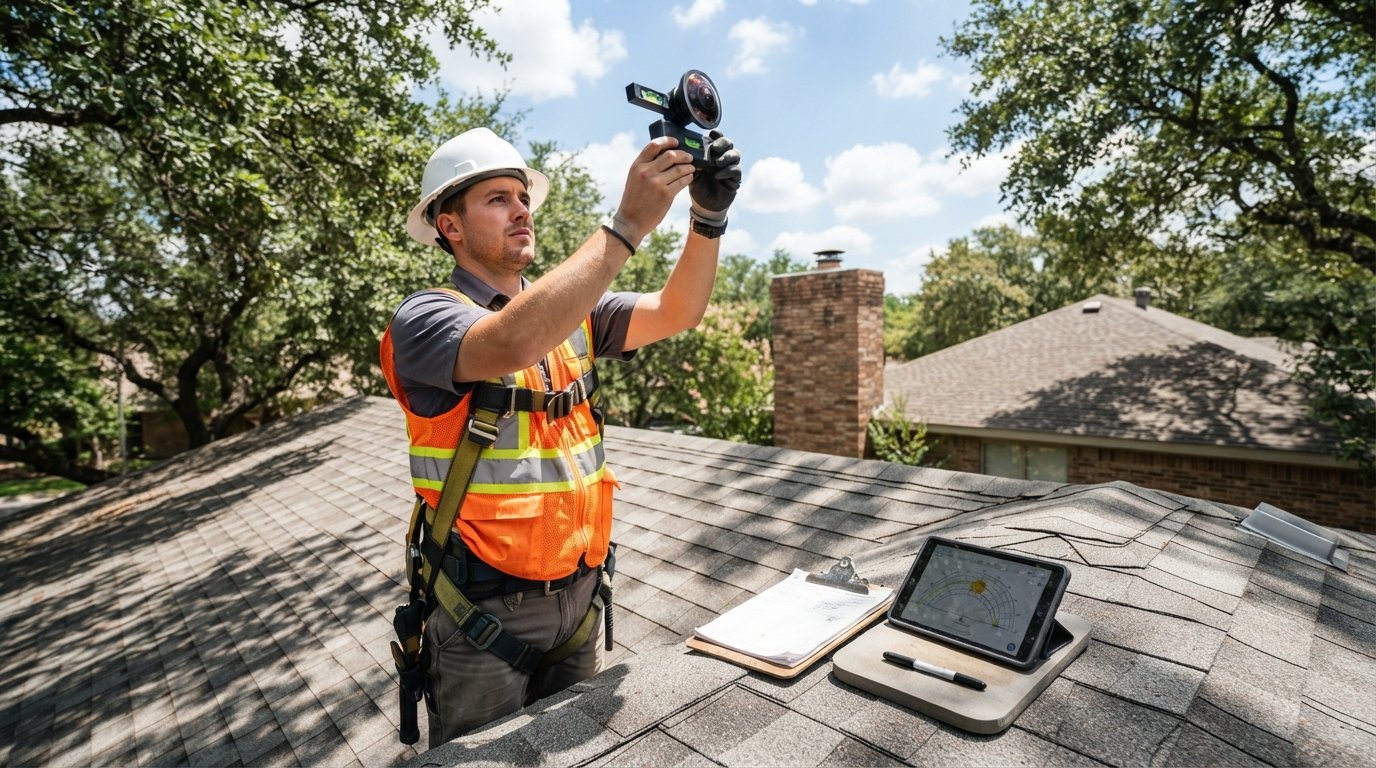
Creating a shade analysis report starts with capturing the physical environment around your roof. Installers use a combination of satellite imagery, on-site photography, and specialized tools like a Solar Pathfinder or a Solmetric SunEye. These devices take a fisheye photo of the sky from the proposed panel location and overlay the sun's path for different times of the year. The result is a map of exactly which obstructions block the sun, and when. For a more detailed look at how solar production translates to savings, see our guide on solar ROI calculation.
Trees are the most common culprit, but not all shade is equal. A deciduous tree that loses its leaves in winter may cast minimal shade during the months when the sun is low, while an evergreen casts year-round shade. Chimneys, dormers, and nearby buildings also matter, especially if they cast shadows during the morning or late afternoon when the sun is at a low angle. The report will typically include a shade rose diagram that shows the sun's path and the obstructions in a circular format, with each obstruction color-coded by the time of day and season.
Software then simulates the sun's position every few minutes throughout the year and calculates the percentage of solar irradiance lost due to each obstruction. This is not a rough guess; it is a physics-based model that accounts for your latitude, roof pitch, panel orientation, and local weather patterns. The output is a production estimate that is far more accurate than a simple square-footage calculation. Some installers will also use drone imagery to create a 3D model of your roof and surrounding vegetation, which improves accuracy for complex roofs.
Interpreting Production Loss Percentages and Module-Level Optimizer Recommendations
After the modeling is complete, the report presents production loss percentages. You will see an overall shade loss figure, often broken down by month or season. For example, a report might show 12 percent annual shade loss, but 25 percent in December and 3 percent in June. This seasonal variation is critical because it tells you when your system will underperform and whether that aligns with your household's energy needs. If you use more electricity in summer for air conditioning, winter shade may not matter much. If you have electric heating, winter shade could be a bigger problem.
Module-level optimizers or microinverters are often recommended when shade cannot be avoided. These devices allow each panel to operate independently, so a shaded panel does not drag down the performance of the entire string. The report will indicate whether your shade profile justifies the extra cost. Here is how to read the recommendation:
- Low shade (under 10 percent annual loss): A standard string inverter is usually fine, and optimizers may not provide a meaningful return on investment.
- Moderate shade (10 to 20 percent): Optimizers or microinverters can recover a significant portion of lost production, and the report will show a before-and-after estimate.
- Heavy shade (over 20 percent): Equipment upgrades may not be enough, and the report might recommend alternative panel locations, tree trimming, or a smaller system.
Pay attention to the difference between unmitigated and mitigated production estimates. A good report will show both, so you can see the value of optimizers in dollars and cents. If the mitigated estimate still shows high losses, the problem is likely too severe for electronics to solve. The report may also flag specific panels that are disproportionately affected, which helps the installer decide where to place optimizers or how to wire the system.
Preparing for a Shade Assessment Before Requesting Quotes
You can do a lot to make the shade assessment more accurate and useful. Before the installer arrives, note the times of day when your roof is shaded and identify the sources. Take photos from the proposed panel locations at different times of day, especially in the morning and late afternoon. If you have trees that you are willing to trim or remove, mention that upfront so the installer can model both scenarios. Clear access to your roof and attic is also important, as the installer may need to inspect structural elements or wiring paths.
When you request quotes, ask specifically whether a shade analysis report is included. Some installers provide a basic estimate without a formal report, which can lead to unpleasant surprises. A professional shade analysis is a standard part of a good proposal, and it should be based on an on-site visit or high-resolution imagery, not just a satellite guess. You should also ask about the software used and whether the report includes a shade rose diagram and seasonal production estimates. For homeowners in Texas and other sunny states, shade analysis is still important because even a few large trees can significantly impact production.
If you are comparing multiple installers, make sure each one provides a shade report so you can compare apples to apples. A lower quote that ignores shade may end up costing more in the long run due to underproduction. At the same time, do not assume that the most expensive report is the best; the quality of the analysis matters more than the brand of the tool. Ask the installer to walk you through the findings and explain any assumptions. This is also a good time to discuss panel layout and whether microinverters or optimizers are included in the quote.
When Trimming or Removal Is Better Than Equipment Upgrades
Equipment upgrades like optimizers and microinverters can mitigate shade, but they cannot create energy from nothing. If a tree casts a dense shadow over a large portion of your roof for several hours a day, no amount of electronics will fully recover that lost production. In these cases, trimming or removing the tree may be the more cost-effective solution. The shade report can help you quantify the trade-off: it can model production with and without the tree, so you can compare the cost of tree removal against the gain in energy production over the system's lifetime.
However, tree removal is not always desirable or permitted. Mature trees provide shade, beauty, and property value, and some municipalities have ordinances protecting them. Trimming may be a compromise, but it requires ongoing maintenance. The report can show you which specific branches are causing the most shade, allowing you to target trimming efforts. In some cases, pruning just a few branches can recover most of the lost production. If you are not sure where to start with installer selection, resources like ContractorHomeQuotes offer guidance on planning home improvement projects and connecting with professionals.
Another option is to adjust the panel layout. The shade report may reveal that shifting the array to a different roof plane or ground-mounted location avoids the worst shade. This is often cheaper than tree removal and can be just as effective. A good installer will present these alternatives and help you weigh the costs and benefits. Remember that shade analysis is a planning tool, not a verdict; it gives you the data to make a decision that fits your budget and priorities.
Finally, consider the long-term trajectory of your trees. A small tree today may become a large shade producer in 10 years, while a mature tree may be nearing the end of its life. The shade report is a snapshot in time, so it is worth revisiting if your landscape changes significantly. Some installers will provide a production guarantee that accounts for expected tree growth, but you should read the fine print. Ultimately, the best shade analysis report is one that you understand and that leads to a system design you are confident in.
Understanding a shade analysis report for home solar what it shows empowers you to ask better questions, compare proposals fairly, and avoid costly mistakes. Whether you are in the early stages of research or ready to request quotes, insist on a proper shade assessment and use it to guide your decisions. Your solar investment will perform better, and you will have realistic expectations from day one.