
Solar Installation Miami Florida: Save on Energy Bills
A practical guide for Miami homeowners considering solar panels. Learn how solar installation can reduce electricity bills, increase energy independence, and leverage Florida’s sunshine.

By Benjamin Kalif
Learn more about Solar Panel Installation and Repair for guides, costs, and what to expect.
Compare Solar Panel Installation and Repair Pros Near You
Enter your ZIP code to compare top-rated local professionals and request free quotes.
If you’re a Miami homeowner, you’ve likely seen your electricity bill climb steadily over the years. The combination of Florida’s heat and rising utility rates can make energy costs a significant monthly burden. This reality is leading more and more residents to search for solar installation Miami Florida as a practical solution. By harnessing the abundant sunshine, you can dramatically reduce your energy bills and become less dependent on the traditional power grid.
Understanding Solar Installation Miami Florida
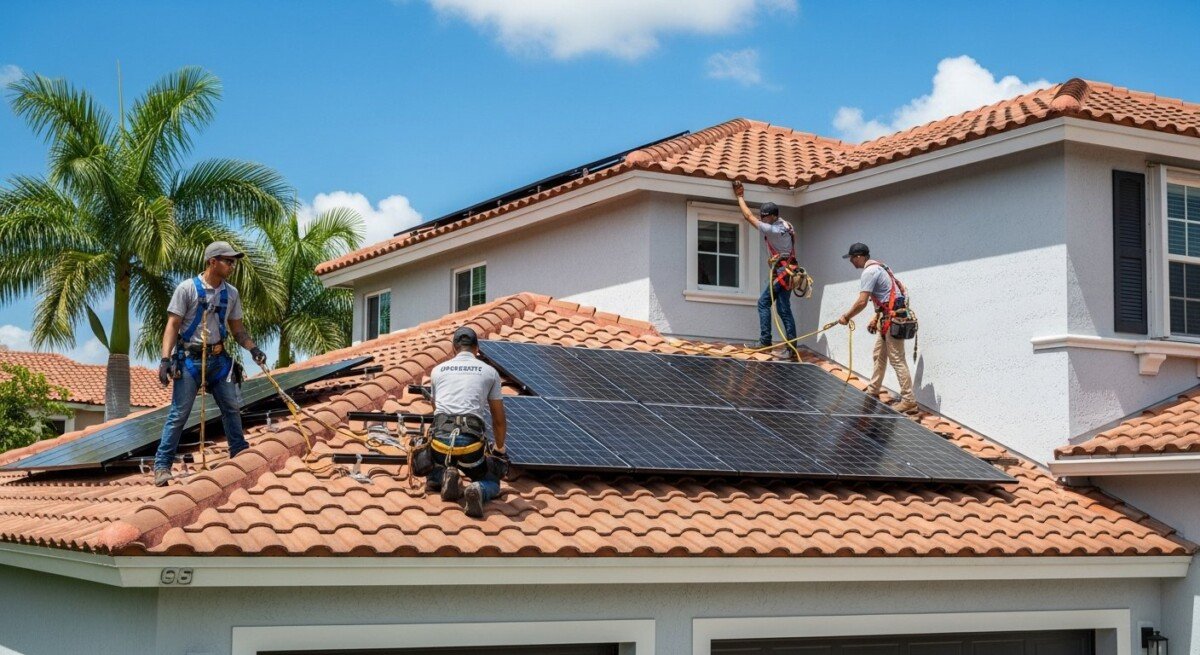
Solar installation in Miami involves placing photovoltaic (PV) panels on your home to convert sunlight directly into electricity. These panels capture photons from the sun and generate a direct current (DC), which an inverter then converts into the alternating current (AC) that powers your home. It’s a clean, reliable technology that turns your roof into a personal power plant.
The process is managed by professional installers who handle everything from initial assessment to final activation. They ensure your system is correctly sized, properly permitted, and seamlessly integrated with your home’s electrical system. For many, the goal is straightforward: to use the sun’s free energy to offset a large portion of their electricity consumption from Florida Power & Light (FPL).
What Are Photovoltaic Panels?
Photovoltaic panels, or solar panels, are made up of many solar cells, typically composed of silicon. When sunlight hits these cells, it knocks electrons loose, creating an electric current. This is the fundamental process that allows your system to generate power silently and without any moving parts, requiring minimal maintenance for decades.
Why Solar Energy Is Becoming More Popular
Homeowners in Miami are switching to solar power for several compelling reasons. First and foremost are the financial benefits. With electricity prices subject to increase, locking in a lower, predictable energy cost provides long-term stability and savings. Solar panels are a proven investment that pays for itself over time.
Environmental concerns also play a major role. Solar energy produces no air pollution or greenhouse gases during operation. For eco-conscious Floridians, especially those concerned about sea-level rise and climate resilience, generating clean power is a tangible way to contribute to a healthier planet.
Finally, the desire for energy independence is a powerful motivator. Having your own power source provides security against grid outages and utility rate hikes. Combined with strong government incentives, these factors make solar an increasingly smart and popular choice for Miami residents.
If you are considering solar power for your home, comparing installation quotes can help you understand your options. Request a free solar quote or call (555) 123-4567 to learn more.
Common Questions Homeowners Have About Solar
It’s normal to have questions before making a significant home improvement decision. Many homeowners wonder about the upfront cost and how long it will take to see a return on their investment. Others are concerned about whether their roof is suitable or if solar will work during Florida’s rainy season.
Professional installers are experts at addressing these concerns with clear, factual information. They can provide detailed financial analyses, explain how net metering works with your utility, and assess your roof’s condition and sun exposure. Getting answers to these common questions is a crucial first step.
- How much does a solar panel system cost in Miami?
- Will solar panels work on my specific roof type (clay tile, flat, etc.)?
- What happens during a hurricane or severe weather?
- Do I need battery storage, or is a grid-tied system sufficient?
- How does net metering work with FPL?
- What maintenance is required for the system?
How Solar Panel Installation Works
The installation process is designed to be straightforward and managed entirely by your chosen professional team. It begins with a detailed evaluation of your home and energy needs. The installer will not only look at your roof but also analyze your past electricity bills to design a system that matches your consumption.
Once you approve the design, the installer handles all the necessary permits and paperwork with Miami-Dade County and your utility company. This is a critical step where experience matters, as local regulations and utility interconnection requirements must be followed precisely. A reputable installer guides you through this entire process.
- Home Energy Assessment: An expert evaluates your roof, electrical panel, and energy usage.
- System Design & Proposal: A custom solar plan is created to maximize your savings.
- Permits & Approvals: The installer secures all local permits and utility interconnection agreements.
- Panel Installation: The system is mounted, wired, and connected to your electrical panel with minimal disruption.
- System Activation & Inspection: After a final inspection, your system is turned on and starts producing power.
Speaking with experienced installers can help you determine the best solar solution for your home. Compare solar quotes here or call (555) 123-4567 to explore available options.
Signs Your Home May Be Ideal for Solar
Most homes in Miami are excellent candidates for solar energy due to our high number of sunny days. The primary factor is having a roof with good, unobstructed exposure to the south, east, or west. Even north-facing roofs can work well in Florida’s latitude, though they may be slightly less efficient.
Another strong indicator is a consistently high monthly electricity bill. If you’re spending a significant amount on power each month, you have more potential savings to capture with solar. The system’s cost is offset more quickly when it’s replacing expensive grid electricity.
- Your roof receives direct sunlight for most of the day, with minimal shading from trees or other buildings.
- You have high air conditioning costs due to Miami’s heat and humidity.
- Your roof is in good condition and has ample, unused space.
- You plan to own your home for the next 5-10 years or more.
- You are interested in increasing your property value and appeal.
- You want to take control of your energy costs and reduce your carbon footprint.
What Affects Solar Installation Costs
The total cost of your solar installation in Miami depends on several key factors. The most significant is the size of the system, measured in kilowatts (kW), which is determined by your home’s energy consumption. A larger home with higher usage will require a larger, more powerful system.
Equipment quality and brand also influence price. Premium, high-efficiency panels and inverters may cost more upfront but can produce more power in the same space and often come with longer warranties. The complexity of your roof, such as a steep pitch or multiple levels, can affect labor costs as well.
Critically, you must factor in available incentives. The federal solar Investment Tax Credit (ITC) allows you to deduct a significant percentage of the system cost from your federal taxes. There are also no state income taxes in Florida, and solar installations are exempt from property tax increases and sales tax, which enhances savings. A detailed guide on saving on energy bills with solar explains how incentives work in different markets.
The cost of solar installation varies depending on your home and energy needs. Request personalized solar quotes or call (555) 123-4567 to see what options are available.
Tips for Choosing a Reliable Solar Installer
Selecting the right installer is just as important as choosing the right equipment. You want a company with a proven track record in Miami-Dade County, as local experience ensures they understand specific building codes, permit processes, and utility requirements. A trustworthy installer will be transparent and educational, not just sales-driven.
Always check for proper licensing and insurance. In Florida, solar contractors should hold a valid state-certified license. Don’t hesitate to ask for references from recent customers in your area and to verify online reviews. The installer’s reputation for quality work and customer service is paramount.
- Verify the company is locally established and licensed in Florida.
- Review their portfolio of completed installations in Miami.
- Check the warranties offered on both equipment and workmanship.
- Read customer testimonials and reviews on independent sites.
- Ensure they provide a clear, detailed contract and proposal.
- Compare multiple detailed quotes to ensure competitive pricing and scope.
Long-Term Benefits of Installing Solar Panels
The most immediate and ongoing benefit is lower monthly electricity bills. Once your system is operational, you will draw significantly less power from the grid, leading to substantial savings that grow as utility rates rise over time. For many homeowners, the system pays for itself within several years.
Solar panels also increase your home’s market value. Studies consistently show that homes with solar sell for a premium compared to similar homes without. Furthermore, you gain a degree of energy independence, insulating yourself from unpredictable rate increases and contributing to a more resilient community grid.
Finally, the environmental impact is a lasting benefit. By choosing solar, you are directly reducing the demand for fossil fuel-generated electricity, cutting air pollution, and lowering your household’s carbon footprint. It’s a decision that benefits your wallet and the South Florida environment for decades.
How much can I really save on my electricity bill with solar?
Savings depend on your system size, energy usage, and sunlight exposure. Most Miami homeowners can offset 70-100% of their electricity consumption. With net metering, excess power you send to the grid earns credits, further reducing your bill. Over 25+ years, total savings often reach tens of thousands of dollars.
What is the federal solar tax credit, and how does it work?
The federal Investment Tax Credit (ITC) allows you to deduct a significant percentage of your solar system’s cost from your federal income taxes. It is a dollar-for-dollar reduction in the tax you owe. You should consult with a tax professional to understand how it applies to your specific financial situation.
Do I need to replace my roof before installing solar?
It is highly recommended. Solar panels have a 25-30 year lifespan, and removing them to re-roof later is an added expense. If your roof is over 10-15 years old or shows signs of wear, consider replacing it before installation. Your solar installer can assess your roof’s condition during the initial consultation.
How long does the solar installation process take in Miami?
From signing a contract to system activation, the process typically takes 2 to 4 months. The timeline includes design, permitting, scheduling, installation, and final inspections. The physical installation on your roof usually only takes 1-3 days, with the rest of the time dedicated to planning and approvals.
Will solar panels damage my roof?
Professional installers use mounting systems designed to protect your roof’s integrity. They seal all penetration points to prevent leaks. In fact, the panels can actually protect the portion of the roof they cover from sun and weather exposure. Proper installation by a licensed contractor is key to avoiding damage.
What happens to my solar panels during a power outage?
For safety reasons, standard grid-tied systems automatically shut off during an outage unless paired with a battery storage solution. This protects utility workers repairing lines. Adding a solar battery, like a Tesla Powerwall, allows you to keep powering essential circuits in your home when the grid is down.
Exploring solar installation for your Miami home is a smart step toward controlling energy costs and investing in a sustainable future. By understanding the process, benefits, and key considerations, you can make a confident, informed decision. The best way to start is to gather personalized information from qualified local professionals. Comparing multiple solar installation quotes is the most practical path to finding the right system and the right partner for your home’s energy needs.
Learn more about Solar Panel Installation and Repair for guides, costs, and what to expect.
Compare Solar Panel Installation and Repair Pros Near You
Enter your ZIP code to compare top-rated local professionals and request free quotes.