
Solar Installation Process Explained for Homeowners
A clear, step-by-step guide explaining the solar installation process for homeowners, covering benefits, costs, and how to choose a reliable installer.

By Andy Pearson
Learn more about Solar Panel Installation and Repair for guides, costs, and what to expect.
Compare Solar Panel Installation and Repair Pros Near You
Enter your ZIP code to compare top-rated local professionals and request free quotes.
If you’ve watched your electricity bill climb month after month, you’re not alone. Many homeowners are searching for a way to regain control over their energy costs and reduce their dependence on the unpredictable power grid. Understanding the solar installation process explained in simple terms is the first step toward harnessing the sun’s power for significant savings and energy independence.
Understanding Solar Installation Process Explained
At its core, a home solar installation is a system designed to convert sunlight directly into electricity you can use. It involves mounting solar panels, typically on your roof, which capture photons from sunlight and generate direct current (DC) electricity. An inverter then converts this DC power into the alternating current (AC) that powers your home’s appliances and lights.
This process allows you to generate your own clean energy right where you use it. Any excess electricity your system produces can often be sent back to the grid, potentially earning you credits from your utility company through a mechanism called net metering. It’s a practical upgrade that turns your home into a mini power plant.
Why Solar Energy Is Becoming More Popular
Homeowners are turning to solar power for several compelling reasons. First and foremost are the financial benefits, as solar panels can drastically reduce or even eliminate your monthly electricity bill. With rising utility rates, locking in a lower, predictable energy cost for decades provides powerful long-term savings and protection against future price hikes.
Beyond the wallet, environmental concerns are a major driver. Solar energy produces no air pollution or greenhouse gases during operation, allowing families to reduce their carbon footprint. Coupled with strong government incentives like the federal solar tax credit and various local rebates, the combination of economic and ecological benefits makes solar an increasingly smart investment.
If you are considering solar power for your home, comparing installation quotes can help you understand your options. Request a free solar quote or call to learn more.
Common Questions Homeowners Have About Solar
It’s natural to have questions before making a significant home improvement decision. Many wonder about the upfront cost, which, while substantial, is often offset by financing options, incentives, and the rapid payback from slashed electric bills. Others are concerned about their roof’s suitability or what happens on cloudy days.
A professional installer will address all these concerns during a consultation. They assess your specific situation to provide clear, personalized answers. To help you start your research, here are some of the most frequent questions homeowners ask:
- How much does a solar panel system cost, and what financing is available?
- Is my roof suitable for solar panels, and what if I need a new roof soon?
- How well will the system perform in my climate and during different seasons?
- What maintenance is required for solar panels?
- How long will the installation process take from start to finish?
- What happens to my solar panels if I sell my house?
How Solar Panel Installation Works
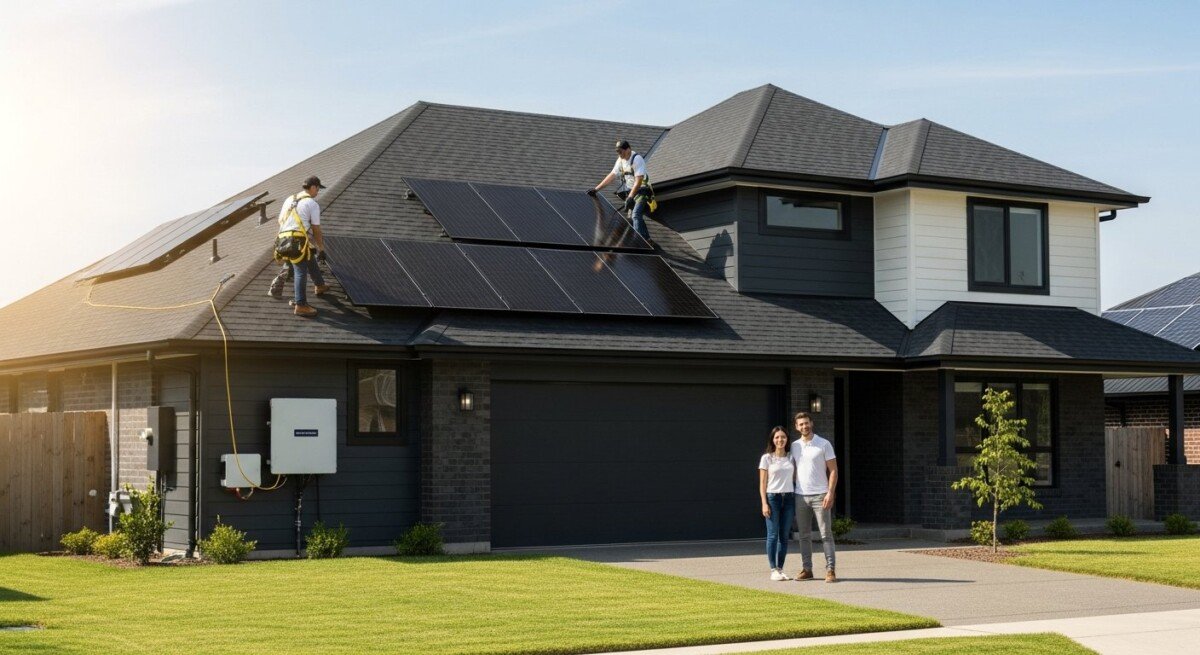
The journey from considering solar to flipping the switch is a coordinated process handled by your chosen installer. It begins with a detailed evaluation of your home and energy usage. The installer then designs a custom system to meet your goals, handles all the necessary paperwork, and executes the physical installation.
While the on-site work often only takes a few days, the entire project includes crucial planning and approval stages. A clear understanding of the timeline helps set proper expectations. For a deeper look at scheduling, our guide on how long solar installation takes breaks down each phase.
- Home Energy Assessment & Consultation: An expert reviews your electricity bills, evaluates your roof, and discusses your energy goals.
- System Design & Proposal: The installer creates a custom design specifying panel placement, equipment, costs, and projected savings.
- Permits & Approvals: The company secures building permits and submits interconnection applications to your utility company.
- Physical Installation: Crews mount racking, install panels and inverters, and run electrical wiring to your main panel.
- Inspections & Activation: Local authorities and the utility conduct final inspections before granting permission to operate (PTO).
Speaking with experienced installers can help you determine the best solar solution for your home. Compare solar quotes here or call to explore available options.
Signs Your Home May Be Ideal for Solar
While solar can work for many homes, some characteristics make the investment particularly advantageous. The most obvious factor is access to strong, unobstructed sunlight for a significant portion of the day. A south-facing roof in the Northern Hemisphere is ideal, but east and west-facing roofs can also be highly effective.
Your current energy consumption and future plans also play a key role. Homes with higher electricity bills typically see a faster return on investment. If you plan to stay in your home for many years, you’ll have more time to enjoy the free energy after the system pays for itself. Consider these indicators:
- Your roof receives direct sunlight for at least 5-6 hours per day, with minimal shading from trees or other structures.
- You have consistently high monthly electricity bills.
- Your roof is in good condition and has ample, uncluttered space.
- You plan to own your home for the next 7-10 years or more.
- Your local utility has favorable net metering policies.
- You live in an area with strong sunlight and available solar incentives.
What Affects Solar Installation Costs
The total price of your solar system isn’t a one-size-fits-all number. It’s influenced by several key factors specific to your home and goals. The system’s size, measured in kilowatts (kW), is the primary driver,a larger system for a bigger home with higher usage will cost more than a smaller one.
Equipment quality and installation complexity also impact the bottom line. Premium, high-efficiency panels and inverters may come at a higher initial cost but can produce more energy in limited space. Factors like roof pitch, material, and electrical panel upgrades can affect labor costs. Crucially, available incentives like the 30% federal tax credit can substantially reduce your net cost.
The cost of solar installation varies depending on your home and energy needs. Request personalized solar quotes or call to see what options are available.
Tips for Choosing a Reliable Solar Installer
Selecting the right installer is as important as choosing the right system. A reputable, experienced company will ensure a smooth process, a quality installation, and lasting performance. They act as your guide, helping you navigate incentives, design choices, and complex paperwork to avoid costly mistakes.
Don’t just choose the first quote you receive. Taking the time to vet several companies gives you a basis for comparison on price, equipment, and service. For homeowners in specific regions, like those exploring solar installation in Miami Florida, it’s especially important to find an installer with local expertise and knowledge of state-specific incentives.
- Verify licenses, insurance, and certifications (like NABCEP).
- Check the company’s experience and ask for local references.
- Review warranty coverage for both equipment and workmanship.
- Read customer reviews and ratings on independent websites.
- Get detailed, written proposals from at least three different installers.
- Ensure they handle the entire process, including permits and interconnection.
Long-Term Benefits of Installing Solar Panels
The advantages of going solar extend far beyond the initial activation. The most immediate and ongoing benefit is dramatically lower electricity bills. Once your system is paid off, the energy it produces is essentially free for the remainder of its 25+ year lifespan, leading to tens of thousands of dollars in savings.
Solar panels also increase your property value and market appeal, with studies showing buyers are willing to pay a premium for homes with solar. You gain a measure of energy independence, buffering yourself from utility rate increases. Perhaps most satisfying is the knowledge that you are significantly reducing your household’s environmental impact for decades to come.
FAQs
How much can I really save with solar panels?
Savings depend on your local electricity rates, system size, sunlight, and incentives. Many homeowners save 50-100% on their electric bills. Over 25 years, total savings often range from $20,000 to $70,000, often exceeding the system’s initial cost.
Do solar panels work when the power goes out?
Standard grid-tied systems automatically shut off during a blackout for safety reasons. To have power during an outage, you need a system with battery storage, which stores excess solar energy for use anytime, including at night or during grid failures.
What is the average payback period for a solar investment?
The average payback period in the U.S. is typically between 6 to 10 years. This timeframe is calculated by dividing the net system cost (after incentives) by your annual energy bill savings. After the payback period, you enjoy essentially free electricity.
Will solar panels damage my roof?
A professional installation will not damage your roof. In fact, mounting systems often protect the area they cover. Installers perform a roof assessment first and use specialized flashing and mounts to ensure a watertight seal. If your roof is near the end of its life, it’s recommended to replace it before installing solar.
How do I maintain my solar panel system?
Solar systems require very little maintenance. Rainfall usually cleans the panels sufficiently. You should occasionally check for debris and have a professional inspect the system every few years. Most quality systems include monitoring software so you can track performance from your phone.
What happens if I sell my house with solar panels?
Homes with solar panels typically sell faster and for more money than comparable homes without them. You can either pay off the system and include it in the home’s sale price, transferring the full benefits to the new owner, or discuss assuming the loan with the buyer.
Understanding the solar installation process empowers you to make an informed decision about one of the most valuable upgrades you can make to your home. By generating your own clean power, you secure long-term financial savings, increase your energy independence, and contribute to a healthier environment. The best next step is to gather personalized information,comparing quotes from trusted, local installers will give you a clear picture of the costs, savings, and perfect system for your unique home.
Learn more about Solar Panel Installation and Repair for guides, costs, and what to expect.
Compare Solar Panel Installation and Repair Pros Near You
Enter your ZIP code to compare top-rated local professionals and request free quotes.