Solar Inverter Guide: How to Choose the Right One
Learn the key factors in choosing a solar inverter, from types and sizing to efficiency and monitoring, for maximum savings.

By Andy Pearson
Learn more about Solar Panel Installation and Repair for guides, costs, and what to expect.
Compare Solar Panel Installation and Repair Pros Near You
Enter your ZIP code to compare top-rated local professionals and request free quotes.
When homeowners begin their solar journey, they often focus on the panels themselves. Yet the solar inverter is the component that truly makes the system work. It converts the direct current (DC) electricity produced by your solar panels into the alternating current (AC) electricity that powers your home. Without a properly selected inverter, even the best solar panels will underperform. This solar inverter guide explains the types, sizing, efficiency, monitoring, and installation considerations you need to know before buying or upgrading.
Why the Solar Inverter Matters More Than You Think
Your solar inverter is the brain of your entire solar energy system. It not only converts DC to AC, but it also optimizes power output, monitors system performance, and communicates with your grid connection. A high-quality inverter ensures that your panels operate at maximum efficiency, while a mismatched or low-quality inverter can reduce energy yield by 5% to 20% or more.
Inverter technology has evolved significantly in recent years. Older systems used simple string inverters, but modern systems often use microinverters or power optimizers. Each type has its own strengths, and the best choice depends on your roof layout, shading, budget, and future expansion plans. This guide breaks down those differences in plain language.
Types of Solar Inverters: A Detailed Comparison
There are three primary inverter types used in residential solar installations today. Understanding their differences is the first step in making an informed decision.
String Inverters (Central Inverters)
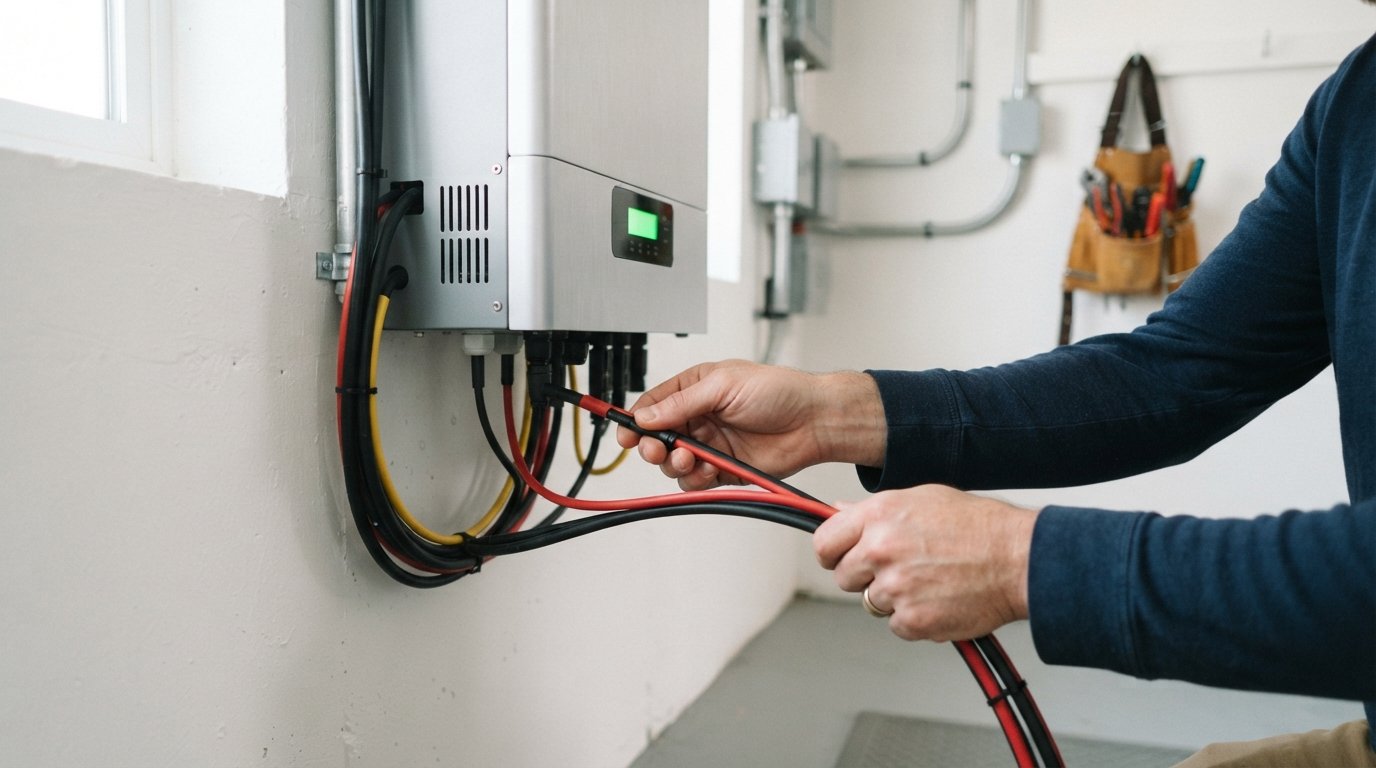
String inverters are the most traditional and cost-effective option. They connect a series of solar panels (a string) to a single inverter unit, usually mounted near your electrical panel. The inverter processes the combined DC electricity from all panels in that string.
Pros: Lower upfront cost, simple design, easy maintenance access, and a long track record of reliability. Cons: If one panel is shaded or underperforming, it drags down the output of the entire string. Also, they lack panel-level monitoring, making it harder to detect individual panel issues.
Microinverters
Microinverters are small devices attached to each individual solar panel. They convert DC to AC right at the panel, so every panel operates independently. This design eliminates the shading issue and allows for panel-level performance monitoring.
Pros: Maximum energy harvest in partially shaded conditions, enhanced monitoring capabilities, and greater design flexibility. Cons: Higher upfront cost per watt, and since they are mounted on the roof, they are more exposed to heat and weather, though modern units are designed for outdoor durability.
Power Optimizers + String Inverter
Power optimizers are a hybrid solution. They are attached to each panel, like microinverters, but they do not convert DC to AC. Instead, they condition the DC electricity and send it to a central string inverter for conversion.
Pros: They offer many of the benefits of microinverters, such as panel-level optimization and monitoring, at a lower cost than full microinverter systems. Cons: The system still relies on a central inverter, so if that unit fails, the entire system goes down. They are also slightly more complex than pure microinverters.
How to Size Your Solar Inverter Correctly
Sizing your inverter is not just about matching the total wattage of your panels. The inverter must be correctly matched to the DC-to-AC ratio of your system. Most modern inverters have a maximum DC input rating and a maximum AC output rating. The ratio between these two values should typically be between 1.1 and 1.3.
For example, if you have a 6 kW solar panel array, you might choose an inverter with a 5 kW AC output. The 1.2 ratio allows the inverter to handle the occasional power spikes that occur on sunny days when panels produce more than their rated output. Oversizing the inverter can waste money, while undersizing can clip your energy production.
When calculating your needs, consider your local climate. In hot climates, panels produce less voltage, so a lower ratio may be acceptable. In cooler climates, panels can produce more voltage, so a higher ratio is safer. Your installer should perform a detailed sizing calculation based on your roof orientation, tilt, and local weather patterns.
Inverter Efficiency and Its Impact on Your Savings
Every inverter has an efficiency rating, typically between 96% and 99%. This percentage represents how much DC electricity is successfully converted to usable AC electricity. A 98% efficient inverter loses only 2% of the energy it processes, while a 96% efficient unit loses 4%.
While the difference may seem small, it compounds over the 25-year lifespan of your solar system. On a typical 6 kW system producing 9,000 kWh per year, a 2% efficiency gain can add up to 180 kWh annually, which is roughly the annual consumption of a small refrigerator. Over 25 years, that is an extra 4,500 kWh of free electricity.
Look for inverters with CEC (California Energy Commission) efficiency ratings, as they are tested under real-world conditions. European and Australian markets also use similar standards. Higher efficiency models often cost more upfront, but the long-term savings usually justify the premium.
Monitoring and Smart Features: The Inverter as a Data Hub
Modern solar inverters are not just power converters. They are also data centers that provide real-time information about your system's performance. Most inverters come with a monitoring portal or mobile app that shows energy production, consumption, and system health.
This monitoring is crucial for detecting issues early. For instance, if one panel's output drops, the monitoring system can alert you, allowing you to troubleshoot with your installer. Some inverters even integrate with home energy management systems, enabling features like load shifting and battery charging optimization.
When comparing inverters, pay attention to the monitoring interface. Is it user-friendly? Does it offer alerts via email or push notification? Can it be accessed from anywhere? These features affect how easily you can track your investment and catch problems before they become costly.
Battery Compatibility and Future-Proofing Your System
If you are considering adding battery storage now or in the future, inverter compatibility is critical. Some inverters are designed to work with specific battery brands or chemistries, while others are more flexible. The two main architectures are AC-coupled and DC-coupled systems.
AC-coupled systems use standard solar inverters and battery inverters that work on the AC side. DC-coupled systems have a single hybrid inverter that manages both solar and battery DC power. Hybrid inverters are often more efficient for battery charging, but they may limit your choice of battery brands.
Before purchasing an inverter, decide whether battery storage is in your plan. If yes, choose an inverter that supports the battery brand you prefer or select a hybrid inverter that offers flexible battery integration. This decision can save you thousands in retrofitting costs later.
Warranty, Reliability, and Lifespan
Solar inverters have a shorter lifespan than solar panels. While panels often last 30 years or more, most string inverters are rated for 10 to 15 years. Microinverters and power optimizers typically have 20 to 25 year warranties, reflecting their higher durability.
When evaluating inverter options, consider the manufacturer's warranty terms. A standard warranty covers parts and labor, but some premium brands offer extended warranties or service-level agreements that guarantee response times. Reliability is also crucial; look for inverters with proven track records and low failure rates.
Ask your installer about their experience with different brands. They can provide real-world feedback on which inverters are most reliable and which manufacturers provide the best customer support. A cheap inverter that fails in five years can cost you more in downtime and repair than a reliable one that lasts 15.
Installation Considerations: Where and How Inverters Are Mounted
The physical placement of your inverter affects its performance and lifespan. String inverters are usually mounted indoors or in a shaded outdoor area, as they need protection from extreme temperatures. Microinverters and power optimizers are mounted on the roof, directly under each panel, where they are exposed to heat and cold.
For string inverters, ensure the mounting surface is solid, well-ventilated, and easily accessible for maintenance. Avoid placing them in direct sunlight, as heat can reduce efficiency and shorten lifespan. Also, check the inverter's ingress protection (IP) rating if it will be outdoors; IP65 or higher is recommended for most climates.
If you plan to install the inverter near your electrical panel, plan the wiring routes and conduit connections. A professional installer will handle these details, but understanding them helps you ask the right questions and ensures your system is safe and code-compliant.
Cost, Incentives, and Return on Investment
The cost of a solar inverter varies widely based on type and brand. String inverters are the cheapest, typically costing between $1,000 and $2,500. Power optimizer systems add $500 to $1,000 more, while microinverters can cost $2,000 to $3,500 or more for a typical home.
While microinverters have a higher upfront cost, they can increase energy harvest by 5% to 10% in partially shaded conditions, which can offset the price difference over time. Additionally, many utilities offer performance-based incentives or rebates for systems with advanced monitoring, which can reduce the net cost.
When calculating your return on investment, factor in the inverter's efficiency, warranty, and expected lifespan. A slightly more expensive inverter that produces more energy and lasts longer often delivers a better ROI than a cheaper unit that underperforms or fails early. Use your installer's production estimates and your local utility rates to model the financial outcome.
How to Choose the Right Inverter for Your Home: A Step-by-Step Framework
Making the final decision can feel overwhelming, but you can simplify it by following a structured approach. Here is a practical framework to guide your choice:
- Assess your roof for shading, orientation, and tilt. If you have significant shading, microinverters or power optimizers are likely your best option.
- Decide on battery storage now or later. If you are certain about adding batteries, consider a hybrid inverter or confirm compatibility.
- Set a realistic budget for the inverter, including installation costs, and compare quotes from multiple brands.
- Check warranty terms and manufacturer reliability reviews online and from your installer.
- Verify that the inverter meets local grid requirements and has the necessary certifications (UL 1741, IEEE 1547).
By working through these steps, you will narrow down your options to a few models that fit your needs. Then, discuss the final choice with your solar installer, who can provide specific performance data for your location and answer any technical questions.
Common Inverter Myths and Misconceptions
Many homeowners are misled by outdated or incorrect information about inverters. One common myth is that a larger inverter always produces more power. In reality, an oversized inverter is inefficient and may clip production, while a properly sized one maximizes output.
Another myth is that microinverters are always better than string inverters. While microinverters excel in shading situations, string inverters are perfectly adequate for simple, unshaded roofs and are more cost-effective. The best inverter is the one that matches your specific conditions, not the most expensive or popular one.
Finally, some believe that inverters do not need maintenance. While they require less upkeep than other home appliances, they should be inspected periodically, and their cooling fans or vents should be kept clean. Proper maintenance extends the life of your inverter and ensures consistent performance.
Final Thoughts: Making the Right Investment
Choosing the right solar inverter is a decision that affects your energy production, savings, and system reliability for decades. By understanding the types, sizing, efficiency, and monitoring features, you can confidently select an inverter that meets your needs and budget.
Always work with a certified solar installer who can provide professional guidance and accurate system design. Use resources like NewSolarQuotes to compare quotes from vetted professionals in your area, ensuring you get the best value. With the right inverter, your solar system will deliver clean, affordable energy for years to come.
Learn more about Solar Panel Installation and Repair for guides, costs, and what to expect.
Compare Solar Panel Installation and Repair Pros Near You
Enter your ZIP code to compare top-rated local professionals and request free quotes.