
Solar Panel Cleaning Frequency and Techniques for 2026
Proper solar panel cleaning frequency and techniques can recover up to 20% of lost output. Learn how often to clean and the safest methods for your climate.

By Alex Carter
Learn more about Solar Panel Cleaning for guides, costs, and what to expect.
Compare Solar Panel Cleaning Pros Near You

Enter your ZIP code to compare top-rated local professionals and request free quotes.
Dust, pollen, bird droppings, and even wildfire ash can quietly erode the output of your solar array. A system that once generated 100 percent of its rated capacity may slip to 85 or 90 percent within a few months in dusty or high-pollen regions. Understanding how often to clean your panels and which methods are safe for the glass and anti-reflective coatings is the difference between maximizing your investment and watching your energy savings fade. This guide breaks down the factors that determine cleaning frequency, the techniques that work best for different environments, and the mistakes that can void your warranty or damage your equipment.
Why Cleaning Frequency Matters More Than You Think
Solar panels are designed to withstand harsh weather, but they are not self-cleaning. A thin layer of dust can reduce efficiency by 5 to 15 percent in many parts of the United States. In areas with heavy agriculture, construction, or pollen, that number can climb above 20 percent. The financial impact is real: a 10 percent loss on a 7 kilowatt system in a sunny state can mean $100 to $200 in lost savings each year. Over the 25 to 30 year lifespan of a system, neglecting cleaning can cost thousands of dollars in foregone electricity production.
Rain provides some natural rinsing, but it is rarely enough. Light rain can actually make things worse by mixing with dust to form a muddy film that bakes onto the glass. Heavy rain may wash away loose dirt, but it will not remove sticky sap, bird droppings, or the stubborn layer of particulate matter that accumulates over months. The frequency of cleaning should therefore be based on your local environment, not on the assumption that weather will take care of it.
Another factor is the angle of your panels. Steeper tilts shed dirt more effectively, while flatter arrays, common on commercial rooftops, tend to accumulate more debris. Shade from trees also plays a role: panels under tree cover collect sap, leaves, and bird droppings far faster than those in open fields. The only way to know your true cleaning interval is to monitor production and inspect the glass visually every few months.
How Often Should You Clean Solar Panels?
There is no single answer that fits every home or business. The optimal solar panel cleaning frequency depends on your location, climate, and surrounding land use. However, general guidelines can help you build a schedule that protects your investment without wasting water or money on unnecessary service calls.
In most temperate regions with moderate rainfall and low dust, cleaning once or twice a year is sufficient. If you live in a dry, dusty climate such as Arizona, New Mexico, or West Texas, you may need to clean every two to three months. Coastal areas with salt spray require more frequent rinsing, while regions with heavy pollen in spring and summer may need an extra cleaning after the pollen season ends. Wildfire zones present a special challenge: ash is highly alkaline and can etch glass if left on hot panels, so cleaning after a smoke event is critical.
Here is a simple framework to set your cleaning schedule based on common environmental conditions:
- Low dust, regular rain: Clean once every 12 months and inspect quarterly.
- Moderate dust, seasonal pollen: Clean every 6 to 8 months, plus one extra cleaning after peak pollen.
- High dust or agricultural activity: Clean every 3 to 4 months.
- Coastal salt spray or wildfire ash: Clean every 2 to 3 months and immediately after any major ash fall.
These intervals are starting points. The best way to fine-tune your schedule is to track your system's energy production. Most inverters and monitoring apps show daily or weekly output. If you notice a gradual decline that does not correlate with weather or seasonal sun angle, dirt is likely the culprit. A sudden drop after a dust storm or nearby construction is an obvious signal to clean. For a deeper look at how efficiency losses translate into dollar savings, see our guide on solar panel efficiency and savings.
Professional Cleaning vs. DIY Techniques
Once you have determined how often to clean, the next decision is who does the work. Many homeowners choose to clean their own panels, and with the right tools and precautions, this can be a safe and effective option. However, professional cleaning offers advantages that go beyond convenience, especially for larger arrays, steep roofs, or systems with battery backups and sensitive wiring.
DIY cleaning requires careful attention to safety and materials. You should never use abrasive sponges, scouring pads, or harsh chemicals. A soft brush with an extension pole, a squeegee, and a mild soap solution (such as dish soap without bleach or citrus additives) are usually sufficient. Deionized water is ideal because it dries without leaving mineral spots. Always clean panels when they are cool to the touch, early morning or late evening, to avoid rapid evaporation and thermal shock. Never walk on the panels, and never use a pressure washer, which can force water into the frame and damage seals.
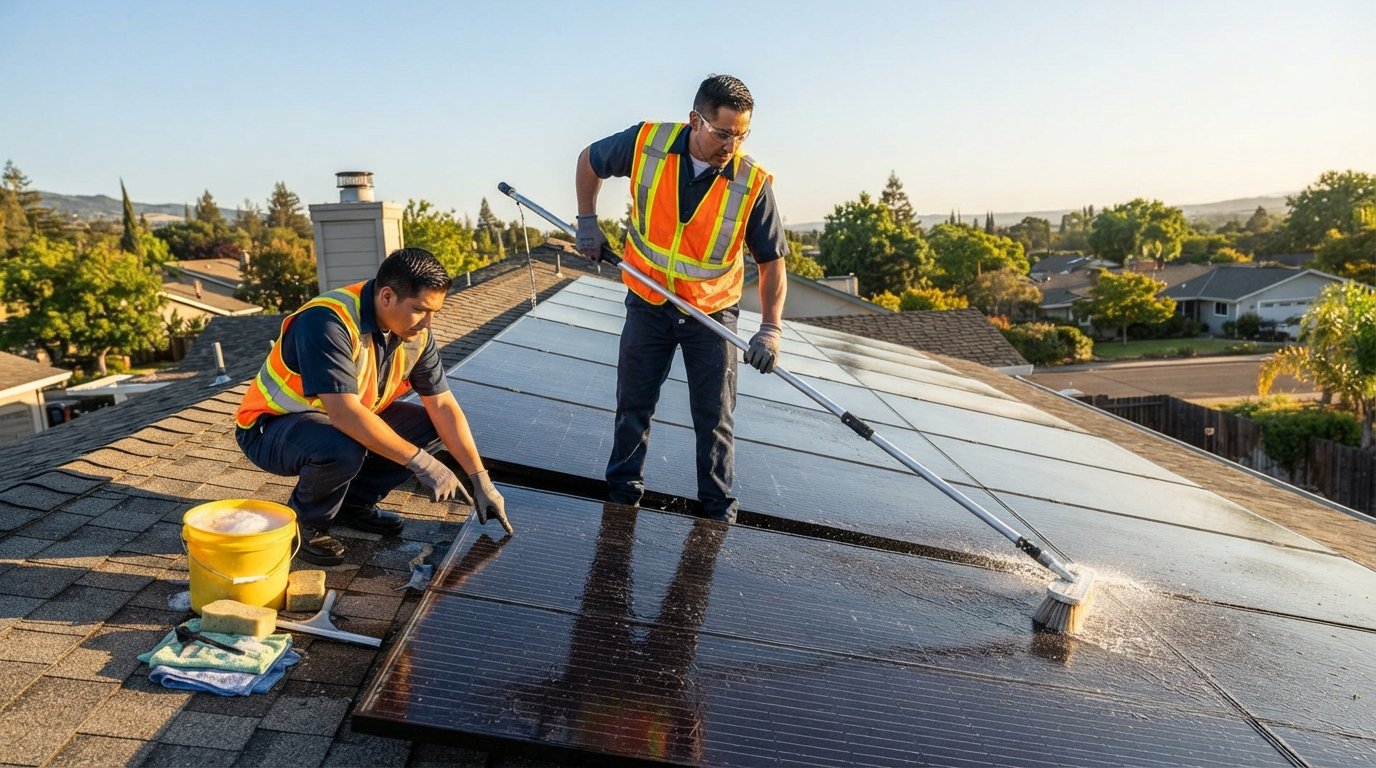
Professional cleaners bring specialized equipment, including pure water systems, soft rotating brushes, and safety harnesses. They also inspect for damage, loose wiring, and hot spots while they work. For many homeowners, the cost of professional cleaning (typically $150 to $400 depending on system size and location) is justified by the reduced risk of falls and the assurance that the job is done correctly. If your panels are on a second story or steeper, professional service is strongly recommended.
When hiring a professional, look for a company that specializes in solar maintenance, not a general handyman. Ask about their cleaning methods, insurance, and whether they use deionized water. NewSolarQuotes connects homeowners with certified solar specialists who can handle cleaning, inspection, and repairs. You can request free solar quotes to compare local providers and find a qualified technician in your area.
Step-by-Step DIY Solar Panel Cleaning Techniques
If you decide to clean your panels yourself, following a proven process will protect your equipment and your safety. The steps below apply to most residential rooftop systems. Always check your manufacturer's warranty first, as some brands require professional cleaning to maintain coverage.
- Shut down the system if recommended: Some manufacturers advise turning off the inverter before cleaning to eliminate shock risk. Check your manual.
- Gather the right tools: A soft-bristle brush with an extension pole, a squeegee, a bucket, mild soap, and a garden hose with a spray nozzle. Deionized water is optional but preferred.
- Rinse loose debris: Spray the panels with water to remove dust and loose dirt. Do not use high pressure.
- Wash gently: Dip the brush in soapy water and scrub the surface in straight lines. Avoid circular motions that can leave streaks.
- Rinse thoroughly: Remove all soap residue with clean water.
- Squeegee or air dry: Use a squeegee to prevent water spots, or let panels air dry in the early morning shade.
For ground-mounted arrays, the process is easier because you can reach the panels without a ladder. For rooftop systems, always use a stable ladder and avoid leaning on the panels. If you are uncomfortable with heights or if your roof is steep or fragile, hire a professional. The risk of a fall or broken panel far outweighs the savings from DIY cleaning.
Common Mistakes That Damage Panels
Even well-intentioned cleaning can go wrong. One of the most common errors is using hard water from a garden hose, which leaves mineral deposits that are difficult to remove and can permanently cloud the glass. Another is cleaning in direct sunlight when panels are hot; the water evaporates too quickly, leaving streaks and potentially causing thermal stress. Abrasive tools, including scouring pads and stiff brushes, can scratch the anti-reflective coating, reducing efficiency permanently.
Pressure washers are a frequent culprit. The high-pressure stream can force water past the frame seals, leading to corrosion and electrical issues. Similarly, cleaning agents with ammonia, bleach, or abrasive particles can damage the glass or the frame. Always use a mild, pH-neutral soap. If you have hard water, consider a final rinse with deionized or distilled water.
Another mistake is ignoring the area around the panels. Debris on the roof or in the gutters can blow onto the panels, and overhanging branches can drop sap and leaves. Trimming trees and clearing gutters can reduce cleaning frequency. Finally, do not forget the inverter and wiring. While you are cleaning, visually inspect for loose connections, rodent damage, or signs of overheating. Catching these issues early can prevent costly repairs.
Seasonal and Regional Considerations
Cleaning needs vary dramatically across the United States. In the Southwest, dust storms and dry conditions mean panels may need cleaning every month during the driest periods. In the Southeast, pollen and humidity create a sticky film that requires more frequent washing. In the Northeast, winter snow can block production for days or weeks; while snow is not dirt, removing it safely (with a soft roof rake, never a shovel) can restore output. In the Midwest, agricultural dust and seasonal pollen are the main concerns.
Coastal homeowners face salt spray, which is corrosive and conductive. Rinsing panels with fresh water after a storm or high winds is important. Wildfire zones require immediate cleaning after ash events, as the ash can be acidic or alkaline depending on the fire. If you live in an area with frequent wildfires, consider a cleaning schedule that includes a post-event rinse. Your local solar installer can provide specific recommendations based on your microclimate.
It is also worth noting that solar panel cleaning frequency and techniques should be adjusted as your system ages. Older panels with degraded seals may be more vulnerable to water intrusion, so gentler methods and professional inspection become more important. If your system is over 10 years old, an annual professional cleaning and inspection is a wise investment.
Monitoring and Maintenance Beyond Cleaning
Cleaning is just one part of a broader maintenance strategy. Regular monitoring of your system's performance will tell you if cleaning is effective or if other issues are at play. Most solar inverters come with monitoring apps that show real-time and historical production. Compare your output to expected values based on your location and system size. If production drops more than 10 percent without an obvious weather explanation, it is time to investigate.
In addition to cleaning, you should schedule a professional inspection every 3 to 5 years. Inspectors check for loose wiring, hot spots, microcracks, and inverter health. They can also verify that your panels are properly grounded and that the mounting hardware is secure. These inspections often catch problems that are invisible from the ground. For businesses with large arrays, annual inspections are recommended.
Finally, keep records of your cleaning and maintenance. Note the date, method, and any observations. This log can be useful if you file a warranty claim or sell your home. A well-maintained solar system is a selling point, and documentation proves that you have taken care of it.
By combining a sensible cleaning frequency with safe techniques and regular monitoring, you can keep your solar panels operating at peak efficiency for decades. Whether you choose to clean them yourself or hire a professional, the effort pays off in lower electricity bills and a smaller carbon footprint.