
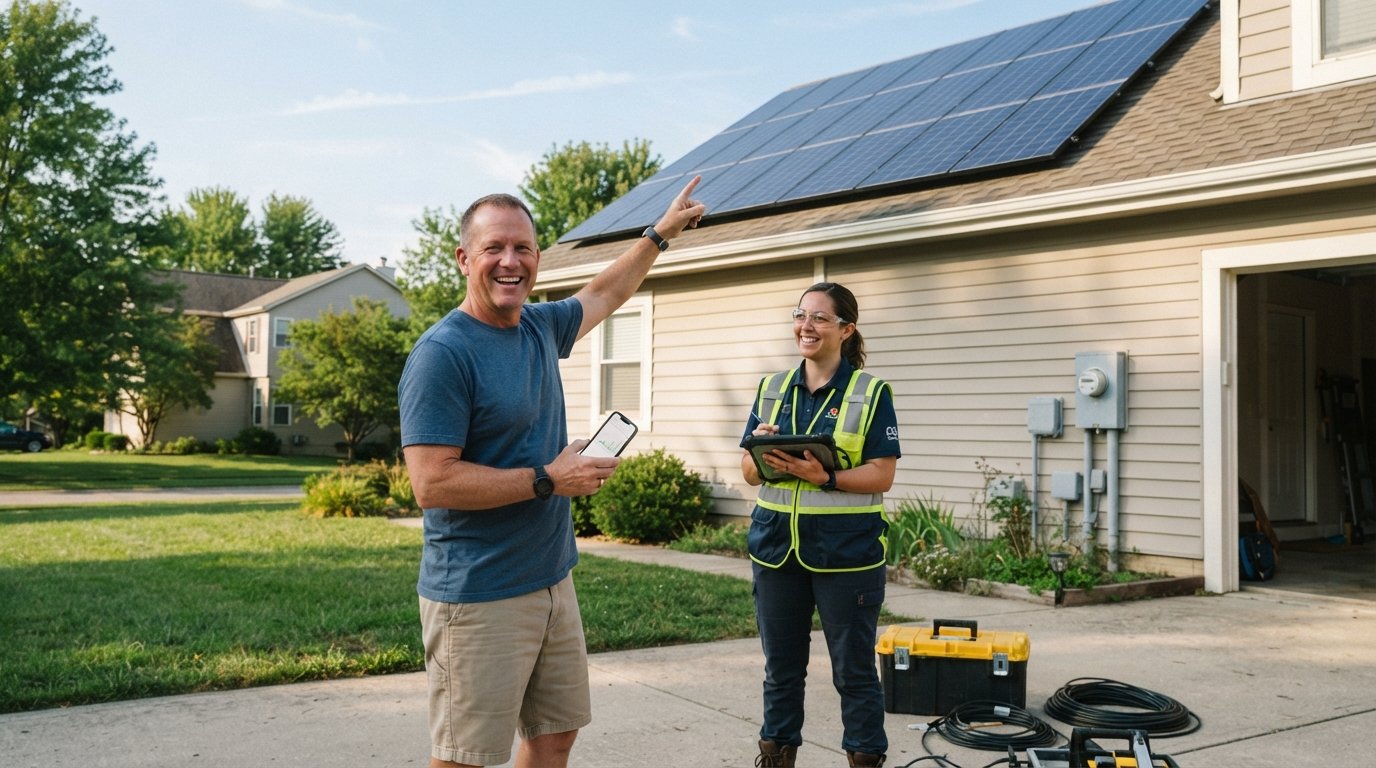
Solar Panel Cost in 2026: Full Price Breakdown
Discover the real solar panel cost in 2026, including state averages, financing options, and how to cut your net price by 30 percent.

By Benjamin Kalif
Learn more about Solar Panel Installation and Repair for guides, costs, and what to expect.
Compare Solar Panel Installation and Repair Pros Near You
Enter your ZIP code to compare top-rated local professionals and request free quotes.
If you have been putting off solar because you assume it costs too much, you are not alone. The truth is that solar panel cost has dropped by more than 40 percent over the last decade, and federal and state incentives can cut your net price by thousands of dollars. In this guide, we break down the real numbers, the factors that move them, and the financing paths that can put panels on your roof for $0 upfront.
Average Solar Panel Cost in 2026
As of 2026, the national average cost of a residential solar system is between $2.50 and $3.50 per watt before incentives. That translates to roughly $15,000 to $25,000 for a typical 6 kilowatt (kW) system, before the federal tax credit and any state or utility rebates. After the 30 percent federal investment tax credit (ITC), the net cost lands between $10,500 and $17,500.
These numbers are based on industry data and thousands of quotes from across the United States. However, your exact price will depend on your home, your utility rates, and the installer you choose. A small 4 kW system might cost $12,000 gross, while a larger 10 kW system can reach $35,000 or more. The key is to understand what drives those differences so you can compare quotes with confidence.
What Drives Your Final Price?
Solar pricing is not a one-size-fits-all number. Installers set their bids based on a combination of equipment, labor, and site-specific conditions. Knowing these variables helps you spot a fair quote and avoid overpaying.
Equipment Quality and Type
The panels themselves make up about 25 to 30 percent of your total cost. Standard monocrystalline panels from reputable brands like REC, Q CELLS, or Silfab cost $0.90 to $1.20 per watt. Premium panels, such as those from SunPower or Maxeon, can run $1.50 per watt or more, but they offer higher efficiency and longer warranties. Inverters add another $1,000 to $3,000, with microinverters from Enphase or string inverters from SolarEdge being the most common choices.
Battery storage is the biggest cost variable. Adding a Tesla Powerwall or LG Chem battery can raise your total by $10,000 to $15,000. If you live in an area with net metering, you may not need a battery at all. But if you want backup power or live where time-of-use rates spike, storage can be a smart investment.
System Size and Your Energy Usage
Your monthly electricity consumption is the starting point for sizing your system. A typical U.S. home uses about 900 kWh per month, which requires a 6 to 8 kW system in most states. Larger homes with pools, electric vehicles, or air conditioning will need more capacity, which pushes the price up.
To estimate your size, look at your annual usage and divide by the number of peak sun hours in your area. A home in sunny Arizona might only need a 6 kW system, while a similar home in cloudy Washington could require 8 kW to produce the same amount of power. Your installer should show you this math during the quote process.
Roof Type, Pitch, and Age
Complex roof installations cost more. A simple asphalt shingle roof with a 20-degree pitch is the cheapest to work with. Tile, metal, or flat roofs require special mounting hardware and more labor, adding $0.50 to $1.00 per watt. If your roof needs repairs or replacement, that is a separate cost you must budget for before solar goes up.
Installers also factor in the height of your roof, the distance from the electrical panel, and any obstructions like skylights or chimneys. These variables can add $500 to $2,000 to the total. A site visit is essential for an accurate quote, so be wary of online-only estimates that skip this step.
Solar Panel Cost by State
Your location has a massive impact on both the gross cost and the net cost of solar. States with strong incentives and competitive markets tend to have lower prices per watt. Here is a snapshot of average costs for a 6 kW system in several key states, before the federal tax credit.
- California: $2.80 per watt, total around $16,800. With the federal credit and state-level net metering, payback periods are often 5 to 7 years.
- Texas: $2.60 per watt, total around $15,600. No state tax credit, but low installation costs and high sun exposure make it one of the most affordable markets.
- Florida: $2.70 per watt, total around $16,200. Strong net metering policies and a competitive installer market keep prices reasonable.
- Arizona: $2.50 per watt, total around $15,000. Excellent sun and a mature solar industry make this the cheapest state on our list.
- New York: $3.10 per watt, total around $18,600. Higher labor costs, but state incentives like the NY-Sun program can reduce the final price significantly.
These figures are averages, so your quote may be higher or lower depending on your specific situation. The best way to know your local price is to request multiple quotes from certified installers. NewSolarQuotes can connect you with vetted professionals in your area for free.
Financing Options and Their Hidden Costs
How you pay for solar changes the total cost over time. Cash purchases are the simplest and offer the best return on investment, but most homeowners do not have $20,000 sitting idle. Here are the main financing paths and what they really cost.
Solar Loans
Solar loans let you own the system from day one with no upfront payment. Monthly payments typically range from $100 to $250, depending on the loan term and interest rate. Rates for solar loans are usually 4 to 8 percent, and terms run 10 to 20 years.
The catch is that some loan products include dealer fees, which are built into the quoted price. A loan with a 20 percent dealer fee might show a system price of $24,000 instead of $20,000. Always ask the installer for the cash price and the loan price so you can compare apples to apples.
Leases and Power Purchase Agreements (PPAs)
With a lease or PPA, you do not own the system. You pay a fixed monthly lease payment, or you buy the power the panels produce at a set rate per kWh. These options often require $0 upfront and include maintenance, but you miss out on the tax credit and long-term savings.
Leases can still save you 10 to 20 percent on your electricity bill, but they are generally less profitable than owning. If your goal is maximum financial return, a loan or cash purchase is the better route. If you value simplicity and low risk, a lease might make sense.
Cash Purchase
Paying cash gives you the lowest total cost because you avoid interest and dealer fees. Your payback period is typically 6 to 10 years, and after that, your electricity is essentially free for the 25-plus year life of the system. Cash buyers also get the full value of the federal tax credit and any state incentives.
If you have the funds, cash is the smartest move. If not, a solar loan with a low rate and no dealer fee is a close second. Avoid leases unless you have no other option.
Incentives That Slash Your Net Cost
The sticker price of solar is scary, but the incentives are not optional extras. They are a major part of the financial picture and can reduce your net cost by 30 to 50 percent. Here is what you need to know.
Federal Investment Tax Credit (ITC)
The ITC gives you a dollar-for-dollar reduction of your federal income tax for 30 percent of your solar system cost. For a $20,000 system, that is a $6,000 credit. There is no cap on the credit, and it applies to both the equipment and installation labor.
You must have enough tax liability to claim the full credit in the year you install. If you do not, you can carry the remaining amount to future years. The ITC is available for systems placed in service through 2032, so 2026 is a great time to act.
State and Local Rebates
Many states offer additional incentives. For example, New York offers a state tax credit of 25 percent of your system cost, up to $5,000. Colorado has a rebate program that can cut costs by $500 to $1,000. California has net metering that pays you for excess power sent to the grid.
Check the Database of State Incentives for Renewables and Efficiency (DSIRE) for your state. Some utilities also offer performance-based incentives or rebates for battery storage. These can be combined with the federal credit to lower your net price dramatically.
Solar Renewable Energy Certificates (SRECs)
In certain states, you can earn SRECs for every megawatt-hour your solar system produces. These certificates can be sold on an open market, generating $200 to $400 per year in extra income. New Jersey, Maryland, and Massachusetts have active SREC markets.
Not every state has SRECs, so do not count on them unless you live in a qualifying area. But if you do, they can shorten your payback period by a year or more and provide a nice cash bonus on top of your energy savings.
How to Get the Best Price Without Getting Burned
Getting a fair solar price is not luck. It is a process. Follow these steps to ensure you pay a competitive rate and avoid common pitfalls.
- Get at least three quotes. Prices can vary by as much as 30 percent between installers for the same system. Use a service like NewSolarQuotes to receive vetted offers in one place.
- Compare the cash price, not the financed price. Ask each installer for their cash price per watt. This is the only way to compare bids fairly.
- Check the equipment specifications. Make sure all quotes include the same panel brand, inverter type, and warranty. Do not accept a vague quote that says "premium panels."
- Read the fine print on financing. Ask about dealer fees, APR, and prepayment penalties. A low monthly payment might hide a high total cost.
- Verify the installer's credentials. Look for NABCEP certification, licensing, and insurance. Check reviews on Google and the Better Business Bureau.
Once you have your quotes, do not be afraid to negotiate. Many installers will match or beat a competitor's price to win your business. A simple email saying "I have a lower quote from another company" can save you hundreds or even thousands of dollars.
Also, be wary of door-to-door salespeople who pressure you to sign same-day. Reputable solar companies will give you time to compare. If someone says the deal expires today, walk away.
Payback Period and Long-Term Savings
The payback period is the time it takes for your energy savings to equal what you paid for the system. On average, U.S. homeowners see payback in 7 to 12 years. After that, the electricity your panels produce is essentially free.
Let us run a quick example. Say you pay $15,000 net for a 6 kW system after incentives. Your average monthly electric bill is $150, or $1,800 per year. In 8.3 years, your savings will cover the cost. Over 25 years, you will save roughly $45,000 in avoided electricity, assuming a 3 percent annual utility rate increase.
Solar also increases your home's resale value. Studies show that homes with solar panels sell for 4 to 6 percent more than comparable homes without them. In a $400,000 home, that is an extra $16,000 to $24,000 at sale. Add that to your energy savings, and the total return on investment becomes very attractive.
The exact numbers depend on your local utility rates, sun exposure, and system performance. To get a precise estimate for your home, use a solar calculator or request a custom quote. NewSolarQuotes offers a free cost calculator that factors in your location and energy usage.
Hidden Costs to Plan For
Solar is a long-term investment, and there are a few additional expenses you should budget for beyond the initial installation.
- Roof repair or replacement: If your roof is older than 10 years, you may need to fix or replace it before installing panels. This can cost $5,000 to $15,000.
- Electrical panel upgrades: Older homes may need a new electrical panel to handle the solar input. Upgrades typically cost $1,000 to $3,000.
- Permits and inspections: Most cities charge a fee for solar permits, usually $200 to $500. Your installer will include this in the quote.
- Maintenance and cleaning: Solar panels require minimal upkeep, but occasional cleaning or inverter replacement can cost $300 to $1,500 over the system's life.
These costs are not a reason to avoid solar, but they should be part of your budget planning. A good installer will flag any potential issues during the site visit, so you are not surprised later.
Is Solar Worth It in 2026?
For most homeowners, the answer is yes. Solar panel cost has never been lower, incentives have never been stronger, and utility rates continue to climb. Even in states with modest sun, the financial case is compelling when you factor in tax credits and long-term savings.
The only situations where solar might not pay off are homes with heavy shading, roofs that need replacement soon, or owners who plan to move within a few years. In those cases, the upfront cost may not be recovered before you sell.
If you are ready to explore solar, the smartest next step is to get personalized quotes. NewSolarQuotes connects you with certified installers in your area who can provide accurate pricing based on your home. The service is free and takes less than a minute.
Solar is more than a bill reduction tool. It is a hedge against rising energy costs, a way to increase your property value, and a direct action you can take to lower your carbon footprint. With the right information and a competitive quote, you can make the switch with confidence.
Learn more about Solar Panel Installation and Repair for guides, costs, and what to expect.
Compare Solar Panel Installation and Repair Pros Near You
Enter your ZIP code to compare top-rated local professionals and request free quotes.