
Solar Panel Mounting on Metal Roofs vs Shingle: A Homeowner Guide
Compare solar panel mounting on metal roofs versus shingle, including leak risks and warranty impacts. Call (833)-212-3715 for expert help.

Learn more about Solar Panel Installation and Repair for guides, costs, and what to expect.
Compare Solar Panel Installation and Repair Pros Near You
Enter your ZIP code to compare top-rated local professionals and request free quotes.
Your roof is not just a cover for your home; it is the foundation for any solar investment you make. When you decide to go solar, the type of roofing material above your head determines how the panels are attached, how much labor is involved, and even whether your roof warranty stays intact. For homeowners with metal roofing, the mounting question is especially critical: metal roofs are durable and energy-efficient, but they require specialized hardware and installer expertise to avoid leaks and voided warranties. Shingle roofs, while more common, present their own set of sealing challenges. Understanding the differences between solar panel mounting on metal roofs versus shingle is essential before you sign a contract or request quotes.
This guide breaks down the technical and financial distinctions between these two mounting approaches. You will learn about the hardware used, the leak risks, warranty implications, and the questions you should ask any installer who claims metal roof experience. By the end, you will know exactly what to expect for your roof type and how to compare quotes with confidence.
How Mounting Hardware Differs Between Metal and Shingle Roofs
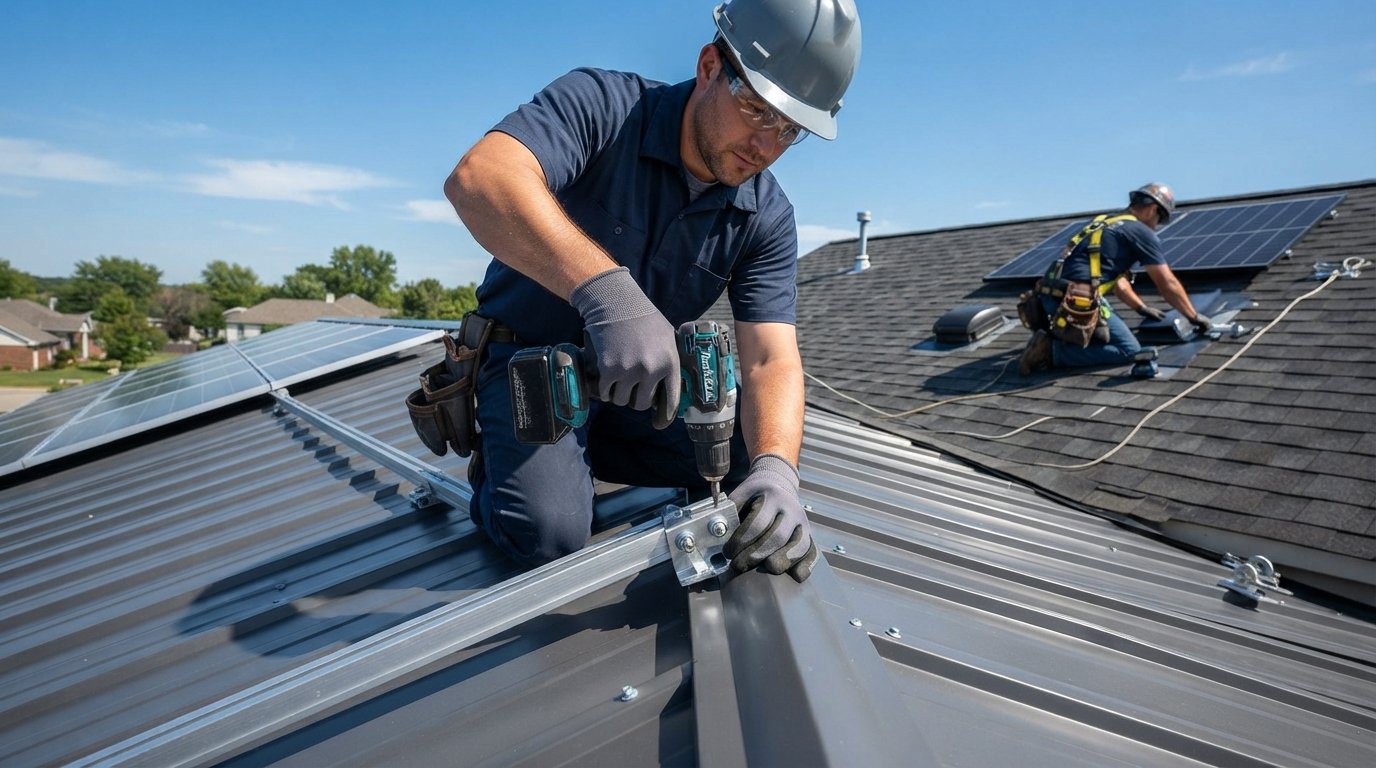
The core difference between metal and shingle mounting lies in how the hardware attaches to the roof deck. On a shingle roof, installers drive lag bolts through the shingles and into the roof rafters, then seal each penetration with flashing and sealant. On a metal roof, especially standing seam, the goal is often to avoid penetration entirely by using clamps that grip the raised seams. This fundamental distinction affects labor time, material costs, and long-term leak risk.
For standing seam metal roofs (the most common type for solar), installers use non-penetrating clamps that attach directly to the vertical seams. These clamps are made of aluminum or stainless steel and are tightened with set screws. Rails are then mounted to the clamps, and solar panels are secured to the rails. This approach preserves the roof's integrity because no holes are drilled into the metal panels. For corrugated metal roofs or exposed-fastener metal roofs, installers may need to use specialized brackets with sealing washers, but these still require penetration. Shingle roofs, by contrast, always require penetration mounts, typically with flashing that slides under the shingle above the penetration point.
The hardware itself is not interchangeable. Metal roof clamps are designed to match specific seam profiles (e.g., trapezoidal, standing seam with rounded or square seams). Using the wrong clamp can damage the seam or fail to hold under wind loads. Shingle mounts are more universal but rely on proper flashing technique to prevent water intrusion. If you are unsure which mounting type your roof requires, a professional assessment is the first step. You can use a solar panel selection tool to narrow down equipment, but mounting hardware must be matched to your roof by an installer.
Leak Risk and Sealing Considerations
Leaks are the top concern for any homeowner considering solar, and the risk profile differs sharply between metal and shingle roofs. On a shingle roof, every penetration creates a potential leak point. Installers must use proper flashing (typically a metal plate that slides under the shingle above and seals around the bolt) and high-quality sealant. Over time, sealant can degrade from UV exposure and thermal cycling, so regular inspection is wise. However, when installed correctly, shingle penetrations are well-understood and reliable. The key is that the flashing must be integrated with the shingle layers, not just smeared with caulk.
Metal roofs, particularly standing seam, offer a major advantage: non-penetrating clamps eliminate the primary leak risk. Because no holes are made in the metal, there is no path for water to enter. This is especially important for metal roofs because they are often installed with a single continuous panel, and any penetration could compromise the roof's waterproofing. For corrugated metal or exposed-fastener roofs, penetrations are sometimes unavoidable, but installers can use brackets with EPDM washers and sealant. Even so, the risk is higher than with standing seam clamps. Homeowners with metal roofs should confirm that the installer uses clamps designed for their specific seam profile and that the clamps are rated for wind uplift.
Sealing on shingle roofs also involves careful placement of mounts relative to the shingle courses. Installers typically place mounts on the lower portion of a shingle course, so water flows over the flashing rather than pooling. On metal roofs, the clamp system avoids this issue entirely. If your metal roof is older or has existing sealant at seams, the installer should inspect and avoid clamping over compromised areas. In both cases, a pre-installation roof inspection is recommended to identify any pre-existing damage that could complicate the solar installation.
Warranty Implications from Roofing Manufacturers
Your roof warranty is a valuable asset, and solar mounting can affect it. Most roofing manufacturers specify that any penetration must be properly sealed and flashed by a licensed professional; otherwise, the warranty may be voided for leaks related to the solar installation. Shingle manufacturers often require that penetrations be sealed with their approved flashing systems and that the work be done by a certified installer. If the solar installer does not follow these guidelines, you could be left without coverage if a leak develops around a mount.
Metal roof warranties are even more sensitive to penetrations. Many metal roof manufacturers state that any penetration not performed by their certified installers or not using their approved methods will void the warranty. For standing seam roofs, non-penetrating clamps are generally preferred because they do not violate the warranty (as long as the clamps are approved for that seam profile). However, some manufacturers may still require that clamps be installed by trained professionals. Homeowners should obtain written confirmation from the roof manufacturer (or the solar installer, who should provide a warranty statement) that the mounting method will not void the roof warranty. This is a critical step that many homeowners overlook.
In practice, the safest approach is to have the solar installer provide a warranty that covers both the mounting hardware and any potential leaks for the life of the solar system. Many reputable installers offer a 10- to 25-year workmanship warranty that includes roof penetrations. For metal roofs, the installer should also confirm that the clamps are compatible with the roof manufacturer's warranty terms. If you are unsure, ask for a letter from the roof manufacturer or a statement from the installer that they will assume liability for any warranty issues caused by the mounting.
Cost and Labor Differences Between Roof Types
Mounting costs vary between metal and shingle roofs, primarily due to labor time and hardware expenses. Shingle roof mounts are generally less expensive in terms of hardware: lag bolts, flashing, and sealant are relatively cheap. However, labor can be higher because each penetration must be carefully flashed and sealed, and the installer must navigate shingle layout. Metal roof mounts, especially non-penetrating clamps, have higher hardware costs (clamps can run $10 to $30 each, and you need many of them), but labor may be lower because installation is faster and does not require flashing. For standing seam roofs, the total mounting cost is often comparable to or slightly higher than shingle, but the reduced leak risk can justify the premium.
Labor differences also depend on roof accessibility and slope. Metal roofs can be slippery, especially when wet, so installers may need additional safety equipment, which can increase labor costs. Shingle roofs are generally easier to walk on, but the granular surface can be damaged if installers are not careful. In terms of overall solar installation cost, the mounting portion is typically 10 to 15 percent of the total project. For a typical 6 kW system, mounting hardware and labor might range from $1,000 to $2,500 depending on roof type and complexity. Homeowners should request a line-item breakdown in their quotes to compare mounting costs directly.
It is also worth noting that metal roofs often last longer than shingle roofs (40 to 70 years vs. 20 to 25 years). If you are planning a solar installation on a metal roof, you may not need to plan for a roof replacement during the solar system's life, which is a significant long-term savings. Shingle roofs may require replacement before the solar panels reach end of life, and removing and reinstalling panels adds cost. This lifecycle difference can offset the higher upfront mounting cost of metal roofs.
What to Ask Installers About Metal Roof Experience
Not all solar installers are experienced with metal roofs. Asking the right questions can save you from costly mistakes and warranty headaches. Before signing a contract, request that the installer provide references from at least three metal roof projects they have completed in the past two years. Ask specifically about the type of metal roof (standing seam, corrugated, etc.) and whether they used clamps or penetrations. A knowledgeable installer will be able to explain the seam profile and why they chose a particular clamp.
Here are key questions to ask:
- What mounting hardware will you use for my specific metal roof profile, and is it approved by the roof manufacturer?
- Will you provide a warranty that covers both the mounting hardware and any potential leaks?
- Have you worked with my roof type before? Can you share references?
- Do you carry liability insurance that covers roof damage during installation?
- Will you coordinate with my roof manufacturer to ensure the warranty remains valid?
For shingle roofs, ask similar questions about flashing technique and sealant quality. An installer who hesitates or gives vague answers about metal roof mounting is a red flag. It is also wise to check whether the installer is certified by the Solar Energy Industries Association (SEIA) or has a North American Board of Certified Energy Practitioners (NABCEP) certification. These credentials indicate a baseline level of professionalism, but they do not guarantee metal roof expertise. Always verify directly.
If you are planning to move soon after installing solar, consider how the mounting might affect a home sale. A well-installed metal roof solar system can be a selling point, but a poorly installed one can be a liability. For homeowners planning a relocation, resources like Moving.Homes offer practical guidance on preparing your home for sale and managing the logistics of a move, including how to document solar installations for potential buyers. This can help you avoid surprises during a home inspection.
Making the Right Choice for Your Roof
Both metal and shingle roofs can host solar panels effectively, but the mounting approach and associated risks are different. Metal roofs, especially standing seam, benefit from non-penetrating clamps that reduce leak risk and preserve roof integrity, but they require specialized hardware and experienced installers. Shingle roofs rely on proper flashing and sealing, which are well-understood but require careful workmanship. Warranty implications are more complex for metal roofs, so documentation and installer qualifications matter. Cost differences are moderate, but long-term savings from avoiding roof replacement can favor metal roofs.
Ultimately, the best choice depends on your specific roof, your budget, and your long-term plans. Request multiple quotes, ask detailed questions about mounting methods, and insist on written warranty coverage. With the right installer and the right hardware, solar panels can be a safe and profitable addition to either roof type. For personalized guidance and to compare quotes from certified installers in your area, reach out to NewSolarQuotes at (833)-212-3715 or visit our website to get started.