
Solar Panel Snow Removal Best Practices for 2026
Learn how to safely maximize winter solar output with solar panel snow removal best practices that protect your panels and your savings.
By Scott Thompson
Learn more about Solar Panel Cleaning for guides, costs, and what to expect.
Compare Solar Panel Cleaning Pros Near You

Enter your ZIP code to compare top-rated local professionals and request free quotes.
When winter blankets your roof in snow, your solar panels stop producing electricity, and your energy savings take a hit. For homeowners in snowy climates, this is a recurring problem that raises a critical question: should you clear the snow, and if so, how? The answer is yes, but only if you use the right techniques. Improper snow removal can scratch the glass, void your warranty, or even cause personal injury. This guide walks you through the safest and most effective solar panel snow removal best practices, helping you protect your investment and keep your system generating power all winter long.
Why Snow Removal Matters for Solar Production
Solar panels rely on sunlight reaching the photovoltaic cells to generate electricity. Even a thin layer of snow can block most of that light, reducing output by 80 to 100 percent. A heavy storm might leave your system idle for days, which adds up to significant lost savings, especially if you rely on net metering or have high winter electricity usage. In regions with frequent snowfall, the cumulative effect of several storms can reduce your annual energy harvest by 5 to 10 percent if you never clear the panels.
Beyond production, snow accumulation can also stress your mounting system. While most panels are designed to handle substantial weight, repeated freeze-thaw cycles can create ice dams that add uneven pressure. Additionally, when snow melts and refreezes at the bottom edge of the array, it can block proper drainage and lead to water backup under the panels. Over time, this moisture can cause corrosion or damage to the electrical connections. Therefore, keeping your panels clear is not just about maximizing output; it is also about preserving the longevity of your system.
That said, you do not need to rush out after every flurry. Many panels are installed at an angle that allows snow to slide off naturally once the sun comes out and warms the glass. The key is to act when the snow is deep enough to fully cover the array and when conditions are safe. The best practices below will help you decide when to intervene and how to do it without causing harm.
Assessing the Situation: When to Remove Snow
Before you grab a shovel, take a moment to evaluate whether removal is truly necessary. In many cases, waiting for the sun to do its job is the most efficient approach. Here are the factors to consider:
- Snow depth and density: Light, fluffy snow may blow off or melt within a day or two. Heavy, wet snow, or ice, forms a stubborn barrier that blocks light for much longer.
- System orientation and tilt: Panels tilted at 30 degrees or more will shed snow faster than flat or low-angle arrays. South-facing panels warm up quicker than those facing east or west.
- Your energy needs: If you are grid-tied and have net metering, a few days of lost production may not hurt much. Off-grid systems or those with high winter demand need to stay clear to avoid power shortages.
- Safety conditions: If your roof is icy, the ground is slippery, or you have a multi-story home, climbing up there is risky. In those situations, professional help is the only safe option.
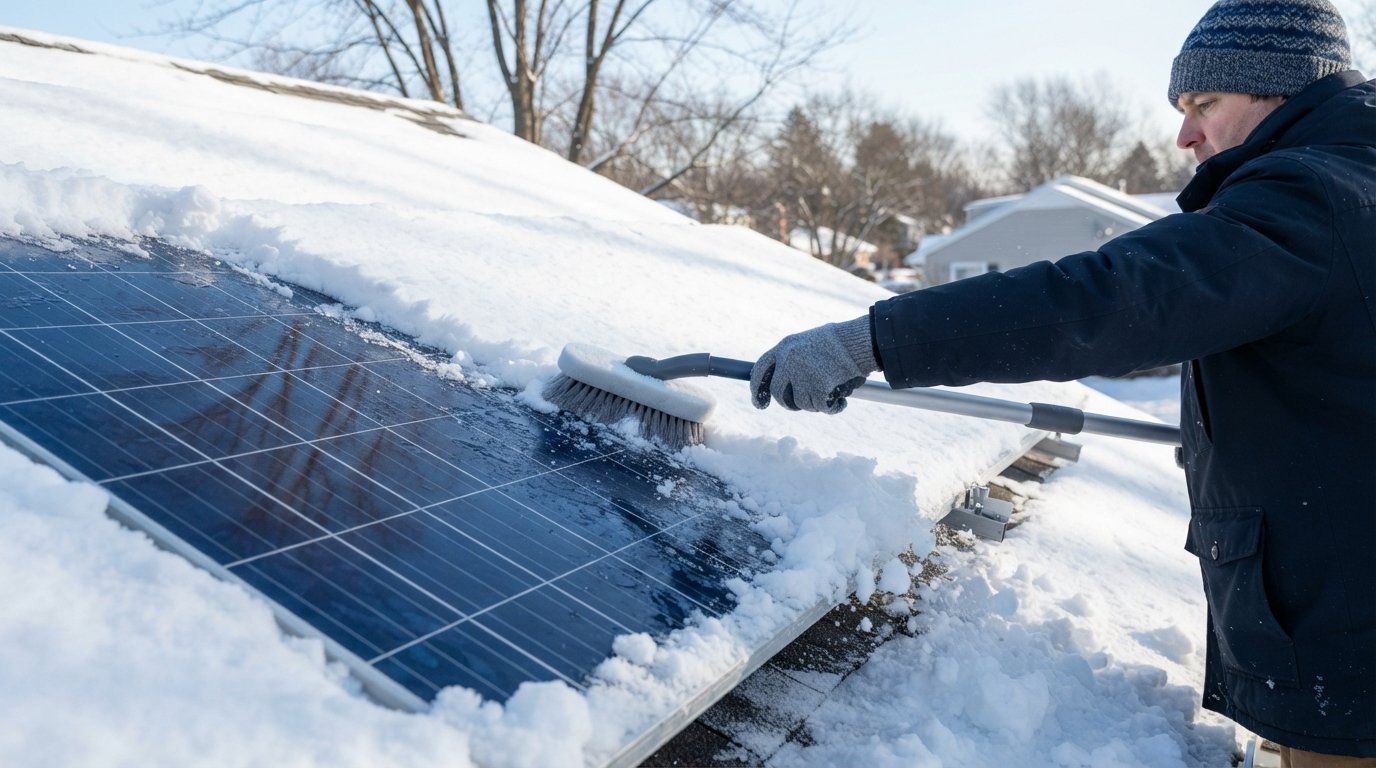
If you decide that removal is warranted, the next step is choosing a method. The safest approach is to use a roof rake with a long handle, designed specifically for solar panels. These rakes have soft foam or rubber edges that slide under the snow without scratching the glass. You can stand on the ground and gently pull the snow down, starting from the top edge. Avoid metal tools, sharp scrapers, or any abrasive material, as they can create micro-scratches that reduce light transmission over time.
Another option is to use a leaf blower on dry, powdery snow. This works surprisingly well for light accumulations, as the air stream can push the snow off the panels. However, it is ineffective on wet or packed snow. Some homeowners use a soft-bristled broom attached to an extension pole, but this requires more effort and can be less effective if the snow is heavy. Never use hot water or deicing chemicals, as the thermal shock can crack the glass and chemicals can corrode the frame or the protective coating.
Professional Snow Removal Services
If you cannot safely reach your roof, or if your panels are on a steep pitch, hiring a professional is the smartest move. Look for companies that specialize in solar panel maintenance, as they will have the right equipment and know how to handle the panels without voiding your warranty. A typical service will use soft brushes, squeegees, or specialized heated tools to clear the snow efficiently. The cost is usually reasonable, and it saves you from the risk of a fall or accidental damage.
When choosing a service, always confirm that they are insured and have experience with solar installations. Ask about their methods and ensure they will not use metal tools or harsh chemicals. A reputable company will also inspect your panels for any signs of damage while they are up there, giving you peace of mind. You can find vetted professionals through local directories or by asking your solar installer for a referral. Some installers even offer winter maintenance packages that include snow removal and system checks.
Prevention and Design Strategies
The best snow removal is the snow that never accumulates. If you are planning a new solar installation, or if you have the opportunity to modify your existing setup, consider these design strategies to reduce snow buildup:
- Increase the tilt angle: Panels mounted at a steeper angle allow snow to slide off more easily. If your roof pitch is low, you might add tilt mounts, though this can increase wind load and cost.
- Install a snow guard system: These are small brackets placed at the bottom edge of the panels to hold snow in place, preventing it from sliding off in a dangerous avalanche. However, they also prevent natural shedding, so they are only useful when you plan to manually remove snow.
- Position the array in a sunny spot: Avoid areas where drifting snow accumulates or where trees shade the panels during the winter. A clear southern exposure will help panels warm up faster.
- Consider micro-inverters or power optimizers: These devices allow each panel to operate independently, so if one section is covered by a snow drift, the rest of the array can still produce at full capacity.
These design tweaks require professional assessment, so talk to your installer about what makes sense for your roof and climate. In many cases, a simple adjustment can drastically reduce the amount of snow that needs to be removed each winter.
Safety First: Protecting Yourself and Your Panels
Your safety is more important than any energy savings. Each year, homeowners are injured while clearing snow from roofs, and solar panels add an extra layer of complexity. Here are the most critical safety rules to follow:
- Never walk on a snowy or icy roof. The surface is slick, and panels can be slippery even without ice. One misstep can lead to a serious fall.
- Use a properly rated roof rake with a non-conductive handle. Keep a safe distance from any power lines, and never use a metal rake if there is a risk of contact.
- Work from the ground whenever possible. If you must use a ladder, have a spotter hold it steady, and always maintain three points of contact.
- Do not use abrasive tools or chemical deicers, as they can damage the panel surface and void your warranty.
- If you are unsure about the conditions or your ability to do the job safely, call a professional. The cost of a service call is far less than a hospital bill.
By prioritizing safety, you can avoid accidents and ensure that your solar system continues to operate reliably for decades. Regular maintenance, including snow removal, is a small part of the overall care that your renewable energy investment requires.
The Financial Angle: Is Snow Removal Worth the Effort?
Homeowners often wonder if the time and effort spent on snow removal actually pays off. The answer depends on your local electricity rates, your system size, and how often you get snow. For a typical 6 kW residential system, a single day of full production might be worth $3 to $5 in avoided electricity costs. If you lose 10 days of production over the winter due to snow, that is $30 to $50 in lost savings. Over a 20-year system life, that could add up to $600 to $1,000, which is not negligible.
However, the financial benefit is not the only reason to clear snow. In some states, you can lose your net metering credits if your system does not produce a minimum amount of energy each month. Also, if you have a solar battery, keeping the panels clear ensures you have enough power to charge the battery for nighttime use. Finally, there is a psychological benefit: seeing your panels working even in winter reinforces the value of your investment. If you are curious about the broader financial picture of solar ownership, including long-term savings and payback periods, you might find our analysis on solar panels worth it helpful. That guide dives into the factors that determine whether solar is a good fit for your home.
In conclusion, snow removal is a minor maintenance task that can have a meaningful impact on your system's annual output, but it must be done correctly. By following the best practices outlined here, you can keep your panels clear without risking your safety or damaging your equipment. For those who prefer a hands-off approach, professional services are widely available and affordable.
Remember, the goal is not to achieve a perfectly clear array after every snowfall, but to maintain a balance between effort, safety, and energy production. With a little planning and the right tools, you can enjoy the benefits of solar power all year round, even in the snowiest of climates. If you are considering a solar installation or want to learn more about optimizing your existing system, the experts at SolarEnergy.ai offer detailed resources and tools to help you make informed decisions about your energy future.
Ultimately, solar panel snow removal is just one part of the larger picture of renewable energy ownership. By combining smart design, proactive maintenance, and a willingness to seek professional help when needed, you can maximize the return on your investment and contribute to a cleaner, more sustainable world. So the next time a storm hits, you will be ready to act with confidence and keep your system humming through the winter.
Learn more about Solar Panel Cleaning for guides, costs, and what to expect.
Compare Solar Panel Cleaning Pros Near You
Enter your ZIP code to compare top-rated local professionals and request free quotes.