
Solar Ready New Construction Homes: What Buyers Must Know
Buying a solar ready new construction home? Learn what buyers should know about incentives, wiring, and avoiding costly retrofits.

By Alex Carter
Learn more about Solar Panel Installation and Repair for guides, costs, and what to expect.
Compare Solar Panel Installation and Repair Pros Near You
Enter your ZIP code to compare top-rated local professionals and request free quotes.
Walking through a brand new home with pristine countertops and fresh paint is exciting. But if the builder mentions the house is "solar ready," do you actually know what that means? This single phrase can save you thousands of dollars, or it can become a major headache if you misunderstand the fine print. As the demand for energy-efficient living skyrockets in 2026, builders are increasingly advertising this feature. However, the definition of "solar ready" varies wildly from one developer to another. Understanding the difference between a home that is truly prepared for renewable energy and one that simply has a sticker on the breaker box is essential before you sign a contract.
Buying a new construction home is different from buying an existing property because you often have the chance to customize systems before the drywall goes up. If you are looking at solar ready new construction homes what buyers should know becomes your most important research topic. You need to verify if the infrastructure supports your future energy goals, if the roof orientation is optimal, and if the builder has already signed you up for a mandatory solar lease. This guide will walk you through the technical details, the financial implications, and the questions you must ask your builder to ensure your new home is genuinely ready for the future.
Defining Solar Ready: More Than Just a Label
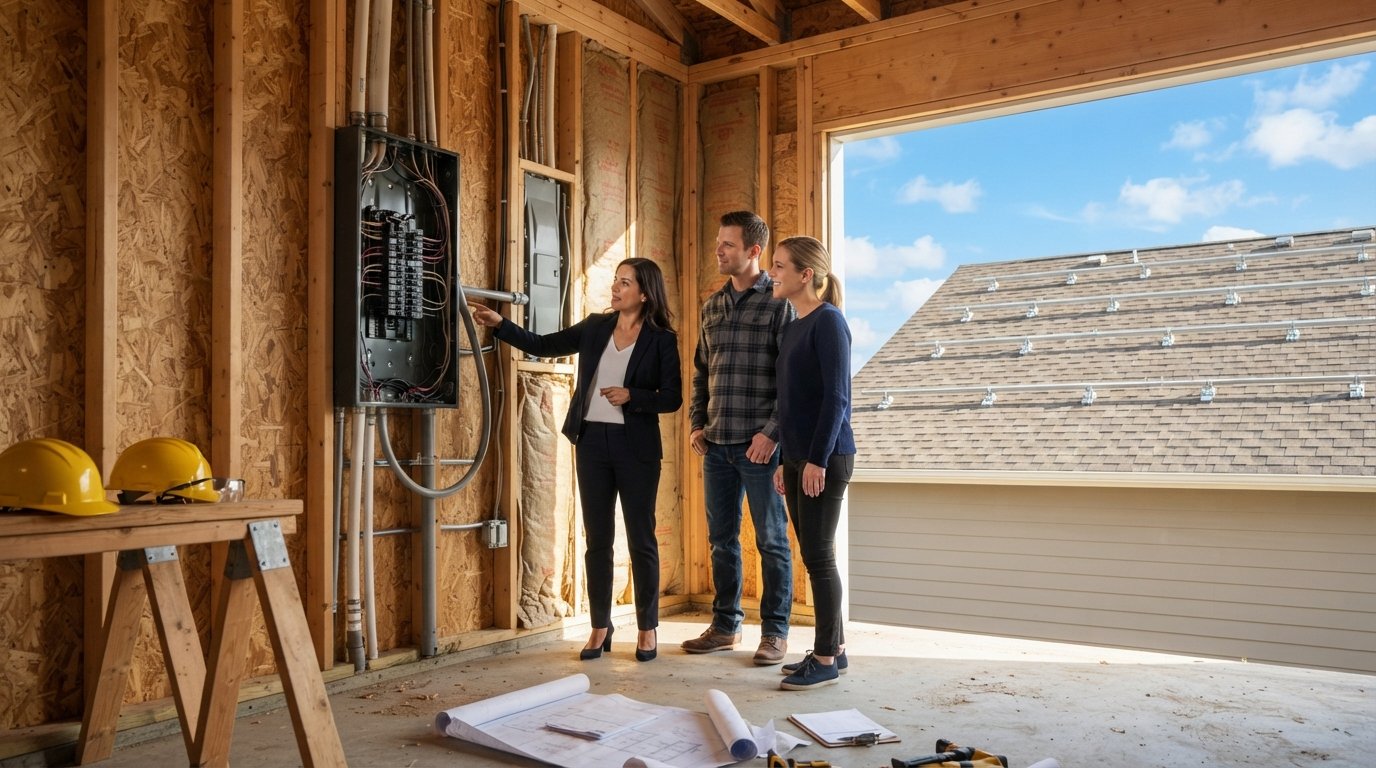
In the construction industry, "solar ready" is not a standardized, universal code. It is a marketing term that generally implies the home has been designed to accommodate the future installation of solar panels. However, the depth of this preparation can range from a simple conduit run to a fully engineered roof structure. For a home to be genuinely ready for a photovoltaic (PV) system, it needs specific physical and electrical attributes. Without these, a future installation could cost you significantly more, or worse, be impossible without major renovations.
To determine if a home is truly ready, you must look beyond the sales brochure. A genuinely solar-ready home typically includes dedicated space in the electrical panel for a double-pole breaker, a conduit run from the attic to the main service panel, and a roof that is structurally sound enough to handle the weight of the panels. If any of these elements are missing, you are looking at a retrofit situation rather than a seamless installation. Builders who cut corners here create hidden costs for homeowners down the line.
There are three primary tiers of solar readiness you might encounter in the 2026 housing market. Understanding these tiers helps you negotiate with your builder and plan your budget effectively.
- Solar Conduit Only: The builder has installed a pipe from the roof to the electrical panel. This is the bare minimum and saves you the hassle of running wires through finished walls later.
- Solar Structural Prep: The roof trusses have been reinforced to handle the additional weight of panels, and the roof orientation is optimized for sun exposure. This is a high-value feature.
- Solar Plug-and-Play: The home comes with pre-installed mounting hardware, inverters, or even a battery backup system ready to connect. This is the most expensive but convenient option.
Knowing which tier your builder is offering determines how much you will need to invest later. If the builder only ran conduit, you still need to budget for the panels, the inverter, and the labor to mount them. If they reinforced the roof, you have already saved money on structural engineering fees. Always ask for the specific definition of "solar ready" in your contract.
The Financial Upside: Incentives and Equity
One of the strongest arguments for buying a solar-ready home is the financial flexibility it offers. By preparing the home during the construction phase, you can often roll the cost of the solar system into your mortgage. This is a massive advantage over paying out of pocket later. A mortgage interest rate is typically much lower than the interest rate on a personal loan or a solar-specific financing agreement. This allows you to own the system outright from day one rather than leasing it.
Furthermore, installing solar on a new construction home allows you to take full advantage of federal and state incentives. The federal tax credit, often referred to as the Investment Tax Credit (ITC), can cover a significant portion of the system cost. To understand the current financial landscape, you should review a detailed guide on Top Solar Panel Incentives You Should Know, as these programs change annually. When you bundle the solar installation with your home purchase, the appraisal value of the home often increases immediately, reflecting the added value of the renewable energy system.
However, the financial benefits are not automatic. You must ensure the builder passes the tax credit savings on to you. Some builders will offer a "solar package" but keep the tax credit for themselves as a profit center. You must discuss the ownership structure of the solar panels before closing. If the builder owns the system and leases it to you, you miss out on the tax credit and the long-term equity of ownership. Always aim to own the system outright.
Critical Questions to Ask Your Builder
When you are in the sales office, the builder's agent may not be an energy expert. They are there to sell the house, not to explain the nuances of inverter efficiency or net metering. You need to be proactive and ask specific, technical questions that force them to commit to details in writing. Vague answers like "it's ready for solar" or "you just need to call a guy" are red flags. A reputable builder will have clear answers and documentation.
Here is a list of questions you must ask to protect your investment and ensure the home meets your future needs. These questions cover the structural, electrical, and legal aspects of the installation.
- What is the age and condition of the roof? Solar panels last 25 to 30 years. If your roof needs replacing in 10 years, you will have to pay to remove and reinstall the panels, which is expensive. Ensure the roof has a lifespan that matches or exceeds the solar system.
- Is the electrical panel "solar ready"? Check if the panel has enough physical space for the solar breakers. If the panel is full, you may need a costly service upgrade to 200 amps or more.
- Who owns the solar renewable energy credits (SRECs)? These credits have cash value. You want to ensure the contract states that you, the homeowner, retain ownership of the SRECs.
- What is the roof orientation and shading? Solar panels need south-facing exposure in most cases. If the builder puts the solar-ready conduit on a north-facing roof, the system will underperform.
- Are there any HOA restrictions? Some homeowners associations have rules about panel placement. Ensure the builder has already cleared solar installation with the HOA.
If the builder cannot answer these questions, you may be dealing with a surface-level "solar ready" claim. In that case, you should factor in the cost of potential electrical upgrades or roof repairs into your budget. It is better to know these costs now than to discover them after you move in.
Evaluating the Quality of the Installation
If the builder is including the solar panels as part of the purchase, the quality of the equipment matters immensely. Not all solar panels are created equal. Builders often use the most cost-effective equipment to maximize their margins, which might not be the most efficient or durable option for you. You should ask for the specifications of the panels, the inverter, and the mounting hardware.
Look for Tier 1 solar panels, which are manufactured by reputable companies with strong warranties and bankability. The inverter, which converts DC power to AC power, is the brain of the system. String inverters are cheaper but less efficient if one panel is shaded. Microinverters or power optimizers are more expensive but offer better performance and monitoring capabilities. If the builder is installing a system, ensure it uses high-quality components that will last decades.
Beyond the equipment, the workmanship of the installation is critical. A poorly installed system can lead to roof leaks, electrical fires, and voided warranties. If possible, ask to see other homes in the development that have solar installed. Check if the wiring is neat, the mounting is secure, and the roof penetrations are properly sealed. If the builder is subcontracting the solar work to the lowest bidder, you may run into quality control issues.
Connecting with the Right Professionals
If your builder is not offering solar as a turnkey solution, or if you are buying a home that is only "solar ready" (empty conduit), you will need to hire a contractor. This gives you the freedom to choose the best equipment and financing for your needs. However, finding a reliable installer can be challenging in a crowded market. You want to work with certified professionals who have experience with new construction and understand local building codes.
To get the best deal and ensure quality, you should compare multiple quotes. You can use platforms like FreeSolarPowerQuotes to connect with vetted solar providers in your area. This service allows you to receive free, no-obligation quotes, helping you understand the market rate for your specific home. Comparing quotes side-by-side helps you avoid overpaying and ensures you are working with a reputable company.
When vetting installers, check their certifications, such as NABCEP (North American Board of Certified Energy Practitioners). Ask for references from recent customers, particularly those with new construction homes. A good installer will conduct a site audit, analyze your energy consumption history, and design a system that offsets your usage accurately. They should also handle all the permitting and interconnection paperwork with your utility company.
Understanding Net Metering and Utility Policies
The value of your solar system depends heavily on your utility company's net metering policy. Net metering allows you to sell excess electricity back to the grid. In many states, utilities are changing these policies, moving from full retail credit to lower wholesale rates. This change can significantly impact the payback period of your solar investment. Before you commit to a system size, research your utility's current policy and any proposed changes.
In some areas, installing a battery backup system is becoming more cost-effective than relying on net metering. Batteries allow you to store excess energy generated during the day for use at night, reducing your reliance on the grid. If your home is solar ready, it may also be battery ready. Check if there is a designated space for a battery installation, preferably in a temperature-controlled area like a garage. Batteries add cost but provide energy security during power outages and can help you maximize your savings under new rate structures.
Navigating these policies can be complex. It is often helpful to consult with a solar specialist who understands the local utility landscape. They can model different scenarios, showing you the return on investment for a solar-only system versus a solar-plus-storage system. This data-driven approach ensures you are making a decision based on facts, not just sales pitch promises.
In conclusion, buying a solar ready new construction home is a smart move toward energy independence, but it requires due diligence. You must verify the definition of "solar ready," inspect the quality of any included equipment, and understand the financial incentives available to you. By asking the right questions and working with trusted professionals, you can turn your new house into a high-performance, energy-efficient home that saves you money for decades.