
State Renewable Portfolio Standards Impact on Solar Growth
State renewable portfolio standards impact on solar growth by creating SREC markets and rebates. Call (833)-212-3715 to compare installer quotes and maximize savings.

By Amelia Griffin
Learn more about Solar Panel Installation and Repair for guides, costs, and what to expect.
Compare Solar Panel Installation and Repair Pros Near You
Enter your ZIP code to compare top-rated local professionals and request free quotes.
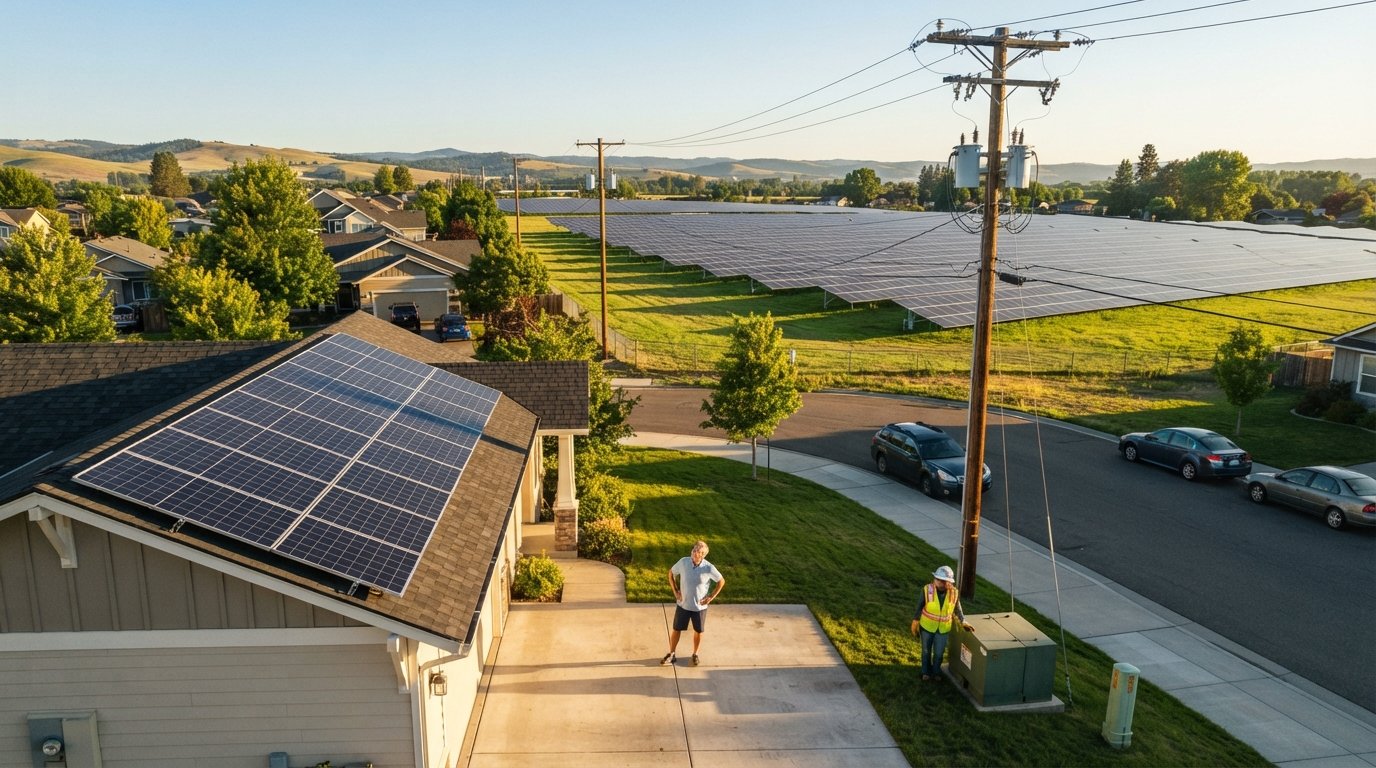
When you see a new solar array on a neighbor's roof or a community solar farm sprouting on the edge of town, there is a good chance a state renewable portfolio standard (RPS) helped make it happen. These unassuming laws, passed quietly in statehouses over the past three decades, have become one of the most powerful drivers of solar adoption in the United States. They force utilities to buy a growing share of their electricity from renewable sources, and that mandate ripples outward to create markets, incentives, and opportunities for homeowners and businesses alike. Understanding how these standards work can help you see why solar is booming in some states and lagging in others, and it can help you decide whether now is the right time to invest in your own clean energy system.
What Are State Renewable Portfolio Standards?
A renewable portfolio standard is a regulation that requires electricity providers to source a minimum percentage of their retail electricity sales from renewable energy resources by a specific target date. While the federal government has offered tax credits and research support, it has never enacted a national RPS. That means the policy landscape is a patchwork of state-level rules, each with its own timeline, eligible technologies, and enforcement mechanisms. As of 2026, more than half of U.S. states plus the District of Columbia have binding RPS requirements, while several others have voluntary goals or clean energy standards that include nuclear and large hydropower.
These standards are not just symbolic. They create legally enforceable demand for renewable electricity. Utilities that fall short typically face alternative compliance payments, penalties, or both. To meet their obligations cost-effectively, utilities and competitive suppliers turn to renewable energy certificates (RECs), which represent the environmental attributes of one megawatt-hour of renewable generation. Solar has a special place in many RPS programs through a carve-out called a solar renewable energy certificate (SREC) market, which we will explore in detail shortly.
The design of each RPS varies widely. Some states set a single overall target, such as 50 percent renewable by 2030. Others layer on technology-specific requirements, like a certain number of megawatts from solar or distributed generation. Some allow utilities to meet their targets by building their own projects, while others rely on competitive markets. This variation explains why the state renewable portfolio standards impact on solar growth is so uneven from one region to the next.
How RPS Mandates Create Solar Renewable Energy Certificate Markets
The most direct way RPS policies accelerate solar growth is by creating a market for solar renewable energy certificates. An SREC is a tradable credit that represents the environmental benefits of one megawatt-hour of solar electricity. When a solar system generates power, it produces two distinct products: the electricity itself, which is used on-site or exported to the grid, and the SREC, which can be sold separately to a utility or supplier that needs to meet its solar obligation.
In states with strong SREC markets, this creates a second revenue stream for system owners. A homeowner in New Jersey or Maryland, for example, might earn several hundred dollars per year by selling SRECs generated by their rooftop array. That extra income improves the financial payback period and makes solar more attractive to households that might otherwise hesitate at the upfront cost. Over time, however, SREC prices can be volatile. When many systems come online and supply outpaces demand, prices can fall sharply, which is why some states have shifted to fixed incentive programs or declining block schedules.
The SREC model works best when the RPS includes a specific solar carve-out with a rising target. Without that dedicated requirement, solar competes against cheaper renewable sources like wind and large hydropower, and SREC values tend to languish. States that have maintained robust SREC markets typically review and adjust their targets periodically to keep supply and demand in balance.
Here is how the SREC mechanism typically flows from policy to homeowner benefit:
- The state legislature sets a solar carve-out within the overall RPS, requiring a specific amount of solar generation by a certain year.
- Utilities and competitive suppliers must purchase SRECs to demonstrate compliance, creating demand.
- Homeowners and businesses that install solar register their systems with a tracking program and earn one SREC for every megawatt-hour produced.
- System owners sell their SRECs through brokers or aggregation platforms, generating recurring income.
- As the RPS target rises, demand for SRECs grows, which supports solar installation activity across the state.
This market-based approach has proven effective at driving distributed solar growth, particularly in the mid-Atlantic and Northeast. However, it is not the only way RPS policies support solar. Some states use alternative compliance payments to fund solar rebates directly, while others require utilities to procure a certain percentage of their renewable energy from distributed sources, which includes rooftop solar.
States With the Strongest RPS Targets and What They Mean for Homeowners
Not all RPS policies are created equal. Some states have aggressive targets that extend decades into the future, while others have modest goals that are already met or nearly met. For homeowners considering solar, the strength of the state RPS is a useful indicator of how supportive the local policy environment is likely to be.
California, for example, has a renewable portfolio standard that requires 60 percent renewable electricity by 2030 and 100 percent carbon-free electricity by 2045. The state also has a long history of solar-specific programs, including the California Solar Initiative and net energy metering. As a result, California consistently ranks at or near the top in installed solar capacity. New York has a similarly ambitious clean energy standard, with a goal of 70 percent renewable electricity by 2030 and 100 percent zero-emission electricity by 2040. The state's NY-Sun program and robust SREC market have made solar a common sight on rooftops across the state.
Other states with strong RPS targets include Illinois, which has a 25 percent renewable goal by 2025 and a long-term plan for 100 percent clean energy by 2050, and Colorado, which has a 30 percent renewable requirement for investor-owned utilities by 2020 and a goal of 100 percent clean electricity by 2040. Massachusetts, Maryland, New Jersey, and Washington also have ambitious standards that include specific solar carve-outs or distributed generation requirements.
For homeowners in these states, a strong RPS often translates into tangible benefits: more generous net metering policies, higher SREC or incentive values, and a greater likelihood that utilities will offer solar-friendly programs. It also signals that the state is committed to renewable energy over the long term, which can reduce the risk of policy reversals that might undermine a solar investment.
By contrast, states with weak or no RPS requirements often have fewer solar incentives and less utility support for distributed generation. That does not mean solar is a bad investment in those states, but it does mean homeowners need to rely more heavily on federal tax credits, utility rebates, and favorable net metering rules that may be less generous. If you are exploring your options, you can request quotes from certified installers to see what is available in your area.
How RPS Changes Affect Net Metering and Utility Programs
RPS policies do not operate in a vacuum. They interact with other regulations, especially net metering, which allows solar owners to receive credit for excess electricity they send to the grid. In states with strong RPS targets, utilities often have a financial incentive to support net metering because distributed solar helps them meet their renewable obligations. However, as solar penetration grows, some utilities argue that net metering shifts costs to non-solar customers, leading to policy battles and revisions.
In recent years, several states have modified their net metering rules in response to these concerns. California, for example, transitioned from traditional net metering to a net billing tariff that pays lower rates for exported electricity. This change was driven in part by the state's success in meeting its RPS goals, which reduced the need for additional solar incentives. Similarly, Hawaii, which has among the highest solar penetration rates in the country, replaced net metering with a self-supply program after its RPS-driven solar boom threatened grid stability.
These changes highlight an important dynamic: RPS policies can be victims of their own success. When solar adoption reaches high levels, utilities and regulators may adjust programs to ensure grid reliability and cost fairness. For homeowners, this means that the earlier you install solar in a state with a strong RPS, the more likely you are to lock in favorable net metering terms. Waiting can mean lower compensation for exported power or a shift to time-of-use rates that favor battery storage.
Utility programs also evolve in response to RPS requirements. Some utilities offer solar rebates, community solar subscriptions, or green power purchasing options as ways to meet their targets while offering customers choice. These programs can be valuable for renters or homeowners whose roofs are not suitable for solar panels. However, they may not offer the same level of savings as owning your own system, so it is worth comparing offers carefully.
Why RPS-Driven Incentives Vary Year to Year
One of the most confusing aspects of RPS policy for homeowners is the year-to-year variability of incentives. A rebate that was available last year may be reduced or eliminated this year. SREC prices can fluctuate widely. Net metering rules can change with a regulatory decision. Several factors drive this variability.
First, RPS targets are often designed with step-down schedules. For example, a state might require a certain percentage of renewable energy by 2020, a higher percentage by 2025, and so on. As the state gets closer to its target, the need for additional incentives decreases, and programs may be scaled back. Second, the supply of solar projects can outpace demand for SRECs, causing prices to fall. Third, political changes can lead to shifts in energy policy, either strengthening or weakening RPS requirements. Fourth, federal tax credits and other incentives can change, altering the overall financial picture.
For homeowners, this variability means it is important to stay informed about current incentives in your state and to act when conditions are favorable. If you are considering solar, a good first step is to get multiple quotes from certified installers who can explain the available incentives and help you model your savings. You can also consult state energy office websites and utility program pages for the most up-to-date information.
It is also worth noting that RPS policies are not the only game in town. Federal tax credits, like the Investment Tax Credit (ITC), provide a baseline of support that is available regardless of state policy. Many states offer additional rebates, tax exemptions, and loan programs. And some utilities offer their own incentives. Combining these programs can significantly improve the economics of solar.
Looking Ahead: The Future of RPS and Solar Growth
As we move further into the 2020s and 2030s, the state renewable portfolio standards impact on solar growth will continue to evolve. Several trends are worth watching. More states are adopting 100 percent clean energy goals, which go beyond traditional RPS targets and often include specific provisions for distributed solar. At the same time, some states are reconsidering the role of SRECs and net metering as solar costs continue to decline. The growth of energy storage is also changing the calculus, as batteries allow solar owners to store excess power and use it when the sun is not shining, reducing reliance on the grid.
For homeowners, the key takeaway is that RPS policies create opportunities, but those opportunities are time-sensitive. The most generous incentives tend to be available early in a program's life, before the market matures and costs come down. If you are in a state with a strong RPS and favorable net metering, you may be able to lock in significant savings by installing solar sooner rather than later. If you are in a state with weaker policies, you may still benefit from federal incentives and falling equipment prices, but it is worth checking what local programs are available.
Ultimately, the decision to go solar depends on your individual circumstances: your electricity usage, your roof's orientation and condition, your budget, and your long-term plans for your home. But understanding the role of state renewable portfolio standards can help you make a more informed choice. These policies are not just abstract regulations; they are the engine behind many of the incentives and programs that make solar affordable today.
If you are ready to explore your options, a good next step is to gather quotes from multiple installers and compare their recommendations. You can also research your state's RPS and incentive programs to see what you qualify for. With the right information and a bit of planning, you can take advantage of the momentum behind renewable energy and start saving on your electricity bills while reducing your carbon footprint. ContractorHomeQuotes