Troubleshooting Common Solar Panel System Issues
Fix common solar issues with our troubleshooting guide, from inverter error codes to shading. Need expert help? Call (833)-212-3715 for a free quote.
By Scott Thompson
Learn more about Solar Panel Installation and Repair for guides, costs, and what to expect.
Compare Solar Panel Installation and Repair Pros Near You
Enter your ZIP code to compare top-rated local professionals and request free quotes.
Your solar panels are supposed to be a set-and-forget investment, silently turning sunlight into savings. But when the inverter display shows a cryptic error, your monitoring app flatlines, or your electric bill creeps back up, that hands-off confidence can quickly turn into frustration. The good news? Many solar system hiccups are simple to diagnose and fix on your own, and knowing what to check can save you a costly service call. This guide walks you through troubleshooting common solar panel system issues, from decoding inverter error codes to deciding when it is time to call a certified technician. Whether you are a new solar owner or have had panels for years, these practical steps will help you protect your investment and keep your system producing at its best.
Start With the Inverter: Your System's Diagnostic Hub
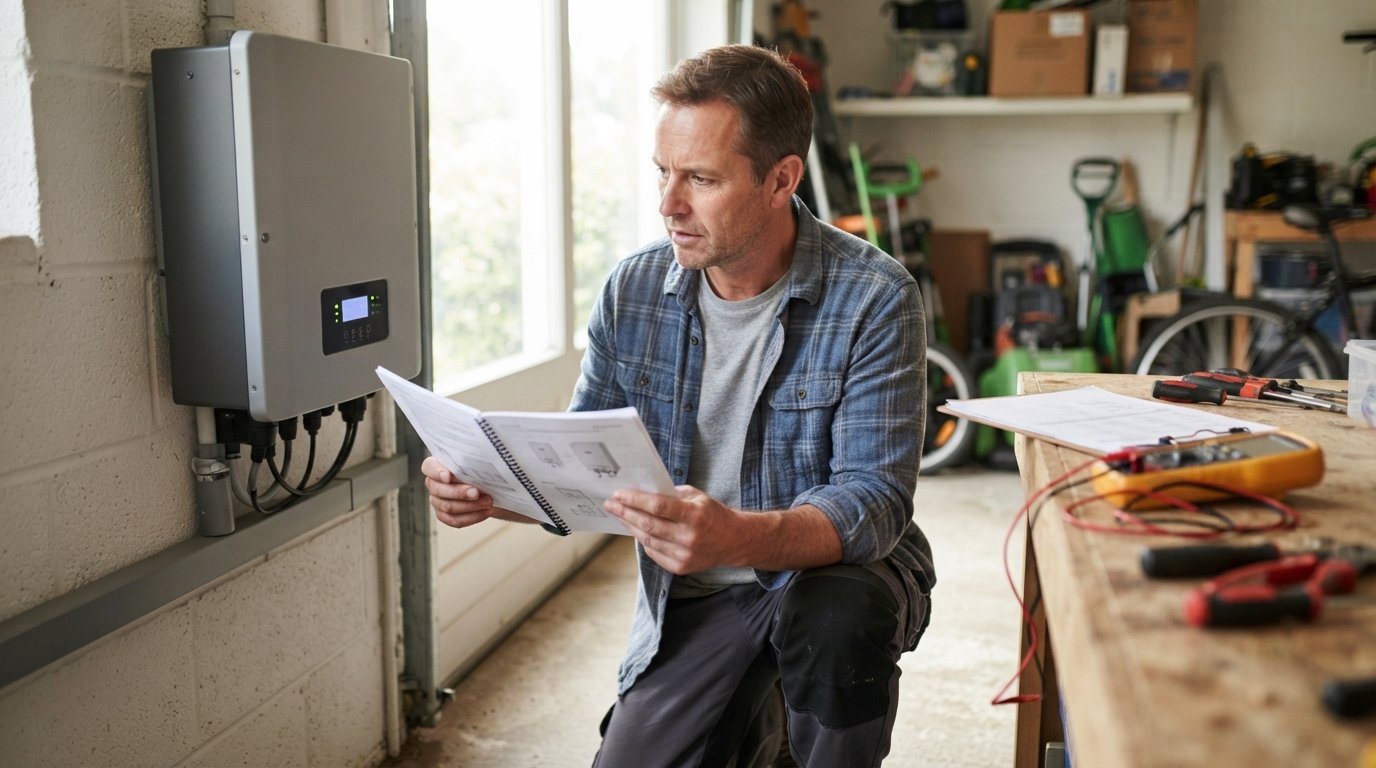
The inverter is the brain of your solar system, converting the direct current (DC) electricity from your panels into the alternating current (AC) your home uses. It is also the component most likely to display error codes or warning lights when something goes wrong. Before you panic, grab your inverter manual or look up the model online. Most manufacturers provide a troubleshooting chart that maps each code to a specific issue.
Common inverter error codes fall into a few broad categories. Ground fault errors indicate that current is leaking to the ground, often due to moisture in a connection or damaged wiring. Arc fault codes signal a dangerous electrical arc, which requires immediate attention. Grid-related errors (such as over-voltage or under-voltage) usually mean the utility grid is outside the inverter's acceptable range, and the unit shuts down to protect itself. Other codes may point to overheating, communication failures, or internal hardware faults.
When you see an error, first note the exact code and check your manual. Many inverters have a reset button or a procedure to clear transient faults (for example, a grid voltage spike during a storm). If the code persists after a reset, do not ignore it. Ground faults and arc faults, in particular, should never be repeatedly reset without investigating the underlying cause. If you are unsure, contact a certified installer. For a reliable starting point, you can request a free quote from vetted professionals through affordable solar panel systems for homeowners.
Check the Basics: Breakers, Disconnects, and Ground Faults
Before diving into complex diagnostics, verify that your system is receiving and delivering power as it should. A surprising number of production issues stem from something as simple as a tripped breaker. Your solar system has several safety disconnects: a main AC breaker in your electrical panel, a DC disconnect near the inverter, and sometimes a rapid shutdown switch. If any of these are off or tripped, the system will not produce.
Start at your main electrical panel. Look for a breaker labeled "solar" or "PV" and check if it is in the tripped position (usually halfway between on and off). Flip it fully off and then back on to reset. Next, inspect the DC disconnect switch near the inverter, making sure it is in the "on" position. If your system has a rapid shutdown device, confirm it has not been activated. These steps take only a minute and can resolve many no-production calls.
Ground faults and arc faults are more serious. A ground fault occurs when DC current finds a path to ground, often through damaged insulation or water intrusion. Arc faults happen when a connection loosens or corrodes, creating a spark. Both are safety hazards. If your inverter reports a ground fault or arc fault, do not reset it repeatedly. Instead, note the code, shut down the system if you can do so safely, and call a certified technician. These faults can damage equipment or start a fire if ignored. A qualified solar professional has the tools to trace the fault and make repairs. If you are also planning a move, resources like Moving.Homes offer checklists and tips to help you manage the transition, including what to do about your solar system.
Distinguishing Shading Issues From Equipment Failure
A sudden drop in production does not always mean a component has failed. Shading is a common culprit, especially as trees grow or seasons change. Even a small shadow on one panel can disproportionately reduce output for the entire string, depending on your system's design. To determine whether shading is the problem, compare your production curve on a sunny day with a day when you suspect shading. If the drop occurs only at certain times (for example, when the sun passes behind a tree), shading is likely the cause.
Other environmental factors can mimic equipment failure. Dust, pollen, bird droppings, and leaves can accumulate on panels and reduce output. A visual inspection from the ground can reveal obvious soiling. If panels are dirty, a gentle cleaning with water and a soft brush can restore performance. However, never walk on your roof without proper safety equipment. For hard-to-reach panels, consider hiring a professional cleaning service.
Equipment failure, on the other hand, often presents differently. If one panel or a group of panels consistently underperforms while others are fine, you may have a faulty panel, a bad optimizer, or a wiring issue. Monitoring systems that track per-panel performance make this easier to spot. If you see a persistent, unexplained drop in one section, it is time to call a technician for a diagnostic visit. They can use thermal imaging or IV curve tracing to pinpoint the problem.
When to Reset and When to Call a Certified Technician
Knowing your limits is crucial for safety and warranty compliance. Some issues are safe for a homeowner to address: tripped breakers, dirty panels, and transient inverter faults that clear with a reset. Others require a licensed professional. As a rule of thumb, if the problem involves opening electrical enclosures, climbing on the roof, or repeatedly tripping safety devices, stop and call an expert.
Here is a quick guide to help you decide:
- Safe for DIY: Resetting a tripped AC breaker, cleaning panels from the ground with a long-handled brush, clearing debris around the array, and performing a soft reset on the inverter as described in the manual.
- Call a technician: Persistent ground faults, arc faults, inverter hardware errors, physical damage to panels or wiring, rapid shutdown malfunctions, and any issue that recurs after a reset.
- Emergency: Sparks, smoke, burning smells, or exposed wiring. In these cases, shut down the system if possible and contact emergency services or your installer immediately.
Attempting repairs beyond your skill level can void warranties and create serious safety risks. Certified solar technicians have the training and equipment to diagnose and fix complex issues quickly. They can also check for recalls or firmware updates that might resolve persistent error codes. If you do not already have a trusted installer, ask neighbors or check online reviews. Many companies offer diagnostic services even if they did not install your system.
Preventive Maintenance: Avoiding Future Troubles
While troubleshooting is necessary when problems arise, prevention is even better. A little routine maintenance can ward off many common solar issues. Schedule a professional inspection every few years to check connections, clean panels safely, and verify that the system is performing to spec. Between inspections, monitor your production regularly through your inverter app or web portal. Knowing what normal looks like helps you spot anomalies early.
Keep an eye on vegetation. Trim trees that cast shadows on your panels, and remove any debris that accumulates. After severe weather, inspect your system from the ground for obvious damage. If you notice anything unusual, document it with photos and contact your installer. Keeping your inverter in a shaded, well-ventilated area also helps prevent overheating, which can cause derating or shutdowns.
Finally, stay informed about your system's warranty and manufacturer support. Some issues may be covered under warranty, and the manufacturer may offer troubleshooting assistance over the phone. Having your system's documentation organized will make any service call more efficient. By combining smart self-checks with professional support, you can keep your solar investment productive for decades.
Solar systems are remarkably reliable, but like any technology, they occasionally need attention. With these troubleshooting tips, you are now better equipped to handle common issues and know when to seek expert help. Remember, your installer is your best resource for complex problems, and regular maintenance is the key to long-term performance.
Learn more about Solar Panel Installation and Repair for guides, costs, and what to expect.
Compare Solar Panel Installation and Repair Pros Near You
Enter your ZIP code to compare top-rated local professionals and request free quotes.