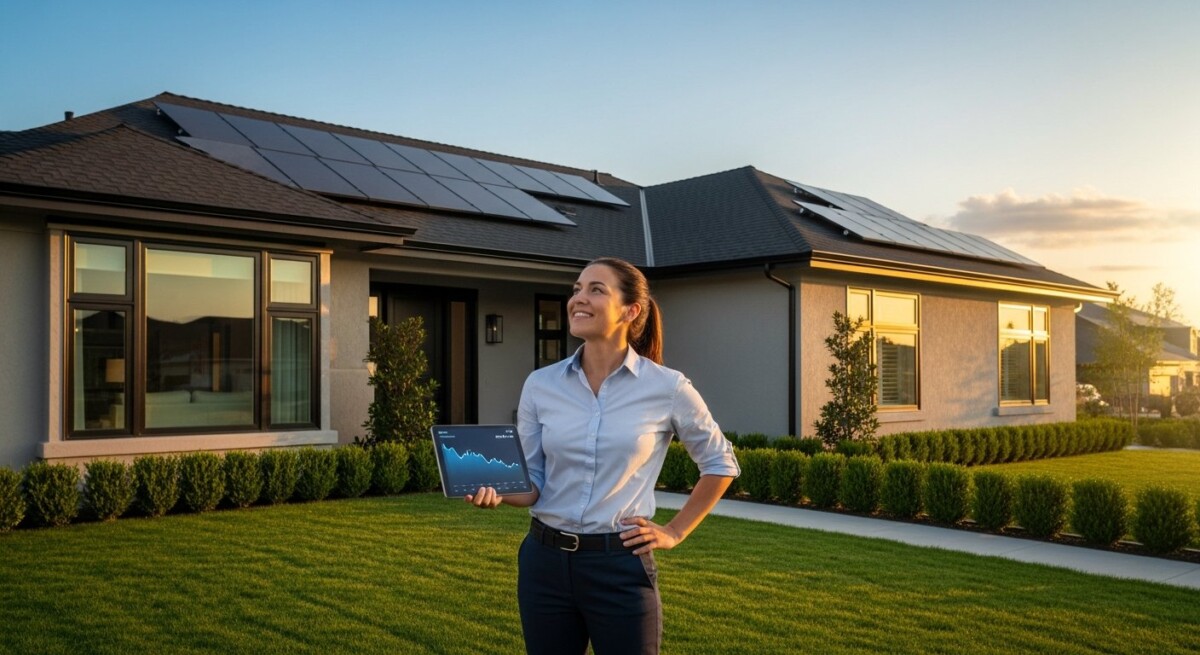
You’ve likely watched your electricity bill climb steadily over the years. Each month, that bill arrives, a constant reminder of your home’s energy consumption and your dependence on the utility company. It’s this very situation that leads so many homeowners to ask a pivotal question: can solar panels power whole house? The desire to reduce those monthly costs and gain more control over your energy future is a powerful motivator. This guide will explore that question in clear, practical terms, helping you understand how solar energy can work for your home.
Understanding Can Solar Panels Power Whole House
The short answer is a resounding yes. A properly designed and installed solar panel system can absolutely provide all the electricity your home needs. This concept is known as achieving “net-zero” energy use, where your solar panels produce as much power as you consume over the course of a year.
It works by converting sunlight into direct current (DC) electricity. An inverter then transforms that DC power into the alternating current (AC) electricity that your home’s appliances and lights use. Any excess energy your panels produce is typically sent back to the grid, often earning you credits from your utility company.
Modern systems are highly efficient and reliable. With advancements in technology and careful planning, powering your entire home with solar energy is not just a futuristic dream,it’s a practical reality for millions of homeowners today.
What Does “Powering a Whole House” Really Mean?
It’s important to clarify that solar panels power your home by offsetting your total annual energy use. They don’t necessarily create an isolated, off-grid bubble. You remain connected to the traditional power grid, which acts as a giant battery.
During sunny days, your system may produce more than you need, sending power back. At night or on cloudy days, you draw power from the grid. Over a 12-month period, the goal is for these imports and exports to balance out, effectively powering your whole house with solar.
Why Solar Energy Is Becoming More Popular
Homeowners are turning to solar power for several compelling reasons. First and foremost are the significant financial savings. By generating your own power, you can drastically reduce or even eliminate your monthly electricity bill, protecting yourself from unpredictable rate hikes.
There’s also a growing desire for energy independence. Producing your own electricity means you’re less vulnerable to grid outages and price fluctuations. It gives you direct control over a major household expense, providing long-term stability and predictability.
Environmental concerns are another major driver. Switching to clean, renewable solar power significantly reduces your household’s carbon footprint. It’s a tangible step toward a more sustainable lifestyle, allowing you to contribute directly to a healthier planet for future generations.
If you are considering solar power for your home, comparing installation quotes can help you understand your options. Request a free solar quote or call to learn more.
Common Questions Homeowners Have About Solar
It’s natural to have questions when considering a major home upgrade like solar. Many homeowners wonder about the upfront cost, which can seem significant. However, with today’s financing options, federal tax credits, and local rebates, solar is more accessible than ever, offering a strong return on investment over time.
Another common concern is whether a specific home is suitable. Factors like roof direction, shading from trees, and local climate all play a role. A reputable installer will conduct a detailed assessment to determine your home’s solar potential and design a system that maximizes it.
- How much does a solar panel system cost, and what are the financing options?
- Will solar panels work on my roof, and what if it’s not perfectly south-facing?
- What happens during cloudy days or at night? Do I need batteries?
- How long will the installation process take, and will it disrupt my daily life?
- What maintenance is required for a solar panel system?
- How do solar panels affect my home’s resale value?
How Solar Panel Installation Works
The process of installing a solar system is methodical and managed by professionals from start to finish. It begins with a comprehensive evaluation of your home’s energy needs and physical characteristics. This ensures the system is tailored specifically for you.
Your installer handles all the complex paperwork, including securing permits and applying for incentives. The physical installation is typically quick, often completed in just a few days. The final step is connecting your system to the grid and flipping the switch on your new source of clean power.
- Home Energy Assessment & Consultation: An expert reviews your electricity bills, evaluates your roof, and discusses your goals.
- Custom System Design & Proposal: The installer designs a system to meet your energy needs and provides a detailed quote.
- Permits & Approvals: The company secures necessary building permits and utility interconnection agreements.
- Equipment Delivery & Installation: Panels, inverters, and racking are installed on your roof by a certified crew.
- Inspection & System Activation: A final inspection is done, and your utility grants permission to operate, turning your system on.
Speaking with experienced installers can help you determine the best solar solution for your home. Compare solar quotes here or call to explore available options.
Signs Your Home May Be Ideal for Solar
Certain characteristics make a home particularly well-suited for solar panels. The most obvious is having a roof with strong, unobstructed exposure to sunlight for most of the day. South-facing roofs are ideal in the Northern Hemisphere, but east and west-facing roofs can also be highly effective.
If you have high electricity bills, you stand to gain the most significant savings. The more you currently pay for power, the faster a solar investment typically pays for itself. It’s also beneficial if you plan to stay in your home for many years, allowing you to reap the long-term financial rewards.
- Your roof is in good condition and receives direct sunlight for at least 5-6 hours per day.
- You have high monthly electricity costs, indicating a strong potential for savings.
- You have sufficient, unshaded roof space (roughly 300-400 square feet for an average system).
- You plan to own your home for 7-10+ years to maximize the return on investment.
- Your local utility offers favorable net metering policies for solar customers.
- You live in an area with strong state or local solar incentives and rebates.
What Affects Solar Installation Costs
The total cost of a solar panel system is influenced by several key factors. The size of the system, measured in kilowatts (kW), is the primary driver,a larger system that powers more of your home will cost more upfront but also deliver greater savings. The quality and efficiency of the panels and inverters you choose also impact the price.
Installation complexity matters too. A simple, ground-mounted system on a single-story home with an easy-to-access roof will generally cost less than a complex installation on a multi-story home with a steep pitch. Most importantly, available incentives can dramatically reduce your net cost. The federal solar tax credit alone can cover 30% of the system cost, and many states and utilities offer additional rebates.
The cost of solar installation varies depending on your home and energy needs. Request personalized solar quotes or call to see what options are available.
Tips for Choosing a Reliable Solar Installer
Selecting the right installer is crucial for a successful solar experience. Look for a company with a strong track record, proper licensing, and certifications from organizations like the North American Board of Certified Energy Practitioners (NABCEP). They should be transparent about the entire process and provide clear, detailed proposals.
Always review warranties carefully. A reputable installer will offer strong warranties on both the equipment (often 25 years on panels) and their workmanship. Don’t hesitate to ask for references and read online reviews to hear about other customers’ experiences.
- Verify the installer’s licenses, insurance, and NABCEP certification.
- Choose a local company with several years of experience in your area.
- Review the full scope of warranties on equipment and labor.
- Read customer reviews and ask for references from recent installations.
- Ensure they handle the entire process, including permits and interconnection.
- Always compare detailed quotes from at least three different installers.
Long-Term Benefits of Installing Solar Panels
The long-term advantages of going solar extend far beyond the initial installation. The most immediate benefit is locking in lower, predictable energy costs for decades. While utility rates are almost certain to rise, the cost of the sunlight powering your panels remains free, providing a powerful hedge against inflation.
Solar panels are also a proven home improvement that increases property value. Studies consistently show that homes with solar panels sell faster and for more money than comparable homes without them. You also gain a profound sense of energy independence, knowing you are producing clean power right on your own roof. For more on how solar enhances your property, explore the benefits of a house with solar panels.
Frequently Asked Questions
Can solar panels completely eliminate my electric bill?
Yes, a correctly sized solar panel system can reduce your net electricity cost to zero. Through a process called net metering, excess power you send to the grid earns credits that offset power you draw at night or on cloudy days. Your goal is a system that produces as much energy as you use annually.
How long do solar panels last?
High-quality solar panels are built to last. Most manufacturers guarantee their panels will still produce at least 80-90% of their original output after 25 to 30 years. With minimal maintenance, they can continue generating electricity for decades beyond that.
Do I need a battery to power my whole house with solar?
No, you do not need a battery to power your home with solar. Most homes with solar remain connected to the grid, using it as backup. However, adding a battery storage system can provide backup power during outages and increase your energy independence.
What happens if my roof needs repairs after solar is installed?
Reputable installers use non-penetrating racking systems, and the panels can be temporarily removed for roof repairs. It’s wise to ensure your roof is in good condition before installation and to coordinate with your solar company for any future maintenance.
Will solar panels work in cold or cloudy climates?
Absolutely. Solar panels generate electricity from light, not heat, and can perform very well in cold, sunny weather. They still produce power on cloudy days, just at a reduced rate. Germany, a country not known for constant sun, is a world leader in solar energy. For a deeper dive into this topic, our article on do solar panels use heat explains the science clearly.
Are there tax credits or rebates for installing solar panels?
Yes. The federal government offers a Residential Clean Energy Credit, which allows you to deduct 30% of your solar system cost from your federal taxes. Many states, cities, and utilities offer additional rebates and incentives, making solar more affordable than ever.
Powering your entire home with solar energy is an achievable and financially smart goal for many homeowners. It offers a path to lower bills, greater energy independence, and a reduced environmental footprint. The key to a successful project lies in understanding your home’s unique needs and partnering with a qualified professional. By taking the step to compare detailed quotes from trusted local installers, you can make a confident, informed decision about harnessing the sun’s power for your home.