
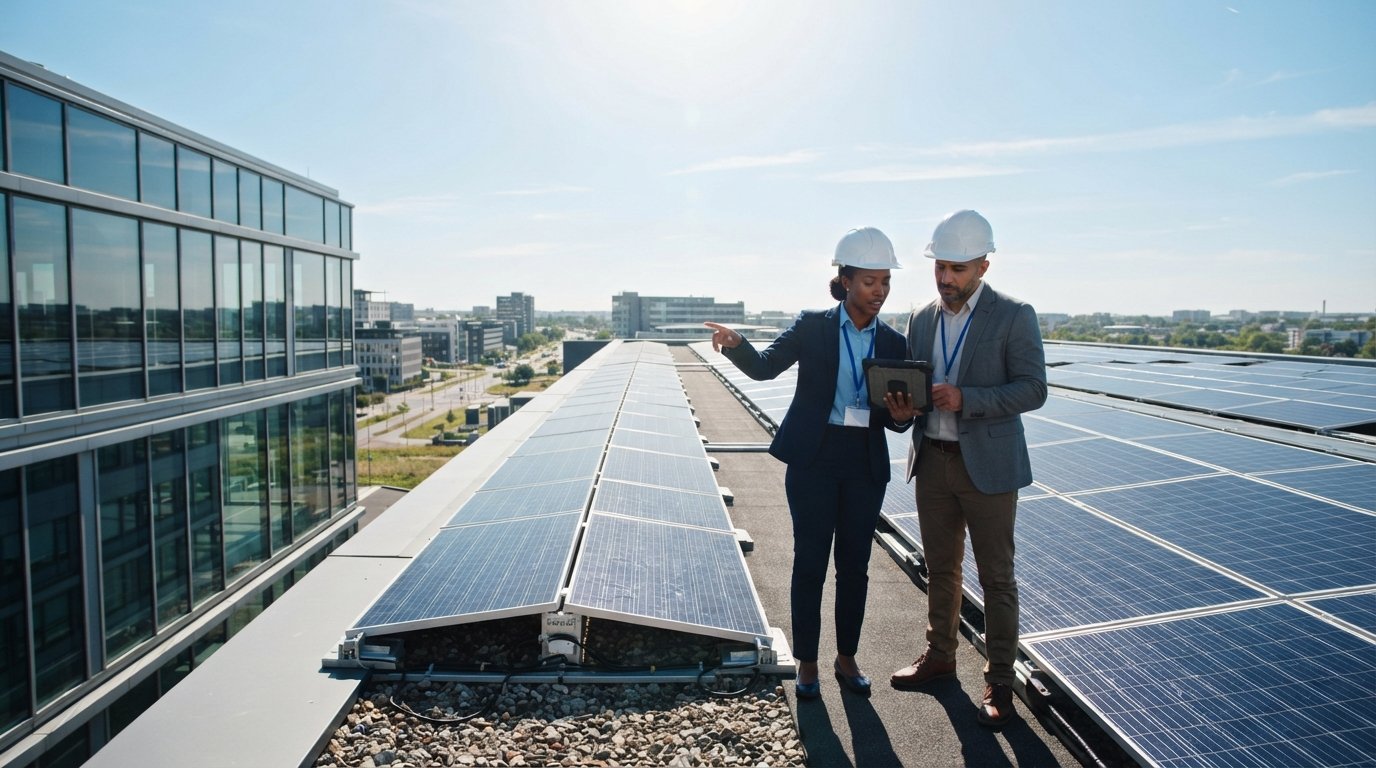
Commercial Solar Roof Lease vs Power Purchase Agreement
Compare commercial solar roof lease versus power purchase agreement to find the best fit. Call (833)-212-3715 for expert guidance and free quotes.

By Alex Carter
Learn more about Solar Panel Installation and Repair for guides, costs, and what to expect.
Compare Solar Panel Installation and Repair Pros Near You
Enter your ZIP code to compare top-rated local professionals and request free quotes.
For many business owners, the decision to go solar is not a question of if, but how to pay for it. Two of the most common third-party ownership structures are the commercial solar roof lease and the power purchase agreement (PPA). Both let you host a solar energy system on your roof with little or no upfront cost, but they differ significantly in ownership, cash flow, tax benefits, and long-term obligations. Choosing the wrong model can lock your business into an unfavorable contract for decades, so understanding the nuances is critical. This guide breaks down commercial solar roof lease versus power purchase agreement so you can make an informed decision that aligns with your financial goals and operational needs.
Who Owns the System and Who Claims the Tax Benefits
The fundamental difference between a lease and a PPA lies in who owns the solar energy system. In a commercial solar roof lease, a third-party investor (the lessor) owns the system, and your business (the lessee) pays a fixed monthly or annual lease payment for the use of the equipment. Because the lessor owns the system, they are entitled to claim the federal Investment Tax Credit (ITC), accelerated depreciation, and any available state or utility incentives. Your business does not own the system, so you cannot claim those tax benefits directly. However, the lessor typically passes through some of those savings in the form of lower lease payments.
In a power purchase agreement, the third-party developer also owns the system, but you agree to purchase the electricity it produces at a predetermined rate, typically per kilowatt-hour (kWh). As with a lease, the developer claims the ITC and depreciation. The key distinction is that your payments are tied to actual energy production, not a fixed lease amount. This means your savings fluctuate with system performance and your electricity consumption. For businesses with volatile energy needs, a PPA can offer more flexibility, but it also introduces variability in monthly costs.
It is important to note that under both models, the third-party owner is responsible for maintenance and repairs, which can be a significant operational relief. However, the tax benefits and incentives are a major financial lever. If your business has a large tax appetite and can utilize the ITC and depreciation, direct ownership (purchasing the system with cash or a loan) might be more advantageous. But if you prefer to avoid the upfront capital and transfer the tax credits to a third party in exchange for lower energy costs, a lease or PPA can be attractive. For a deeper look at insurance requirements that apply to commercial solar systems, regardless of ownership model, see our guide on commercial solar system insurance coverage requirements.
Cash Flow and Balance Sheet Impacts for Your Business
Cash flow is often the deciding factor for businesses considering solar. A commercial solar roof lease typically requires a fixed monthly payment, which can be structured as an operating expense (opex). This predictable payment makes budgeting easier, but it does not vary with energy production. If the system underperforms, you still owe the lease payment, which could erode your expected savings. On the other hand, a PPA charges you only for the electricity produced, so if the sun does not shine, your payment is lower. However, PPAs often have a minimum production guarantee, and you may still owe a portion of the expected bill if the system underperforms.
From a balance sheet perspective, both leases and PPAs are generally treated as operating leases under current accounting rules (ASC 842), meaning they do not add debt to your balance sheet. This can preserve your borrowing capacity for other investments. However, the specific accounting treatment can vary based on contract terms, so consult your accountant. It is also worth noting that lease payments are typically fixed and may escalate annually by a predetermined percentage (e.g., 1-3%), while PPA rates may be fixed or escalate, often starting below your current utility rate and increasing over time.
To illustrate, consider a manufacturing company with a large warehouse roof. Under a lease, they might pay $2,000 per month regardless of production. Under a PPA, they might pay $0.08 per kWh, and if the system produces 25,000 kWh in a month, the bill is $2,000. If production drops to 20,000 kWh, the bill falls to $1,600. This variability can be a blessing or a curse, depending on your risk tolerance and energy usage patterns. For businesses with stable, high energy consumption, a lease offers predictability. For those with variable usage or a desire to align costs with output, a PPA may be preferable.
Roof Access, Maintenance, and End-of-Term Obligations
Under both a commercial solar roof lease and a PPA, the third-party owner is responsible for installing, maintaining, and repairing the solar energy system. This includes panel cleaning, inverter replacements, and monitoring. However, the contract will specify access rights and obligations that can affect your building operations. For example, the lessor or developer may need periodic access to the roof for inspections and maintenance, and you must grant that access. If your roof needs repair or replacement during the lease term, you may be responsible for the cost of removing and reinstalling the solar array, which can be substantial. Some contracts include provisions for roof replacement, but others do not.
End-of-term obligations are another critical area. At the end of a lease, you typically have the option to renew the lease, purchase the system at fair market value, or have the system removed. Removal costs can be significant, and some contracts place that burden on the lessee. With a PPA, you may have the option to purchase the system, extend the agreement, or have it removed. It is essential to read the fine print regarding removal and restoration of your roof to its original condition. Additionally, if you sell the building during the term, the new owner must typically assume the lease or PPA. Transferability provisions vary, and some contracts require the seller to buy out the system or pay a transfer fee. Understanding these obligations upfront can save you from costly surprises.
Maintenance responsibilities also include insurance. Even though the third party owns the system, your property insurance may need to cover the solar equipment, or the third party may carry its own insurance. Clarify this in the contract to avoid gaps in coverage. For businesses concerned about liability, it is wise to review insurance requirements carefully, as mentioned in our earlier link.
Buyout Options and Transferability If the Property Sells
Buyout options allow you to purchase the solar energy system before or at the end of the lease or PPA term. In a lease, the buyout price is often predetermined or based on fair market value. In a PPA, the buyout price may be based on the remaining contract value or fair market value. Early buyout can be advantageous if you want to own the system and claim future incentives, but it may come with a premium. It is important to model the financial outcomes of buying out versus continuing the agreement.
Transferability is crucial if you plan to sell your property. Most leases and PPAs are transferred to the new owner, but the new owner must qualify financially and agree to the terms. Some contracts allow the seller to buy out the system to facilitate the sale, but this can be expensive. Alternatively, you may need to find a buyer willing to assume the contract. If the new owner does not want the system, you may be forced to remove it at your cost. Therefore, before signing, consider your long-term plans for the property. If you anticipate selling within the lease term, negotiate transfer terms that are favorable or include a buyout option that is affordable.
Additionally, some contracts include a "transfer fee" or require the new owner to pay a portion of the remaining payments upfront. These costs can complicate a real estate transaction. It is advisable to have a legal review of the contract, especially if you are not familiar with solar agreements. For businesses that may relocate, understanding these provisions is essential. If you are planning a move, resources like Moving.Homes offer practical guidance on relocation, but for solar contracts, legal advice is paramount.
Questions to Ask Before Signing a Long-Term Agreement
Before committing to a 20- to 25-year solar lease or PPA, ask detailed questions to protect your interests. The following list covers key areas to clarify with the developer or lessor.
- What is the exact rate escalation schedule, and how does it compare to projected utility rate increases?
- Who is responsible for roof repairs or replacement, and what are the costs if the system must be removed and reinstalled?
- What are the buyout options at year 5, 10, and 20, and how is the buyout price calculated?
- What happens if the system underperforms, and is there a production guarantee?
- What are the transfer requirements if I sell the building, and are there fees?
These questions help uncover hidden costs and obligations. Additionally, request a copy of the contract and have it reviewed by an attorney experienced in commercial solar agreements. Pay attention to termination clauses, insurance requirements, and end-of-term removal responsibilities. Understanding the total cost of ownership over the contract term is also wise; compare the net present value of lease or PPA payments against the cost of purchasing a system outright with a loan. For many businesses, a lease or PPA can be a smart way to go solar with minimal upfront cost, but only if the terms are transparent and aligned with your financial strategy.
Finally, consider the impact on your property value. Studies show that solar installations can increase property value, but leased systems may complicate appraisals and sales. Some buyers may be wary of assuming a long-term contract. Therefore, if you plan to sell, a PPA or lease with favorable transfer terms is essential. Weigh the convenience of third-party ownership against the potential exit challenges.
Ultimately, the choice between a commercial solar roof lease and a power purchase agreement hinges on your business's financial profile, risk tolerance, and long-term real estate plans. By understanding ownership, cash flow, maintenance, buyout, and transferability, you can negotiate a contract that maximizes savings and minimizes headaches. For personalized guidance and to compare quotes from certified installers, reach out to NewSolarQuotes at (833)-212-3715 or visit our website to request a free quote.