
Emerging Solar Cell Materials Beyond Perovskite and Tandem
Explore emerging solar cell materials beyond perovskite and tandem, from organic photovoltaics to quantum dots. Call (833)-212-3715 for expert guidance.

By Andrew Adler
Learn more about Solar Panel Installation and Repair for guides, costs, and what to expect.
Compare Solar Panel Installation and Repair Pros Near You

Enter your ZIP code to compare independent local professionals and request free quotes.
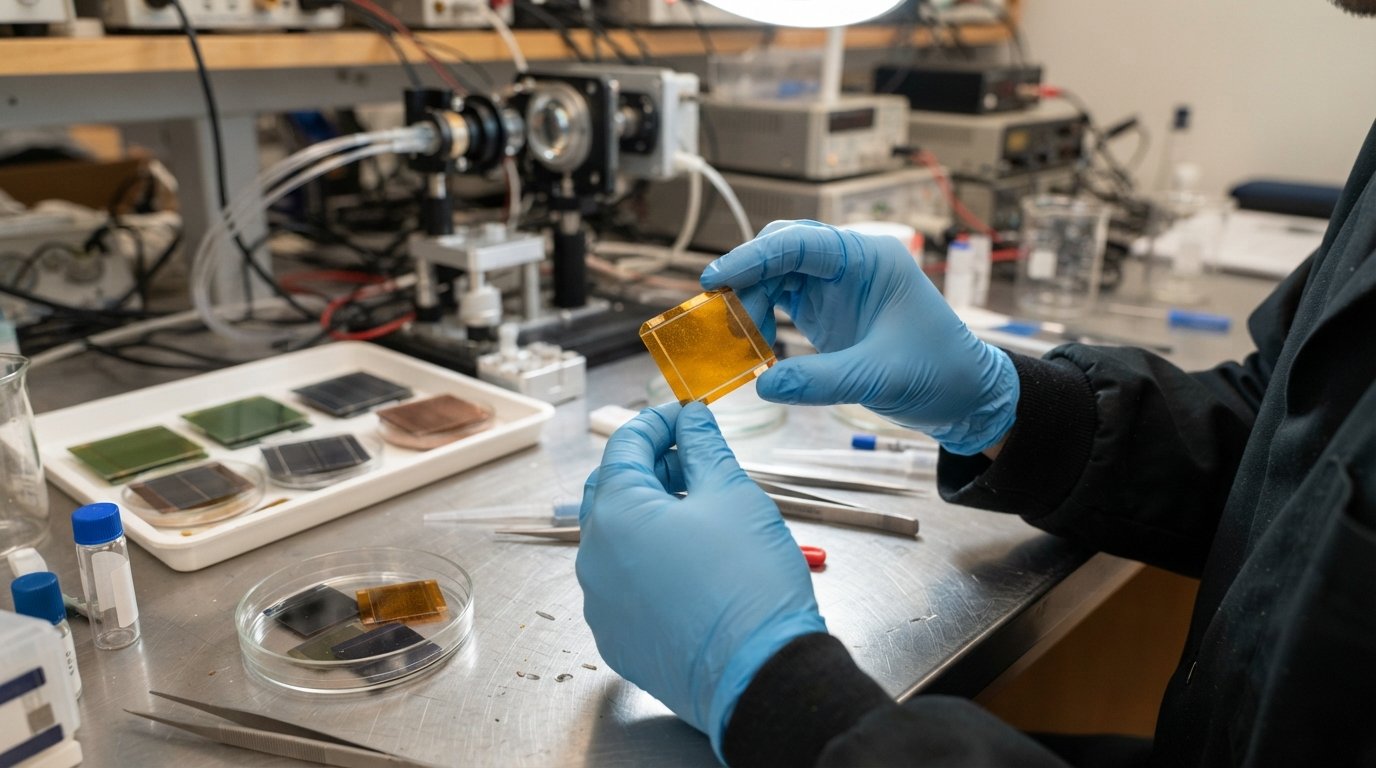
When most people think about the future of solar power, perovskite and tandem cells dominate the conversation. And for good reason: these technologies have smashed efficiency records and attracted billions in research funding. But beyond the perovskite hype cycle, a quieter revolution is taking place. A diverse family of emerging solar cell materials, from organic photovoltaics to kesterites and quantum dot cells, is steadily maturing. These materials promise benefits that perovskite and tandem designs cannot easily deliver: ultra-low-cost manufacturing, mechanical flexibility, nontoxic compositions, and seamless integration into buildings and products. For homeowners and businesses watching the solar market, understanding these alternatives is essential for making informed decisions about when to invest and what to expect from the next generation of panels.
Why Look Beyond Perovskite and Tandem?
Perovskite and tandem cells are undeniably exciting. Perovskite materials can be tuned to absorb different parts of the light spectrum, and tandem designs stack two or more absorber layers to push efficiencies above 30 percent in laboratory settings. However, they face well-documented hurdles: lead toxicity in many formulations, moisture sensitivity that demands rigorous encapsulation, and manufacturing scalability challenges. Tandem cells add complexity and cost, often requiring specialized interlayers and current-matching between subcells. These issues do not disqualify perovskite and tandem, but they create space for alternative materials that prioritize stability, low cost, and ease of production over raw efficiency.
Moreover, the solar market is not a monolith. Rooftop residential systems have different requirements than utility-scale farms or portable electronics. A material that excels in one niche may be poorly suited for another. By exploring emerging solar cell materials beyond perovskite and tandem, researchers and manufacturers can tailor solutions to specific applications, accelerating the overall transition to clean energy. For a broader look at how perovskite and bifacial panels are already entering the market, see our guide on emerging solar technologies with perovskite and bifacial panels.
Organic Photovoltaics: Flexible, Lightweight, and Cheap to Print
Organic photovoltaics (OPVs) use carbon-based semiconductors, often polymers or small molecules, to convert light into electricity. Unlike silicon or perovskite, OPV materials can be dissolved in solvents and printed onto flexible substrates using roll-to-roll processes, similar to newspaper printing. This enables ultra-thin, lightweight solar films that can be applied to curved surfaces, windows, and even clothing. The raw materials are abundant and potentially very low-cost, and the manufacturing process is energy-efficient compared to high-temperature silicon production.
The efficiency of OPVs has climbed steadily, with laboratory records now exceeding 19 percent for single-junction cells and over 20 percent for tandem organic cells. However, real-world deployment faces challenges. Organic materials degrade when exposed to oxygen, moisture, and ultraviolet light, requiring robust encapsulation. Lifetimes of commercial OPV modules are typically shorter than silicon, often in the range of 5 to 10 years, though improvements are ongoing. Despite these limitations, OPVs are finding early markets in portable chargers, building-integrated photovoltaics (BIPV), and Internet of Things devices where flexibility and lightweight properties matter more than decades-long durability.
For homeowners, OPVs could eventually appear as solar window films or roofing membranes that blend into the building envelope. But do not expect them to replace traditional rooftop panels soon. The efficiency gap and stability concerns mean OPVs will likely complement rather than displace silicon in residential settings.
Kesterites: Earth-Abundant and Nontoxic
Kesterites are a family of copper-zinc-tin-sulfide (CZTS) or copper-zinc-tin-selenide (CZTSe) semiconductors that offer a compelling alternative to copper-indium-gallium-diselenide (CIGS) cells. While CIGS uses indium and gallium, which are rare and expensive, kesterites rely on earth-abundant, low-cost elements: copper, zinc, tin, sulfur, and selenium. They are also nontoxic, avoiding the lead concerns associated with perovskites. Kesterite solar cells can be fabricated using solution-based or vacuum deposition techniques, making them compatible with flexible substrates and high-throughput manufacturing.
The main drawback is efficiency. While CIGS cells have reached over 23 percent in the lab, kesterite records hover around 13 to 14 percent for pure sulfide and slightly higher for selenide variants. The performance gap stems from defects and secondary phases that are difficult to control during film growth. Researchers are making progress through improved annealing processes, alkali doping, and interface engineering, but commercial modules remain limited. Kesterites are most likely to first appear in utility-scale or building-integrated applications where cost per watt and material abundance trump peak efficiency. For residential rooftops, they are not yet competitive with silicon or perovskite tandems.
Quantum Dot Solar Cells: Tuning the Spectrum
Quantum dot solar cells use nanoscale semiconductor particles (typically 2 to 10 nanometers in diameter) that can be tuned to absorb specific wavelengths of light by adjusting their size. This quantum confinement effect allows researchers to design cells that capture light across a broad spectrum or target specific bands. Quantum dots can be made from various materials, including lead sulfide, cadmium selenide, and more recently, nontoxic alternatives like copper indium sulfide. They can be processed from solution and deposited on flexible substrates, opening doors to lightweight, portable solar devices.
Laboratory efficiencies for quantum dot cells have reached over 18 percent for single junctions and over 20 percent in tandem configurations with other materials. However, stability and toxicity remain concerns. Many high-performing quantum dots contain lead or cadmium, raising environmental and health questions. Encapsulation is critical because quantum dots are sensitive to moisture and oxygen. Commercialization is still in early stages, with initial targets in niche markets such as sensors and portable electronics. For residential solar, quantum dot cells are unlikely to appear before the 2030s, if at all, unless nontoxic formulations and long-term stability are proven.
Efficiency Records Versus Real-World Stability
One of the most important lessons from emerging solar cell materials is that laboratory efficiency records do not translate directly to real-world performance. A cell that achieves 25 percent efficiency in a controlled environment may degrade rapidly outdoors due to humidity, temperature swings, and UV exposure. Stability is often measured using standardized tests such as damp heat (85 degrees Celsius and 85 percent relative humidity for 1000 hours) and light soaking. Many emerging materials struggle to pass these tests without expensive encapsulation or protective coatings.
For homeowners, this means that the panel you install today is likely to be silicon-based for at least the next decade. Silicon is not going anywhere: it is stable, abundant, and backed by a mature supply chain. Emerging materials will first enter markets where their unique properties (flexibility, transparency, lightweight) justify a premium or where stability requirements are less stringent. As a rule of thumb, any new material needs at least 10 to 15 years of field data before it can be considered bankable for residential rooftops. Perovskite and tandem cells are moving faster, but even they face a multi-year path to widespread adoption.
Which Technologies Could Reach Residential Rooftops First?
Among the emerging materials beyond perovskite and tandem, organic photovoltaics and kesterites have the most plausible near-term path to residential applications, albeit in limited forms. OPVs could appear as solar window films or flexible roofing shingles that are easier to install on complex roof geometries. However, their lower efficiency and shorter lifespan mean they will likely be used as supplements to traditional panels, not replacements. Kesterites, with their earth-abundant and nontoxic composition, could gain traction in building-integrated photovoltaics where cost and environmental profile matter more than peak efficiency.
Quantum dot cells are further out, with commercialization timelines typically projected beyond 2030. For homeowners planning a solar installation in the next few years, waiting for these materials is not advisable. The best strategy is to evaluate current silicon or perovskite-silicon tandem offerings based on your location, incentives, and energy needs. To compare quotes from independent local providers and plan ahead, you can use a free matching service. If you are also considering broader home upgrades alongside solar, services like USremodel can connect you with independent providers for remodeling and repair projects.
What Homeowners Should Watch Before Waiting for a Better Panel
The solar industry evolves quickly, and it is tempting to delay an installation in hopes of a breakthrough. But waiting has costs: electricity bills continue, incentives may change, and technology improvements are incremental. Instead of waiting, focus on these practical steps:
- Assess your current roof and energy usage. A solar installer can evaluate your roof's condition and shading, and recommend a system size that meets your needs. If your roof needs repairs, address those first.
- Understand available incentives and net metering rules. These vary by state and utility, and they can significantly affect your payback period. Locking in current rates may be more valuable than waiting for a slightly more efficient panel.
- Consider efficiency and degradation. Modern silicon panels degrade slowly (around 0.5 percent per year), so a system installed today will still produce most of its power in 25 years. Emerging materials may offer higher efficiency but with unknown degradation profiles.
- Monitor pilot programs and certifications. Keep an eye on building-integrated photovoltaic products and flexible solar films as they enter the market. Early adopters may face higher costs and limited availability.
- Compare quotes from multiple providers. The price variation between installers can be significant, and a well-designed system with quality components often outperforms a marginally more efficient panel installed poorly.
By staying informed about emerging solar cell materials beyond perovskite and tandem, you can make a decision that balances today's savings with future possibilities. The transition to sustainable energy is a long-term investment, and the best panel is the one that is installed, well-maintained, and properly sized for your home.
As research continues, the solar landscape will keep shifting. Organic photovoltaics, kesterites, and quantum dot cells each offer unique advantages that could reshape specific niches, from portable electronics to building facades. For now, silicon remains the workhorse, but the next decade will likely bring a more diverse mix of materials to the market. Homeowners who understand these trends can plan with confidence, knowing that today's solar investment is a solid step toward energy independence and lower carbon footprints.