
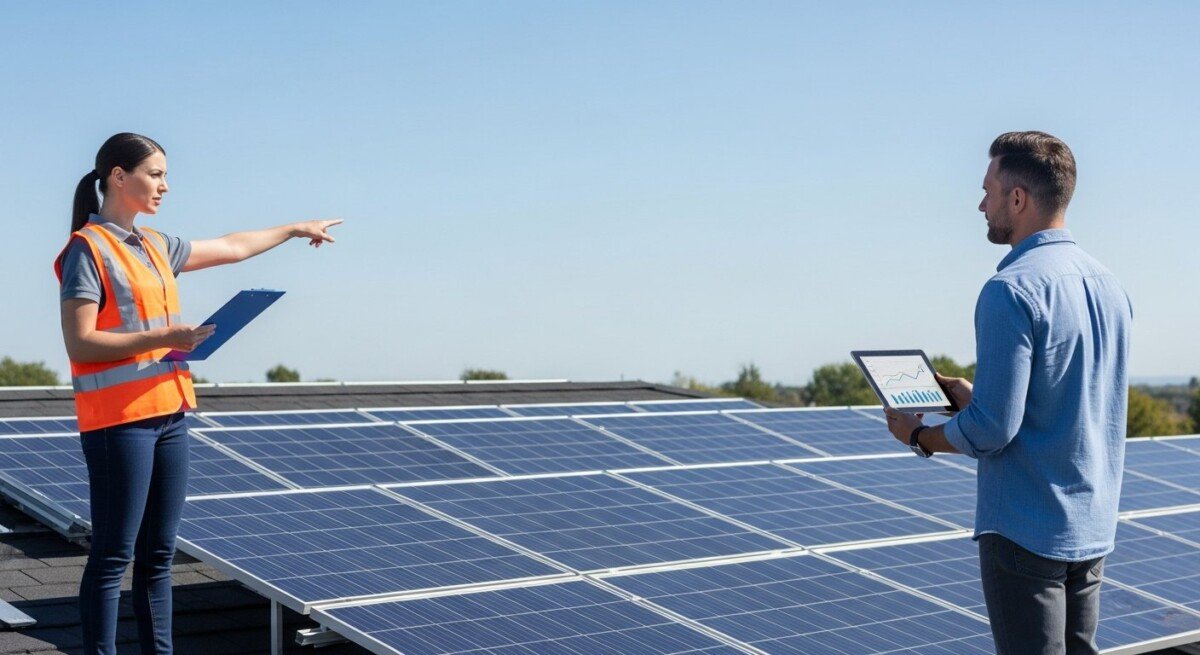
How Solar Pricing Is Calculated for Homeowners
Learn how solar pricing is calculated for your home. Understand the factors that affect cost, potential savings, and how to evaluate quotes from installers.

By Alexia Mabel
Learn more about Solar Panel Installation and Repair for guides, costs, and what to expect.
Compare Solar Panel Installation and Repair Pros Near You
Enter your ZIP code to compare top-rated local professionals and request free quotes.
If you’ve watched your electricity bill climb year after year, you’re not alone. Many homeowners are now looking for a way to take control of their energy costs and reduce their reliance on the unpredictable power grid. Understanding how solar pricing is calculated is the first step toward unlocking significant savings and energy independence for your home.
Understanding How Solar Pricing Is Calculated
Solar pricing isn’t a one-size-fits-all number. It’s a personalized estimate based on your home’s unique energy profile and physical characteristics. The final quote you receive reflects the cost of the equipment, labor, and services needed to build a system tailored just for you.
Installers calculate this by first determining how much electricity you need to offset. They then design a system with the right number of panels to meet that goal, considering your roof’s size, angle, and sun exposure. The final price combines the cost of panels, inverters, mounting hardware, permits, and professional installation.
Breaking Down the Cost Per Watt
You’ll often see solar system costs quoted as a price per watt ($/W). This is a standard industry metric that makes comparing quotes easier. To get your total gross price, the installer multiplies your system’s size (in watts or kilowatts) by this per-watt cost.
For example, a 10-kilowatt (kW) system priced at $3.00 per watt would have a gross cost of $30,000. This figure is before applying any financial incentives or rebates, which can substantially reduce your final net investment.
Why Solar Energy Is Becoming More Popular
Homeowners are turning to solar power for powerful financial reasons. With utility rates consistently rising, locking in a lower, predictable cost for electricity for decades is incredibly appealing. Solar panels are a long-term investment that shields you from future price hikes.
Beyond the wallet, environmental concerns are a major driver. Generating clean, renewable energy from your roof significantly reduces your household’s carbon footprint. It’s a tangible step toward a sustainable future that also provides the peace of mind that comes with energy independence.
The combination of proven technology, strong financial returns, and environmental benefit makes solar a compelling home upgrade. It’s no longer a niche product but a mainstream home improvement that adds value and modernizes your energy supply.
If you are considering solar power for your home, comparing installation quotes can help you understand your options. Request a free solar quote or call to learn more.
Common Questions Homeowners Have About Solar
It’s normal to have questions before making a significant investment. Many homeowners wonder about the upfront cost and how long it will take to see a return. Others are concerned about whether their roof is suitable or what happens on cloudy days.
Professional installers are experts at answering these questions clearly. They can provide detailed projections of your savings, assess your roof’s condition, and explain how net metering credits work with your utility. Their guidance helps you make a confident, informed decision.
- How much will a solar panel system actually cost for my home?
- Is my roof strong enough and does it get enough sun?
- How long will the payback period and system warranty last?
- What happens to my solar panels if I sell my house?
- Will solar work during a power outage?
- How do maintenance and cleaning work?
How Solar Panel Installation Works
The installation process is highly structured and managed by your chosen professional team. It begins with a detailed consultation and assessment of your home. This ensures the proposed system design is perfectly aligned with your energy goals and physical space.
Once you approve the design, your installer handles all the logistics. They pull the necessary permits, order equipment, and schedule the installation crew. The physical installation is typically completed in just a few days, with minimal disruption to your household.
- Home Energy Assessment & Consultation: Review your bills, evaluate your roof, and discuss your goals.
- Custom System Design & Proposal: Receive a tailored plan and a detailed quote outlining costs and savings.
- Permits & Approvals: Your installer secures all local building and utility interconnection permits.
- Equipment Delivery & Installation: Panels, inverters, and racking are installed by certified technicians.
- Inspections & System Activation: After passing final inspections, your system is connected to the grid and turned on.
Speaking with experienced installers can help you determine the best solar solution for your home. Compare solar quotes here or call to explore available options.
Signs Your Home May Be Ideal for Solar
Some homes are naturally better candidates for solar energy than others. The most important factor is access to strong, unobstructed sunlight for the majority of the day. A south-facing roof with minimal shading from trees or chimneys is typically ideal.
Your current energy consumption and costs also play a key role. If you have high monthly electricity bills, you have more potential savings to capture. This makes the investment in solar panels financially advantageous more quickly.
- Your roof is in good condition and receives direct sunlight for 5+ hours daily.
- You pay high monthly electricity bills, indicating strong savings potential.
- You have adequate, unshaded roof space (roughly 200-400 square feet per 5 kW).
- You plan to own your home for the next 5-10 years to realize the full financial benefit.
- Your local utility offers favorable net metering policies.
- You are interested in increasing your property value and sustainability.
What Affects Solar Installation Costs
The size of your system is the single biggest cost driver. A larger system with more panels costs more upfront but generates more electricity and greater long-term savings. Your installer will size your system based on your historical energy use and future needs.
Equipment quality and installation complexity also influence the price. Premium, high-efficiency panels and inverters may cost more but can produce more power in limited space. Factors like roof pitch, material, and the need for electrical upgrades can affect labor costs.
Critically, local and federal incentives have a massive impact on your net price. The federal solar investment tax credit (ITC) allows you to deduct a significant percentage of the system cost from your federal taxes. Many states and utilities offer additional rebates that further reduce your investment.
The cost of solar installation varies depending on your home and energy needs. Request personalized solar quotes or call to see what options are available.
Tips for Choosing a Reliable Solar Installer
Selecting the right installer is as important as choosing the right equipment. Look for a company with a strong track record of local installations and positive customer reviews. They should be licensed, insured, and certified by reputable organizations like NABCEP.
Always review the warranties offered on both the equipment and the workmanship. A strong warranty protects your investment for 25 years or more. Don’t hesitate to ask for references and to see examples of previous installations similar to yours.
- Verify licenses, insurance, and certifications (like NABCEP).
- Read customer reviews and ask for local references.
- Compare the details of equipment and workmanship warranties.
- Ensure they handle the entire process, including permits and interconnection.
- Get detailed, written quotes from at least three different companies.
- Choose a company that communicates clearly and answers all your questions.
Long-Term Benefits of Installing Solar Panels
The most immediate and satisfying benefit is watching your monthly electricity bills plummet. Solar panels can eliminate a large portion, if not all, of your utility costs for decades. This predictable energy cost acts as a hedge against rising utility rates.
Solar panels are also a proven home improvement that increases property value. Studies show buyers are willing to pay more for homes with owned solar systems. Beyond finances, you gain energy independence and contribute directly to a cleaner environment by reducing fossil fuel reliance.
This combination of savings, value, and sustainability creates a powerful return on investment. It’s a decision that benefits your budget today and contributes to a more secure and responsible future for your household.
How Does the Federal Solar Tax Credit Work?
The federal Investment Tax Credit (ITC) is a major financial incentive. It allows you to deduct a significant percentage of your solar system’s total cost from your federal income taxes. This credit directly reduces the amount of tax you owe, dollar-for-dollar.
If your tax liability is less than the credit in the first year, the remaining amount can typically be rolled over to future years. It’s crucial to consult with a tax professional to understand how the credit applies to your specific financial situation.
What Is Net Metering and How Does It Save Me Money?
Net metering is a billing arrangement with your utility company. When your solar panels produce more electricity than your home uses, the excess power is sent back to the grid. Your utility meter literally runs backwards, and you earn credits on your account.
At night or on cloudy days when your system isn’t producing enough, you draw power from the grid and use those credits. This process effectively uses the grid as a giant battery, ensuring you only pay for your net energy use over the billing period.
Do Solar Panels Require a Lot of Maintenance?
Solar panels are remarkably low-maintenance. They have no moving parts, so they require very little ongoing care. In most climates, rainfall is sufficient to keep them clean and operating efficiently.
It’s a good idea to have your system visually inspected annually and to check for any shading from new tree growth. Your installer can often provide a monitoring app so you can track your system’s performance right from your phone.
How Long Do Solar Panels Typically Last?
Today’s high-quality solar panels are built to last for 25 to 30 years or more. Most manufacturers guarantee that their panels will still produce at least 80-92% of their original output after 25 years.
The inverter, which converts solar energy to usable electricity, may need to be replaced once during the system’s lifespan. When evaluating quotes, pay close attention to the length and terms of the product and performance warranties.
Can I Install Solar If My Roof Isn’t Perfect?
Many roof types and conditions can still accommodate solar. Installers have mounting solutions for various materials like asphalt shingles, metal, tile, and flat roofs. An initial assessment will determine if your roof is structurally sound.
If your roof is older or needs repairs soon, it’s often recommended to replace it before installing solar. This avoids the cost of removing and reinstalling the panels later. Your installer can advise you on the best course of action.
What Happens to My Solar Panels If I Sell My House?
Solar panels can increase your home’s appeal and market value. Multiple studies have shown that homes with solar panels sell faster and for more money than comparable homes without them.
Be prepared to educate potential buyers about the system’s benefits, including the reduced electricity bills. Having your original paperwork, warranty information, and performance data readily available will make the process smooth.
Understanding how solar pricing is calculated empowers you to make a smart investment in your home’s future. By comparing detailed quotes from reputable installers, you can find the right system to maximize your savings and achieve energy independence. Take the next step today and see how solar can work for you.
Learn more about Solar Panel Installation and Repair for guides, costs, and what to expect.
Compare Solar Panel Installation and Repair Pros Near You
Enter your ZIP code to compare top-rated local professionals and request free quotes.