
Smart Solar Inverters: Features and Benefits for 2026
Smart solar inverters features and benefits 2026 explained, from remote monitoring to battery pairing. Call (833)-212-3715 for installer quotes.

Learn more about Solar Panel Installation and Repair for guides, costs, and what to expect.
Compare Solar Panel Installation and Repair Pros Near You
Enter your ZIP code to compare top-rated local professionals and request free quotes.
Your solar panels may get all the attention, but the inverter is the component that turns raw sunlight into usable household power and, increasingly, into strategic energy decisions. In 2026, smart solar inverters have evolved from simple DC-to-AC converters into intelligent hubs that monitor production, communicate with the grid, manage battery storage, and even help keep your home powered during outages. If you are planning a new solar installation or upgrading an aging system, understanding what smart inverters actually do (and what they do not do) is essential to choosing equipment that will serve you for the next 25 years. This guide breaks down the features that matter, the benefits you can expect, and the questions you should ask before signing a contract.
What Makes a Solar Inverter Smart in 2026
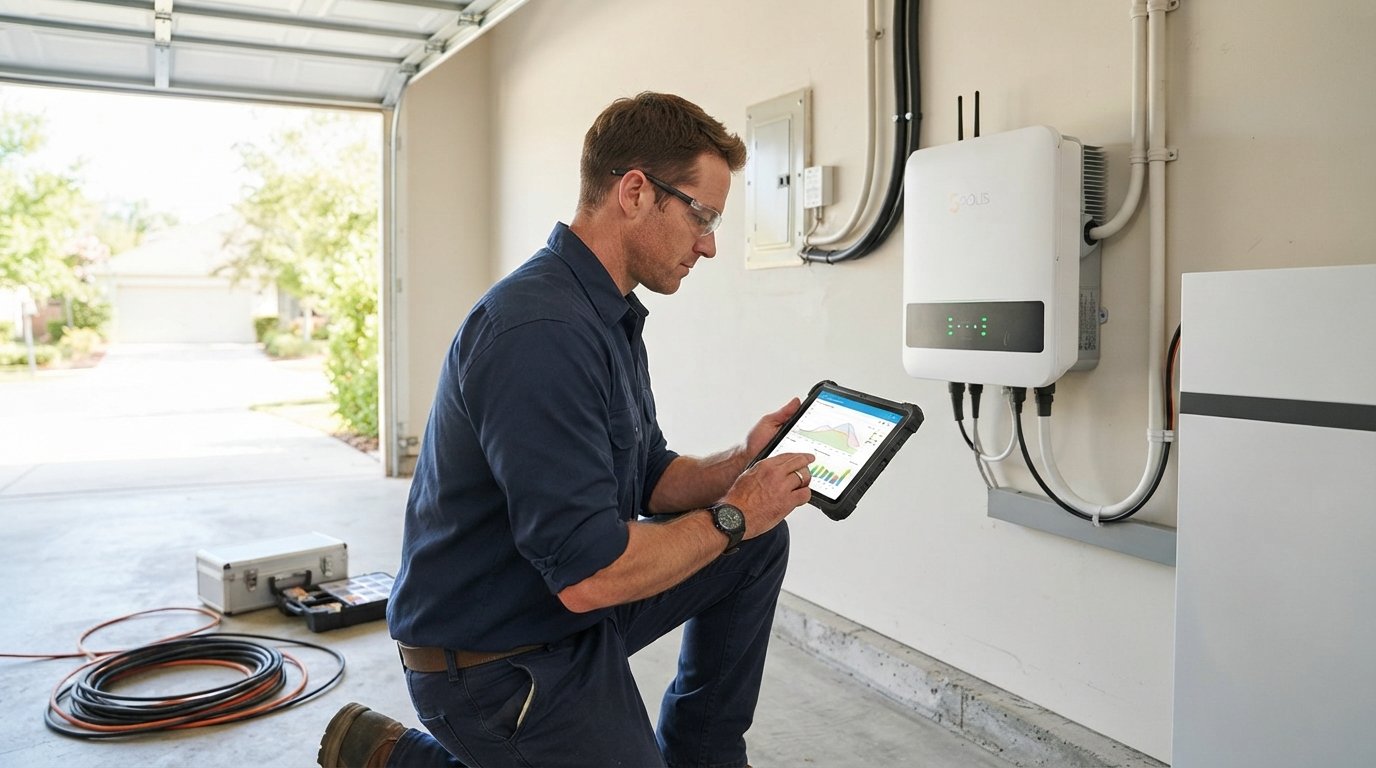
A conventional string inverter takes direct current from your panels and converts it to alternating current for your home. A smart inverter does that same job but adds computing power, two-way communication, and software intelligence. The result is a device that can be updated remotely, respond to utility signals, coordinate with batteries, and give you granular visibility into system performance. The difference is similar to moving from a basic flip phone to a smartphone: the core function remains, but the capabilities expand dramatically.
In practical terms, smart inverters in 2026 typically include built-in Wi-Fi or cellular connectivity, a mobile app for monitoring, and firmware that can be updated over the air. They also support advanced grid functions such as voltage and frequency ride-through, reactive power control, and rapid shutdown compliance. These features are not just technical niceties; they are increasingly required by utilities and building codes, and they directly affect how safely and efficiently your system operates.
If you are still building your foundational knowledge, our guide on what a solar inverter does for home energy savings explains the core function in plain language. Once you understand the basics, the smart features become easier to evaluate on their own merits.
Remote Monitoring and Firmware Updates: Visibility and Longevity
One of the most immediate benefits of a smart inverter is remote monitoring. Instead of waiting for a monthly utility bill to guess whether your panels are producing as expected, you can open an app and see real-time power output, historical generation, and fault alerts. This visibility helps you catch problems early, such as a shaded panel, a loose connection, or a failing optimizer, before they erode savings. For homeowners who travel or own rental properties, remote access is especially valuable because you can check system health from anywhere.
Firmware updates are the second pillar of smart inverter longevity. Manufacturers regularly release software improvements that enhance grid compatibility, fix bugs, add new features, or comply with updated standards. A smart inverter can receive these updates over the internet, often automatically, without a technician visit. That means your system can stay current with changing utility requirements and cybersecurity patches throughout its lifetime. Older non-connected inverters may require manual updates or simply lack the hardware to support new grid functions, which can become a liability as regulations evolve.
When comparing models, ask whether monitoring is included free of charge or requires a subscription, and confirm that the inverter supports over-the-air updates. Some manufacturers provide lifetime monitoring at no extra cost, while others charge after an introductory period. A few also offer optional cellular connectivity for homes with unreliable Wi-Fi, which is worth considering if your router is far from the inverter location.
Grid-Support Functions and Utility Communication
Smart inverters are active participants in the grid, not passive suppliers. They can help stabilize voltage and frequency by injecting or absorbing reactive power, riding through brief disturbances, and ramping output smoothly when clouds pass. These capabilities, often grouped under the term grid-support functions, are increasingly mandated by utilities and standards such as IEEE 1547 and UL 1741. In 2026, many jurisdictions require smart inverters to be certified for these functions before granting interconnection approval.
Utility communication is the other side of the coin. Some smart inverters can receive signals from the utility to curtail production during peak demand or to support grid reliability. While curtailment may sound like a downside, it is often a condition of interconnection for larger systems or areas with high solar penetration. The benefit is that smart inverters enable your system to remain compliant and interconnected, whereas a non-compliant inverter might be denied permission to operate. In addition, smart inverters support rapid shutdown requirements, which protect firefighters and utility workers by quickly reducing voltage in an emergency.
For homeowners, the practical takeaway is to confirm that your chosen inverter is on your utility's approved equipment list and meets local rapid shutdown codes. Your installer should handle this paperwork, but you should verify it yourself to avoid delays. The features are not optional in many markets; they are the price of admission for a grid-tied system.
Pairing Smart Inverters with Batteries and Home Energy Management
Smart inverters shine brightest when paired with battery storage. A hybrid or battery-ready inverter can coordinate charging and discharging based on time-of-use rates, solar production forecasts, and your household consumption patterns. For example, the inverter can charge your battery from solar during the day, then discharge it during expensive evening hours, reducing your reliance on the grid when rates are highest. It can also prioritize backup power for essential circuits during an outage, switching over automatically and safely.
Beyond batteries, smart inverters increasingly integrate with home energy management systems (HEMS). These platforms can coordinate solar, storage, EV charging, heat pumps, and other large loads to optimize for cost, carbon, or resilience. The inverter acts as a key data source and control point in that ecosystem. If you plan to add an electric vehicle or a heat pump water heater in the next few years, choosing an inverter with open APIs or broad compatibility can save you from a costly upgrade later.
Consider this checklist when evaluating battery and HEMS compatibility:
- Does the inverter support both AC-coupled and DC-coupled batteries, and which battery brands are certified?
- Can the inverter manage backup loads with a critical load panel, and what is the continuous power rating?
- Does the monitoring app integrate with third-party HEMS or smart home platforms?
- Are there open APIs or Modbus interfaces for advanced users and integrators?
- What is the warranty coverage when the inverter is paired with a battery?
These details matter because battery compatibility is not universal. A smart inverter that works seamlessly with one battery brand may require additional equipment or firmware for another. Ask your installer for a compatibility matrix and confirm that the battery you want is supported.
Rapid Shutdown and Code Compliance: Safety Features That Matter
Rapid shutdown is a safety requirement in many jurisdictions, including the National Electrical Code (NEC) in the United States. It requires that solar systems reduce voltage to a safe level within a specified time, typically at the module level or via a shutdown device, so that first responders can work safely on or near the roof. Smart inverters often incorporate or coordinate with rapid shutdown transmitters and receivers. Some models include integrated rapid shutdown functionality, while others rely on module-level electronics.
Code compliance goes beyond rapid shutdown. Smart inverters must also meet standards for arc-fault protection, ground-fault detection, and anti-islanding. In 2026, many utilities also require smart inverter certification for grid-support functions. Your installer should provide documentation showing that the inverter meets all applicable local codes and utility requirements. If you are comparing quotes, ask whether permit fees and utility interconnection costs are included, and confirm that the proposed inverter is explicitly listed on the utility's approved list.
Safety features are not glamorous, but they are non-negotiable. A smart inverter that lacks proper certification can delay your project or, worse, create a safety hazard. Treat code compliance as a baseline requirement, not a selling point.
Feature Checklist for Comparing Smart Inverter Models
With so many models on the market, it helps to have a structured way to compare them without getting lost in brand hype. The following checklist focuses on capabilities that affect performance, longevity, and your ability to manage energy costs. Use it as a starting point when reviewing quotes or spec sheets.
- Monitoring and connectivity: Is monitoring included free for the life of the system? Does it support Wi-Fi and cellular? Can you access data via an open API?
- Grid-support and compliance: Is the inverter certified to IEEE 1547 and UL 1741? Is it on your utility's approved list? Does it support rapid shutdown?
- Battery and HEMS compatibility: Which battery brands are certified? Does it support backup power? Can it integrate with home energy management systems?
- Power and efficiency: What is the continuous AC output, surge capacity, and CEC efficiency? Does it support multiple MPPTs for complex roof layouts?
- Warranty and service: What is the standard warranty length? Are extensions available? What is the replacement process and typical downtime?
After you shortlist two or three models, ask your installer to explain why they recommend one over another in plain language. A good installer will tie the features to your specific roof orientation, shading, backup goals, and budget. If they cannot explain the trade-offs clearly, that is a red flag.
Questions to Ask Your Installer About Monitoring Access
Monitoring access is one of the most overlooked details in a solar contract. You want to own your data and have full access to your system's performance history, not be locked into a proprietary portal with limited visibility. Before signing, ask these questions:
- Who owns the monitoring account, and will I have admin access?
- Is monitoring free for the life of the system, or is there a subscription after a trial period?
- What happens to monitoring if the manufacturer goes out of business or is acquired?
- Can I export my data, and does the system support third-party integrations?
- How are fault alerts delivered, and what is the service response time?
Also ask whether the installer provides a local data option, such as a local API or Modbus, in case cloud services change. Some homeowners prefer to integrate solar data into home automation systems, and that requires access that some manufacturers restrict. Clarifying these points upfront avoids frustration later.
Benefits You Can Expect from a Smart Inverter in 2026
The cumulative benefits of smart inverters go beyond individual features. First, you get greater energy independence: by coordinating solar and storage, you can reduce reliance on the grid during peak rates and outages. Second, you gain long-term flexibility: over-the-air updates and open standards mean your system can adapt to new tariffs, technologies, and regulations without a full replacement. Third, you get peace of mind from real-time monitoring and rapid safety features. Fourth, you may qualify for utility programs or incentives that require smart inverter capabilities, such as connected storage rebates or demand response programs.
From a financial perspective, smart inverters can improve the return on your solar investment by maximizing self-consumption of solar energy and minimizing expensive grid purchases. They also help future-proof your system against changing net metering rules, as utilities increasingly move toward time-of-use rates and export compensation that values grid services. While the upfront cost of a smart inverter may be slightly higher than a basic string inverter, the difference is often modest relative to the total system cost, and the functionality gap is substantial.
If you are still in the planning stage, it is worth noting that inverter selection should be part of a broader conversation about your energy goals. If you are also planning a move or need to coordinate a solar upgrade with a relocation, resources like Moving.Homes offer practical checklists and guides that can help you manage the transition without losing track of your energy projects.
Common Mistakes to Avoid When Choosing a Smart Inverter
One common mistake is choosing an inverter solely on price without checking utility approval and code compliance. A cheaper model that is not on the approved list can delay your project by weeks or force a replacement. Another mistake is assuming that all monitoring platforms are equal; some are limited to basic production data, while others provide granular module-level insights and export capabilities. A third mistake is ignoring battery compatibility until after the inverter is installed, which can limit your options for storage later.
Finally, do not overlook warranty terms and service logistics. A 25-year warranty sounds great, but if replacement requires shipping the unit overseas and waiting weeks, your downtime could be significant. Ask about local service partners and typical replacement timelines. A smart inverter is a long-term investment, so weigh reliability and support as heavily as feature lists.
Smart solar inverters in 2026 are more than a trend; they are the standard for new residential and commercial systems. By focusing on monitoring access, grid compliance, battery compatibility, and safety features, you can choose an inverter that delivers value for decades. Start with a clear feature checklist, ask your installer the right questions, and prioritize transparency and compatibility over brand hype. Your future self, and your energy bills, will thank you.