
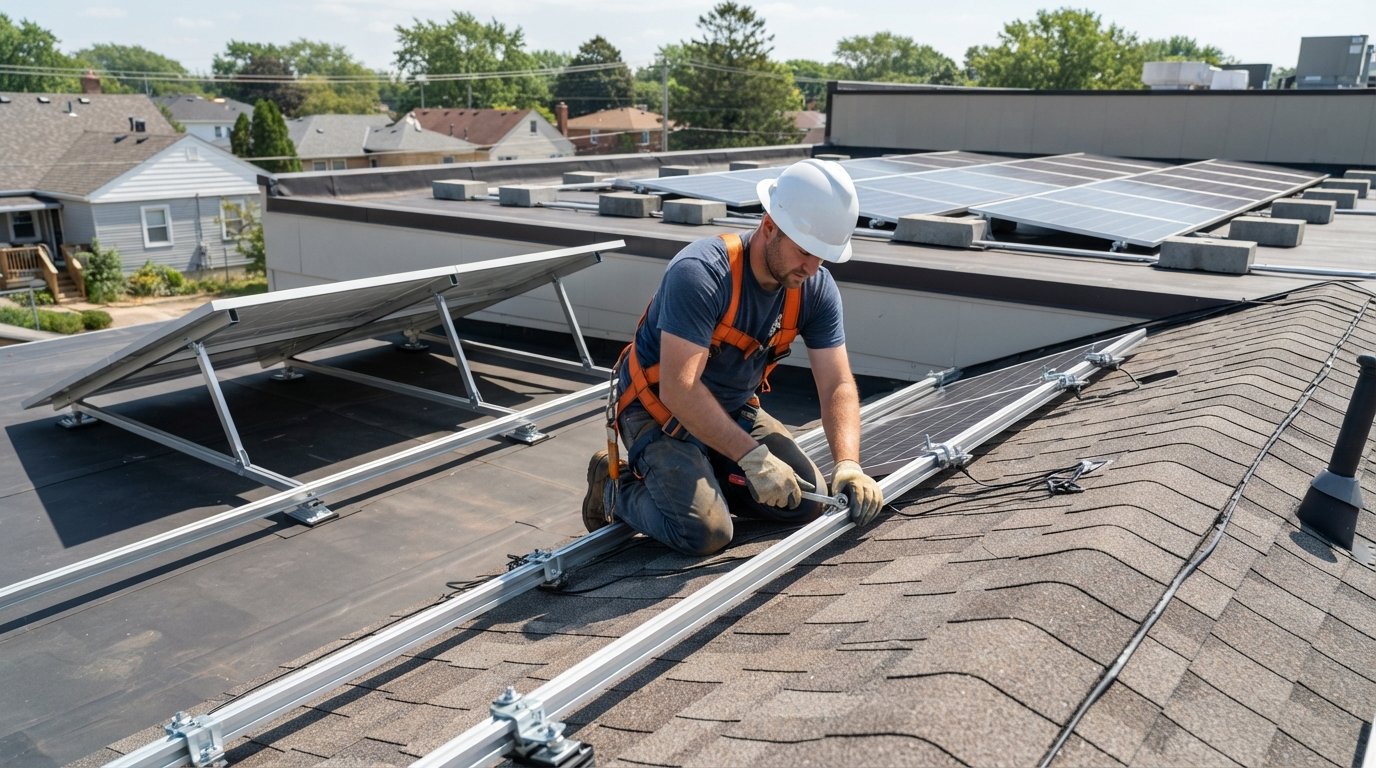
Solar Panel Racking Systems: Types and Mounting Options
Explore solar panel racking systems types and mounting options, from flush mounts to ground piles. Call (833)-212-3715 for expert guidance.
By Scott Thompson
Learn more about Solar Panel Installation and Repair for guides, costs, and what to expect.
Compare Solar Panel Installation and Repair Pros Near You

Enter your ZIP code to compare top-rated local professionals and request free quotes.
Choosing the right solar panel racking system is just as important as selecting the panels themselves. The racking, or mounting structure, holds your solar array in place for decades, determines how efficiently the panels capture sunlight, and directly affects installation costs and roof warranty. With so many options available, from flush mounts on asphalt shingles to ballasted systems on flat commercial roofs, it is easy to feel overwhelmed. This guide breaks down the most common solar panel racking systems types and mounting options, so you can make an informed decision and ask the right questions when comparing quotes from installers.
Flush Mount vs. Tilt-Up vs. Ballasted Racking
The three primary mounting approaches for solar arrays are flush mount, tilt-up, and ballasted. Each suits different roof types and energy goals. Flush mount systems run parallel to the roof surface, typically a few inches above it. They are the most common choice for pitched residential roofs because they are cost-effective, low-profile, and quick to install. However, flush mounting results in lower energy production than tilt-up systems because the panels do not face the sun at an optimal angle, especially on shallow roofs.
Tilt-up racking elevates the panels at a fixed angle, usually between 15 and 40 degrees, to maximize sun exposure. This option is ideal for flat roofs or high-latitude locations where the sun sits lower in the sky. Tilt-up systems increase energy yield but also require more mounting hardware and may increase wind exposure, so proper engineering is critical. Ballasted racking, on the other hand, uses weight (typically concrete blocks) to hold the array in place without penetrating the roof membrane. It is popular for flat commercial roofs where penetrations are undesirable, but it adds significant load to the structure and may not be suitable for all buildings. Homeowners with flat roofs should consult a structural engineer before choosing ballasted systems.
Rail-Based vs. Shared-Rail Systems and Wind Ratings
Within flush and tilt-up categories, racking can be rail-based or shared-rail. Rail-based systems use two or more aluminum rails running horizontally across the roof, with mounting feet attached to the roof structure. Panels are clamped to the rails. This design is versatile and widely compatible with different panel sizes, but it uses more material and can be slower to install. Shared-rail systems, also known as shared-rail or rail-less systems, eliminate the long rails and instead use individual mounting points that connect directly to the panel frames. These systems reduce material costs and installation time, but they require careful engineering to ensure proper wind uplift resistance.
Wind rating is a critical differentiator. Rail-based systems generally offer higher wind uplift capacity because the continuous rails distribute forces across multiple attachment points. Shared-rail systems rely on the panel frames themselves for structural integrity, so they must be tested and certified to meet local wind codes. In hurricane-prone regions like Florida or Texas, installers often prefer rail-based systems with third-party certifications (such as UL 2703) to satisfy permitting requirements and insurer demands. Always ask your installer for the wind rating of the proposed racking and confirm it meets your local building codes.
Ground-Mount Racking Foundations: Driven Piles vs. Concrete Ballast
Ground-mounted solar arrays offer flexibility in tilt angle and orientation, often producing more energy than roof-mounted systems. However, the foundation design is just as important as the racking itself. The two main foundation types are driven piles and concrete ballast. Driven piles are steel posts driven into the ground, typically used in areas with stable soil and sufficient frost depth. They are cost-effective and fast to install, but require soil testing to ensure load-bearing capacity. Concrete ballast uses pre-cast concrete blocks or poured concrete footings to anchor the racking. This method is better for rocky soil or sites where digging is difficult, but it is more expensive and time-consuming.
The choice between driven piles and concrete ballast affects installation cost, timeline, and long-term durability. For example, driven piles may not be suitable in areas with high water tables or expansive clay soils, where concrete ballast provides better stability. Additionally, some jurisdictions require engineered foundation plans, so your installer must account for local soil conditions and frost heave. When comparing quotes for ground-mounted systems, ask for the foundation design and ensure it includes soil tests and engineering stamps.
How Racking Choices Affect Install Cost and Roof Warranty
Racking typically accounts for 10 to 20 percent of the total solar installation cost, but the choice of system can influence other expenses. Flush mounts are generally the least expensive because they use fewer materials and less labor. Tilt-up and ballasted systems cost more due to additional hardware and engineering. Shared-rail systems can reduce material costs but may require more specialized labor. Ground-mount foundations add significant cost, especially if concrete ballast is needed.
Roof warranty is another crucial consideration. Penetrating the roof for mounting feet can void or limit your roofing warranty if not done properly. Many racking manufacturers offer flashing solutions that seal penetrations and are approved by roofing companies. Ballasted systems avoid penetrations entirely, preserving the roof membrane, but they may not be compatible with all roof types. Before installation, discuss warranty implications with both your roofer and solar installer. Some racking systems come with warranties of 10 to 25 years, so check the coverage and transferability.
Key Considerations for Choosing a Racking System
When evaluating racking options, keep these factors in mind to ensure a safe, efficient, and cost-effective installation. Start by assessing your roof type, condition, and local climate. Then consider the following checklist:
- Roof material and condition: Asphalt shingles, metal, tile, and flat membranes each require specific mounting hardware and sealing methods.
- Wind and snow loads: Confirm the racking is certified for your area's wind and snow loads, and that it meets local building codes.
- Warranty compatibility: Ensure the racking system does not void your roof warranty and that the installer provides proper flashing.
- Future maintenance: Some systems allow easier panel removal for roof repairs; consider accessibility.
- Aesthetics: Flush mounts offer a sleek look, while tilt-up systems are more visible but may produce more energy.
Beyond the racking itself, the overall solar installation process involves many steps, from permitting to interconnection. If you are also planning to add solar to atypical structures like an above-ground pool, our guide on solar panels for above ground pool covers the unique mounting and safety considerations. And if you are relocating and need to transport or reinstall a solar system, resources like Moving.Homes offer practical advice for moving specialized equipment.
Finally, always work with certified installers who have experience with the racking system they propose. NewSolarQuotes connects you with pre-vetted solar professionals who can assess your roof, recommend the right mounting option, and provide transparent quotes. Whether you need a simple flush mount or a complex ground-mount foundation, the right racking ensures your solar investment performs reliably for decades.
Learn more about Solar Panel Installation and Repair for guides, costs, and what to expect.
Compare Solar Panel Installation and Repair Pros Near You
Enter your ZIP code to compare top-rated local professionals and request free quotes.