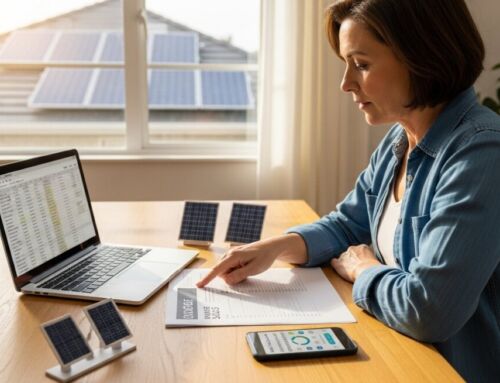
You open your monthly electricity bill and notice it’s higher than last year. Again. Across the United States, homeowners are feeling the pinch of rising energy costs, and many are searching for ways to take control. That search often leads to one question: solar pricing per watt explained in a way that actually makes sense. Understanding this number is the first step toward reducing your electricity bills and becoming less dependent on the power grid. Let’s break it down so you can make an informed decision about solar for your home.
Understanding solar pricing per watt explained
Solar pricing per watt is simply the total cost of a solar system divided by its total power output in watts. For example, if a 6,000-watt (6 kW) system costs $18,000 before incentives, the price per watt is $3.00. This metric helps you compare quotes from different installers on an equal footing, regardless of system size.
The price per watt includes the solar panels, inverter, mounting hardware, wiring, labor, permits, and profit for the installer. It does not usually include battery storage or additional electrical upgrades. By focusing on this number, you can quickly see which quote offers the best value for your home. More homeowners are turning to solar because prices have dropped dramatically over the past decade, making long-term savings more accessible than ever.
How to calculate your potential savings
Once you know the price per watt, you can estimate your payback period. Multiply the system size in watts by the price per watt to get the gross cost. Subtract any federal tax credit (currently 30%) and local incentives. Divide that net cost by your annual electricity savings to see how many years it will take to break even. In our guide on solar panel cost per watt explained for homeowner savings, we walk through real-world examples that make this math easy.
Why Solar Energy Is Becoming More Popular
Electricity rates have risen steadily across the country, and many homeowners are tired of unpredictable bills. Solar offers a way to lock in a large portion of your energy costs for the next 25 to 30 years. Beyond the financial side, environmental concerns are also driving interest. Generating your own clean energy reduces your carbon footprint and helps fight climate change.
Long-term savings are another major motivator. While the upfront cost of solar can seem high, most homeowners recover their investment within 6 to 10 years and then enjoy free or nearly free electricity for decades. Add in federal and state incentives, and the financial case becomes even stronger. Solar is no longer a niche option,it is a mainstream solution for cutting monthly expenses.
If you are considering solar power for your home, comparing installation quotes can help you understand your options. Request a free solar quote or call (800) 555-0199 to learn more.
Common Questions Homeowners Have About Solar
Many homeowners feel overwhelmed by the technical details and upfront investment. The most common questions revolve around installation cost, roof suitability, and system performance. Will my roof support panels? How much will I really save? What happens on cloudy days? These are all valid concerns that professional installers address every day.
The good news is that solar technology has become reliable and efficient. Modern panels work well even in indirect sunlight, and monitoring systems let you track production in real time. Roof assessments are typically included in the quote process, so you will know exactly what your home needs before committing.
- How much does a typical solar system cost?
- Will solar work on my roof type (tile, shingle, flat)?
- What happens during a power outage?
- How long do solar panels last?
- Are there financing options with $0 down?
- Do I need a battery with my system?
How Solar Panel Installation Works
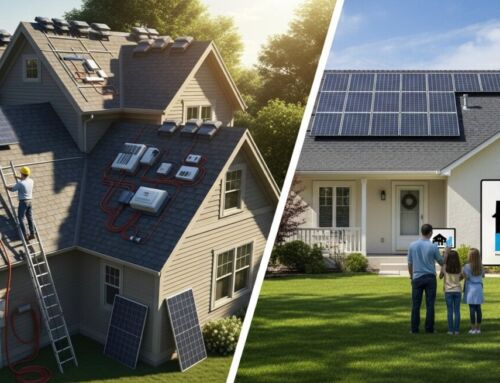
The installation process is more straightforward than most people expect. It starts with a home energy assessment, where an installer reviews your electricity usage, roof condition, and sun exposure. Based on that data, they design a system tailored to your needs. Permits and approvals are handled by the installer, so you don’t have to navigate local bureaucracy.
Once permits are in place, installation typically takes one to three days. The panels are mounted, wiring is connected, and the inverter is installed. After a final inspection by your local utility or city, the system is turned on and starts generating power. From start to finish, most projects are completed within four to eight weeks.
- Home energy assessment and roof inspection
- System design and equipment selection
- Permit applications and utility approvals
- Panel and inverter installation (1,3 days)
- Final inspection and system activation
Speaking with experienced installers can help you determine the best solar solution for your home. Compare solar quotes here or call (800) 555-0199 to explore available options.
Signs Your Home May Be Ideal for Solar
Not every home is a perfect candidate for solar, but many are. The most important factor is sunlight exposure. A roof that faces south, west, or east with minimal shading from trees or neighboring buildings will produce the most energy. If your roof is in good condition and has enough space, you are already a strong candidate.
High electricity bills are another clear sign. If you pay more than $100 per month on average, solar can likely reduce that amount significantly. Homeowners who plan to stay in their home for at least five to seven years also benefit the most, because that is the typical payback period. Finally, if your state offers net metering or other incentives, your savings can be even greater.
- Unshaded roof with strong sun exposure (south, west, or east facing)
- Monthly electricity bills averaging $100 or more
- Roof in good condition with at least 10,15 years of life remaining
- Plan to stay in your home for at least 5,7 years
- Access to net metering or local solar incentives
What Affects Solar Installation Costs
Several factors influence the final price of a solar system. System size is the biggest driver,larger systems cost more but also save more money over time. Equipment quality matters too. Premium panels with higher efficiency often cost more per watt but produce more electricity in limited roof space.
Installation complexity can also add to the cost. A simple, single-story roof with standard shingles is easier to work on than a steep, multi-level roof with tiles. Local incentives, including the federal tax credit, state rebates, and utility programs, can reduce your out-of-pocket cost by 30% or more. Always ask installers for a price per watt quote that includes all components and labor, so you can compare apples to apples.
The cost of solar installation varies depending on your home and energy needs. Request personalized solar quotes or call (800) 555-0199 to see what options are available.
Tips for Choosing a Reliable Solar Installer
Choosing the right installer is just as important as choosing the right equipment. A reputable company will handle permits, inspections, and warranty claims without hassle. Start by reviewing the installer’s experience and ask how many systems they have installed in your area. Local experience matters because they understand your utility’s requirements and climate conditions.
Check warranties carefully. A good installer offers at least a 10-year workmanship warranty, and the panels should come with a 25-year performance warranty. Read customer reviews on third-party sites like the Better Business Bureau or Google Reviews. Most importantly, get multiple quotes. Comparing at least three proposals gives you leverage and helps you spot outliers that are either too cheap or overpriced.
- Look for installers with at least 3,5 years of experience and local references
- Verify that the company holds proper licenses and insurance
- Read recent customer reviews on independent platforms
- Compare at least three quotes using the price per watt metric
- Ask about warranty coverage for both equipment and workmanship
Long-Term Benefits of Installing Solar Panels
Once your solar system is paid off, your electricity bills drop dramatically. Most homeowners see a 50% to 90% reduction in their monthly energy costs, depending on system size and local rates. Over 25 years, that can translate into tens of thousands of dollars in savings. Solar also increases your home’s resale value. Studies show that homes with solar panels sell for a premium compared to similar homes without them.
Beyond personal finances, solar reduces your environmental impact. A typical residential system offsets about three to four tons of carbon dioxide each year,equivalent to planting over 100 trees annually. And because you generate your own power, you are less vulnerable to grid outages and rising utility rates. Energy independence is not just a buzzword; it is a practical benefit that gives you peace of mind.
Frequently Asked Questions
What is a good price per watt for solar in 2025?
A good price per watt for residential solar typically falls between $2.50 and $3.50 before incentives. Prices vary by region, roof complexity, and equipment quality. The best way to know if you are getting a fair deal is to compare multiple quotes side by side.
How long does it take for solar panels to pay for themselves?
Most homeowners recover their investment in 6 to 10 years. The exact payback period depends on your electricity rates, system cost, available incentives, and how much sun your roof receives. After the payback period, your electricity is essentially free for the remaining life of the system.
Can I install solar panels myself to save money?
While DIY solar kits exist, professional installation is strongly recommended. Improper wiring can create fire hazards, void equipment warranties, and fail inspection. Professional installers also handle permits and utility interconnection, which can be complicated for a first-timer.
Will solar panels work during a power outage?
Standard grid-tied solar systems shut off during an outage to protect utility workers. If you want backup power, you need a battery storage system like the Tesla Powerwall or LG Chem. Batteries add to the cost but provide energy independence during blackouts.
How much maintenance do solar panels require?
Solar panels require very little maintenance. Rain usually washes away dust and pollen. In dry or dusty areas, you may need to hose them off once or twice a year. Most systems come with monitoring software that alerts you if a panel is underperforming.
Do I need a new roof before installing solar?
If your roof is older than 15,20 years or shows signs of damage, it is wise to replace it before installing panels. Removing and reinstalling panels later adds cost. A reputable installer will inspect your roof and advise you during the quote process.
What happens if I move after installing solar?
You can either include the system in the home sale or transfer the lease or loan to the new owner. Homes with owned solar systems often sell faster and at a higher price. Leased systems may require approval from the new buyer, but many find the lower electricity bills attractive.
Are there government incentives for solar in 2025?
Yes, the federal solar Investment Tax Credit (ITC) offers a 30% tax credit on the total system cost through 2032. Many states and utilities also offer rebates, performance payments, or net metering programs. Check the Database of State Incentives for Renewables & Efficiency (DSIRE) for your specific location.
Understanding solar pricing per watt is the key to making a smart investment in your home’s energy future. By comparing quotes from multiple certified installers, you can find a system that fits your budget, reduces your electricity bills, and helps you achieve energy independence. Take the first step today and see how solar can work for you.