
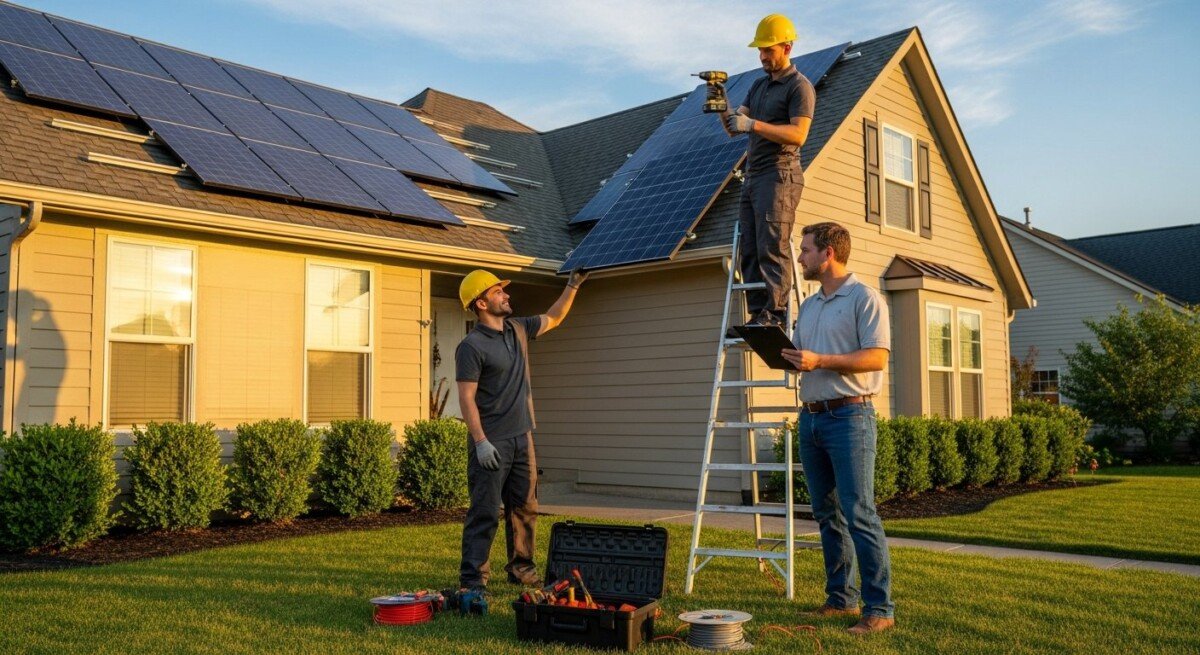
Solar Tax Credits Explained: Save on Installation Costs
A clear guide explaining solar tax credits and how homeowners can use them to save on installation costs and reduce electricity bills.

By Andy Pearson
Learn more about Solar Panel Installation and Repair for guides, costs, and what to expect.
Compare Solar Panel Installation and Repair Pros Near You
Enter your ZIP code to compare top-rated local professionals and request free quotes.
You’ve likely watched your electricity bill climb steadily over the years, wondering when the increases will stop. More and more homeowners are searching for a solution, and many find themselves looking up “solar tax credits explained” as a first step. This search is often the beginning of a journey toward reducing energy bills and gaining independence from the unpredictable power grid. Understanding these incentives is key to unlocking the true financial potential of solar energy for your home.
Understanding Solar Tax Credits Explained
When people search for “solar tax credits explained,” they are usually looking for clarity on a major federal incentive. In simple terms, a solar tax credit allows you to subtract a percentage of your solar panel system’s cost directly from the federal income taxes you owe. It’s not a rebate or a check sent to you; instead, it reduces your tax liability dollar-for-dollar, making the investment much more affordable upfront.
The primary incentive is the federal Investment Tax Credit (ITC). This credit currently allows you to deduct a significant portion of your installation costs from your taxes. If the credit exceeds your tax bill for the year, it can often be rolled over to future years, ensuring you can capture its full value.
This powerful financial tool is designed to encourage the adoption of clean energy. By lowering the net cost of going solar, it accelerates your payback period and boosts your long-term return on investment, making solar a practical choice for many households.
Why Solar Energy Is Becoming More Popular
Homeowners are turning to solar power for several compelling reasons. First and foremost are rising electricity prices. Utility rates have a history of increasing, locking you into a lifetime of unpredictable costs. Solar panels provide a way to lock in your energy rate for decades, offering predictable power costs and protection against future hikes.
Beyond the finances, environmental concerns are a major driver. Generating your own clean electricity significantly reduces your household’s carbon footprint. This move towards sustainability, combined with the desire for energy independence during grid outages, makes solar an attractive long-term solution for modern living.
If you are considering solar power for your home, comparing installation quotes can help you understand your options. Request a free solar quote or call to learn more.
Common Questions Homeowners Have About Solar
It’s normal to have questions before making a significant home improvement. The upfront cost is often the biggest hurdle, though incentives like the federal tax credit and various local rebates dramatically lower the net price. Many wonder if their roof is suitable, which a professional installer can assess for factors like age, orientation, and shading.
Concerns about system performance and maintenance are also common. Today’s solar panels are durable, require minimal upkeep, and are designed to produce electricity for 25 years or more. A reputable installer will provide a detailed production estimate so you know exactly what to expect.
- How much do solar panels really cost after incentives?
- Will solar panels work on my roof?
- What happens on cloudy days or at night?
- How long will the installation process take?
- Do I need to replace my roof first?
- How does net metering work with my utility?
How Solar Panel Installation Works
The solar installation process is straightforward when handled by experienced professionals. It begins with a detailed consultation and energy assessment of your home. The installer will review your past electricity bills, evaluate your roof, and discuss your energy goals to design a system that fits your needs.
Once you approve the design, the installer manages all the necessary permits and paperwork, including applications for local incentives. The physical installation is typically quick, followed by inspections and final approval from your utility company to connect your new system to the grid.
- Home Energy Assessment & Consultation
- Custom System Design & Proposal
- Permitting & Utility Approvals
- Solar Panel & Equipment Installation
- Final Inspections & System Activation
Speaking with experienced installers can help you determine the best solar solution for your home. Compare solar quotes here or call to explore available options.
Signs Your Home May Be Ideal for Solar
Certain home characteristics make solar panel systems particularly effective and financially rewarding. The most obvious is strong, unobstructed sunlight exposure on your roof for a good portion of the day. South-facing roofs in the Northern Hemisphere are typically ideal, but east and west-facing roofs can also be excellent candidates.
If you have high monthly electricity bills, solar can provide substantial savings. The more you currently pay for power, the faster your solar investment will pay for itself. Homeowners who plan to stay in their homes for the long term will reap the maximum financial benefits from their system.
- Your roof receives direct sunlight for most of the day.
- You have high or rising monthly electricity costs.
- Your roof is in good condition and has ample space.
- You plan to own your home for the next 5-10+ years.
- Your local utility offers favorable net metering policies.
- You live in an area with strong state or local solar incentives.
What Affects Solar Installation Costs
The final price of your solar energy system depends on several key factors. The system’s size, measured in kilowatts (kW), is the primary driver,a larger system to offset more usage will cost more. The quality and efficiency of the equipment you choose, such as premium solar panels or microinverters, also influence the price.
Installation complexity matters too. A simple, ground-mounted system or a new, easily accessible roof will generally cost less than a complex roof with multiple angles. Crucially, available incentives like the federal tax credit and local rebates directly reduce your net cost, making it essential to understand all programs for which you qualify.
The cost of solar installation varies depending on your home and energy needs. Request personalized solar quotes or call to see what options are available.
Tips for Choosing a Reliable Solar Installer
Selecting the right installer is as important as choosing the right equipment. A trustworthy company will guide you through every step, from explaining incentives to handling permits. They ensure your system is designed correctly and installed safely for optimal performance.
Always verify an installer’s credentials, experience, and customer reviews. A strong warranty covering both equipment and workmanship is a sign of a company that stands behind its work. Most importantly, get detailed proposals from multiple installers to compare costs, equipment, and projected savings.
- Check for proper licensing, insurance, and certifications.
- Review their portfolio and years of experience in your area.
- Read customer testimonials and online reviews.
- Understand the warranties offered on equipment and labor.
- Ask for references from recent local projects.
- Compare multiple detailed quotes before deciding.
Long-Term Benefits of Installing Solar Panels
The long-term advantages of solar energy extend far beyond the initial tax credit. The most immediate benefit is dramatically lower electricity bills, often reducing them by 70% to 100%. Over the 25+ year lifespan of a system, this adds up to tens of thousands of dollars in savings, effectively locking in your energy cost against inflation.
Solar panels also increase your property value and make your home more attractive to future buyers. You’ll gain a greater degree of energy independence and contribute to a cleaner environment by reducing reliance on fossil fuels. It’s an investment that pays for itself and then continues to pay you.
What is the federal solar tax credit?
The federal Investment Tax Credit (ITC) is a significant incentive that allows you to deduct a percentage of your solar installation cost from your federal taxes. It directly reduces your tax liability, lowering the net price of your system. This credit is available for both residential and commercial systems and has no upper limit.
How do I claim the solar tax credit?
To claim the credit, you must own your solar system (not lease it) and have sufficient tax liability. When you file your federal income taxes for the year your system was installed, you will complete IRS Form 5695 and include it with your return. It’s wise to consult with a tax professional to ensure you claim it correctly.
Can I get solar if my roof isn’t perfect?
Yes, many roof types and conditions can still accommodate solar. Installers can use specialized mounting equipment for various materials like tile or metal. If your roof needs replacement soon, it’s often best to do that first. For unsuitable roofs, ground-mounted systems are an excellent alternative.
How long do solar panels last?
Modern solar panels are extremely durable and are typically warrantied to produce at least 80% of their original output after 25 to 30 years. They require very little maintenance,usually just occasional cleaning,and have no moving parts, which contributes to their long lifespan and reliability.
What happens during a power outage?
With a standard grid-tied system, your solar panels will automatically shut off during an outage for safety reasons. To have power during an outage, you need a solar battery storage system. A battery stores excess energy produced during the day for use at night or during grid failures, providing true backup power.
Are there state-level solar incentives too?
Absolutely. Many states, utilities, and even local municipalities offer additional rebates, tax credits, or performance-based incentives. For example, our guide on the NYS solar tax credit details one such valuable state program. These can stack with the federal credit for even greater savings.
Understanding solar tax credits and incentives is the first step toward realizing significant energy savings and independence. By taking the time to research and compare professional installers, you can make a confident decision that benefits your finances and your home for decades to come. Start exploring your options today by requesting personalized quotes to see the potential savings for your specific situation.
Learn more about Solar Panel Installation and Repair for guides, costs, and what to expect.
Compare Solar Panel Installation and Repair Pros Near You
Enter your ZIP code to compare top-rated local professionals and request free quotes.