Have you opened your electricity bill recently and felt a jolt of surprise? You’re not alone. With energy costs steadily climbing, more homeowners are looking for a way to take control. The idea of generating your own clean power, slashing your monthly bills, and becoming less dependent on the utility grid is incredibly appealing. But before you make the leap, it’s wise to understand what to know before going solar.
Understanding What to Know Before Going Solar
Going solar means installing a system of photovoltaic (PV) panels on your property, typically your roof. These panels convert sunlight directly into electricity you can use in your home. Any excess power you generate can often be sent back to the grid for credits or stored in a battery for use at night.
It’s a significant home upgrade that requires some upfront research. The goal is to make an informed decision that maximizes your financial return and energy production for years to come. Knowing the right questions to ask and factors to consider will ensure your solar investment is a success.
How Do Solar Panels Actually Work?
Solar panels are made up of many solar cells, usually composed of silicon. When sunlight hits these cells, it knocks electrons loose, creating a flow of direct current (DC) electricity. An inverter then converts this DC power into the alternating current (AC) electricity that powers your home’s lights, appliances, and devices.
Why Solar Energy Is Becoming More Popular
The primary driver for most homeowners is financial. Electricity rates have a history of increasing, while the cost of solar panels has dropped dramatically over the past decade. This creates a powerful opportunity to lock in a lower, predictable cost for your energy for the 25+ year lifespan of a system.
Beyond the wallet, environmental concerns are a major factor. Solar power is a clean, renewable resource that reduces your household’s carbon footprint. By generating your own electricity, you’re directly contributing to a reduction in fossil fuel consumption and greenhouse gas emissions.
Finally, the desire for energy independence is growing. Power outages, grid instability, and fluctuating rates make the prospect of producing your own power very attractive. Pairing solar with a battery storage system can keep your lights on even when the grid goes down.
If you are considering solar power for your home, comparing installation quotes can help you understand your options. Request a free solar quote or call to learn more.
Common Questions Homeowners Have About Solar
It’s normal to have questions about such a substantial investment. The upfront cost is often the first hurdle, but it’s crucial to view it as a long-term investment with a strong return, similar to upgrading your home’s efficiency. Many homeowners finance their systems with loans that have monthly payments lower than their old electric bill.
Another common concern is whether a home is suitable. Not every roof is ideal, but a professional assessment can quickly determine your home’s solar potential. Factors like shading, roof direction, and structural integrity all play a role.
People also wonder if solar will work in their climate. Modern solar panels are effective even on cloudy days and in colder temperatures. They need light, not necessarily heat, to produce electricity efficiently.
- How much will a solar panel system really cost?
- Is my roof strong enough and facing the right direction?
- What happens on cloudy days or at night?
- How long will the installation process take?
- Will solar panels increase my property taxes or home insurance?
- What maintenance is required?
How Solar Panel Installation Works
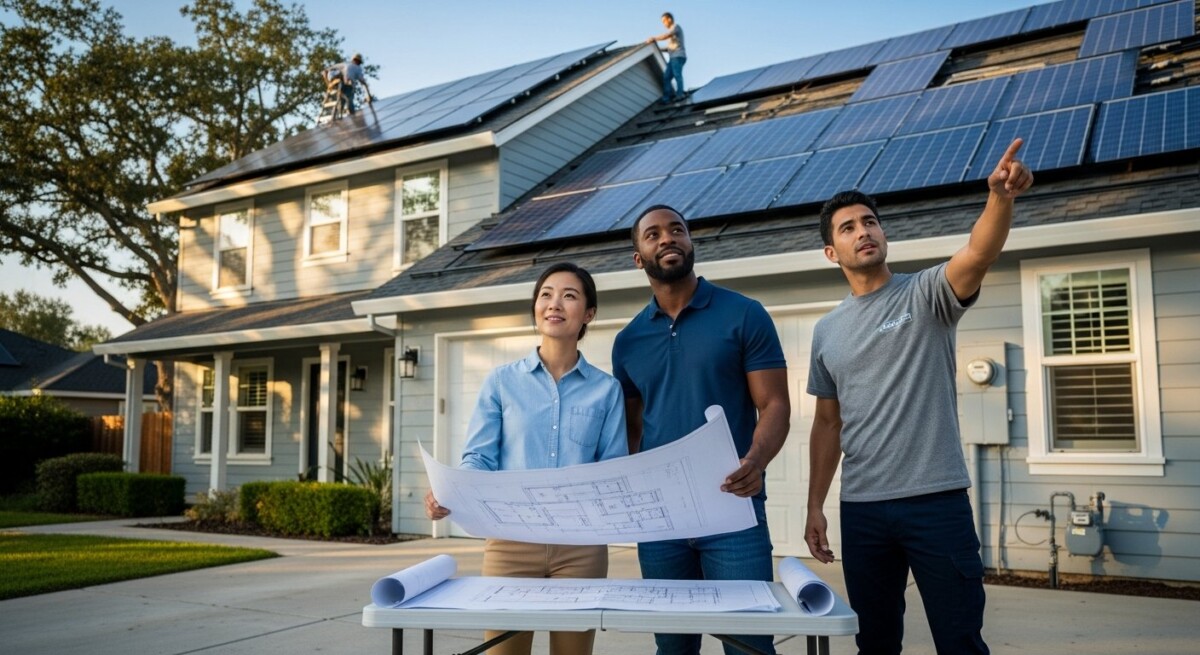
The installation process is highly structured and managed by professionals from start to finish. A reputable installer will guide you through each phase, handling the complex paperwork and logistics. This allows you to focus on the outcome rather than the process.
From the initial consultation to flipping the switch, the journey typically follows a clear path. Understanding these steps can demystify the experience and set realistic expectations for your project timeline.
- Consultation and Energy Assessment: An installer reviews your energy bills, evaluates your roof via satellite imagery or a site visit, and discusses your goals.
- System Design and Proposal: They create a custom system design to meet your energy needs and provide a detailed quote outlining costs, savings, and equipment.
- Permits and Approvals: The installer secures all necessary building permits and submits paperwork to your utility company for “interconnection” (permission to connect to the grid).
- Installation Day: The crew mounts the racking, installs the panels, sets up the inverter(s), and runs the electrical wiring. This usually takes 1-3 days.
- Inspections and Activation: After a final inspection by your local building department and the utility, the system is granted permission to operate (PTO) and is turned on.
Speaking with experienced installers can help you determine the best solar solution for your home. Compare solar quotes here or call to explore available options.
Signs Your Home May Be Ideal for Solar
While many homes can benefit from solar, some are naturally better positioned for maximum production and savings. The most important factor is access to strong, unobstructed sunlight for the majority of the day. A south-facing roof in the Northern Hemisphere is typically ideal, but east and west-facing roofs can also work well.
Your current energy consumption and costs are also key indicators. Homes with higher electricity bills see a faster return on investment because solar offsets more expensive grid power. The more you currently pay, the more you stand to save.
- Your roof is relatively new, in good condition, and has ample, unshaded space.
- You receive high electricity bills, indicating strong energy usage to offset.
- You plan to stay in your home for the next 7-10 years to realize the full financial benefits.
- Your local utility has favorable net metering policies that credit you for excess power.
- You live in an area with strong state or local solar incentives and rebates.
- You have a strong personal interest in sustainability and energy independence.
What Affects Solar Installation Costs
The total price of a solar system isn’t one-size-fits-all. The single biggest factor is the system’s size, measured in kilowatts (kW). A larger system designed to cover 100% of your energy use will cost more than a smaller one, but it will also deliver greater long-term savings.
Equipment quality and brand also influence cost. Premium, high-efficiency panels and inverters may come at a higher price point but can produce more power in a limited space. Installation complexity, such as a steep or multi-level roof, can add to labor costs. Crucially, the net cost is dramatically reduced by the federal solar investment tax credit (ITC), which allows you to deduct 30% of the system cost from your federal taxes. Many states and utilities offer additional rebates.
The cost of solar installation varies depending on your home and energy needs. Request personalized solar quotes or call to see what options are available.
Tips for Choosing a Reliable Solar Installer
Your installer is your partner in this decades-long investment, so choosing the right one is critical. A trustworthy company will be transparent, answer all your questions thoroughly, and never use high-pressure sales tactics. They should have a proven track record of successful installations in your area.
Always get multiple detailed quotes to compare. This is the best way to ensure you’re getting a fair price and the right system design for your home. A detailed quote is more than just a price tag; it’s a comprehensive plan. For a deeper understanding of this crucial document, read our guide on the key differences between a solar quote and a simple estimate.
- Check for proper licensing, insurance, and certifications (like NABCEP).
- Read verified customer reviews and ask for local references.
- Compare the warranties offered on both equipment (from manufacturers) and workmanship (from the installer).
- Ask who will perform the installation (in-house crew vs. subcontractors).
- Get a detailed, written contract that outlines every cost, timeline, and expectation.
- Compare at least three different quotes before making a decision.
Long-Term Benefits of Installing Solar Panels
The most immediate and tangible benefit is drastically reduced electricity bills. In many cases, homeowners can eliminate 80-100% of their grid power consumption. This protection against rising utility rates provides decades of predictable energy costs and significant financial savings.
Solar panels are also a valuable home improvement. Studies consistently show that homes with solar panels sell faster and for more money than comparable homes without them. You’re also investing in a cleaner environment, reducing air pollution and your carbon footprint for the life of the system.
Finally, solar provides a profound sense of energy security. Whether paired with a battery or not, producing your own power makes you less vulnerable to grid outages and price spikes. It’s a step toward true energy independence for your household.
How long do solar panels last?
Most solar panels come with a 25-year performance warranty guaranteeing they will still produce at least 80-85% of their original output at that age. The panels themselves can continue to produce electricity well beyond that timeframe. Inverters may need replacement once during the system’s life.
What is net metering?
Net metering is a billing arrangement with your utility company. When your solar panels produce more electricity than your home uses, the excess is sent to the grid. Your meter runs backward, and you receive a credit on your bill. You then use these credits to draw power from the grid at night or on cloudy days.
Can I go solar if my roof is old?
It is generally not recommended to install solar on a roof that will need replacement within the next 10-15 years. The cost of removing and reinstalling the panels for a roof replacement can be significant. It’s often more cost-effective to replace an aging roof before going solar.
Do solar panels work during a power outage?
Standard grid-tied solar systems automatically shut off during a blackout for safety reasons, to protect utility workers. To have power during an outage, you need a solar battery storage system (like a Tesla Powerwall) or a special inverter that can create a secure “island” of power for your home.
What is the federal solar tax credit?
The federal Investment Tax Credit (ITC) allows you to deduct 30% of the total cost of your solar panel system from your federal income taxes. This is a dollar-for-dollar reduction in your tax liability. If your system costs $20,000, the ITC would save you $6,000 on your taxes. It’s a major financial incentive.
What are solar shingles, and how do they compare?
Solar shingles, like the Tesla Solar Roof, are building-integrated photovoltaic (BIPV) products designed to look like a conventional roof. They can be aesthetically pleasing but are often significantly more expensive per watt of energy produced than traditional rack-mounted panels. They are best for new construction or a roof that needs full replacement.
How much maintenance do solar panels require?
Solar panels require very little maintenance. Rainfall usually cleans them sufficiently. In dusty areas or during long dry spells, an occasional rinse with a garden hose may be beneficial. You should also monitor your system’s production via its app or online portal to ensure it’s performing as expected.
How do I finance a solar panel system?
Homeowners typically use cash purchases, solar loans, or leases/PPAs. A cash purchase offers the highest long-term return. Solar loans allow you to own the system with little or no money down, with monthly loan payments often lower than your old electric bill. Leases and Power Purchase Agreements (PPAs) involve a third party owning the system; you pay for the power it produces, often at a lower rate.
Making the decision to go solar is a powerful step toward financial savings and energy independence. By understanding the key factors,from your roof’s suitability and financing options to choosing the right installer,you can move forward with confidence. The best next step is to gather personalized information. Comparing multiple, detailed quotes from reputable local installers will give you the clearest picture of your potential savings and the ideal system for your home.