When you picture a solar panel system, you likely imagine rows of shiny blue panels soaking up the sun on a rooftop. But the true star of the system is a device roughly the size of a small suitcase: the solar inverter. Without it, all that sunlight captured by your panels would be useless for powering your refrigerator, charging your phone, or running your air conditioner. Understanding the solar inverter function is the key to unlocking real energy savings and getting the most out of your investment. This article explains exactly what this critical component does, why it matters for your wallet, and how to choose the right one for your home.
What Is a Solar Inverter and Why Does Every System Need One?
A solar inverter is an electronic device that converts the direct current (DC) electricity generated by your solar panels into alternating current (AC) electricity. Why does this matter? Your home and the electrical grid operate on AC power. Every appliance, outlet, and light fixture in your house is designed to run on AC. So without a solar inverter, the clean energy your panels produce would remain trapped in a form your home cannot use.
Beyond simple conversion, the solar inverter function includes several other critical jobs. It monitors system performance, communicates with the grid, ensures safety by shutting down the system during a power outage (a feature called anti-islanding), and optimizes the energy output from your panels. In short, the inverter is the brain of your solar array. It manages the flow of electricity and makes sure your system operates efficiently and safely for decades.
For homeowners considering solar, the inverter is often the second most important decision after the panels themselves. A high-quality inverter can improve overall system efficiency by 5 to 20 percent depending on conditions. That translates directly into more electricity generated and greater savings on your utility bills. In our detailed guide on what is solar inverter function as the key to home energy savings, we break down the financial impact of inverter choice in even greater depth.
Core Functions of a Solar Inverter Explained
The solar inverter function goes far beyond a simple DC-to-AC conversion. Modern inverters are sophisticated pieces of technology that perform multiple roles simultaneously. Let us examine each major function in detail.
DC to AC Power Conversion
This is the primary and most obvious job. Solar panels produce electricity when photons from sunlight knock electrons loose in the silicon cells. This process creates a steady, unidirectional flow of electrons: direct current. However, the electrical grid and your home appliances use alternating current, where the direction of electron flow reverses many times per second (60 times per second in the United States). The inverter uses electronic switches (transistors) to rapidly flip the DC input, creating a simulated AC waveform. It then smooths that waveform into a clean sine wave that matches the utility grid’s power quality exactly.
Maximum Power Point Tracking (MPPT)
Solar panels have a specific voltage and current combination at which they produce the most power. This point, called the maximum power point, shifts constantly as sunlight intensity changes, clouds pass overhead, and panel temperature fluctuates. An inverter with MPPT technology continuously adjusts the electrical load on the panels to keep them operating at that sweet spot. Without MPPT, your system would lose 20 to 30 percent of its potential energy production. String inverters typically have one or two MPPT trackers for the entire array, while microinverters have one per panel, giving each panel its own optimizer.
Grid Synchronization and Anti-Islanding
When your solar system is connected to the utility grid, the inverter must match the grid’s voltage and frequency precisely. This synchronization ensures that the electricity your system sends back to the grid is compatible and safe. If the grid goes down due to a storm or maintenance, the inverter must immediately shut off (within milliseconds). This anti-islanding feature protects utility workers who may be repairing power lines from being electrocuted by your solar system. Grid-tied inverters are designed to stop producing power when the grid is down unless you have a battery backup system with islanding capability.
Monitoring and Data Communication
Most modern inverters include built-in monitoring capabilities that track energy production, system voltage, and error codes. This data is typically transmitted via Wi-Fi or ethernet to a cloud platform where you can view it on a smartphone app or web portal. Monitoring helps you verify that your system is performing as expected and alerts you to problems like a panel that is underperforming or an inverter that has failed. Some inverters also support remote firmware updates, allowing manufacturers to improve performance or fix bugs without a service call.
Safety Functions
Inverters include multiple safety features beyond anti-islanding. They monitor for ground faults, arc faults, and overheating. If a dangerous condition is detected, the inverter will automatically shut down and display an error code. Rapid shutdown capability is now required by the National Electrical Code for all new solar installations. This feature reduces the voltage in the DC wiring to a safe level within 30 seconds, protecting firefighters and first responders in an emergency.
Types of Solar Inverters: Which One Is Right for Your Home?
Not all inverters work the same way. The type you choose affects system efficiency, cost, monitoring capability, and expandability. Here are the three main categories you will encounter when shopping for a solar system.
String Inverters are the traditional choice. All panels in a string are wired together to a single inverter located near your main electrical panel. They are the most affordable option and have been used in solar installations for decades. The downside is that if one panel is shaded or dirty, the performance of the entire string drops to the level of the weakest panel. String inverters work best on roofs with uniform sun exposure and no shading issues.
Microinverters are small inverters attached to each individual solar panel. Each panel operates independently, so shading on one panel does not affect the others. Microinverters offer panel-level monitoring, easier system expansion, and higher overall energy harvest on complex roofs. They cost more upfront but can pay for themselves in increased production on partially shaded roofs. They also come with longer warranties, typically 25 years compared to 10 to 12 years for string inverters.
Power Optimizers are a hybrid solution. They are DC-to-DC converters attached to each panel that condition the power before sending it to a central string inverter. Optimizers provide many of the same benefits as microinverters (panel-level MPPT, shade tolerance, monitoring) while keeping the central inverter cost lower. They are a popular middle-ground option for homeowners who want the performance benefits of microinverters without the higher price tag.
- String inverters: Lowest cost, simple design, best for unshaded south-facing roofs, 10-12 year warranty.
- Microinverters: Highest efficiency in shade, panel-level monitoring, 25-year warranty, higher upfront cost.
- Power optimizers: Good balance of performance and cost, panel-level MPPT, 25-year warranty on optimizers, 10-12 years on central inverter.
Choosing between these options depends on your roof’s orientation, shading patterns, budget, and long-term goals. A certified installer can perform a site assessment and recommend the best inverter type for your specific situation. For a more detailed comparison of inverter technologies, see our article on solar inverter function explained for homeowners.
How Inverter Efficiency Impacts Your Energy Savings
Inverter efficiency measures how much of the DC power from your panels is successfully converted to usable AC power. Most modern inverters operate at 96 to 99 percent efficiency under ideal conditions. That sounds excellent, but small differences compound over the 25- to 30-year life of your system. A 1 percent efficiency difference might seem negligible, but on a 10 kW system producing 14,000 kWh per year, that 1 percent equals 140 kWh annually. Over 25 years, that is 3,500 kWh of lost production, which could be worth $500 or more depending on your electricity rate.
Efficiency is not a fixed number. It varies based on temperature, input voltage, and power level. Inverters are most efficient when operating at 30 to 80 percent of their rated capacity. Oversizing your inverter relative to your panel array can push it into a less efficient operating range. Conversely, undersizing can cause clipping, where the inverter cannot handle the full output of the panels on sunny days. A good system designer will match the inverter size to the panel array to balance efficiency and cost.
Another factor to consider is the inverter’s temperature rating. Inverters generate heat during operation, and many are installed in hot attics or on exterior walls in direct sunlight. High temperatures reduce inverter efficiency and can shorten its lifespan. Look for inverters with a wide operating temperature range and active cooling fans or heat sinks. Some premium inverters include derating curves in their specifications that show exactly how efficiency drops as temperature rises.
Signs Your Solar Inverter Might Be Failing
Even the best inverters can fail over time. Because the inverter handles high voltages and operates outdoors in extreme temperatures, it is the most likely component in a solar system to need replacement. Recognizing early warning signs can save you from prolonged downtime and lost energy production.
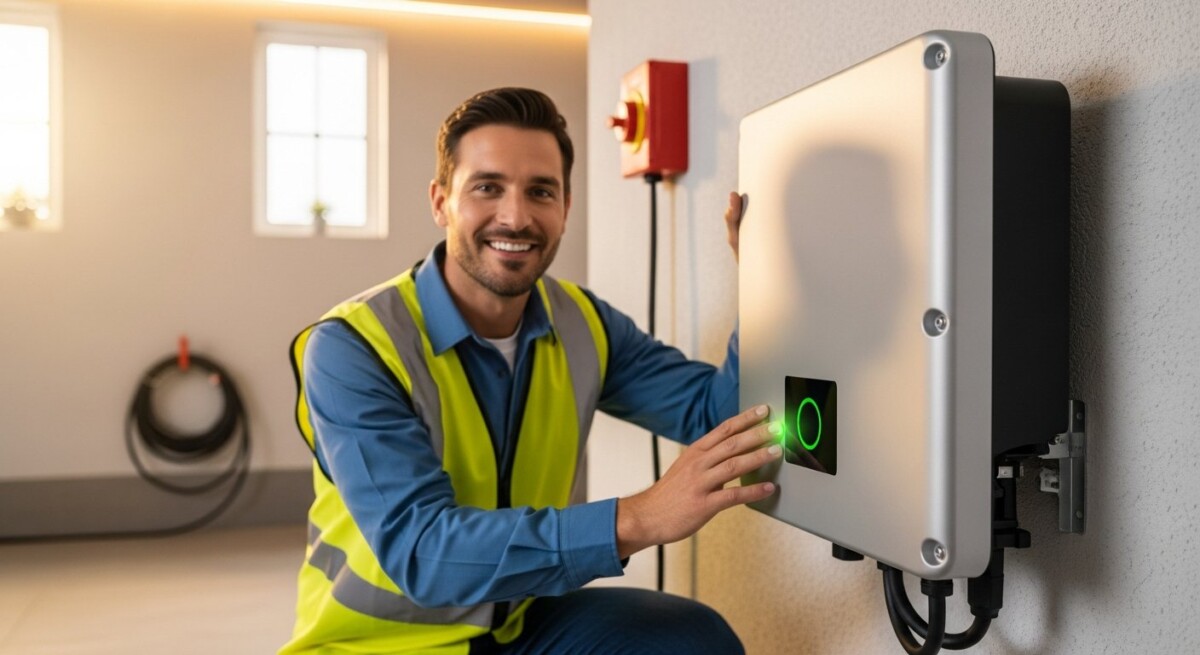
The most obvious sign is a solid red or orange error light on the inverter’s display. Each manufacturer uses a specific color code, but a non-green status light usually indicates a problem. Check your inverter’s manual or monitoring app to interpret the error code. Common issues include ground faults, grid voltage anomalies, and internal component failures.
Another sign is a sudden drop in energy production visible in your monitoring data. If your system was producing 40 kWh per day and suddenly drops to 20 kWh with no change in weather, the inverter may be malfunctioning. Compare your production to historical data for the same time of year and weather conditions. Some monitoring platforms automatically alert you to underperformance.
Physical signs include audible buzzing or humming sounds that are louder than normal, visible smoke or burning smells, and corrosion or water damage on the inverter casing. If you notice any of these, turn off the system using the AC disconnect switch and contact your installer immediately. Do not attempt to open or repair the inverter yourself, as it contains high-voltage components that can be lethal.
Inverter warranties typically cover replacement for 10 to 12 years, though some premium models offer 20- or 25-year warranties. If your inverter fails outside the warranty period, replacement costs range from $1,000 to $3,000 including labor, depending on the inverter type and system size. Planning for this expense in your long-term solar budget is wise.
Choosing the Right Inverter for Your Solar System
Selecting an inverter is a decision that balances performance, reliability, cost, and compatibility with your panels and battery storage plans. Here are the key factors to evaluate when working with your installer.
System size and roof layout. For a simple south-facing roof with no shading, a string inverter is often the most cost-effective choice. For a complex roof with multiple orientations or partial shading from chimneys and trees, microinverters or power optimizers will capture more energy.
Battery storage plans. If you plan to add a battery now or in the future, choose an inverter that supports battery integration. Some inverters, like the Enphase IQ8 or SolarEdge HD-Wave, are designed to work seamlessly with specific battery systems. AC-coupled batteries (like the Tesla Powerwall) can work with any inverter, but DC-coupled systems can be more efficient for new installations.
Warranty and reliability. Look for inverters from established manufacturers with a track record of reliability. Enphase, SolarEdge, SMA, and Fronius are among the most trusted brands. Read independent reviews and check the manufacturer’s warranty terms. Some offer extended warranty options for an additional cost.
Monitoring features. Ensure the inverter’s monitoring platform is user-friendly and provides the data you care about. Some platforms show panel-level data, while others only show system totals. If you want to track individual panel performance, you need microinverters or optimizers with monitoring capability.
At NewSolarQuotes, we help homeowners compare quotes from certified installers who carry multiple inverter brands. This allows you to see pricing and performance trade-offs side by side. Getting at least three quotes ensures you find the best combination of equipment and installation quality for your home.
Inverter Sizing: Matching the Inverter to Your Panel Array
Inverter sizing is a technical detail that significantly affects system performance. The ratio of panel DC capacity to inverter AC capacity is called the DC-to-AC ratio. Most systems are designed with a ratio between 1.1 and 1.4. This means the panels can produce more power than the inverter can handle at peak sun hours. Why would you intentionally undersize the inverter?
The reason is that panels rarely operate at their full rated capacity. Factors like heat, soiling, and suboptimal sun angles mean the actual DC output is usually 70 to 85 percent of the nameplate rating. A slightly undersized inverter captures more energy during low-light conditions (morning, evening, cloudy days) when the inverter operates at higher efficiency. During the few hours per year when the sun is perfectly aligned and panels are cool, the inverter may clip some power, but the lost energy is typically small (1 to 5 percent annually) and is offset by the cost savings of a smaller inverter.
A DC-to-AC ratio that is too high (over 1.5) causes excessive clipping and wasted energy. A ratio that is too low (under 1.0) means the inverter is oversized and operates below its peak efficiency range most of the time. Your installer will calculate the optimal ratio based on your location, panel tilt, and local climate. In general, hotter climates with less seasonal variation can use a higher ratio, while cooler climates with more direct sun benefit from a lower ratio.
The Bottom Line on Solar Inverter Function
The solar inverter function is the bridge between your rooftop panels and the electricity that powers your life. It converts DC to AC, optimizes energy harvest, ensures grid safety, and provides the data you need to verify your system is working correctly. Choosing the right inverter type and size directly affects how much money you save on electricity over the life of your system.
Whether you opt for a simple string inverter, panel-level microinverters, or power optimizers, the quality of the inverter matters. A well-designed system with a reliable inverter will produce clean energy for 25 years or more with minimal maintenance. Understanding this core component helps you make informed decisions when planning your solar installation and ensures you get the maximum return on your investment.
If you are ready to explore solar for your home, use NewSolarQuotes to compare quotes from pre-screened installers in your area. You will receive detailed proposals that specify the inverter make and model, system sizing, and projected energy savings. With the right inverter at the heart of your system, you can confidently move toward energy independence and lower utility bills.