You finally decide to go solar and lower your monthly electricity bills. But then you wonder: what if your energy needs change down the road? Will the system you install today still work for you five or ten years from now? This is one of the most common questions homeowners ask when they start researching solar panel installation. The good news is that the answer is often yes,but planning ahead makes all the difference. Understanding can solar system be expanded later helps you save money now while keeping your options open.
Understanding Can Solar System Be Expanded Later
Expanding a solar system means adding more panels or upgrading components after the initial installation. This allows you to increase energy production as your household needs grow,whether from buying an electric vehicle, adding a home addition, or simply using more power over time. The concept is simple: solar systems are modular, so you can start small and scale up.
However, not every system is designed for easy expansion. Key components like your inverter, wiring, and roof space must accommodate future additions. For example, a microinverter system often handles expansion more smoothly than a central string inverter system. When you work with a professional installer, they can help you design a system that is expansion-ready from day one. In our guide on Compare Solar System Quotes for Home Energy Savings, we explain how to evaluate quotes with expansion in mind.
More homeowners are considering expandable systems because they offer flexibility without a huge upfront cost. You can start with enough panels to cover current usage, then add more later when your budget or energy needs change. This approach makes solar more accessible and reduces the financial risk of over-sizing your system too early.
Why Solar Energy Is Becoming More Popular
Electricity rates have been climbing steadily across the United States. Many homeowners see solar as a way to lock in lower energy costs and protect themselves from future rate hikes. Solar panels convert sunlight into electricity, reducing the amount of power you need to buy from your utility company.
Environmental concerns also drive interest in solar. Generating your own clean energy reduces your carbon footprint and helps fight climate change. At the same time, federal tax credits and state-level incentives make solar more affordable than ever. These programs can significantly lower your net installation cost, often by 30% or more.
Long-term savings are another powerful motivator. Most solar systems pay for themselves within 6 to 10 years and continue producing free electricity for 25 years or longer. That translates to tens of thousands of dollars in savings over the system’s lifetime.
If you are considering solar power for your home, comparing installation quotes can help you understand your options. Request a free solar quote or call to learn more.
Common Questions Homeowners Have About Solar
When you first look into solar, questions pile up quickly. How much does installation cost? Will my roof support panels? What happens on cloudy days or at night? These are valid concerns that deserve clear answers.
Installation cost depends on system size, equipment quality, and local labor rates. Most homeowners finance solar through loans, leases, or power purchase agreements to avoid paying everything upfront. Roof suitability involves factors like age, material, orientation, and shading,most professionals offer free site assessments.
System performance is measured in kilowatt-hours (kWh) and depends on sunlight exposure in your area. Solar panels still generate electricity on cloudy days, just at a reduced rate. Battery storage can provide backup power when the sun isn’t shining.
- How much will solar panels save me each month?
- Will solar work on my roof type?
- How long does installation take?
- What maintenance is required?
- Do I need a battery with my solar system?
- Can I take solar panels with me if I move?
How Solar Panel Installation Works
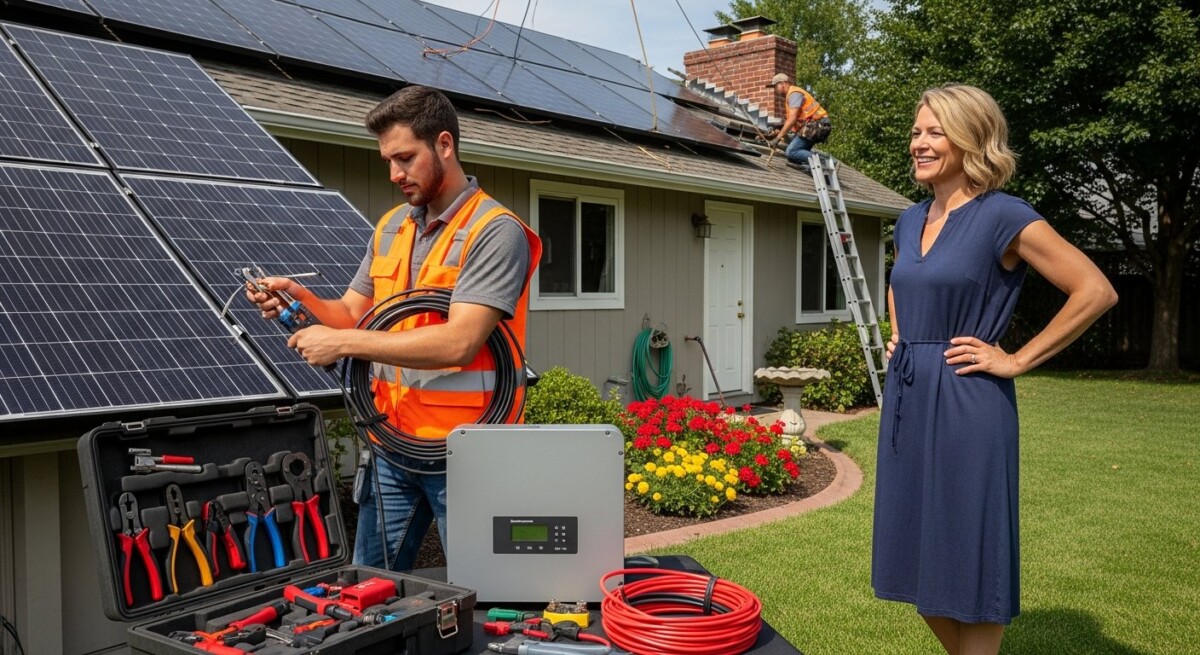
The installation process follows a clear sequence designed to ensure safety, efficiency, and long-term performance. A professional installer handles everything from design to permitting to final activation. This removes the guesswork and helps you avoid costly mistakes.
First, an energy assessment evaluates your home’s electricity usage and roof conditions. Then the system is designed to match your needs and available sunlight. After that, the installer obtains necessary permits from your local government and utility company. Finally, the panels are mounted, wired, and connected to your electrical panel.
- Home energy assessment , review past bills and inspect your roof
- System design , choose panel type, inverter, and layout
- Permits and approvals , secure local and utility permissions
- Panel installation , mount panels and connect wiring
- System activation , final inspection and grid connection
Speaking with experienced installers can help you determine the best solar solution for your home. Compare solar quotes here or call to explore available options.
Signs Your Home May Be Ideal for Solar
Not every home is a perfect candidate for solar, but many are. If your roof gets direct sunlight for most of the day and has enough space, you are likely a good fit. Solar panels work best on south-facing roofs with little to no shade from trees or nearby buildings.
Your electricity bills also provide a strong clue. If you pay $100 or more per month for electricity, solar can probably save you money. Homeowners who plan to stay in their home for at least 5 to 7 years typically see the best return on investment.
- Unshaded roof that faces south, east, or west
- Monthly electricity bills above $75,$100
- Roof in good condition with 15+ years of life remaining
- Plans to remain in your home for at least 5 years
- Access to net metering or other favorable utility policies
- Local or state solar incentives that reduce upfront costs
What Affects Solar Installation Costs
Several factors influence how much you will pay for a solar system. The size of the system, measured in kilowatts (kW), is the biggest driver,more panels mean higher upfront cost but also more energy savings. Equipment quality also matters; premium panels and inverters cost more but often come with better warranties and efficiency.
Installation complexity can add to the price. A simple roof with easy access costs less to install than a steep, multi-story roof with complex wiring. Local labor rates and permit fees vary by region. Incentives and rebates can reduce your net cost dramatically, so it pays to research what is available in your area.
The cost of solar installation varies depending on your home and energy needs. Request personalized solar quotes or call to see what options are available.
Tips for Choosing a Reliable Solar Installer
Choosing the right installer is just as important as choosing the right equipment. A reputable company will guide you through the process, handle permits correctly, and stand behind their work. Poor installation can lead to leaks, reduced performance, or safety hazards.
Start by checking for proper licensing, insurance, and industry certifications like NABCEP (North American Board of Certified Energy Practitioners). Ask about warranties on both equipment and workmanship,most quality installers offer at least 10 years on labor and 25 years on panels.
- Verify installer licensing, insurance, and certifications
- Read online reviews on Google, Yelp, and the Better Business Bureau
- Ask for customer references and follow up with them
- Compare at least three quotes before making a decision
- Review warranty terms for panels, inverters, and workmanship
- Inquire about monitoring options and post-installation support
Long-Term Benefits of Installing Solar Panels
The most obvious benefit is lower electricity bills. Once your system is paid off, the electricity it produces is essentially free. Over the 25- to 30-year lifespan of solar panels, that can mean $20,000 to $40,000 or more in savings, depending on your location and energy use.
Solar also increases your home’s resale value. Studies show that homes with solar panels sell for a premium compared to similar homes without them. Buyers appreciate the prospect of lower utility costs and energy independence. Additionally, generating your own power reduces reliance on the grid and shields you from rising electricity rates.
Environmental benefits matter too. A typical residential solar system offsets about 3 to 4 tons of carbon dioxide each year,equivalent to planting more than 100 trees annually. By going solar, you contribute directly to a cleaner, more sustainable energy future.
Frequently Asked Questions
Can I add more solar panels to my system later?
Yes, in most cases you can add panels later if your system was designed for expansion. This requires adequate inverter capacity, available roof space, and proper wiring. Working with a professional installer from the start makes future expansion much easier.
How much does it cost to expand an existing solar system?
The cost depends on how many panels you add and whether any equipment needs upgrading. Adding panels typically costs between $2.50 and $3.50 per watt before incentives. Getting a quote from your original installer is often the simplest route.
Do I need a new inverter if I expand my solar system?
Not always. If your current inverter has extra capacity, it may handle additional panels. Microinverter systems are especially easy to expand because each panel operates independently. A solar professional can evaluate your inverter’s capacity during a site visit.
Will expanding my solar system affect my net metering agreement?
It might. Some utility companies limit the size of systems eligible for net metering. Before expanding, check with your utility and your installer to ensure you stay within program guidelines. Failing to do so could reduce your savings.
How long does it take to expand a solar system?
Expansion usually takes one to three days, depending on the complexity. Permitting and utility approval may add a few weeks. Your installer can give you a realistic timeline based on your specific situation and local requirements.
Is it cheaper to install a larger system now or expand later?
Installing a larger system now is often cheaper per watt because of fixed costs like permitting and labor. However, expanding later allows you to spread out the investment. A professional installer can help you run the numbers both ways.
What if my roof doesn’t have space for more panels later?
If roof space is limited, consider ground-mounted panels or higher-efficiency panels that produce more power per square foot. Battery storage can also help you use more of the energy you generate, effectively increasing your system’s output without adding panels.
Do solar panel expansions require new permits?
Yes, most jurisdictions require a new permit for any electrical work, including adding panels. Your installer will handle the permitting process. It is a standard part of any expansion project.
Exploring solar energy is a smart step toward lower bills and greater energy independence. Whether you start small and expand later or go all in now, the key is working with trusted professionals. Exploring Types Of Solar Systems can help you understand which setup fits your goals. Take the next step by comparing quotes from multiple installers,it is the best way to find a system that matches your needs and budget.