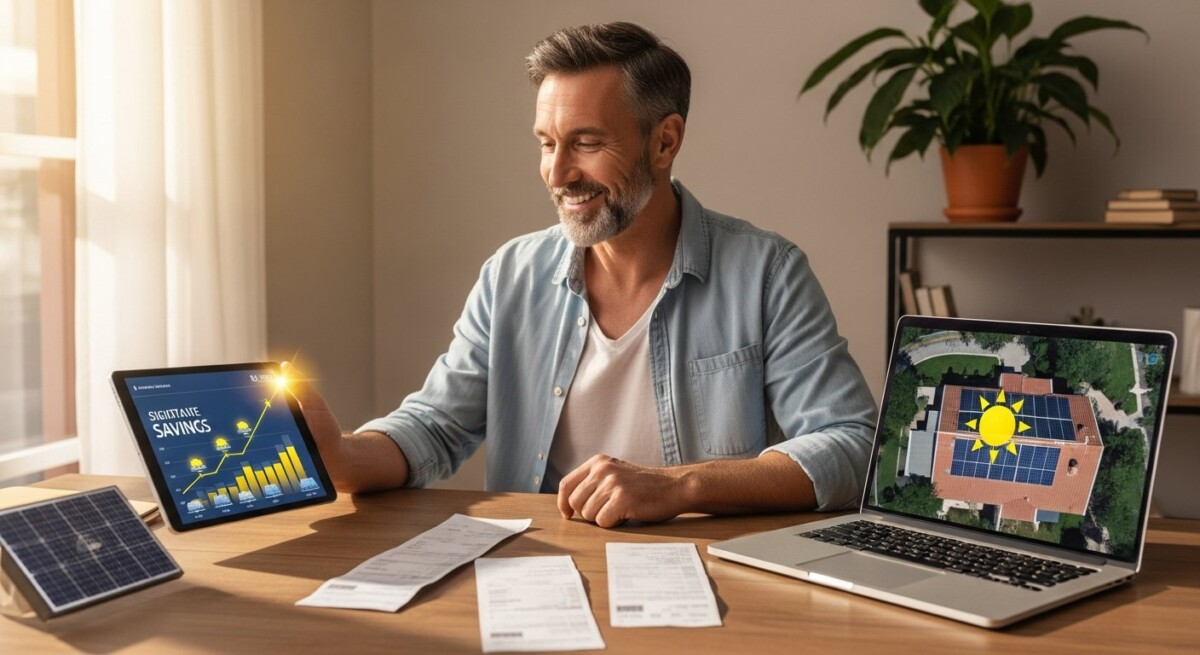
You open your monthly electricity bill and feel that familiar sting. Costs keep climbing, and you wonder if there is a way to stop the trend. Many homeowners are now searching for a solar savings estimation tool to see if solar panels can reduce those bills and provide energy independence. This simple online calculator helps you understand how much you could save before making any commitments.
A solar savings estimation tool is a free online calculator that uses your location, roof size, and current electricity usage to predict your potential savings. It shows you how much money you could save over 20 or 25 years, and it factors in local sunlight hours and utility rates. Homeowners use it as a starting point to decide if solar is worth pursuing.
Understanding Solar Savings Estimation Tool
A solar savings estimation tool works by analyzing data that you provide or that is already available for your address. You enter your average monthly electric bill, the direction your roof faces, and whether you have shading from trees. The tool then calculates how many solar panels you would need and what your long-term savings might look like.
More homeowners are turning to these tools because they remove guesswork. Instead of calling multiple companies just to get a rough number, you can get a personalized estimate in minutes. This lets you compare the financial benefits of solar against the upfront cost without any pressure.
These tools also consider net metering policies and local electricity rates, which vary widely across the country. For example, a home in California might see different savings than one in Texas due to utility rates and sunlight. In our guide on best states for solar savings and energy independence, we explain how location plays a major role in your return on investment.
Why Solar Energy Is Becoming More Popular
Rising electricity prices are the number one reason homeowners consider solar. According to the U.S. Energy Information Administration, residential electricity rates have increased steadily over the past decade. Solar offers a way to lock in lower energy costs for decades.
Environmental concerns also drive interest. Many homeowners want to reduce their carbon footprint and contribute to a cleaner planet. Solar panels generate electricity without producing greenhouse gases, making them an environmentally responsible choice.
Finally, long-term savings are hard to ignore. Once your solar system is paid off, your electricity costs drop significantly. Many homeowners save tens of thousands of dollars over the life of their system, and federal tax credits and local rebates can reduce the upfront cost by 30% or more.
If you are considering solar power for your home, comparing installation quotes can help you understand your options. Request a free solar quote or call to learn more.
Common Questions Homeowners Have About Solar
Many homeowners hesitate because they worry about the installation cost. While solar panels require an upfront investment, financing options and incentives make them accessible to more families. The average system pays for itself within 7 to 10 years.
Another common concern is roof suitability. Not every roof is ideal for solar, but most are. A professional installer can assess your roof’s age, material, and orientation to determine if solar is a good fit. If your roof needs replacement soon, you can combine both projects.
System performance also raises questions. Homeowners want to know how much energy their panels will produce on cloudy days or during winter. Modern panels are efficient and still generate electricity in low-light conditions. Here are other frequent concerns:
- Will solar panels work during a power outage?
- How long do solar panels last?
- What maintenance is required?
- Can I add more panels later if my energy needs grow?
- Do solar panels increase property taxes?
How Solar Panel Installation Works
Installing solar panels is a straightforward process when you work with a professional installer. The entire project typically takes one to three days, depending on the size of your system and the complexity of your roof. Here are the main steps:
- Home energy assessment: An installer reviews your past utility bills to understand your energy consumption.
- System design: They create a custom layout that maximizes sunlight exposure for your roof.
- Permits and approvals: The installer handles all necessary permits and utility approvals.
- Panel installation: Crews mount the panels, connect the inverter, and wire the system to your electrical panel.
- System activation: Once inspections pass and the utility gives permission, your system starts generating electricity.
Professional installers handle every detail, from paperwork to safety checks. This ensures your system is installed correctly and meets local building codes. They also help you understand the warranty and maintenance requirements.
Speaking with experienced installers can help you determine the best solar solution for your home. Compare solar quotes here or call to explore available options.
Signs Your Home May Be Ideal for Solar
Some homes are better suited for solar than others. The most important factor is sunlight exposure. If your roof faces south, west, or east and receives direct sunlight for most of the day, you are likely a strong candidate. Shading from trees or nearby buildings can reduce production.
High electricity bills are another clear sign. If you pay more than $100 per month on average, solar could significantly reduce your costs. Homes with electric heating or air conditioning often see the biggest savings.
Here are additional indicators that your home may be ideal for solar:
- Your roof is less than 10 years old and in good condition.
- You have at least 300 square feet of unshaded roof space.
- You plan to stay in your home for at least five more years.
- Your state offers net metering or other solar incentives.
- Your local utility has high electricity rates.
What Affects Solar Installation Costs
System size is the biggest cost driver. A larger system that covers more of your electricity needs will cost more upfront but also save more over time. Most residential systems range from 5 kW to 10 kW.
Equipment quality also matters. Premium panels and inverters cost more but often come with better warranties and higher efficiency. Cheaper equipment may save money initially but could lead to lower long-term performance.
Installation complexity can add to the cost. A simple roof with easy access is cheaper to install than a steep, multi-story roof with complex tile or slate. Local incentives and federal tax credits can offset 30% or more of the total cost, making solar more affordable.
The cost of solar installation varies depending on your home and energy needs. Request personalized solar quotes or call to see what options are available.
Tips for Choosing a Reliable Solar Installer
Choosing the right installer is just as important as choosing the right equipment. A reliable company will have years of experience, proper licensing, and a strong reputation in your community. Start by checking online reviews and asking for references.
Warranties are another key consideration. A good installer offers a workmanship warranty of at least 10 years and helps you understand the manufacturer warranties on panels and inverters. This protects your investment if something goes wrong.
Here are practical tips for choosing a solar installer:
- Get quotes from at least three different companies.
- Verify that the installer is licensed and insured in your state.
- Read customer reviews on Google, Yelp, or the Better Business Bureau.
- Ask about the types of panels and inverters they use.
- Confirm that they handle all permits and utility paperwork.
Long-Term Benefits of Installing Solar Panels
The most obvious benefit is lower electricity bills. After your system is paid off, you enjoy free or nearly free electricity for the remaining life of your panels, which is typically 25 to 30 years. Many homeowners see their monthly bills drop by 50% to 100%.
Solar panels also increase your home’s value. Studies show that homes with solar sell for about 4% more than comparable homes without solar. Buyers are willing to pay a premium for lower utility costs and energy independence.
Finally, solar reduces your environmental impact and gives you energy independence. You rely less on the grid and are protected from future rate hikes. For many families, the peace of mind that comes with energy freedom is priceless. In our guide on best states for solar savings and energy independence, we break down how different states stack up in terms of savings and incentives.
Frequently Asked Questions
How much does a solar system cost for a typical home?
The average cost for a residential solar system in the United States ranges from $15,000 to $25,000 before incentives. After the federal tax credit of 30%, the net cost drops to between $10,500 and $17,500. Your final cost depends on system size, equipment, and local labor rates.
How long does it take for solar panels to pay for themselves?
Most homeowners see payback periods between 7 and 12 years. This depends on your electricity rates, the size of your system, and available incentives. After the payback period, you essentially get free electricity for the remaining life of the panels.
Do solar panels work during a power outage?
Standard grid-tied solar systems shut down during a power outage for safety reasons. If you want backup power during outages, you need a battery storage system like the Tesla Powerwall or similar. Batteries store excess solar energy for use when the grid is down.
How many solar panels do I need to power my home?
The number of panels depends on your energy usage and the amount of sunlight your location receives. A typical home needs between 15 and 25 panels. A solar savings estimation tool can give you a more accurate number based on your specific situation.
What maintenance do solar panels require?
Solar panels require very little maintenance. You should clean them once or twice a year if they get dusty or covered in pollen. Rain usually does the job for you. Most systems come with monitoring software that alerts you if something is wrong.
Will solar panels damage my roof?
No, when installed correctly by a professional, solar panels actually protect the roof underneath. They shield the roofing material from sun, rain, and hail. If your roof ever needs repair, the panels can be removed and reinstalled without damage.
Can I install solar panels myself to save money?
DIY solar installation is possible but not recommended for most homeowners. Professional installers handle permits, electrical work, and safety requirements that can be dangerous for untrained individuals. Mistakes can void warranties and cause fire hazards.
What happens if I move after installing solar?
If you own your system outright, you can sell your home with the solar panels included. Most buyers see them as a valuable upgrade. If you have a solar loan, you can either pay it off or transfer it to the new homeowner, depending on the loan terms.
Solar energy offers a practical way to reduce your electricity bills and gain energy independence. By using a solar savings estimation tool, you can see exactly how much you might save. The next step is to compare quotes from professional installers to find the right system for your home and budget.