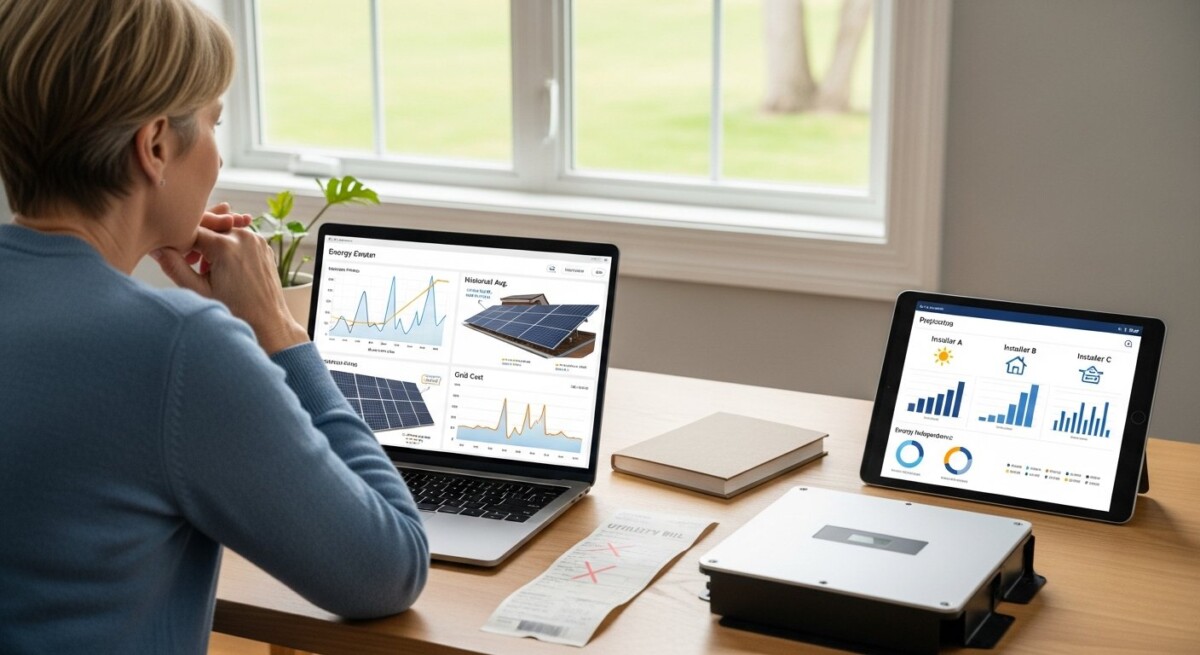
You have probably seen advertisements promising huge solar savings, only to wonder why your own estimates look different. Rising electricity costs have pushed many homeowners to search for why solar savings estimates change and whether solar panels still make financial sense. Understanding these shifts can help you reduce your energy bills, gain energy independence, and make a confident decision.
Solar savings estimates are not one-size-fits-all numbers. They depend on your home, your utility rates, and even the weather. This article explains why those numbers fluctuate and how comparing quotes from professional installers can help you find realistic savings.
Understanding why solar savings estimates change
Solar savings estimates are projections of how much money a solar panel system will save you on electricity bills over time. These estimates change because they rely on variables that differ from home to home and year to year. The most important factors include your local electricity rates, the amount of sunlight your roof receives, and the cost of the system itself.
When you receive a solar quote, the installer calculates savings based on assumptions about future utility rate increases and your home’s energy usage. If utility rates rise faster than expected, your savings could be higher. If your energy consumption changes,for example, you buy an electric car,your savings may also shift. Our guide on the best states for solar savings explains how location and local policies further influence these numbers.
More homeowners are considering solar because of rising electricity costs and growing environmental awareness. However, many are surprised when their initial savings estimate differs from a detailed quote. This is why it is essential to understand what drives the numbers and to work with installers who provide transparent, site-specific calculations.
Key variables that affect solar savings
Three main variables drive changes in solar savings estimates: electricity rates, system production, and financing terms. Electricity rates vary by region and can change annually. System production depends on your roof’s orientation, shading, and local weather patterns. Financing,whether you buy, lease, or take a loan,changes your upfront cost and monthly savings.
Why Solar Energy Is Becoming More Popular
Solar energy adoption has grown rapidly as homeowners look for ways to combat rising utility costs. In many areas, electricity prices have increased by 3,5% per year, making solar an attractive hedge against future rate hikes. By generating your own power, you can lock in lower energy costs for decades.
Environmental concerns also drive interest. Solar panels produce clean energy, reducing your household’s carbon footprint. Many homeowners feel good about contributing to a more sustainable future while also saving money.
Long-term savings are the biggest motivator. A well-designed solar system can pay for itself in 6,10 years and continue generating free electricity for 25 years or more. Government incentives, such as the federal Investment Tax Credit (ITC), further reduce upfront costs, making solar more accessible than ever.
If you are considering solar power for your home, comparing installation quotes can help you understand your options. Request a free solar quote or call to learn more.
Common Questions Homeowners Have About Solar
Many homeowners worry about the upfront cost of solar panels. The good news is that prices have dropped significantly over the past decade, and incentives can cover 30% or more of the total cost. Financing options, including solar loans and leases, make it possible to start saving with little to no money down.
Roof suitability is another frequent concern. Not every roof is ideal for solar, but most can accommodate panels if they have enough unshaded space and are in good condition. A professional installer will evaluate your roof’s age, material, and orientation during a site visit.
System performance often raises questions about cloudy days or winter months. While solar panels produce less energy in low light, modern systems still generate power on overcast days. Net metering programs let you bank excess energy for use at night or during cloudy periods.
- How much does a solar system cost for an average home?
- Will solar panels work on my roof if it is shaded or old?
- How long do solar panels last, and what maintenance do they need?
- What happens if I sell my home before the system is paid off?
- Do I need a battery for solar to be worthwhile?
- How do local incentives and net metering affect my savings?
How Solar Panel Installation Works
The installation process begins with a home energy assessment. An installer reviews your past electricity bills, evaluates your roof, and discusses your energy goals. This step ensures the system is sized correctly to meet your needs.
After the assessment, the installer designs a custom system and handles permits and approvals. This paperwork can take a few weeks, but it ensures your system meets local building codes and utility requirements. Once permits are secured, the physical installation usually takes one to three days.
- Home energy assessment and bill analysis
- System design and equipment selection
- Permit applications and utility approvals
- Panel and inverter installation on your roof
- Final inspection and system activation
Speaking with experienced installers can help you determine the best solar solution for your home. Compare solar quotes here or call to explore available options.
Signs Your Home May Be Ideal for Solar
Homes with strong, direct sunlight exposure are the best candidates for solar panels. South-facing roofs with little to no shading capture the most energy throughout the day. Even east- or west-facing roofs can work well, though they may produce slightly less power.
High electricity bills are another clear indicator. If you pay more than $100 per month for electricity, solar can likely reduce your costs. In states with high utility rates, the savings are even more dramatic.
- Your roof gets at least 5,6 hours of direct sunlight per day
- Your monthly electricity bill is consistently above $100
- You have ample roof space facing south, east, or west
- Your roof is less than 10,15 years old and in good condition
- You plan to stay in your home for at least 5,7 years
- Your state offers net metering or solar incentives
What Affects Solar Installation Costs
The size of your solar system is the primary cost driver. A larger system that covers 100% of your energy use will cost more than a smaller one that offsets only part of your bill. However, larger systems often have better long-term savings per watt.
Equipment quality also matters. High-efficiency panels and premium inverters cost more upfront but produce more energy and last longer. Installation complexity,such as a steep roof, tile roofing, or electrical panel upgrades,can add to the labor cost.
Local incentives and rebates can significantly reduce your out-of-pocket expense. For example, the federal ITC allows you to deduct 30% of the system cost from your taxes. Some states and utilities offer additional cash rebates or performance-based incentives.
The cost of solar installation varies depending on your home and energy needs. Request personalized solar quotes or call to see what options are available.
Tips for Choosing a Reliable Solar Installer
Not all solar installers are created equal. Look for companies with several years of experience and a strong track record of installations in your area. A local installer will understand your utility’s net metering policies and local permitting requirements.
Warranties are a critical part of any solar investment. Reputable installers offer at least a 10-year workmanship warranty, and solar panel manufacturers typically provide 25-year performance warranties. Read the fine print to understand what is covered.
- Check the installer’s licensing, insurance, and certifications (e.g., NABCEP)
- Read online reviews on Google, Yelp, and the Better Business Bureau
- Ask for at least three detailed quotes to compare pricing and equipment
- Verify that the installer handles permits and utility approvals
- Request references from past customers in your area
Long-Term Benefits of Installing Solar Panels
Lower electricity bills are the most immediate benefit. Once your system is paid off, you essentially generate free power for the remaining lifespan of the panels. Over 25 years, this can amount to tens of thousands of dollars in savings.
Solar panels also increase your home’s value. Studies show that homes with solar systems sell for a premium compared to similar homes without solar. Buyers recognize the value of lower utility costs and energy independence.
On the environmental side, a typical residential solar system offsets about 3,4 tons of carbon dioxide per year. That is equivalent to planting over 100 trees annually. By going solar, you reduce reliance on fossil fuels and contribute to a cleaner grid.
Energy independence is the final piece. With solar and a battery backup, you can keep your lights on during grid outages. Even without batteries, solar reduces your dependence on utility companies and protects you from future rate hikes.
Frequently Asked Questions
Why do solar savings estimates vary so much between quotes?
Different installers use different assumptions about future electricity rate increases, system degradation, and your home’s energy usage. They may also quote different equipment, financing options, and warranty terms. This is why comparing multiple quotes is essential to find realistic numbers.
How long does it take for solar panels to pay for themselves?
The payback period typically ranges from 6 to 12 years, depending on your location, electricity rates, and system cost. States with higher utility rates and strong incentives often see faster payback. After that point, your electricity is essentially free.
Will solar panels work during a power outage?
Standard grid-tied solar systems shut off during outages for safety reasons. If you want backup power, you need a battery system like the Tesla Powerwall or Enphase IQ Battery. Batteries store excess solar energy for use when the grid is down.
What maintenance do solar panels require?
Solar panels require very little maintenance. Rain usually keeps them clean enough, but in dusty areas, occasional rinsing with a hose can help. You should also have the system inspected every few years to ensure wiring and mounts are secure.
Can I install solar panels myself to save money?
DIY solar installations are possible but risky. You may void warranties, face electrical hazards, and struggle with permits and utility approvals. Professional installers ensure the system is safe, efficient, and qualifies for incentives.
What happens to my solar savings if I move?
If you own your solar system, it can increase your home’s resale value. Many buyers see solar as a valuable upgrade. If you lease the system, the new owner can take over the lease, though this may complicate the sale.
Do solar panels increase my property taxes?
In most states, solar panel installations are exempt from property tax assessments. This means your home value may go up, but your taxes won’t increase. Check your state’s specific laws to confirm.
How do I know if a solar quote is accurate?
Look for quotes that include a detailed production estimate based on your roof and location, not just a generic average. Ask the installer to explain their assumptions about utility rate increases and system degradation. A transparent quote will help you trust the numbers.
Understanding why solar savings estimates change is the first step toward making a smart investment. By comparing quotes from multiple installers, you can find a system that fits your budget, meets your energy needs, and delivers realistic long-term savings. Start today by requesting free quotes and taking control of your energy future.