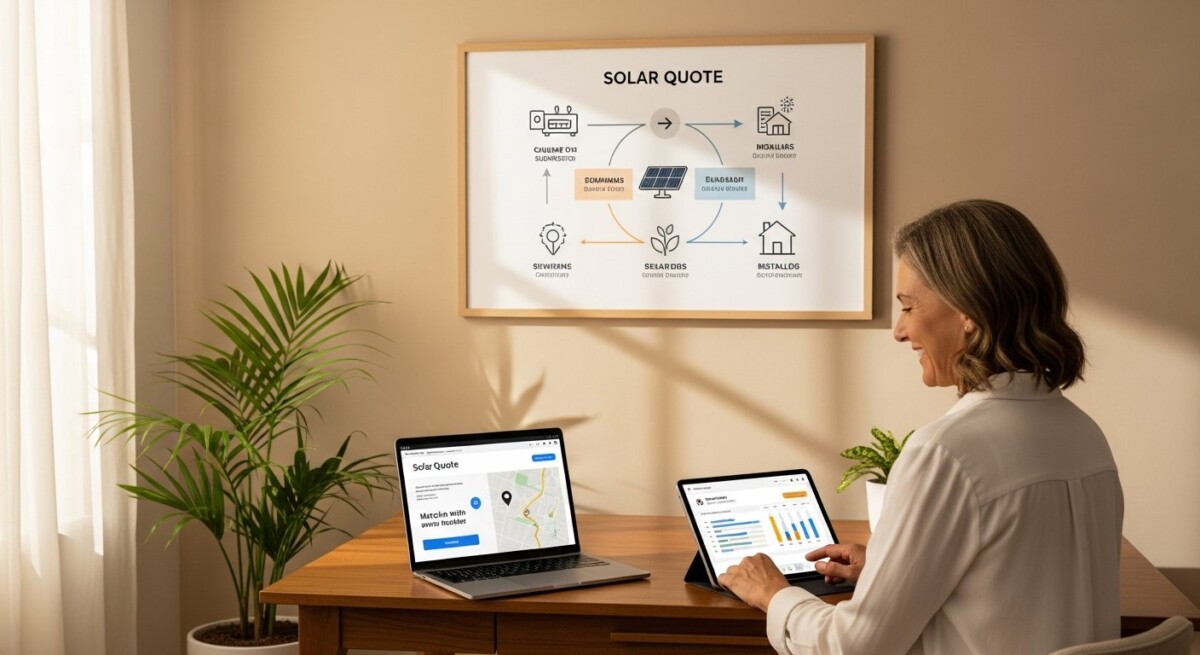
Your monthly electricity bill keeps climbing. You have heard that solar panels can help, but the thought of researching equipment, installers, and financing feels overwhelming. That is where solar quote platforms come in. These online tools simplify the process of getting started with solar energy by connecting you with multiple pre-vetted installers at once. Instead of spending hours calling companies one by one, you fill out a single form and receive competing quotes tailored to your home and energy usage. This approach not only saves time but also helps you find the best price and system design for your situation.
Understanding How Solar Quote Platforms Work
A solar quote platform is an online service that collects basic information about your home and energy needs, then shares that information with several local or national solar installers. The installers review your details and submit custom proposals that include equipment recommendations, estimated energy production, financing options, and total cost. You receive these offers in a standard format, making it easy to compare apples to apples.
The process is straightforward. You start by entering your address, your average monthly electric bill, and a few details about your roof, such as its age and shading. The platform uses this data to generate an initial estimate of system size and potential savings. Once you submit your information, the platform sends your request to its network of partner installers, who then reach out with personalized quotes. Most platforms handle the entire process online, though some may schedule a phone call or virtual consultation to clarify details.
Homeowners are turning to these platforms because they eliminate the legwork of vetting contractors and negotiating prices. By comparing multiple offers in one place, you gain leverage and insight. You see exactly what each installer charges for panels, inverters, labor, and permits. This transparency helps you avoid overpaying and ensures you choose a system that fits your budget and energy goals. In our guide on affordable solar quotes, we explain how comparing offers can lead to lower bills and greater energy independence.
Why Solar Energy Is Becoming More Popular
Rising electricity rates are the primary reason more homeowners are exploring solar power. Over the past decade, the cost of grid electricity has increased steadily, while the price of solar panels has dropped dramatically. This shift makes solar an increasingly attractive long-term investment for households across the country.
Environmental concerns also play a major role. Many homeowners want to reduce their carbon footprint and contribute to a cleaner energy future. Solar panels generate electricity without producing greenhouse gases, making them one of the most effective ways to lower your household’s environmental impact. Pairing solar with battery storage can further reduce reliance on fossil fuels by allowing you to use stored energy during peak demand times or power outages.
Financial incentives add another layer of appeal. The federal solar investment tax credit (ITC) currently allows you to deduct 30 percent of your system cost from your federal taxes. Many states and utilities offer additional rebates, performance payments, or net metering programs that pay you for excess energy your panels send back to the grid. These incentives can significantly shorten your payback period and improve your overall return on investment.
If you are considering solar power for your home, comparing installation quotes can help you understand your options. Request a free solar quote or call to learn more.
Common Questions Homeowners Have About Solar
When researching solar, most homeowners have similar concerns. They worry about upfront cost, whether their roof is suitable, and how well the system will perform over time. Understanding the answers to these questions can help you move forward with confidence.
Installation cost is often the biggest hurdle. While a typical residential solar system costs between $15,000 and $25,000 before incentives, financing options such as solar loans, leases, and power purchase agreements (PPAs) make it possible to go solar with little or no money down. Many homeowners find that their monthly loan payment is lower than their average electric bill, meaning they start saving from day one. You can learn more about how free quotes work in our article on are solar quotes free.
- How much does a solar panel system cost?
- Will solar panels work on my roof?
- How long do solar panels last?
- What happens on cloudy days or at night?
- Do I need a battery with my solar system?
- How long will it take for solar to pay for itself?
How Solar Panel Installation Works
Once you select a quote and sign a contract, the installation process follows a clear sequence of steps. Understanding these steps helps you know what to expect and how to prepare your home.
- Home Energy Assessment: An installer reviews your past utility bills and evaluates your home’s energy consumption to determine the optimal system size.
- System Design: Using satellite imagery and onsite measurements, the installer designs a custom layout that maximizes sunlight exposure and fits your roof’s dimensions and angle.
- Permits and Approvals: The installer handles all necessary permits from your local building department and submits interconnection paperwork to your utility company.
- Panel Installation: A crew mounts racking on your roof, installs the panels, runs wiring to an inverter, and connects the system to your electrical panel.
- System Activation: After a final inspection and utility approval, your system is turned on and begins generating electricity.
Speaking with experienced installers can help you determine the best solar solution for your home. Compare solar quotes here or call to explore available options.
Signs Your Home May Be Ideal for Solar
Not every home is equally suited for solar, but many properties can benefit. Several indicators can help you gauge whether your home is a good candidate.
Strong, unobstructed sunlight is the most important factor. A south-facing roof with little to no shade from trees, chimneys, or neighboring buildings will produce the most energy. Even roofs that face east or west can work well, especially if you pair them with modern, high-efficiency panels. If your roof is shaded, ground-mounted panels or community solar subscriptions may be viable alternatives.
- Your roof receives direct sunlight for most of the day.
- Your monthly electricity bills are consistently high.
- Your roof is in good condition and has at least 10 to 15 years of life remaining.
- You plan to stay in your home for at least five to seven years.
- Your local utility offers net metering or time-of-use rates that reward solar production.
- You live in a state with strong solar incentives or rebates.
What Affects Solar Installation Costs
Several variables influence the final price of a solar installation. Understanding these factors helps you evaluate quotes and make informed trade-offs between cost and quality.
System size is the largest cost driver. A larger system that covers more of your energy usage will cost more upfront but can deliver greater long-term savings. Equipment quality also matters. Premium panels from manufacturers like SunPower or REC tend to be more efficient and come with longer warranties, while budget panels cost less but may degrade faster or produce less power over time. Inverter type,string inverters versus microinverters or power optimizers,also affects price and performance.
Installation complexity adds to labor costs. Roofs that are steep, have multiple angles, or are made of tile or slate require more time and specialized mounting hardware. If your electrical panel needs an upgrade to accommodate solar, that adds expense. Local permit fees and utility interconnection charges vary by jurisdiction. Finally, available incentives can reduce your net cost by thousands of dollars, so it is important to factor those into your comparison.
The cost of solar installation varies depending on your home and energy needs. Request personalized solar quotes or call to see what options are available.
Tips for Choosing a Reliable Solar Installer
Selecting the right installer is just as important as choosing the right equipment. A reputable company ensures your system is designed correctly, installed safely, and backed by solid warranties.
Start by reviewing each installer’s experience and credentials. Look for installers who hold certifications from the North American Board of Certified Energy Practitioners (NABCEP) and have been in business for at least several years. Check their Better Business Bureau rating and read customer reviews on platforms like Google, Yelp, and SolarReviews. Pay attention to how they handle complaints and whether they respond to customer questions promptly.
- Ask for at least three detailed quotes and compare them side by side.
- Verify that the installer offers a comprehensive workmanship warranty (typically 10 years or more).
- Confirm that the solar panel and inverter warranties are backed by the manufacturer, not just the installer.
- Request references from recent customers with similar roof types and energy usage patterns.
- Avoid installers who pressure you to sign immediately or demand large upfront deposits.
Long-Term Benefits of Installing Solar Panels
Investing in solar panels provides financial and lifestyle rewards that extend far beyond the first year. The most immediate benefit is lower electricity bills. Once your system is paid off, your electricity costs drop to near zero, insulating you from future rate hikes. Over 25 to 30 years, the average homeowner saves tens of thousands of dollars.
Solar also increases your home’s resale value. Multiple studies have shown that homes with solar panels sell for a premium compared to comparable homes without them. Buyers recognize the value of reduced utility costs and are often willing to pay more for a home that already has a functional solar system. Additionally, solar panels require very little maintenance,usually just occasional cleaning and an annual inspection,making them a low-effort asset.
On a broader scale, every kilowatt-hour of solar electricity you generate reduces the demand for fossil fuel power plants. This lowers air pollution and conserves natural resources. For homeowners who value self-reliance, solar plus battery storage provides energy independence, allowing you to keep critical appliances running during grid outages. Combining these benefits makes solar one of the most impactful home improvements you can make.
How many solar panels do I need for my home?
The number of panels depends on your average energy consumption, your roof’s sunlight exposure, and the wattage of the panels you choose. A typical U.S. home needs between 15 and 25 panels to cover most or all of its electricity usage. A solar quote platform can estimate the right system size based on your utility bills and roof characteristics.
Can I get solar panels for free?
No, solar panels are not free, but third-party ownership options such as solar leases and power purchase agreements (PPAs) require little to no upfront cost. With these arrangements, you pay a monthly fee for the electricity the panels produce, often at a lower rate than your utility charges. However, you do not own the system, which means you cannot claim tax credits or incentives.
Do solar panels work during a power outage?
Standard grid-tied solar systems shut down during a power outage for safety reasons. If you want backup power, you need a battery storage system, such as the Tesla Powerwall or Enphase Encharge, that can disconnect from the grid and continue supplying electricity to your home. Solar quote platforms can help you compare battery options alongside your panel quotes.
How long does it take to install solar panels?
The physical installation of panels on your roof typically takes one to three days. However, the entire process from signing a contract to system activation usually takes four to eight weeks. The timeline depends on how quickly your local government issues permits and your utility company approves the interconnection.
Will solar panels damage my roof?
When installed correctly by a certified professional, solar panels do not damage your roof. Installers use flashing and sealants to prevent leaks, and the panels themselves can actually protect the covered portion of your roof from weather and UV exposure. It is important to ensure your roof is in good condition before installation, as adding panels to an aging roof can complicate future repairs or replacement.
What happens if I move after installing solar?
If you own your solar system outright, you can include it in the sale of your home, often increasing the property’s value. If you have a solar loan, you may need to pay off the remaining balance at closing or transfer the loan to the buyer, depending on the terms. Leased systems can typically be transferred to the new homeowner, provided they qualify for the lease agreement.
How much can I save with solar panels?
Savings vary based on your local electricity rates, system size, and available incentives. On average, homeowners save between $10,000 and $30,000 over 20 years. Using a solar quote platform to compare multiple offers helps you maximize those savings by finding the most cost-effective equipment and financing options for your specific situation.
Solar energy offers a practical path to lower electricity bills, greater energy independence, and a smaller environmental footprint. By using a solar quote platform, you can compare multiple installation quotes from trusted professionals without the hassle of cold-calling contractors. The first step is simple: submit your information once and let the offers come to you. Compare your options, ask questions, and choose the system that fits your home and budget. Start today and take control of your energy future.