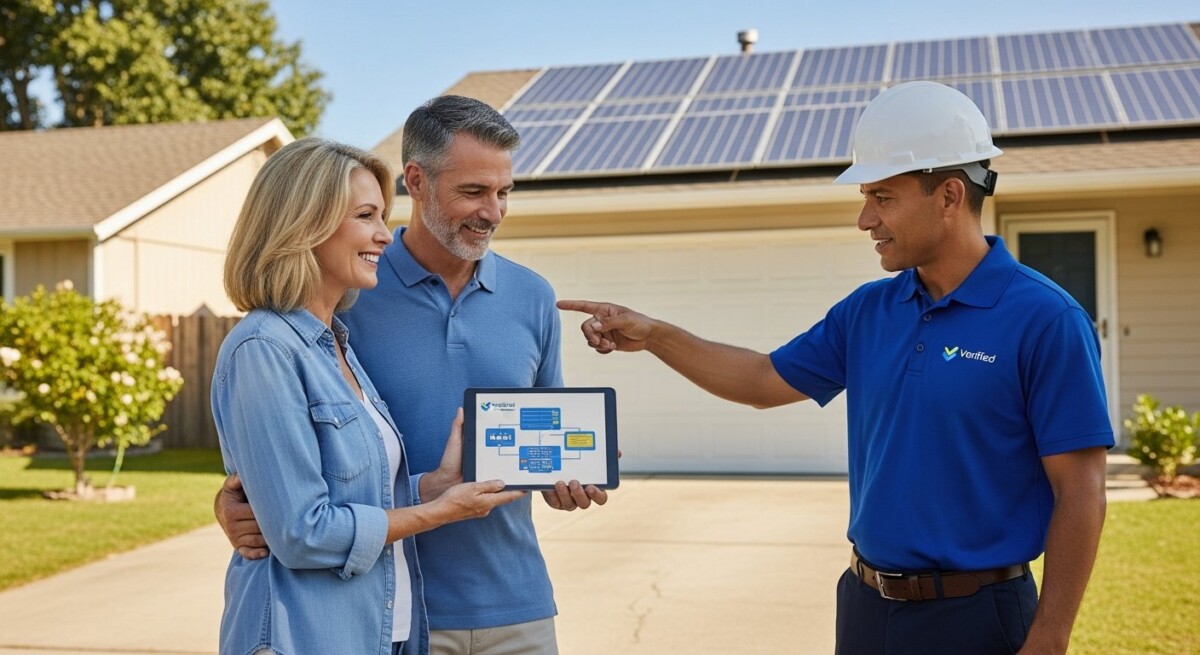
You open your monthly electricity bill and feel that familiar pinch. Rates keep climbing, and it seems like there is no end in sight. Many homeowners in the same situation are now looking for verified solar providers to take control of their energy costs and reduce their reliance on the power grid.
Understanding Verified Solar Providers
A verified solar provider is a company that has been vetted for quality, licensing, insurance, and industry certifications. These providers meet high standards set by organizations such as the North American Board of Certified Energy Practitioners (NABCEP) or state-level licensing boards.
Working with a verified provider means you are hiring a professional who follows best practices for system design, installation, and safety. This reduces the risk of poor workmanship, faulty equipment, or systems that underperform.
More homeowners are choosing verified solar providers because they want confidence that their investment is protected. A certified installer also helps you navigate local permits, utility interconnection requirements, and available incentives.
Why Solar Energy Is Becoming More Popular
Electricity prices have risen steadily over the past decade, and many homeowners expect this trend to continue. Solar panels allow you to generate your own power, locking in lower energy costs for decades.
Environmental concerns also play a role. Solar energy produces no greenhouse gas emissions during operation, making it one of the cleanest ways to power a home. For many families, reducing their carbon footprint is a meaningful step toward a healthier planet.
Long-term savings are another major motivator. While the upfront cost of solar can seem high, the average homeowner recovers their investment through lower electricity bills within 6 to 10 years. After that, the electricity they produce is essentially free.
If you are considering solar power for your home, comparing installation quotes can help you understand your options. Request a free solar quote or call to learn more.
Common Questions Homeowners Have About Solar
Many homeowners wonder about the total cost of installation. Solar panel prices have dropped significantly over the past decade, and federal tax credits can cover 30% of the system cost.
Roof suitability is another common concern. Most roofs that face south, east, or west with good sunlight exposure can accommodate solar panels. A professional installer will assess your roof’s condition, angle, and shading.
System performance is also top of mind. Modern solar panels are highly efficient and come with warranties lasting 25 years or more. Even on cloudy days, panels still generate electricity, though at reduced levels.
- How much will solar panels cost for my home?
- Is my roof suitable for solar installation?
- How long will the installation take?
- What happens if my panels produce more power than I use?
- Do solar panels work during a power outage?
- What maintenance do solar panels require?
How Solar Panel Installation Works
The installation process starts with a home energy assessment. An installer reviews your past electricity bills, inspects your roof, and measures your property’s sun exposure.
Next, they design a system tailored to your energy needs and roof layout. After you approve the design, the installer handles permits and approvals from your local government and utility company.
Finally, the physical installation takes place, usually in one to three days. After a final inspection, your system is activated and begins generating electricity immediately.
- Home energy assessment and site survey
- Custom system design and equipment selection
- Permit applications and utility approvals
- Panel and inverter installation on your roof
- Final inspection and system activation
Speaking with experienced installers can help you determine the best solar solution for your home. Compare solar quotes here or call to explore available options.
Signs Your Home May Be Ideal for Solar
Homes with strong, direct sunlight for most of the day are prime candidates for solar panels. If your roof receives sunlight from mid-morning to late afternoon, your system will perform well.
High electricity bills are another clear sign. If you pay more than $100 per month, solar panels can likely reduce your costs significantly. A professional can estimate your savings based on local utility rates.
- Your roof faces south, east, or west with minimal shading
- You have high monthly electricity bills
- Your roof is in good condition and has at least 10 years of life left
- You plan to stay in your home for 5 years or more
- Your local utility offers net metering or solar buyback programs
What Affects Solar Installation Costs
System size is the biggest cost factor. A larger system that covers all of your electricity needs costs more upfront but offers greater long-term savings. Most homes install systems between 5 kW and 10 kW.
Equipment quality also matters. Premium panels and inverters cost more but often come with better efficiency and longer warranties. Verified solar providers can help you balance cost and quality based on your budget.
Installation complexity can raise costs. Steep roofs, tile roofs, or roofs with multiple angles require more labor and specialized mounting hardware. Local incentives, such as state rebates or tax credits, can reduce the net cost significantly.
The cost of solar installation varies depending on your home and energy needs. Request personalized solar quotes or call to see what options are available.
Tips for Choosing a Reliable Solar Installer
Start by reviewing an installer’s experience and industry certifications. NABCEP certification is a strong indicator that the company follows best practices. Ask how long they have been in business and how many systems they have installed.
Check warranties carefully. A good installer offers a workmanship warranty of at least 10 years, and the equipment should come with manufacturer warranties of 20 to 25 years. Read customer reviews on independent platforms to gauge satisfaction.
Comparing multiple quotes is the most effective way to find a fair price and quality service. Each quote should list the equipment, system size, total cost, and estimated savings. This transparency helps you make an informed decision.
- Verify licensing, insurance, and industry certifications
- Ask about equipment warranties and workmanship guarantees
- Read recent online reviews from local homeowners
- Request at least three detailed quotes for comparison
Long-Term Benefits of Installing Solar Panels
Lower electricity bills are the most immediate benefit. Once your system is paid off, you enjoy decades of free or very low-cost electricity. Many homeowners see monthly savings of 50% or more.
Solar panels also increase your home’s value. Studies show that homes with solar sell for a premium compared to similar homes without it. Buyers recognize the long-term savings and are willing to pay more.
Energy independence is another powerful advantage. Generating your own power means you are less affected by utility rate hikes and grid outages when combined with battery storage. You also reduce your home’s reliance on fossil fuels, cutting your carbon footprint significantly.
How much do solar panels save on electricity bills?
Most homeowners save between $600 and $2,400 per year, depending on local electricity rates, system size, and sun exposure. Over 20 years, total savings can range from $12,000 to $48,000 or more.
What is a verified solar provider?
A verified solar provider is a company that has been checked for proper licensing, insurance, and industry certifications. These providers meet standards set by organizations like NABCEP and state regulatory bodies.
Is my roof good for solar panels?
Roofs that face south, east, or west with minimal shade are generally good for solar. A professional installer will assess your roof’s condition, angle, and sun exposure during a site visit.
How long does solar panel installation take?
Physical installation usually takes one to three days. The entire process, from design to activation, can take four to eight weeks depending on permit and utility approval timelines.
Do solar panels work at night or on cloudy days?
Solar panels do not generate electricity at night, but they still produce power on cloudy days at reduced levels. Most systems are connected to the grid, so you draw electricity from the utility when solar production is low.
What happens if my solar panels produce more power than I use?
Excess power is sent to the grid, and your utility credits you through a process called net metering. These credits offset the electricity you use when your panels are not producing.
How long do solar panels last?
Solar panels typically last 25 to 30 years or more. Most manufacturers offer performance warranties that guarantee at least 80% of original output after 25 years.
Are there government incentives for solar?
Yes, the federal solar Investment Tax Credit (ITC) allows you to deduct 30% of the system cost from your federal taxes. Many states and utilities offer additional rebates, tax credits, or performance-based incentives.
Exploring solar energy is a smart step toward lower bills, energy independence, and a cleaner environment. By comparing quotes from verified solar providers, you can find a system that fits your home and budget. Start your journey today and see how much you can save.