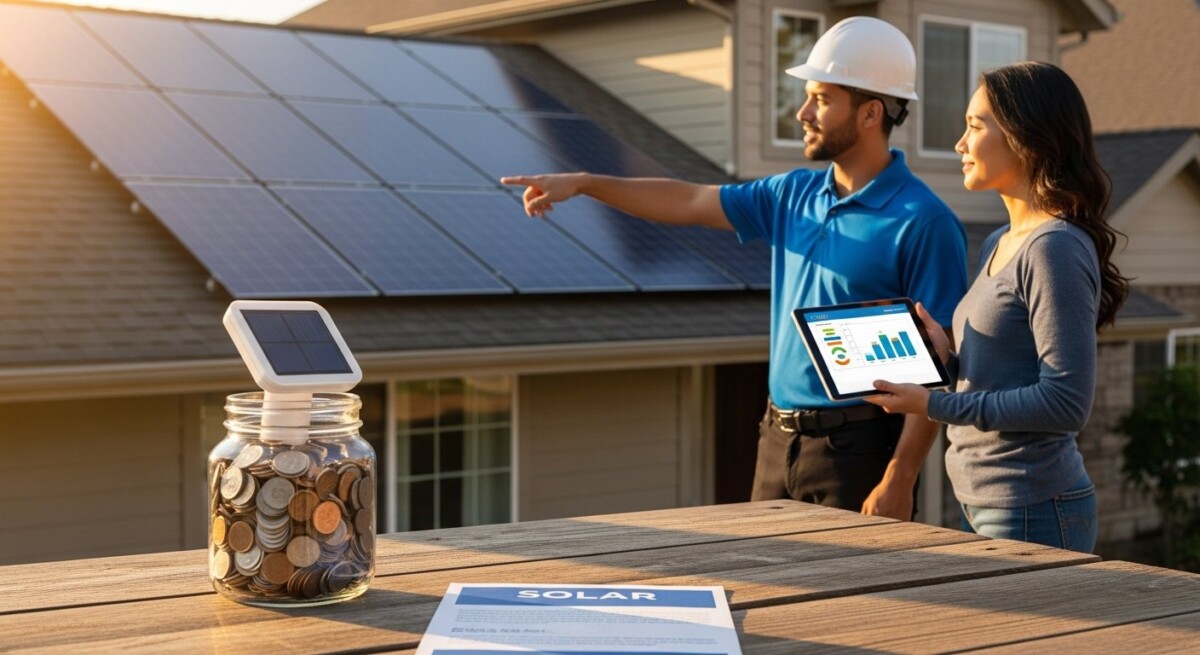
Picture this: your monthly electricity bill arrives, and the number seems to climb higher every time. Across the United States, utility rates have risen steadily, leaving many homeowners searching for a more predictable and affordable way to power their homes. That search often leads to the idea of solar for off grid homes, a solution that promises lower bills and greater self-reliance. By generating your own power, you can reduce your dependence on the grid and gain real control over your energy costs.
Understanding solar for off grid homes
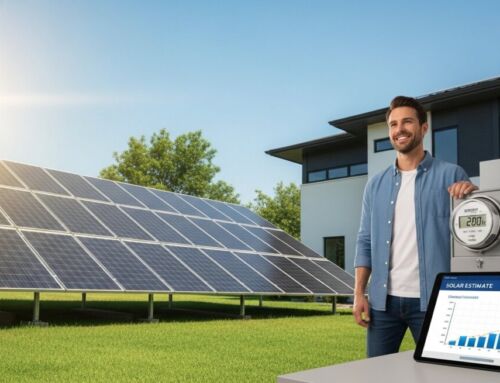
Solar for off grid homes means installing a solar panel system that operates independently of the local utility grid. Instead of relying on power lines, your home generates electricity from sunlight using photovoltaic panels, stores it in batteries, and uses it whenever needed. This setup gives you true energy independence, especially in remote areas or during grid outages.
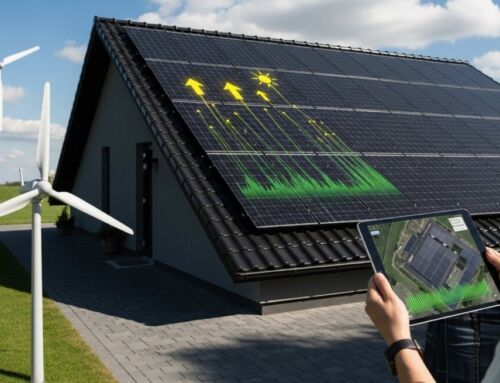
In an off-grid system, solar panels capture sunlight and convert it into direct current (DC) electricity. An inverter changes that into alternating current (AC) your home can use. Any extra power charges a battery bank, so you have electricity at night or on cloudy days. More homeowners are considering this approach not just for remote cabins but also for suburban homes where grid reliability is a concern or where electricity costs are high.
Key components of an off-grid solar system
An off-grid system typically includes solar panels, a charge controller, batteries, and an inverter. The charge controller prevents overcharging, while batteries store energy for later use. Sizing these components correctly is critical,too small a battery bank can leave you in the dark, while an oversized system wastes money.
Why Solar Energy Is Becoming More Popular
Rising electricity prices are a primary reason homeowners turn to solar. Over the past decade, average residential rates have increased by roughly 15,20% in many regions, and that trend shows no sign of slowing. Solar offers a way to lock in a large portion of your energy costs, shielding you from future rate hikes.
Environmental concerns also drive interest. Solar power produces no greenhouse gas emissions during operation, helping reduce your household’s carbon footprint. At the same time, long-term savings are compelling: though an upfront investment is required, most systems pay for themselves within 6 to 10 years, then provide free electricity for decades. In our guide on 100 watt flex solar panel efficiency, we explain how even small panels can contribute to overall savings.
If you are considering solar power for your home, comparing installation quotes can help you understand your options. Request a free solar quote or call to learn more.
Common Questions Homeowners Have About Solar
Many homeowners wonder about the upfront cost of going solar. While a full off-grid system can cost $15,000 to $40,000 or more, federal and state incentives reduce that price significantly. Another common concern is roof suitability,panels work best on south-facing roofs with little shade and good structural condition.
System performance in winter or cloudy weather also raises questions. Modern panels still generate electricity on overcast days, though at reduced output. Battery storage ensures you have power when the sun isn’t shining. Here are some frequent concerns homeowners bring up:
- How long do solar panels last? (Typically 25,30 years with gradual efficiency loss.)
- Will solar work during a power outage? (Yes, with battery storage and the right inverter.)
- Do I need to clean my panels regularly? (Rain usually keeps them clean, but occasional rinsing helps.)
- Can I add more panels later? (Most systems allow easy expansion.)
- What happens if my batteries wear out? (Batteries last 5,15 years and can be replaced.)
- Is financing available? (Many installers offer loans with little or no money down.)
How Solar Panel Installation Works
Professional installation begins with a home energy assessment to understand your electricity usage and site conditions. Installers measure your roof’s angle, orientation, and shading, then review your past utility bills to size the system properly. This step prevents costly mistakes like undersized systems that leave you still dependent on the grid.
Once the assessment is complete, the installer designs a custom system, selects equipment, and handles necessary permits. Installation itself usually takes one to three days for most homes. After the panels are mounted and wired, a final inspection and system activation bring your solar array to life. The process goes smoothly when you work with experienced professionals who know local codes and utility requirements.
- Home energy assessment , Review bills and site conditions.
- System design , Choose panels, inverter, and battery size.
- Permits and approvals , Secure local building and electrical permits.
- Panel installation , Mount panels, run wiring, install inverter and batteries.
- System activation , Final inspection, turn on system, monitor performance.
Speaking with experienced installers can help you determine the best solar solution for your home. Compare solar quotes here or call to explore available options.
Signs Your Home May Be Ideal for Solar
Not every home is equally suited for solar, but many are. The most important factor is strong sunlight exposure,ideally, a south-facing roof that receives direct sun from mid-morning to late afternoon. If your roof is shaded by tall trees or neighboring buildings, solar may still work but with lower output.
High electricity bills are another strong indicator. If you pay more than $100 per month on average, solar will likely save you money over time. Sufficient roof space is also essential; each kilowatt of solar capacity needs roughly 100,150 square feet. Finally, if you plan to stay in your home for at least five more years, the long-term savings will outweigh the upfront cost.
- Your roof gets at least 5,6 hours of direct sunlight daily.
- Your monthly electricity bill exceeds $100.
- Your roof is in good condition and has 400+ square feet of unshaded space.
- You plan to stay in your home for at least 5,7 years.
- Your local utility has net metering or high retail rates.
- You live in a state with strong solar incentives or tax credits.
What Affects Solar Installation Costs
System size is the biggest cost driver. A small off-grid setup for a cabin might cost $10,000, while a whole-home system with ample battery storage can exceed $40,000. Equipment quality also matters,premium panels and lithium batteries cost more but last longer and perform better in low light.
Installation complexity adds to the price. A simple roof mount on a single-story home costs less than a ground mount or a system requiring roof reinforcement. Local incentives, such as the federal Investment Tax Credit (currently 30%), can cut your net cost significantly. State and utility rebates further reduce the price, so it pays to research what’s available in your area.
The cost of solar installation varies depending on your home and energy needs. Request personalized solar quotes or call to see what options are available.
Tips for Choosing a Reliable Solar Installer
Selecting the right installer is just as important as choosing quality equipment. Look for companies with at least three to five years of experience and a track record of installing off-grid systems. Ask for references and read online reviews on platforms like the Better Business Bureau or Google.
Warranties matter, too. Reputable installers offer a workmanship warranty for at least 5,10 years, and equipment warranties from manufacturers typically cover panels for 25 years. Before committing, compare at least three quotes,not just on price but on equipment quality, warranty terms, and proposed timeline. This due diligence helps you avoid common pitfalls like undersized systems or poor installation practices.
- Review installer experience , Look for 3+ years of off-grid solar work.
- Check warranties , Ensure panel, inverter, battery, and labor coverage.
- Read customer reviews , Focus on recent feedback and complaint resolution.
- Compare multiple quotes , Evaluate price, equipment, and scope side by side.
- Verify licensing and insurance , Confirm the installer meets state requirements.
Long-Term Benefits of Installing Solar Panels
Lower electricity bills are the most immediate benefit. After your system is paid off, your monthly power cost drops to nearly zero for decades. Over a 25-year lifespan, a typical off-grid system can save $30,000 to $60,000 or more, depending on local rates and sunlight.
Home value also increases. Studies show that homes with solar panels sell for about 4% more than comparable non-solar homes. Environmentally, each kilowatt-hour of solar power avoids roughly 0.9 pounds of CO₂ emissions. And perhaps most important, energy independence means no more worrying about grid outages, rate hikes, or power line maintenance. In our article on 2 drawbacks of solar energy, we discuss potential downsides like upfront cost and weather dependency, but for most homeowners, the long-term benefits far outweigh these concerns.
What is the average cost of an off-grid solar system?
The average cost ranges from $15,000 to $40,000 before incentives, depending on system size and battery type. A small cabin setup may cost under $10,000, while a full home system with lithium batteries can exceed $50,000. Federal and state incentives typically reduce that by 30% or more.
How many solar panels do I need to go off-grid?
Most homes need between 20 and 30 panels for full off-grid operation. The exact number depends on your daily energy use, local sunlight hours, and battery capacity. A professional installer can calculate the precise number during an energy assessment.
Can I run my AC off-grid with solar?
Yes, but air conditioning requires significant power. A typical central AC unit needs 3,000,5,000 watts, so you’ll need a larger solar array and battery bank. Many off-grid homeowners install energy-efficient mini-split systems to reduce demand.
How long do off-grid solar batteries last?
Lead-acid batteries last 5,10 years, while lithium-ion batteries last 10,15 years or more. Lithium batteries cost more upfront but offer better depth of discharge and cycle life, making them popular for off-grid systems.
Do I need a generator with my off-grid solar system?
Not necessarily, but many homeowners add a backup generator for extended cloudy periods or winter months. A generator can recharge batteries and run high-demand appliances, providing peace of mind during unusual weather.
Is off-grid solar legal in all states?
Most states allow off-grid solar, but some have restrictions or require permits. Local building codes may also mandate certain safety features like disconnect switches. Check with your county planning department before installing.
What maintenance does an off-grid solar system need?
Maintenance is minimal. Keep panels clean, check battery water levels (for lead-acid types), and monitor system performance annually. Most systems require professional inspection every 2,3 years to ensure everything runs efficiently.
Can I add solar panels to an existing off-grid system?
Yes, most systems can be expanded. Adding panels requires checking your inverter and charge controller capacity. An installer can help you design a scalable system from the start to make future upgrades easier.
Solar for off grid homes offers a practical path to lower bills, energy independence, and a smaller carbon footprint. By understanding the basics, evaluating your home’s suitability, and comparing quotes from multiple installers, you can make an informed decision that pays off for years to come. Take the first step today,explore your solar options and see how much you could save.