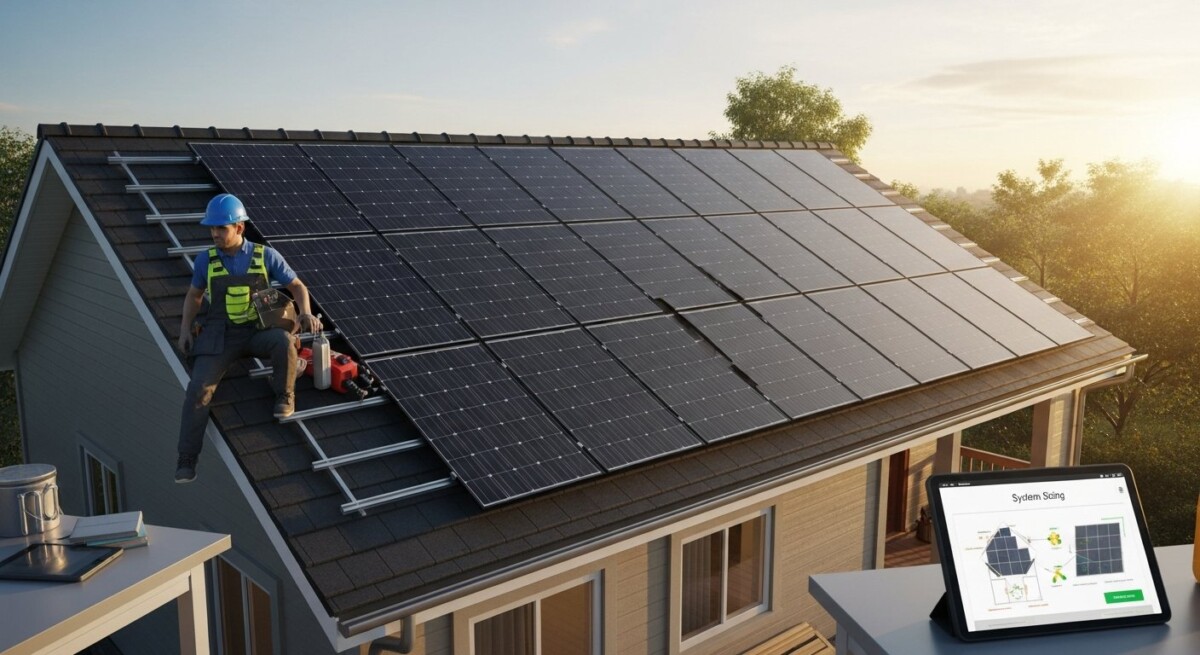
You open your monthly electric bill and feel a familiar pinch. Rates keep climbing, and you wonder if there is a way to take control. Many homeowners in your situation start searching for solar for small homes system sizing to reduce monthly expenses and gain energy independence. The good news is that modern solar technology has become more affordable and efficient, making it a practical choice for houses of all sizes.
Understanding Solar for Small Homes System Sizing
System sizing refers to matching the number and wattage of solar panels to your home’s actual electricity usage. A system that is too small won’t cover your needs, while an oversized system adds unnecessary upfront cost. Professional installers calculate your average daily consumption,usually from past utility bills,and design a solar array that offsets that amount.
The process starts with a home energy assessment. Installers review your roof’s orientation, shading, and available square footage. They also consider your local climate and net metering policies. The goal is to build a system that delivers maximum savings without exceeding your budget or physical roof space.
For small homes, a typical system ranges from 3 to 6 kilowatts (kW). This size can cover most or all of a modest household’s electricity needs. Because small homes consume less energy, the payback period is often shorter than for larger properties.
Why Solar Energy Is Becoming More Popular
Rising electricity prices are the primary driver. Over the past decade, residential rates have increased steadily, and many utility companies project further hikes. Solar panels allow you to lock in a lower, predictable energy cost for 25 years or more.
Environmental concerns also play a major role. Generating your own clean electricity reduces your carbon footprint and reliance on fossil fuels. Homeowners increasingly see solar as a tangible way to fight climate change while saving money.
Long-term savings are compelling. Although the initial investment can seem high, federal and state incentives lower the cost substantially. Over the life of a system, most homeowners save tens of thousands of dollars on electricity.
If you are considering solar power for your home, comparing installation quotes can help you understand your options. Request a free solar quote or call to learn more.
Common Questions Homeowners Have About Solar
Many homeowners worry about the upfront installation cost. While solar does require an investment, financing options such as loans, leases, and power purchase agreements make it accessible. Federal tax credits and local rebates can reduce the net cost by 30 percent or more.
Roof suitability is another frequent concern. Not every roof is ideal, but most can accommodate panels. Installers evaluate age, material, and structural integrity during the site survey. If your roof needs repairs, it is often best to address them before installation.
Performance in cloudy or cold weather also raises questions. Solar panels generate electricity from daylight, not direct sunlight, so they still produce power on overcast days. Modern panels are also efficient in cooler temperatures, which can actually improve output.
- How much does a typical small home system cost?
- Will solar panels work on a north-facing roof?
- How long does installation take?
- What happens during a power outage?
- Do I need a battery with my system?
- How do net metering credits work?
How Solar Panel Installation Works
The installation process follows a clear sequence of steps designed to minimize disruption. A professional installer handles everything from permits to final testing. You do not need to manage the technical details yourself.
Once the system is active, monitoring software lets you track production and savings in real time. Most installations are completed in one to three days, depending on system complexity.
- Home energy assessment: Review past bills and evaluate your roof.
- System design: Create a custom layout and select equipment.
- Permits and approvals: Secure necessary paperwork from your city and utility.
- Panel installation: Mount panels, run wiring, and connect the inverter.
- System activation: Final inspection, utility approval, and flip the switch.
Speaking with experienced installers can help you determine the best solar solution for your home. Compare solar quotes here or call to explore available options.
Signs Your Home May Be Ideal for Solar
Certain conditions make solar more attractive and cost-effective. If your home meets several of these indicators, you are likely a strong candidate. Even if some factors are less than perfect, an installer can often find a workable solution.
For example, if your roof has limited south-facing space, east or west panels can still generate significant power. In our guide on benefits of a solar panel mounting pole, we explain how ground mounts can bypass roof limitations entirely.
- Strong sunlight exposure with minimal shading.
- High electricity bills that could be offset.
- Suitable roof space in good condition.
- Plans to stay in your home for at least five years.
- Access to net metering or favorable local policies.
- Good solar resource in your geographic region.
What Affects Solar Installation Costs
System size is the biggest cost driver. A larger system requires more panels, racking, and labor. However, economies of scale mean the per-watt cost often decreases as system size increases.
Equipment quality matters. Premium panels and inverters cost more upfront but typically offer higher efficiency and longer warranties. Lower-cost options can still perform well but may degrade faster over time.
Installation complexity also plays a role. A simple south-facing roof with easy attic access is less expensive than a complex multi-plane roof with tile or slate. Local labor rates and permitting fees vary by region.
The cost of solar installation varies depending on your home and energy needs. Request personalized solar quotes or call to see what options are available.
Tips for Choosing a Reliable Solar Installer
Selecting the right installer is critical to a successful solar project. A reputable company will guide you through system sizing, equipment selection, and financing. They should also handle all permitting and utility paperwork.
Always compare multiple quotes before making a decision. Prices, equipment quality, and warranty terms can vary significantly between installers. Taking the time to evaluate options helps you avoid costly mistakes.
- Review installer experience and years in business.
- Check equipment and workmanship warranties (typically 10,25 years).
- Read customer reviews on platforms like Google and SolarReviews.
- Compare at least three detailed quotes with itemized costs.
- Ask about financing options and payment schedules.
- Verify licensing, insurance, and certifications (e.g., NABCEP).
Long-Term Benefits of Installing Solar Panels
Lower electricity bills are the most immediate benefit. Once your system is paid off, the electricity it produces is essentially free. Over 25 years, that can translate into tens of thousands of dollars in savings.
Home value also increases. Studies show that homes with solar panels sell faster and at a premium compared to non-solar homes. Buyers recognize the long-term energy savings and are willing to pay more.
Reducing your environmental impact is another powerful advantage. A typical residential solar system offsets several tons of carbon dioxide each year,equivalent to planting hundreds of trees. For many homeowners, this aligns with personal values and sustainability goals.
Energy independence provides peace of mind. When paired with a battery, solar panels can keep critical appliances running during grid outages. You become less vulnerable to utility rate hikes and power disruptions. For a deeper look at how to manage your system efficiently, read our article on operating a solar energy management system.
How many solar panels do I need for a small home?
Most small homes need between 8 and 16 panels, depending on energy usage and panel wattage. A 300-watt panel is common, so a 4 kW system would require about 13 panels. An installer will calculate the exact number based on your electricity bills and roof space.
What is the average cost of solar for a small home?
After the federal tax credit, a 4 kW system typically costs between $8,000 and $12,000. Prices vary by location, equipment, and installer. Comparing multiple quotes helps you find the best value.
How long do solar panels last?
Solar panels are warrantied for 25 to 30 years and often continue producing power beyond that. Performance gradually declines, but most panels still generate 80,90 percent of their original output after 25 years. Inverters may need replacement after 10,15 years.
Will solar panels work during a power outage?
Standard grid-tied solar systems shut off during outages for safety reasons. If you want backup power, you need a battery storage system. Batteries store excess solar energy and can power essential loads when the grid goes down.
Do I need to clean my solar panels?
Rain typically keeps panels clean enough. In dusty areas or during dry spells, occasional rinsing with a hose may improve output. Most homeowners do not need professional cleaning more than once a year.
What happens if I move after installing solar?
If you own the system outright, it can increase your home’s resale value. If you lease or have a loan, the new owner may assume the agreement, or you can pay off the balance at closing. Discuss transfer options with your installer before signing.
Solar energy offers a practical path to lower bills, greater independence, and a cleaner environment. The key is choosing the right system size and a trusted installer. Start by gathering multiple quotes to see what works for your home and budget. Comparing options side by side helps you make an informed decision and avoid costly mistakes.