Have you watched your electricity bill climb higher each year? You’re not alone. Many homeowners are searching for a way to stabilize their energy costs and gain independence from the unpredictable power grid. The idea of solar installation without upfront cost has become a popular solution, making it possible to reduce your bills from day one while investing in your home’s future.
Understanding Solar Installation Without Upfront Cost
Solar installation without upfront cost is exactly what it sounds like. You can have a solar energy system installed on your home without paying a large sum of money at the start. This is made possible through financing options like solar loans, leases, and power purchase agreements (PPAs).
With a solar loan, you finance the system and own it, paying it off over time while enjoying the energy it produces. With a lease or PPA, a company owns the panels on your roof, and you pay a fixed, often lower, rate for the electricity they generate. These models remove the biggest barrier to solar adoption: the initial investment.
Why Solar Energy Is Becoming More Popular
Homeowners are turning to solar power for several compelling reasons. First, electricity prices continue to rise, making a fixed, predictable energy cost highly attractive. Solar panels provide a hedge against these future increases, locking in your rate for decades.
Beyond the financials, there’s a growing desire to reduce our environmental footprint. Solar energy is clean, renewable, and reduces reliance on fossil fuels. The combination of long-term savings, energy independence, and environmental benefits makes solar a smart, forward-thinking home upgrade.
If you are considering solar power for your home, comparing installation quotes can help you understand your options. Request a free solar quote or call to learn more.
Common Questions Homeowners Have About Solar
It’s normal to have questions before making such a significant decision. Many wonder if their roof is suitable, how the system will perform in different weather, and what happens if they sell their home. Reputable installers are experts at addressing these concerns clearly and honestly.
Professional guidance is key to avoiding costly mistakes. A good installer will assess your home’s unique situation and design a system that meets your energy goals. They handle the complex details, from permits to paperwork, ensuring a smooth process.
- How much can I really save on my electricity bill?
- Is my roof strong enough and facing the right direction?
- What happens on cloudy days or at night?
- Will solar panels increase my property value?
- What are the maintenance requirements?
- Can I still go solar if I have an older roof?
How Solar Panel Installation Works
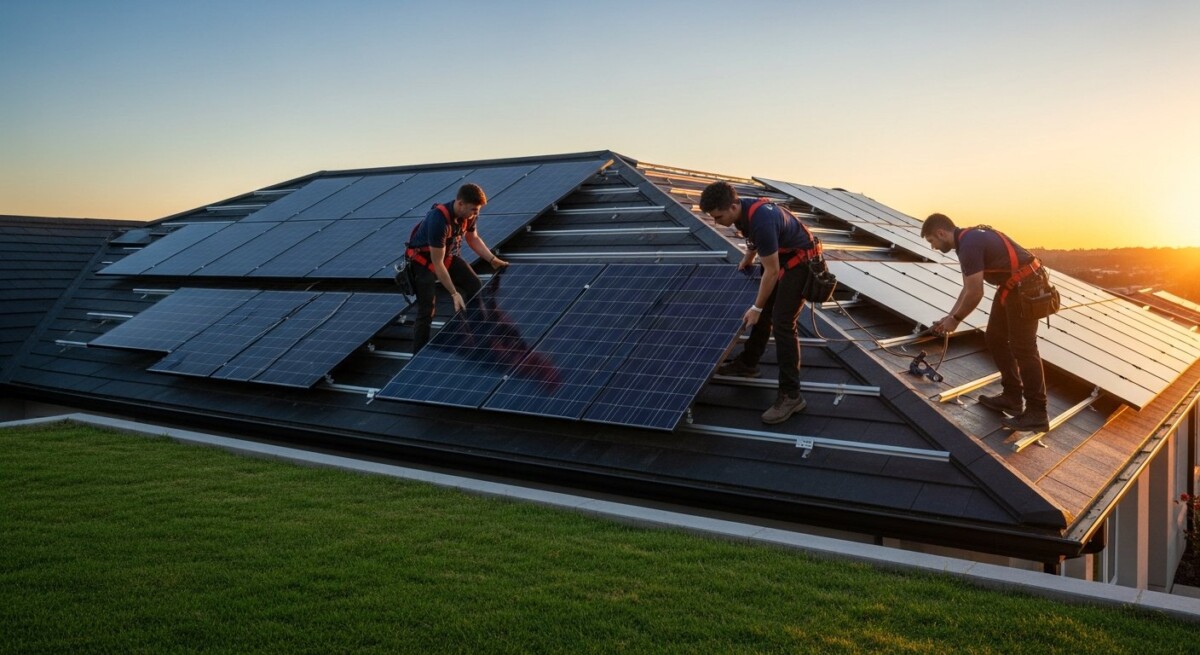
The installation process is straightforward when handled by professionals. It begins with a detailed assessment of your home’s energy use and roof condition. This information is used to design a custom system that maximizes your savings.
The installer then manages all the necessary permits and approvals from your local government and utility company. Once approved, the physical installation is typically completed in just a few days, with minimal disruption to your household.
- Home Energy Assessment: Reviewing your bills and evaluating your roof’s solar potential.
- System Design: Creating a custom plan for panel placement and equipment.
- Permits and Approvals: Securing all required permissions and interconnection agreements.
- Panel Installation: Mounting the racking, panels, and inverter on your roof.
- System Activation: Final inspection and connection to the grid, turning your system on.
Speaking with experienced installers can help you determine the best solar solution for your home. Compare solar quotes here or call to explore available options.
Signs Your Home May Be Ideal for Solar
While many homes are good candidates, some characteristics make solar an especially wise investment. The most obvious is a roof with strong, unobstructed sunlight for most of the day. South-facing roofs in the Northern Hemisphere are typically ideal, but east and west can also work well.
Your current energy consumption and future plans also matter. If you have high electricity bills, solar can deliver significant monthly savings. It’s also a great choice if you plan to stay in your home long enough to see the full financial return on your investment.
- Your roof gets direct sunlight for 5+ hours per day.
- You pay more than $100 per month on electricity.
- You have a suitable, unshaded roof area (approx. 200+ sq. ft.).
- You plan to own your home for 5-10+ years.
- Your roof is in good condition or will soon be replaced.
- You live in an area with strong government incentives or rebates.
What Affects Solar Installation Costs
The final cost of your system depends on several key factors. The size of the system, measured in kilowatts (kW), is the primary driver,it’s based on how much electricity you need to offset. The quality and efficiency of the panels and inverter you choose also influence the price.
Installation complexity, like a steep or multi-level roof, can add cost. However, these factors are balanced by available financial incentives. The federal solar tax credit, along with state and local rebates, can significantly reduce your net cost. To get a clear picture, using a solar panel cost calculator can provide a helpful initial estimate based on your location and usage.
The cost of solar installation varies depending on your home and energy needs. Request personalized solar quotes or call to see what options are available.
Tips for Choosing a Reliable Solar Installer
Selecting the right installer is as important as choosing the right system. Look for a company with a strong track record, proper licensing, and positive customer reviews. They should be transparent about costs, equipment, and the expected timeline.
Always compare detailed quotes from multiple installers. This allows you to evaluate not just the price, but the proposed system size, equipment brands, warranty terms, and projected savings. A trustworthy installer will welcome your questions and provide clear, written answers.
- Verify licenses, insurance, and certifications (like NABCEP).
- Read customer reviews and ask for local references.
- Compare warranty coverage for both equipment and workmanship.
- Ensure they handle the entire process, including permits.
- Compare multiple quotes to ensure a fair price and the best system design.
Long-Term Benefits of Installing Solar Panels
The most immediate benefit is reducing or even eliminating your monthly electricity bill. Over 25+ years, this adds up to substantial financial savings that far outweigh the initial cost. You are essentially pre-paying for decades of clean, affordable energy.
Solar panels also increase your home’s market value and appeal to future buyers. You gain greater energy independence, protecting yourself from rising utility rates. Perhaps most importantly, you make a positive impact by reducing carbon emissions and supporting a sustainable future.
FAQs About Solar Installation
How does solar installation without upfront cost work?
You can access solar through financing options like loans, leases, or PPAs. With a loan, you own the system and pay it off monthly. With a lease/PPA, a third party owns it, and you pay for the power it produces, often at a lower rate than your utility.
What government incentives are available for solar?
The federal government offers a tax credit that deducts a percentage of your system cost from your taxes. Many states and local utilities offer additional rebates, tax exemptions, or performance-based incentives. Your installer can detail what you qualify for.
Do solar panels work when the power goes out?
Standard grid-tied systems shut off for safety during a blackout. To have power during an outage, you need a system with battery storage. This adds to the cost but provides valuable backup power and greater energy independence.
How long do solar panels last?
Most high-quality solar panels come with a 25-30 year performance warranty, guaranteeing they will still produce a high percentage of their original output. The system itself can often continue generating electricity well beyond that timeframe.
Can I install solar panels myself?
While DIY kits exist, professional installation is strongly recommended. The process involves electrical work, roofing, permits, and grid interconnection that require expertise. A professional ensures safety, maximizes performance, and secures warranties. For a deeper dive into budgeting, our guide on average solar installation cost and savings breaks down the numbers.
What happens if I sell my house with a solar lease?
You can transfer the lease agreement to the new homeowner, subject to their credit approval. Alternatively, some agreements allow you to buy out the lease before selling. This is a key point to discuss with your solar provider upfront.
Switching to solar energy is a powerful decision for your finances and your home. By understanding the options for solar installation without upfront cost and carefully comparing quotes from trusted professionals, you can confidently take the next step toward energy independence and long-term savings.