Every month, you open your electricity bill and see a number that keeps climbing. If you have ever wondered whether solar panels could lower that cost, you are not alone. Many homeowners are now searching for a solar monthly savings estimation to understand exactly how much they could save by switching to renewable energy.
Solar energy offers a way to reduce your monthly bills while gaining more control over your home’s power supply. By generating your own electricity, you become less dependent on the grid and less vulnerable to future rate hikes. A clear monthly savings estimate helps you see the financial impact before making any commitments.
In this guide, we will break down what goes into a solar monthly savings estimation, why more homeowners are making the switch, and how you can use this information to make a confident decision. We will also show you how comparing quotes from professional installers can help you find the best system for your home and budget.
Understanding Solar Monthly Savings Estimation
A solar monthly savings estimation is a calculation that shows how much money you could save on your electricity bill after installing solar panels. It compares your current monthly energy costs with the expected costs after your solar system is up and running.
This estimation takes into account your home’s energy usage, local electricity rates, the size of the solar system, and the amount of sunlight your roof receives. Most installers use software to model these factors and produce a personalized savings projection.
More homeowners are turning to solar because of rising utility costs and the desire for predictable energy bills. A reliable monthly savings estimate gives you a realistic picture of how solar can fit into your household budget over the long term.
How the Calculation Works
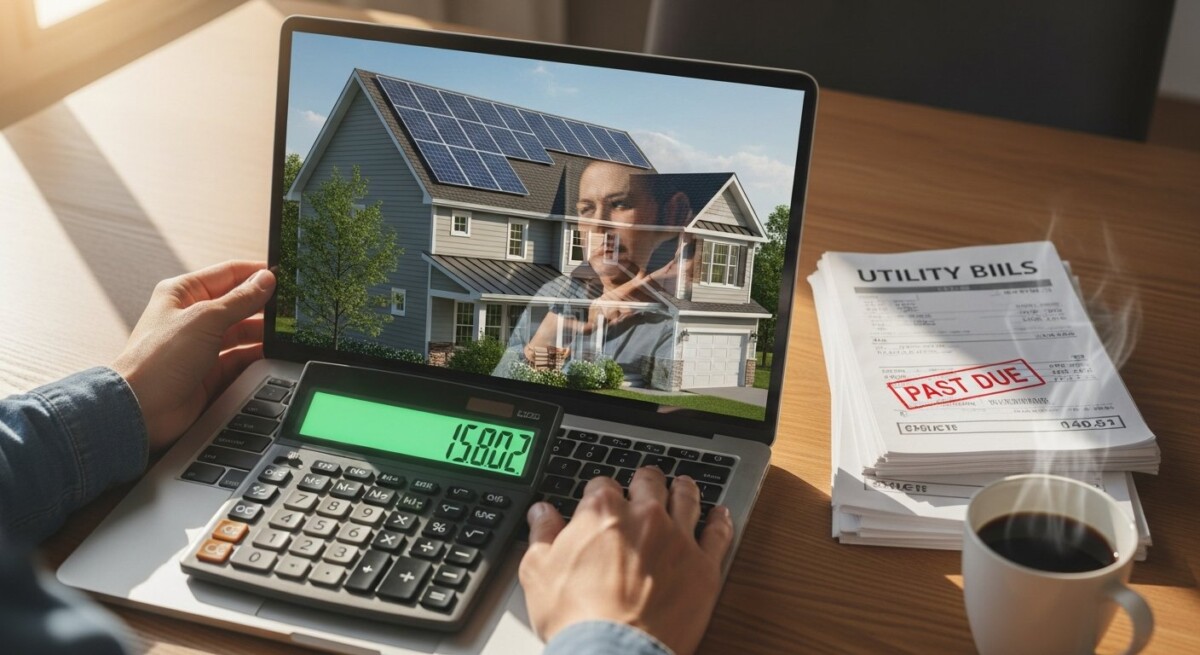
The basic formula for a monthly savings estimate starts with your current average monthly electricity bill. Then, the installer subtracts the portion of that bill that your solar panels will offset. For example, if your typical bill is $150 and your system covers 90% of your usage, your new monthly cost might drop to around $15, plus any fixed grid connection fees.
Most estimates also include the impact of net metering, a policy that credits you for excess energy you send back to the grid. This can further reduce your monthly costs, especially during sunny months when your system produces more power than your home needs.
Why Solar Energy Is Becoming More Popular
Electricity prices across the United States have risen steadily over the past decade, and experts expect this trend to continue. Solar energy offers a hedge against these rising costs by locking in a lower, more predictable monthly energy expense for 25 years or more.
Beyond financial reasons, many homeowners are motivated by environmental concerns. Solar panels produce clean, renewable energy that reduces your home’s carbon footprint. For families who want to lower their impact on the planet, solar is a practical and visible step.
Long-term savings are another major draw. While the upfront cost of solar panels may seem high, the average homeowner recovers that investment through lower electricity bills within 6 to 10 years. After that, the electricity your panels generate is essentially free, boosting your overall savings year after year.
If you are considering solar power for your home, comparing installation quotes can help you understand your options. Request a free solar quote or call to learn more.
Common Questions Homeowners Have About Solar
Many homeowners feel unsure about solar because they have questions about cost, installation, and performance. Addressing these concerns early can help you move forward with confidence.
One of the most common questions is about the upfront installation cost. While solar panels do require an initial investment, federal tax credits, state rebates, and financing options make them more accessible than ever. In many cases, your monthly savings will cover your loan payment, meaning you can go solar with little to no money down.
- How much does a solar system cost for an average home?
- Will solar panels work on my roof if it is shaded or old?
- How long does it take for solar panels to pay for themselves?
- What happens to my solar savings during winter or cloudy months?
- Do I need to replace my roof before installing solar panels?
- How does net metering affect my monthly electricity bill?
How Solar Panel Installation Works
The installation process is straightforward when you work with a professional installer. It typically begins with a home energy assessment, where the installer reviews your past electricity bills and evaluates your roof’s condition and sun exposure.
After the assessment, the installer designs a custom solar system that matches your energy needs. They handle all the permits and approvals required by your local utility and municipality, so you do not have to worry about the paperwork.
- Schedule a home energy assessment and roof inspection.
- Review a custom system design and monthly savings estimate.
- Obtain necessary permits and utility approvals.
- Install the solar panels, inverter, and mounting equipment.
- Pass final inspection and activate the system to start saving.
The entire process usually takes 4 to 8 weeks from initial consultation to system activation. Once your system is live, you can track your energy production and savings through a smartphone app provided by the installer.
Speaking with experienced installers can help you determine the best solar solution for your home. Compare solar quotes here or call to explore available options.
Signs Your Home May Be Ideal for Solar
Not every home is equally suited for solar, but many properties can benefit. The most important factor is sunlight exposure. Homes with a south-facing roof that receives direct sunlight for most of the day will generate the most electricity.
Your roof condition also matters. If your roof is less than 10 years old or in good shape, it is likely ready for solar panels. If your roof needs replacement soon, you may want to do that before installation to avoid extra costs later.
- Your roof gets strong, direct sunlight for at least 4 to 5 hours per day.
- You currently pay high electricity bills, typically over $100 per month.
- You have enough unshaded roof space, usually 300 to 500 square feet.
- You plan to stay in your home for at least 5 to 10 years.
- Your local utility offers net metering or other solar incentives.
- You live in a state with favorable solar policies or tax credits.
What Affects Solar Installation Costs
The cost of a solar system varies based on several key factors. System size is the biggest driver: a larger system that covers more of your energy usage will cost more upfront but also deliver higher monthly savings.
Equipment quality also plays a role. High-efficiency panels and premium inverters cost more but can produce more electricity over their lifespan. Your installer can help you balance cost and performance based on your goals.
Installation complexity can add to the cost as well. Factors like a steep roof, multiple roof angles, or older electrical panels may require extra labor or materials. On the bright side, federal and state incentives can reduce your total out-of-pocket cost by 30% or more.
The cost of solar installation varies depending on your home and energy needs. Request personalized solar quotes or call to see what options are available.
Tips for Choosing a Reliable Solar Installer
Finding the right installer is just as important as choosing the right equipment. A reputable installer will provide a clear, detailed proposal that includes your expected monthly savings, system specifications, and warranty information.
Always check an installer’s experience and credentials. Look for companies that are licensed, insured, and certified by organizations like the North American Board of Certified Energy Practitioners (NABCEP). These certifications indicate a high level of expertise.
- Review each installer’s years in business and number of completed projects.
- Ask about equipment and workmanship warranties, which should cover at least 10 to 25 years.
- Read customer reviews on sites like Google, Yelp, and the Better Business Bureau.
- Compare at least three quotes to see how pricing, equipment, and savings estimates differ.
Long-Term Benefits of Installing Solar Panels
Once your solar system is paid off, the electricity it produces is essentially free. Over the typical 25- to 30-year lifespan of solar panels, that adds up to tens of thousands of dollars in savings. Your monthly energy costs become predictable, which makes household budgeting easier.
Solar panels also increase your home’s resale value. Studies show that homes with solar systems sell for more than comparable homes without them. Buyers are often willing to pay a premium for lower future utility costs.
Beyond the financial side, solar energy gives you a sense of independence from the power grid. You produce your own clean energy, and every kilowatt-hour you generate is one less that comes from fossil fuels. It is a practical way to support a healthier environment while improving your own bottom line.
How much can I save each month with solar panels?
Monthly savings depend on your current electricity usage, local rates, and system size. On average, homeowners save between $50 and $150 per month. A personalized solar monthly savings estimation from a professional installer will give you an accurate number for your home.
Will solar panels work during cloudy days or winter?
Yes, solar panels still generate electricity on cloudy days, though at a reduced rate. Net metering allows you to earn credits for excess power produced on sunny days, which you can use during darker months. Your system is designed to produce enough energy over the entire year to offset your usage.
How long do solar panels last?
Most solar panels come with a performance warranty of 25 to 30 years. They continue to produce electricity beyond that period, though their output gradually declines. Many panels still operate at 80% efficiency after 25 years.
Do I need to clean my solar panels regularly?
In most areas, rain is sufficient to keep your panels clean. If you live in a dusty region or under trees that drop debris, occasional cleaning may help maintain performance. Many installers offer maintenance plans if you prefer professional care.
What happens if I move after installing solar?
If you own your solar system outright, it can increase your home’s resale value. You can also include the remaining loan balance in the home sale price. If you lease the system, the new buyer may be able to take over the lease agreement.
Are there government incentives for solar in 2025?
Yes, the federal solar investment tax credit (ITC) allows you to deduct 30% of your system cost from your federal taxes. Many states and local utilities also offer additional rebates or performance-based incentives. Your installer can help you identify all available programs.
How do I get a solar monthly savings estimation for my home?
Start by requesting quotes from multiple certified installers. They will analyze your energy bills, roof conditions, and local rates to produce a personalized estimate. Comparing multiple quotes ensures you see a range of potential savings and system options.
Can I install solar panels myself to save money?
DIY solar installation is possible but not recommended for most homeowners. Improper installation can lead to safety hazards, reduced performance, and voided warranties. Professional installers ensure your system is safe, efficient, and eligible for all incentives.
Understanding your solar monthly savings estimation is the first step toward lower energy bills and greater energy independence. By comparing quotes from trusted installers, you can find a system that fits your home and budget. Reach out today to explore your options and start saving.