You open your monthly electricity bill and notice the number has crept up again. It’s a familiar frustration for many homeowners. This steady rise in energy costs is why more people are searching for answers to “what is solar battery storage system” and whether it can help them take control of their power bills. The idea of generating your own electricity and storing it for later use is no longer a futuristic concept,it’s a practical solution available right now.
Adding a solar battery to your home lets you keep the sun’s energy for use at night or during a power outage. Instead of sending excess power back to the grid for a small credit, you save it for yourself. This shift from being a passive consumer to an active energy manager is what makes solar battery storage so compelling. If you’ve been researching solar panel installation, understanding this technology is the next logical step toward true energy independence.
Understanding what is solar battery storage system
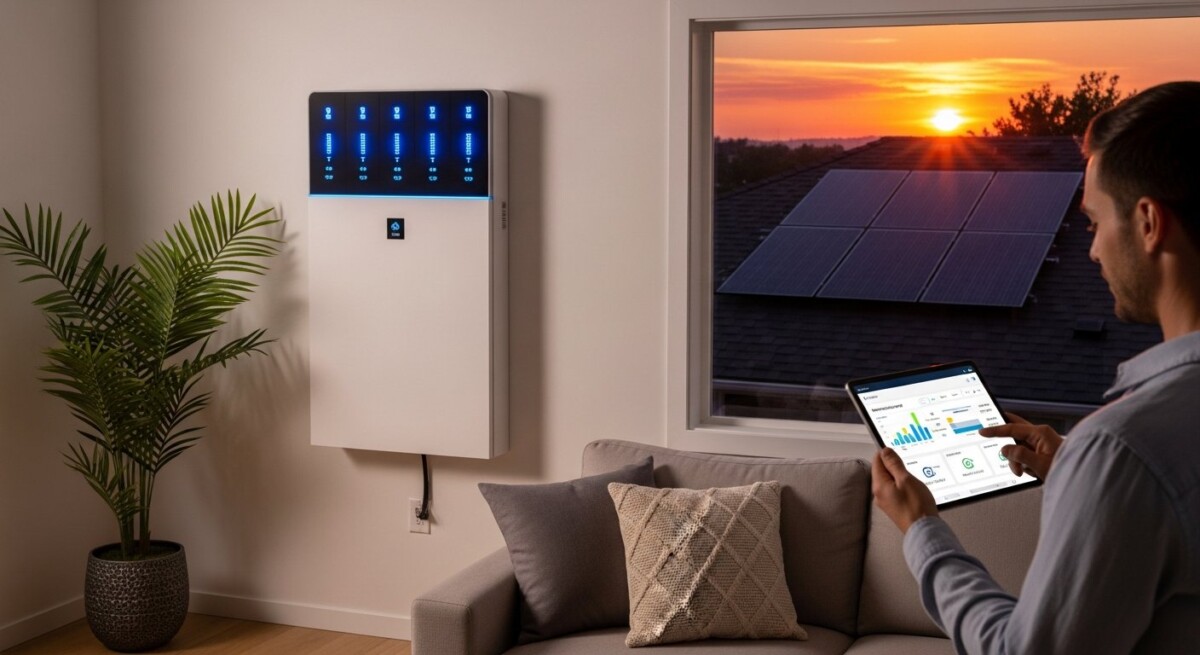
A solar battery storage system is essentially a rechargeable battery that stores electricity generated by your solar panels. During the day, when your panels produce more power than your home needs, the excess energy charges the battery. Then, in the evening or on cloudy days, you draw from the battery instead of pulling power from the utility grid.
This process gives you greater control over your electricity usage. Without a battery, a typical grid-tied solar system shuts off during a blackout for safety reasons. With a battery, your lights stay on and your refrigerator keeps running even when the neighborhood goes dark. For homeowners looking to reduce their reliance on the grid, adding battery storage to your solar system later is a flexible way to upgrade your setup when you’re ready.
How the technology works in simple terms
Most home solar batteries use lithium-ion technology, similar to what powers your smartphone or laptop, but scaled up for your entire house. A device called an inverter converts the direct current (DC) electricity from your panels into alternating current (AC) that your home appliances can use. The battery stores DC power and the inverter handles the conversion when you need to use that stored energy.
Modern systems include smart software that monitors your energy production and consumption in real time. This software can automatically decide whether to send power to your home, charge the battery, or export it to the grid, depending on what saves you the most money. The best part is that once a professional installer sets up the system, it runs quietly in the background with minimal input from you.
Why Solar Energy Is Becoming More Popular
Three main factors are driving the rapid adoption of residential solar: rising electricity rates, growing environmental awareness, and the long-term financial payoff. According to the U.S. Energy Information Administration, residential electricity prices have increased by an average of 3,5% per year over the past decade. Solar panels offer a hedge against these unpredictable increases by locking in a lower, predictable energy cost.
Environmental concerns also play a significant role. Homeowners are increasingly aware that fossil fuel-generated electricity contributes to climate change. Installing solar reduces your household’s carbon footprint by replacing grid power with clean, renewable energy. Many people find satisfaction in knowing their home is part of the solution rather than the problem.
Financial savings remain the top motivator for most homeowners. A well-designed solar system can reduce your electricity bill by 50,90% or even eliminate it entirely, depending on your location and energy usage. When combined with a battery, you can maximize those savings by using stored power during peak rate periods when electricity is most expensive. Over the 25,30 year lifespan of solar panels, the cumulative savings often amount to tens of thousands of dollars.
If you are considering solar power for your home, comparing installation quotes can help you understand your options. Request a free solar quote or call to learn more.
Common Questions Homeowners Have About Solar
When homeowners start researching solar, they often feel overwhelmed by technical terms and conflicting information. The most common question is about upfront cost. A typical residential solar system ranges from $15,000 to $25,000 before incentives, and adding a battery can increase that by $7,000 to $15,000. However, federal and state incentives significantly reduce the net cost. The federal Investment Tax Credit (ITC) currently allows you to deduct 30% of your system cost from your federal taxes.
Another frequent concern is whether a roof can support solar panels. Most asphalt shingle roofs in good condition work well, as do metal roofs and tile roofs with proper mounting hardware. A professional installer will evaluate your roof’s age, orientation, shading, and structural integrity during a free site assessment. They can also tell you if you need to replace your roof before installation,a common consideration for older homes.
Homeowners also wonder about system performance in less sunny climates or during winter. Solar panels actually work more efficiently in cooler temperatures, and modern systems still generate meaningful power on overcast days. Battery storage becomes especially valuable in regions with frequent cloudy weather because it allows you to store what little sun you get and use it strategically.
- Will solar panels damage my roof?
- How long do solar batteries last?
- Can I go completely off-grid with solar and battery?
- What happens to my system during a power outage?
- Do I need to clean my solar panels regularly?
How Solar Panel Installation Works
The installation process is more straightforward than most people imagine. It typically takes one to three days for the physical installation, with the entire process from initial consultation to activation spanning four to eight weeks. A professional installer manages every step, from design to permits to final inspection, so you don’t have to navigate the paperwork yourself.
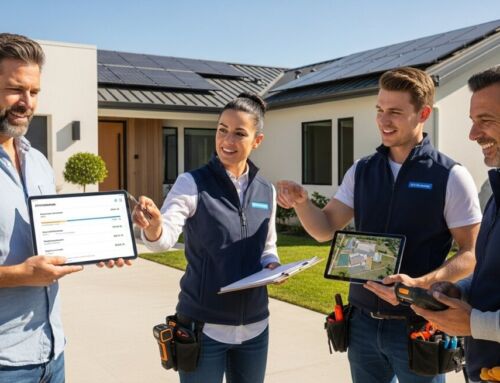
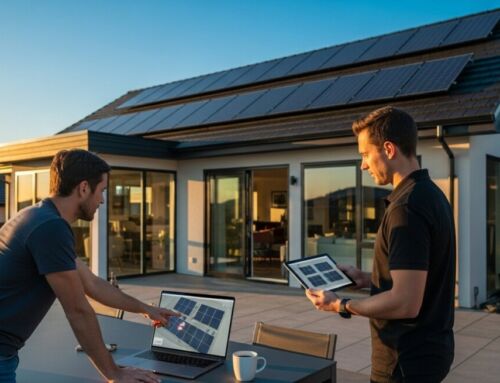
Understanding the timeline helps set realistic expectations. After you sign a contract, the installer conducts a detailed energy audit of your home, designs a system tailored to your roof and electricity usage, and submits permit applications to your local government. Once permits are approved, the installation crew arrives to mount the panels, install the inverter and battery, and connect everything to your electrical panel.
- Home energy assessment , The installer reviews your past electricity bills and evaluates your roof.
- System design , A custom layout is created to maximize sun exposure and meet your energy goals.
- Permits and approvals , The installer handles all required paperwork with your city and utility company.
- Panel and battery installation , Mounting racks are secured to the roof, panels are attached, and wiring is run to your home.
- System activation , A final inspection is completed, and the utility grants permission to operate (PTO).
Speaking with experienced installers can help you determine the best solar solution for your home. Compare solar quotes here or call to explore available options.
Signs Your Home May Be Ideal for Solar
Not every home is equally suited for solar, but many are. The most important factor is sunlight exposure. A roof that faces south or west with minimal shading from trees or neighboring buildings will produce the most energy. Even east- or west-facing roofs can work well, though they may produce slightly less power.
Your electricity bills also tell a compelling story. If you’re paying $150 or more per month for electricity, solar can likely save you money. Homes with high daytime energy usage,such as those with someone home during the day, electric vehicle charging, or a home office,benefit even more because they can use solar power directly without needing as much battery storage.
Roof condition matters too. If your roof is less than ten years old and in good shape, you’re in a strong position. If your roof is older, consider replacing it before solar installation to avoid the cost and hassle of removing and reinstalling panels later. Also, homeowners who plan to stay in their home for at least five to seven years typically see the best return on investment, as that’s the average payback period for a solar system.
- Your roof receives direct sunlight for most of the day.
- Your monthly electricity bill exceeds $100.
- You have at least 300 square feet of usable roof space.
- You plan to stay in your home for the next 5+ years.
- Your local utility offers net metering or time-of-use rates.
What Affects Solar Installation Costs
Solar installation costs vary widely based on several key factors. System size is the biggest driver,a larger system that covers 100% of your electricity needs will cost more than a smaller one that only offsets a portion. A typical 6 kW system might cost $15,000,$18,000 before incentives, while a 10 kW system could run $22,000,$28,000.
Equipment quality also matters. Premium solar panels from brands like SunPower or REC are more efficient and come with better warranties, but they cost more upfront. String inverters are cheaper than microinverters or power optimizers, but they may reduce system performance if your roof has partial shading. Battery brands like Tesla Powerwall, LG Chem, and Enphase each have different price points and capabilities.
Installation complexity adds to the cost. A simple south-facing asphalt roof with easy attic access is the cheapest to install. A complex roof with multiple angles, tile materials, or difficult wiring runs will require more labor. Local incentives can dramatically lower your net cost,some states offer additional tax credits, rebates, or performance-based incentives that stack with the federal ITC.
The cost of solar installation varies depending on your home and energy needs. Request personalized solar quotes or call to see what options are available.
Tips for Choosing a Reliable Solar Installer
Choosing the right installer is just as important as choosing the right equipment. A reputable installer will conduct a thorough site assessment, explain your options clearly, and provide a detailed written estimate. They should also handle all permitting and utility paperwork, saving you hours of administrative headache.
Start by checking an installer’s credentials. Look for companies that are licensed, bonded, and insured in your state. Certification from the North American Board of Certified Energy Practitioners (NABCEP) is a strong indicator of technical expertise. Also, ask about the warranties they offer,both on the equipment (typically 25 years for panels, 10 years for inverters and batteries) and on the workmanship (usually 5,10 years).
Reading customer reviews on platforms like Google, Yelp, and the Better Business Bureau gives you insight into real homeowner experiences. Pay attention to how the company handles post-installation service and support. Most importantly, get at least three quotes from different installers. Comparing quotes side by side helps you spot outliers and ensures you’re getting fair pricing.
- Verify the installer’s license and insurance.
- Ask for NABCEP certification or equivalent credentials.
- Request warranty details for both equipment and workmanship.
- Read recent customer reviews on multiple platforms.
- Compare at least three detailed quotes before deciding.
Long-Term Benefits of Installing Solar Panels
The most immediate long-term benefit is lower electricity bills. After your solar system is paid off,typically within 5 to 8 years,the electricity it produces is essentially free. Over a 25-year period, that can translate to $30,000 to $60,000 in savings, depending on your local utility rates and system size. Adding a battery amplifies those savings by allowing you to avoid peak-time electricity charges.
Home value is another significant benefit. Multiple studies, including research from Zillow and the Lawrence Berkeley National Laboratory, show that homes with solar panels sell for a premium compared to similar homes without them. Buyers are willing to pay more for a home with lower operating costs and energy independence. This is especially true in states with high electricity rates or strong solar incentives.
Energy independence gives you peace of mind. With a battery, you are less affected by grid outages, rolling blackouts, or utility rate hikes. You produce your own power and store it for when you need it most. Environmentally, a typical home solar system offsets about 3 to 4 tons of carbon dioxide per year,the equivalent of planting 100 trees annually. This combination of financial, practical, and environmental benefits makes solar one of the most impactful home improvements you can make.
Frequently Asked Questions
How long does a solar battery last?
Most solar batteries have a lifespan of 5 to 15 years, depending on the chemistry and how often they are cycled. Lithium-ion batteries typically last longer than lead-acid options. Most manufacturers offer warranties that guarantee a certain number of cycles or years, often around 10 years or 10,000 cycles.
Can I add a battery to my existing solar system?
Yes, in most cases you can retrofit a battery to an existing solar panel system. However, your current inverter may need to be replaced or upgraded to support battery integration. Battery storage boosts solar efficiency by storing excess energy you would otherwise send to the grid, so upgrading is often worthwhile.
Will a solar battery power my whole house during an outage?
It depends on the battery’s capacity and your home’s energy consumption. A single battery can typically power essential loads like lights, a refrigerator, and a few outlets for 8,12 hours. To power larger appliances like air conditioning or an electric water heater, you may need multiple batteries or a larger whole-home system.
How much does a solar battery storage system cost?
The cost of a solar battery alone, without panels, typically ranges from $7,000 to $15,000 installed. When bundled with a new solar panel system, the combined cost can range from $22,000 to $40,000 before incentives. Federal and state incentives can reduce the net cost by 30% or more.
Do I need a battery if I have net metering?
Not necessarily. Net metering allows you to sell excess solar power back to the grid in exchange for credits. However, if your utility reduces net metering rates or switches to time-of-use billing, a battery becomes more valuable because it lets you store power for use during high-rate periods instead of selling it cheaply.
What size solar battery do I need?
The right size depends on your energy usage and goals. A typical home uses about 30 kWh per day. A single 10 kWh battery can cover your essential loads for several hours. To go mostly off-grid, you may need 20,30 kWh of storage. A professional installer can calculate the ideal size based on your specific needs.
Are solar batteries safe for my home?
Yes, modern lithium-ion solar batteries are designed with multiple safety features, including thermal management systems, overcharge protection, and fire-resistant casings. They are tested to rigorous safety standards like UL 9540. Proper installation by a certified professional is essential for safe operation.
How long does it take to install a solar battery?
Installing a solar battery typically takes one to two days if added to an existing solar system. If installed as part of a new solar panel system, the battery installation is done simultaneously with the panels and adds minimal extra time to the overall project timeline.
Solar battery storage is a smart investment for homeowners who want to maximize their energy savings, gain backup power, and reduce their carbon footprint. By understanding what a solar battery storage system is and how it works, you can make an informed decision about whether it fits your home and lifestyle. The best next step is to gather information from multiple professional installers. Comparing quotes gives you the confidence that you are choosing the right system at the right price. Start your journey today by reaching out to trusted solar providers in your area.