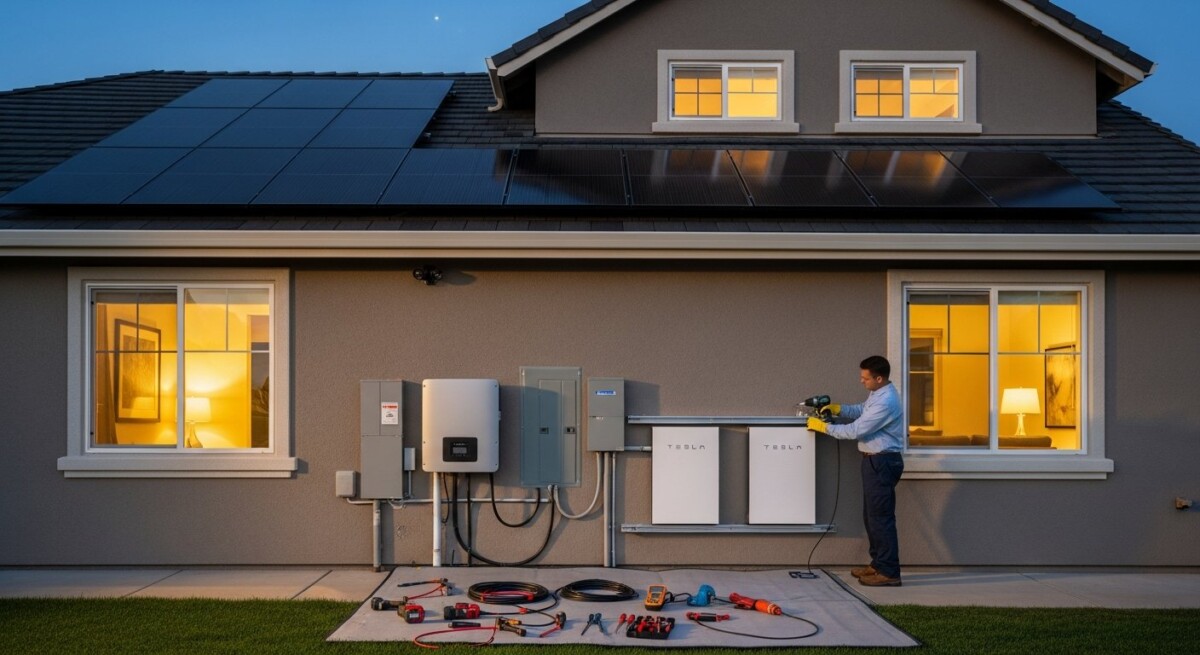
You’ve made a smart investment in solar panels, and you’re enjoying lower electricity bills. But as power outages become more common and electricity rates climb, you might be wondering: can you add battery to solar system later? The good news is that for most homeowners, the answer is a resounding yes. This flexibility allows you to enhance your existing solar setup, boosting your energy independence and protecting your home from blackouts without starting from scratch.
Understanding Can You Add Battery to Solar System Later
Adding battery storage to an existing solar panel system is not only possible but is a common upgrade. This process is often called solar battery retrofitting. It involves integrating a new battery unit, like a Tesla Powerwall or similar product, with your current solar panels and inverter.
The technology works by storing the excess solar energy your panels produce during the day. Instead of sending all that extra power back to the grid, you save it for use at night, during cloudy weather, or when the grid goes down. This turns your solar system from a bill-reducing tool into a true backup power source for your home.
How a Battery Retrofit Works
The key component is often a device called an AC-coupled battery. This battery system connects to your home’s electrical panel on the same side as your existing solar inverter. It doesn’t require replacing your current solar equipment, making it a streamlined addition. A professional installer will ensure everything communicates properly for safe and efficient operation.
Why Solar Energy Is Becoming More Popular
Homeowners are turning to solar power in record numbers, driven by a powerful combination of financial and practical benefits. Rising and unpredictable electricity prices make a fixed-cost solar system an attractive shield against future bill hikes. The promise of long-term savings is a major motivator for this investment.
Beyond the wallet, environmental concerns are a significant factor. Generating clean, renewable energy from the sun reduces your household’s carbon footprint. Coupled with strong government incentives and rebates that lower the upfront cost, solar energy offers a path to greater self-sufficiency and a stable energy future.
If you are considering solar power for your home, comparing installation quotes can help you understand your options. Request a free solar quote or call to learn more.
Common Questions Homeowners Have About Solar
It’s normal to have questions before making a significant home upgrade like solar. Many wonder about the initial investment and how long it will take to see a return. Others are concerned about whether their roof is suitable or if their home gets enough sunlight.
Understanding system performance and maintenance is also key. Homeowners want to know how much power they can realistically generate and what happens on days with less sun. Addressing these concerns upfront with a qualified installer builds confidence and leads to a better system design.
- How much will a solar system cost, and what financing is available?
- Is my roof strong enough and facing the right direction for panels?
- What happens to my solar power when the grid goes out (without a battery)?
- How do net metering and solar credits work with my utility?
- Will solar panels increase my property value?
- What maintenance does a solar system require?
How Solar Panel Installation Works
The solar installation process is designed to be straightforward and managed by professionals from start to finish. It begins with a detailed assessment of your home’s energy usage and physical characteristics. This ensures the system is tailored to maximize your savings and efficiency.
From there, installers handle the permits, design, and physical installation, turning the plan into reality on your roof. The final step is connecting your system to the grid and activating it, a process that includes inspections to ensure everything is safe and up to code.
- Home Energy Assessment & Consultation: Reviewing your bills, evaluating your roof, and discussing goals.
- System Design & Proposal: Creating a custom layout and providing a detailed quote.
- Permits & Approvals: Securing necessary permits from your city and interconnection agreement from your utility.
- Panel & Equipment Installation: Mounting racks, installing panels, and setting up the inverter and electrical components.
- Final Inspections & Activation: Passing local building and utility inspections before flipping the switch.
Speaking with experienced installers can help you determine the best solar solution for your home. Compare solar quotes here or call to explore available options.
Signs Your Home May Be Ideal for Solar
While many homes are good candidates for solar, some characteristics make the investment particularly advantageous. The most obvious is a roof with strong, unobstructed sunlight exposure for most of the day. South-facing roofs in the Northern Hemisphere are typically ideal, but east and west can work well too.
If you have high monthly electricity bills, solar can provide substantial relief by locking in a lower energy cost. Homeowners who plan to stay in their homes for the long term will see the greatest financial return, as they can enjoy decades of reduced operating costs.
- Your roof is in good condition and receives direct sunlight for 4-6+ hours daily.
- You face high or rising electricity costs from your utility company.
- You have a suitable amount of unshaded roof space.
- You plan to own your home for 5-10 years or more to realize the full savings.
- You are interested in increasing your home’s value and appeal.
- You live in an area with frequent power outages or unstable grid power.
What Affects Solar Installation Costs
The final price of a solar system depends on several key factors. The size of the system, measured in kilowatts (kW), is the primary driver,larger systems that produce more power cost more. The quality and efficiency of the panels and inverter you choose also influence the price.
Installation complexity, such as a multi-story home or a steep roof, can affect labor costs. Crucially, available government incentives, tax credits, and local rebates can dramatically reduce your net cost. For a detailed look at planning your system’s capacity, our guide on how to size a solar system breaks down the key considerations.
The cost of solar installation varies depending on your home and energy needs. Request personalized solar quotes or call to see what options are available.
Tips for Choosing a Reliable Solar Installer
Selecting the right installer is as important as choosing the right equipment. A reputable company will ensure your system is designed correctly, installed safely, and performs optimally for years. They are your partner in navigating permits, incentives, and any future needs like adding a battery.
Always check an installer’s certifications, such as NABCEP, and their track record in your community. Don’t hesitate to ask for references and review their warranty offerings for both labor and equipment. Getting multiple detailed quotes allows you to compare not just price, but also system design, equipment brands, and service quality.
- Verify licenses, insurance, and industry certifications (e.g., NABCEP).
- Choose an installer with several years of local experience.
- Read customer reviews and ask for references from recent projects.
- Understand the full warranty coverage for parts and workmanship.
- Get and compare detailed written quotes from at least 3 companies.
- Ensure they provide a clear timeline and handle all permitting.
Long-Term Benefits of Installing Solar Panels
The long-term advantages of solar power extend far beyond the initial installation. The most immediate benefit is dramatically lower electricity bills, often reducing them by 70-100%. Over 25+ years, this adds up to tens of thousands of dollars in savings, protecting you from rising utility rates.
Solar panels also increase your home’s market value and appeal to eco-conscious buyers. You gain a measure of energy independence, producing your own power and insulating yourself from grid instability. Furthermore, by choosing renewable energy, you make a positive environmental impact, reducing reliance on fossil fuels.
FAQs About Solar and Battery Storage
Can you add a battery to an existing solar system?
Yes, in most cases you can. This is called a battery retrofit. Using an AC-coupled battery system, installers can connect a battery to your existing solar setup without replacing your current inverter. It’s a popular upgrade for homeowners seeking backup power.
How much does it cost to add a battery to solar?
Adding a home battery typically costs between $10,000 and $20,000, including installation, before any incentives. The final price depends on the battery’s capacity, brand, and the complexity of integrating it with your existing electrical and solar systems.
What are the benefits of adding battery storage?
Battery storage provides backup power during outages, allows you to use more of your own solar energy at night, and can help you avoid drawing expensive power from the grid during peak hours. It maximizes your self-consumption and energy independence.
Will solar panels work during a power outage?
Standard grid-tied solar systems automatically shut off during a blackout for safety reasons, unless they are paired with a battery. Adding a battery is what enables your solar panels to keep your lights on and appliances running when the grid is down.
How long do solar batteries last?
Most modern solar batteries come with a warranty guaranteeing a certain capacity (often 70%) for 10 years. Their actual lifespan can vary based on usage, brand, and technology, but many are designed to last the lifetime of your solar panel system.
Can I finance a solar battery addition?
Yes. Many solar installers offer financing options for battery retrofits. Additionally, batteries are often eligible for the same federal investment tax credit (ITC) as solar panels, which can significantly reduce the net cost.
Do I need to upgrade my solar inverter to add a battery?
Not necessarily. AC-coupled batteries work alongside your existing solar inverter. However, if your inverter is very old or you are considering a DC-coupled battery, an inverter upgrade might be recommended or required. A qualified installer can assess your specific setup.
What maintenance does a solar battery need?
Solar batteries are generally low-maintenance. Most require no regular servicing from the homeowner. The installer will monitor system performance, and the battery’s management system handles its own charging and discharging cycles to optimize lifespan. If issues arise, professional solar system repair services can address them.
Exploring the possibility of adding a battery to your solar system is a smart next step in your home energy journey. It enhances the value and capability of your initial investment. By comparing detailed quotes from trusted, local installers, you can find the best solution to achieve greater energy independence, security, and long-term savings for your household.