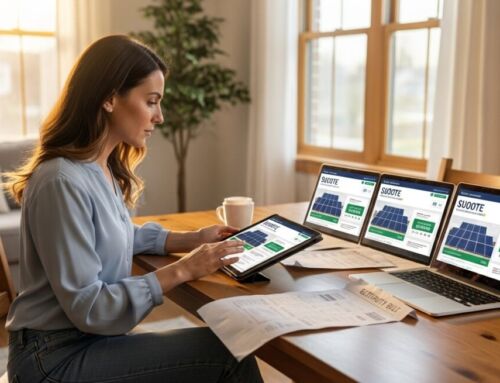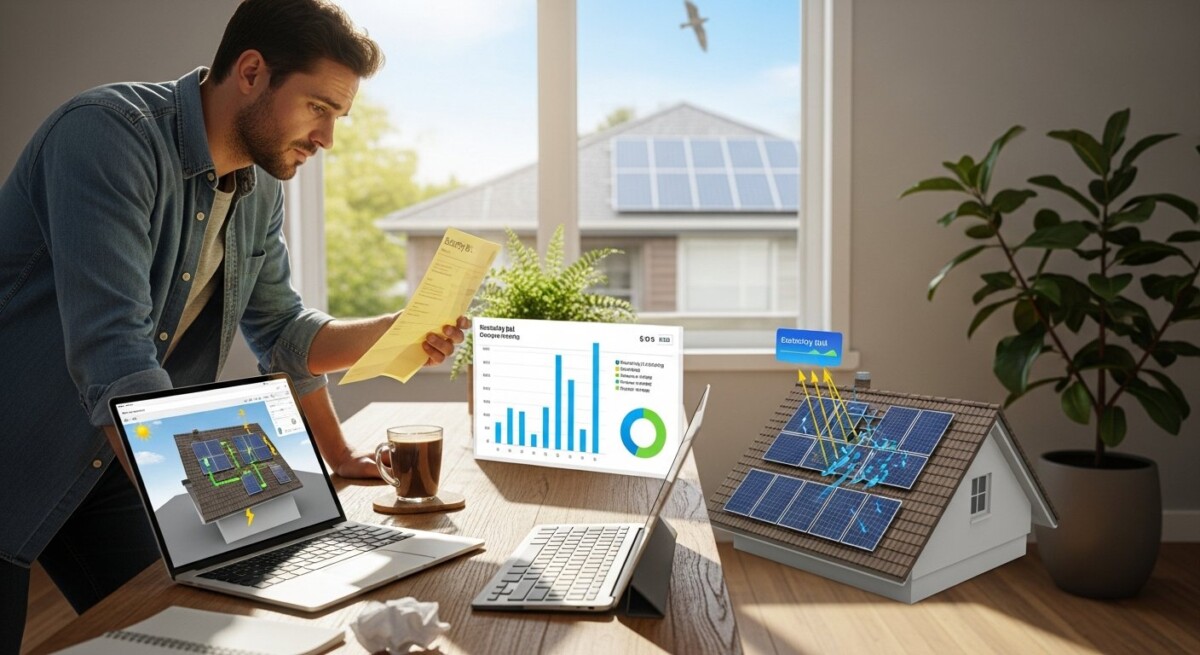
You open your monthly electricity bill and feel a familiar sting. The number keeps climbing, and you wonder if there is a way to take control. This feeling drives many homeowners to search for what is solar system sizing calculation, hoping to reduce energy bills and gain some independence from the power grid. Understanding this calculation is the first step toward a smarter energy investment.
Understanding what is solar system sizing calculation
Solar system sizing calculation is the process of determining how many solar panels you need to meet your home’s energy needs. It balances your electricity consumption with the amount of sunlight your roof receives. The goal is to design a system that produces enough power to offset your usage without overbuilding and wasting money.
To perform this calculation, installers look at your past electricity bills to find your average monthly and annual kilowatt-hour (kWh) usage. They then factor in your roof’s orientation, shading, and geographic location to estimate how much energy each panel can generate. The result is a recommended system size, usually measured in kilowatts (kW).
More homeowners are considering this calculation because it directly impacts their long-term savings. An undersized system might not cut your bill enough, while an oversized one can extend your payback period. Getting the size right ensures you maximize your return on investment and move closer to energy independence.
Why Solar Energy Is Becoming More Popular
Rising electricity prices are a major reason homeowners switch to solar. With utility rates increasing year after year, generating your own power offers a hedge against future hikes. Solar panels turn a variable monthly expense into a predictable, lower cost over time.
Environmental concerns also play a big role. Solar energy is clean, renewable, and reduces your carbon footprint. For many families, going solar aligns with their values and helps create a more sustainable future. Long-term savings are the final push,most systems pay for themselves within 6 to 10 years and continue saving you money for decades.
If you are considering solar power for your home, comparing installation quotes can help you understand your options. Request a free solar quote or call to learn more.
Common Questions Homeowners Have About Solar
Homeowners often wonder about the upfront cost of solar installation. The price has dropped significantly in recent years, and federal tax credits plus state incentives can cover 30% or more of the total. Financing options like solar loans make it affordable for most budgets.
Another common concern is roof suitability. Most roofs that face south, east, or west with good sun exposure work well. An installer can assess your roof’s age, material, and shading to confirm it is a good fit. System performance is also a top question,modern panels are highly efficient and come with warranties of 25 years or more.
- How much does a solar system cost for an average home?
- Will solar panels work on a shaded or north-facing roof?
- How long does it take for solar to pay for itself?
- What happens if my panels produce more power than I use?
- Do I need to replace my roof before installing solar?
- Are there government incentives available in my area?
How Solar Panel Installation Works
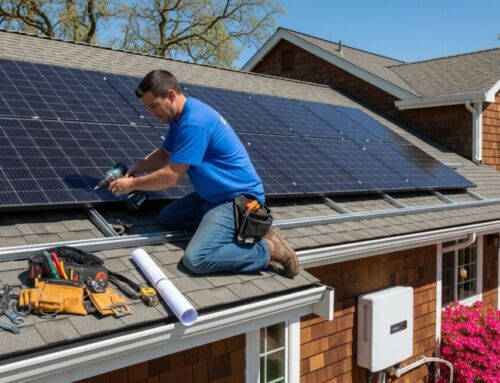
The installation process begins with a home energy assessment. An installer reviews your electricity bills and evaluates your roof to determine the ideal system size. They then design a custom layout that maximizes sun exposure and aesthetic appeal.
Once the design is final, the installer handles all permits and approvals with your local utility and municipality. This step ensures your system meets safety codes and grid connection requirements. After approvals, the physical installation takes one to three days, followed by system activation and a final inspection.
- Home energy assessment to analyze your usage and roof
- System design tailored to your home and sunlight
- Permits and approvals from local authorities
- Panel installation on your roof
- System activation and final inspection
Speaking with experienced installers can help you determine the best solar solution for your home. Compare solar quotes here or call to explore available options.
Signs Your Home May Be Ideal for Solar
Homes with strong sunlight exposure are natural candidates for solar panels. If your roof receives direct sun for most of the day,especially between 9 a.m. and 3 p.m.,you can generate substantial power. High electricity bills also signal that solar could deliver meaningful savings.
Suitable roof space is another key factor. A typical system needs about 300 to 500 square feet of unshaded roof area. If you plan to stay in your home for five or more years, the long-term savings make solar a smart investment.
- Your roof faces south, east, or west with minimal shading
- Your monthly electricity bill exceeds $100
- You have at least 300 square feet of usable roof space
- You plan to live in your home for several more years
- Your roof is in good condition or recently replaced
- Your state offers strong solar incentives or net metering
What Affects Solar Installation Costs
System size is the biggest cost driver,larger systems require more panels and equipment. However, bigger systems also produce more power, so the cost per watt often decreases as you scale up. Equipment quality also matters; premium panels and inverters cost more but offer higher efficiency and longer warranties.
Installation complexity can raise costs if your roof is steep, has multiple angles, or requires electrical upgrades. Local incentives and rebates can significantly lower your out-of-pocket expense. In our guide on solar system sizing calculation: maximize your home savings, we explain how to factor these variables into your decision.
The cost of solar installation varies depending on your home and energy needs. Request personalized solar quotes or call to see what options are available.
Tips for Choosing a Reliable Solar Installer
Start by reviewing an installer’s experience and track record. Look for companies that have been in business for several years and have completed numerous installations in your area. Check their licensing, insurance, and certifications, such as NABCEP (North American Board of Certified Energy Practitioners).
Warranties are just as important. A trustworthy installer offers a workmanship warranty of at least 10 years and supports the manufacturer’s equipment warranties. Reading customer reviews on platforms like Google and SolarReviews gives you real insight into their service quality. Finally, always compare multiple quotes,pricing and system designs can vary widely.
- Review installer experience and local references
- Check for NABCEP certification and proper licensing
- Ask about workmanship and equipment warranties
- Read recent customer reviews on independent sites
- Compare at least three detailed quotes before deciding
Long-Term Benefits of Installing Solar Panels
Lower electricity bills are the most immediate benefit. Once your system is paid off, your power is essentially free for the remaining life of the panels. Over 25 years, the average homeowner saves $20,000 to $40,000 on electricity costs. Solar also increases your home’s resale value,studies show a 4% to 6% premium for homes with owned solar systems.
Beyond finances, solar reduces your environmental impact. A typical residential system offsets 3 to 4 tons of carbon dioxide annually, equivalent to planting over 100 trees each year. Energy independence is another powerful advantage,you are less affected by utility rate hikes and grid outages, especially if you add battery storage. If you ever need guidance on maintenance, our article on solar system repair: boost efficiency now offers practical tips to keep your panels performing at their best.
FAQs
How do I calculate the solar system size I need?
To calculate your solar system size, look at your annual electricity usage in kilowatt-hours (kWh) from your utility bills. Divide that number by the average annual sun hours in your area to get the system size in kilowatts. A professional installer can refine this using your roof’s specific conditions.
What size solar system do I need for a 2000 square foot home?
A 2000 square foot home typically needs a 6 kW to 8 kW solar system, depending on your energy usage. Energy consumption varies more with lifestyle than home size, so checking your bills is more accurate than relying on square footage alone. An installer will use your actual usage to recommend the right size.
Can a solar system be too big for my home?
Yes, an oversized system can cost more upfront and may not be fully utilized unless you have net metering or battery storage. Excess power is often credited at a lower rate, which can extend your payback period. A proper sizing calculation ensures your system matches your needs without waste.
How long does a solar panel installation take?
Physical installation of solar panels typically takes one to three days for a standard home. The entire process, including permitting and inspections, can take four to eight weeks from signing the contract to activation. Your installer will provide a timeline based on local requirements.
Do solar panels work on cloudy days?
Yes, solar panels still generate electricity on cloudy days, though at reduced efficiency,typically 10% to 25% of their rated capacity. Modern panels are designed to capture diffuse sunlight. Your system’s overall annual output is calculated based on historical weather patterns in your area.
What happens if I move after installing solar panels?
If you own your solar panels, they can increase your home’s resale value. Many buyers see solar as a desirable feature because it lowers future utility costs. If you lease panels, the new owner may need to assume the lease, which can complicate a sale.
Are there government incentives for solar in 2025?
Yes, the federal solar investment tax credit (ITC) currently allows you to deduct 30% of your solar installation cost from your federal taxes. Many states also offer additional rebates, tax credits, or performance-based incentives. Check with a local installer or the Database of State Incentives for Renewables & Efficiency (DSIRE) for your specific area.
What maintenance do solar panels require?
Solar panels require minimal maintenance,mostly periodic cleaning to remove dust, leaves, or snow. Rain often does the job, but in dry areas, a gentle rinse twice a year helps. Most reputable installers include monitoring services to alert you if performance drops.
Understanding what is solar system sizing calculation gives you the confidence to explore solar energy for your home. By comparing quotes from certified installers, you can find a system that fits your budget, reduces your electricity bills, and supports a cleaner future. Take the next step today and request multiple quotes to see how much you can save.