You open your monthly electric bill and wince. The number keeps climbing, and you wonder if there is a way to take control. Like many homeowners, you have probably searched for how long solar installation takes because you want to reduce your energy bills and become less dependent on the power grid. The good news is that solar technology is more efficient and affordable than ever, and understanding the timeline is the first step toward lasting savings.
Understanding How Long Solar Installation Takes
Solar installation refers to the process of mounting photovoltaic (PV) panels on your roof or property so they can convert sunlight into electricity. These panels capture direct current (DC) energy, which an inverter changes into alternating current (AC) that powers your home. Any extra electricity can flow back to the grid, often earning you credits through net metering.
The full timeline from initial consultation to flipping the switch usually spans one to three months. This window includes a site assessment, system design, permit approvals, equipment ordering, and the actual installation day, which typically takes one to three days. Delays can happen if your roof needs repairs or if your local permitting office is backed up, but a professional installer will walk you through each step. In our guide on how long solar installation takes for your home, we break down the factors that affect your specific schedule.
More homeowners are considering solar because it turns a fixed monthly expense into a long-term investment. Instead of paying the utility company forever, you can generate your own power and lock in lower electricity costs for decades.
What Happens During the Permitting and Approval Stage?
Permitting is often the longest part of the process, lasting two to six weeks. Your installer will submit plans to your city or county building department, and possibly to your homeowners’ association (HOA). Once permits are approved, the installation crew can schedule your project and begin work.
Why Solar Energy Is Becoming More Popular
Rising electricity prices are a major reason families are switching to solar. Rates have increased steadily across the United States, and there is no sign of them slowing down. Solar gives you a hedge against those hikes by letting you produce power at a predictable, lower cost.
Environmental concerns also play a big role. Solar energy is clean and renewable, producing no greenhouse gas emissions during operation. Every kilowatt-hour of solar electricity you use reduces your carbon footprint and helps fight climate change.
Long-term savings are the most compelling benefit for many homeowners. A well-designed system can pay for itself in six to ten years, then deliver free electricity for the remaining twenty-plus years of its lifespan. That is thousands of dollars back in your pocket.
If you are considering solar power for your home, comparing installation quotes can help you understand your options. Request a free solar quote or call (800) 555-0199 to learn more.
Common Questions Homeowners Have About Solar
When you start researching solar, you will probably have questions about cost, roof condition, and whether the panels will work on cloudy days. These are all valid concerns, and reputable installers address them during the consultation.
Installation cost is the first question most people ask. The average residential system runs between $15,000 and $25,000 before incentives, but federal tax credits and state rebates can reduce that by 30 percent or more. Roof suitability matters too,south-facing roofs with little shade and good structural condition are ideal, but modern mounting systems can work on many roof types.
System performance is another common worry. Solar panels do produce less power on overcast days, but they still generate electricity. In fact, many homeowners produce enough energy across the year to cover their entire usage, including cloudy winter months.
- How much does a solar system cost after incentives?
- Will solar work on my roof type?
- Do panels need direct sunlight all day?
- What happens if I produce more power than I use?
- How long do solar panels last?
- Is my home a good candidate for solar?
How Solar Panel Installation Works
The installation process starts with a home energy assessment. An installer reviews your past electricity bills, examines your roof, and measures your available sunlight. This data helps them design a system sized to match your energy needs.
Once the design is finalized, the installer handles all the paperwork,including permit applications and incentive documentation. This step is critical because missing a rebate deadline or skipping a permit can cause costly issues later.
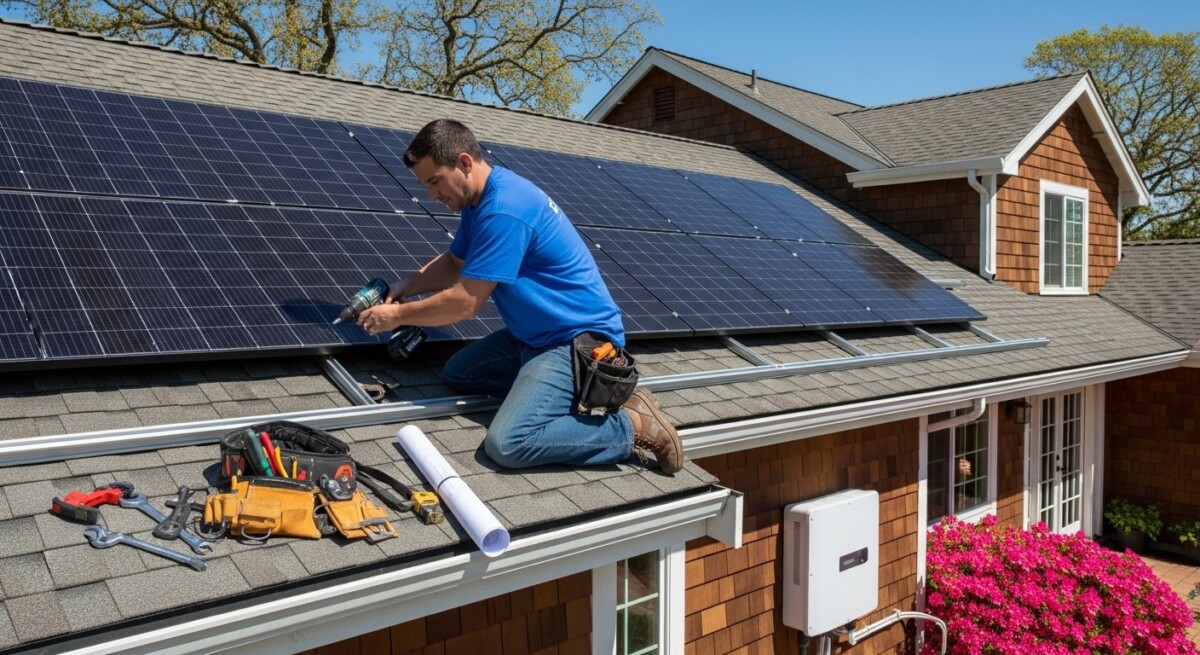
On installation day, a crew mounts the racking system, attaches the panels, connects the inverter, and runs wiring to your main electrical panel. After a final inspection by your local building department, the utility company gives permission to operate (PTO), and your system starts generating power.
- Home energy assessment
- System design and proposal
- Permits and approvals
- Panel installation (1,3 days)
- Final inspection and utility approval
- System activation
Speaking with experienced installers can help you determine the best solar solution for your home. Compare solar quotes here or call (800) 555-0199 to explore available options.
Signs Your Home May Be Ideal for Solar
Not every home is perfectly suited for solar, but many are. The best candidates have a south- or west-facing roof that gets strong sunlight most of the day. If your roof has large trees casting shade, a ground-mounted system could still work.
High electricity bills are another clue that solar could save you money. If you pay more than $100 per month, a solar system can likely offset a large chunk of that. Also, if you plan to stay in your home for at least five to ten years, you will have plenty of time to recoup your investment.
- Your roof receives strong sunlight for most of the day
- Your monthly electricity bills are consistently high
- You have adequate roof space with good structural condition
- You plan to stay in your home for at least five more years
- Your state or utility offers net metering or solar incentives
- You want to reduce your carbon footprint
What Affects Solar Installation Costs
System size is the biggest cost driver. A larger system that covers 100 percent of your usage will cost more upfront but deliver greater long-term savings. Equipment quality also matters,premium panels and inverters cost more but often come with better warranties and higher efficiency.
Installation complexity can add to the price. If your roof is steep, has multiple angles, or requires structural reinforcement, the labor will cost more. Conversely, a simple south-facing roof with easy access keeps installation costs lower.
Local incentives and tax credits can dramatically reduce your net cost. The federal solar Investment Tax Credit (ITC) currently lets you deduct 30 percent of the system cost from your federal taxes. Many states and utilities add extra rebates or performance-based incentives, so it pays to research what is available where you live.
The cost of solar installation varies depending on your home and energy needs. Request personalized solar quotes or call (800) 555-0199 to see what options are available.
Tips for Choosing a Reliable Solar Installer
Choosing the right installer is just as important as choosing the right panels. A reputable company will have years of experience, positive customer reviews, and proper licensing and insurance. They should also offer a clear, written contract with no hidden fees.
Always ask about warranties. The best installers offer a workmanship warranty of at least ten years, and they will help you understand the manufacturer warranties on panels and inverters. A good warranty protects your investment and gives you peace of mind.
- Review the installer’s experience and industry certifications
- Check customer reviews on sites like Google, Yelp, and the Better Business Bureau
- Ask about warranties on equipment and workmanship
- Compare at least three quotes to find the best value
- Confirm the installer handles all permits and paperwork
- Read the contract carefully before signing
Long-Term Benefits of Installing Solar Panels
The most obvious benefit is lower electricity bills. Once your system is paid off, the power it produces is essentially free. Over 25 years, that can add up to tens of thousands of dollars in savings, depending on your local utility rates and system size.
Solar also increases your home’s value. Studies show that homes with solar panels sell for more than comparable non-solar homes, and they often sell faster. Buyers recognize the value of lower energy costs and energy independence.
Finally, solar gives you energy independence. You are less affected by grid outages and utility rate hikes. Every kilowatt-hour you generate is one you do not have to buy from the power company, and that feeling of control is priceless.
Frequently Asked Questions
How long does the solar installation process take from start to finish?
Most residential solar installations take one to three months from the initial consultation to final activation. The actual panel installation only takes one to three days. The rest of the time is spent on permitting, design, and utility approvals.
Does solar installation require roof repairs or modifications?
In many cases, no major modifications are needed. However, if your roof is old or damaged, your installer may recommend repairs before mounting panels. A roof inspection is part of the initial assessment, so any issues are caught early.
Will solar panels work during a power outage?
Standard grid-tied solar systems shut off during an outage for safety reasons. If you want backup power, you can add a battery system like the Tesla Powerwall or Enphase Encharge. Batteries store excess energy and keep your lights on when the grid goes down.
What happens if my solar panels produce more electricity than I use?
Excess power flows back to the electric grid, and your utility credits you for it through a program called net metering. Those credits offset the power you use at night or on cloudy days. Policies vary by state, so your installer can explain the rules where you live.
How long do solar panels last?
Solar panels typically last 25 to 30 years, and many continue producing power at reduced output after that. Most manufacturers offer a 25-year performance warranty that guarantees the panels will still generate at least 80 percent of their original capacity.
Can I install solar panels myself to save money?
DIY solar is possible, but it is not recommended for most homeowners. Professional installation ensures the system is safe, properly permitted, and eligible for incentives. Mistakes can void warranties, cause roof leaks, or create electrical hazards.
Does solar increase my property taxes?
In most states, solar panels are exempt from property tax assessments. That means your home value can go up without your tax bill increasing. Your installer or local tax assessor can confirm the rules in your area.
What maintenance do solar panels require?
Solar panels are very low maintenance. Rain usually washes away dust and debris. If you live in a dry or dusty area, you may need to hose them off once or twice a year. Most systems come with monitoring software that alerts you to any performance issues.
Exploring solar installation is a smart step toward saving money and gaining energy independence. By comparing quotes from trusted installers, you can find a system that fits your budget and home. Get started with free solar quotes today or call (800) 555-0199 to speak with a specialist who can answer your questions.