
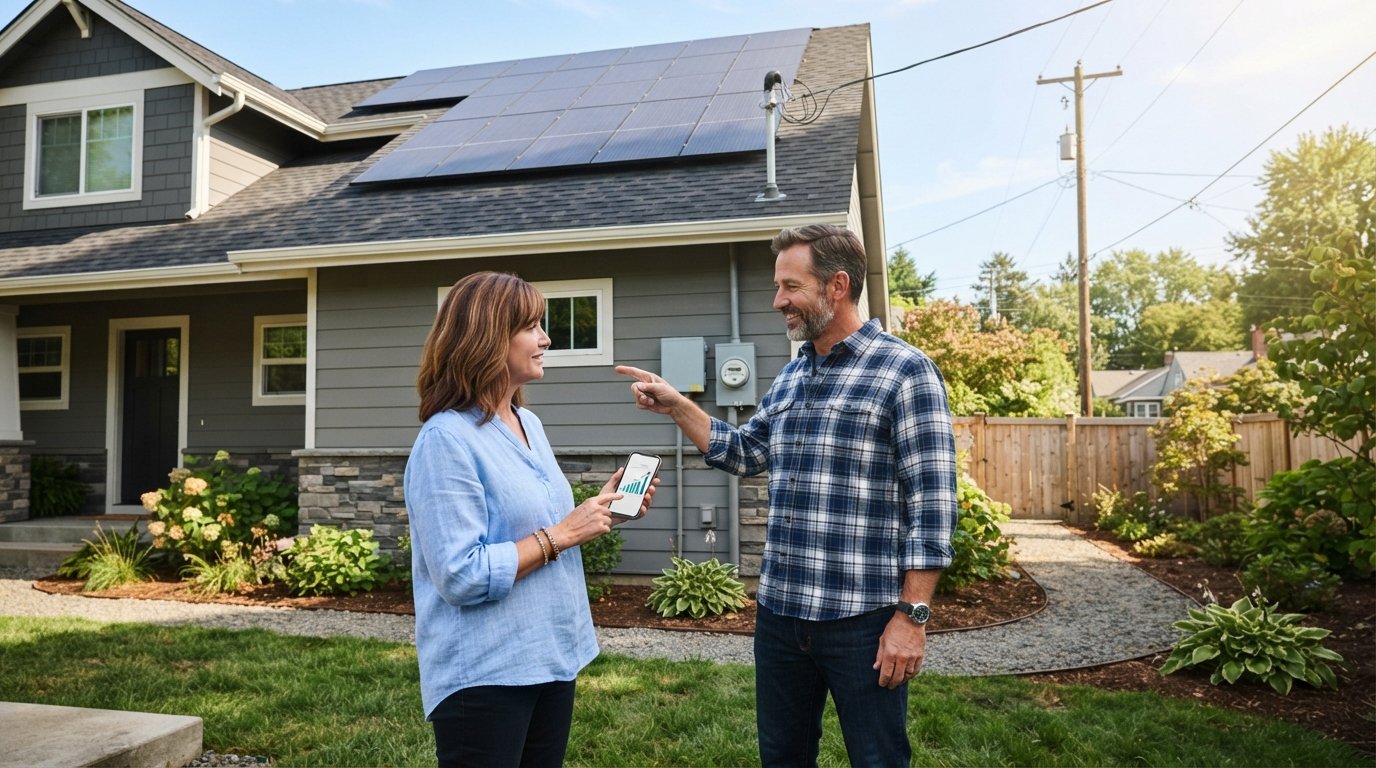
On Grid Solar System: How It Works and Saves Money
Learn how an on grid solar system works, cuts electricity bills, and qualifies for net metering. See costs, savings, and pros and cons.

By Benjamin Kalif
Learn more about Solar Panel Installation and Repair for guides, costs, and what to expect.
Compare Solar Panel Installation and Repair Pros Near You
Enter your ZIP code to compare top-rated local professionals and request free quotes.
Imagine a solar setup that lets you slash your monthly electricity bill without buying expensive batteries. That is the core promise of the on grid solar system, the most popular solar configuration for American homes and businesses. Also called a grid-tied system, it connects directly to the utility power grid, allowing you to draw electricity when the sun is down and send excess power back when your panels overproduce. For most property owners, this is the simplest and most cost-effective way to start saving with solar.
This guide explains what an on grid solar system is, how it works, what it costs, and how it can lower your energy bills. You will also learn about net metering, potential drawbacks, and how to choose the right installer. By the end, you will know whether grid-tied solar is the right fit for your home or business.
What Is an On Grid Solar System?
An on grid solar system is a photovoltaic (PV) setup that remains connected to the local electricity network. Unlike off-grid systems, which rely on batteries for storage, grid-tied systems use the utility grid as a virtual battery. When your panels generate more electricity than you need, the surplus is exported to the grid. When your panels cannot meet your demand, such as at night or on cloudy days, you draw power from the grid as usual.
This design eliminates the need for expensive battery storage, which is why grid-tied solar is the most common and affordable choice for residential and commercial use. The system typically includes solar panels, a racking system, an inverter (or microinverters), a utility meter, and a net meter that tracks both the electricity you consume and the electricity you send back.
Key Components of a Grid-Tied System
To understand how an on grid solar system works, it helps to know its main parts:
- Solar panels: These capture sunlight and convert it into direct current (DC) electricity.
- Inverter: This device converts DC electricity into alternating current (AC), which your home and the grid use. Some modern systems use microinverters attached to each panel.
- Net meter: A special utility meter that records both the electricity you pull from the grid and the excess electricity you send back.
- Utility connection: Your system is wired into the grid through a service panel and a disconnect switch that allows the utility to isolate your system safely during repairs.
The inverter is the heart of the system, managing power flow and ensuring safety. Without a grid connection, a standard grid-tied inverter will shut down to avoid sending electricity to the grid during an outage, which protects utility workers from shock hazards.
How Net Metering Makes On Grid Solar Valuable
The financial engine behind an on grid solar system is net metering. This billing arrangement lets you earn credits for the surplus electricity your panels generate. When your system produces more power than you use, your meter spins backward, and your utility credits your account. At the end of the billing period, you only pay for your net electricity consumption, which is the difference between what you used and what you generated.
For example, if your panels produce 800 kilowatt-hours (kWh) in a month but you only use 600 kWh, the extra 200 kWh is sent to the grid. Your utility gives you a credit for that 200 kWh, which you can use later when your system is underproducing, such as during winter months. This credit system can significantly reduce or even eliminate your electricity bill, depending on your system size and local rate structures.
Net metering policies vary by state and utility. Some utilities offer one-to-one credits, meaning each kWh you export is worth the same as a kWh you import. Others offer lower wholesale rates for exported power or time-of-use tariffs that change the value of credits based on peak demand hours. Before installing a system, check your local net metering rules to understand your potential savings.
How Much Can You Save With an On Grid Solar System?
The savings from a grid-tied solar system depend on several factors: your electricity rate, your system size, your local climate, and your net metering policy. On average, a typical 6 kW residential system in the United States can save homeowners between $1,000 and $2,000 per year on electricity costs. In states with high electricity rates and generous solar policies, like California, Hawaii, or Massachusetts, the savings can be even higher.
Here is a quick breakdown of what affects your savings:
- Electricity rate: The more you pay per kWh, the more you save per kWh of solar generation.
- System size: Larger systems produce more electricity, but they also cost more to install. The optimal size is usually one that offsets 80-100% of your annual consumption.
- Sun exposure: Properties with south-facing roofs and little shading generate more power, boosting savings.
- Net metering policy: A one-to-one credit policy maximizes the value of exported electricity.
- Incentives: Federal and state tax credits, rebates, and SRECs can reduce upfront costs and improve payback time.
You can use an online solar calculator to get a personalized estimate, but a local installer can provide a more precise analysis based on your roof and utility rates.
Costs and Financial Incentives for Grid-Tied Solar
The upfront cost of an on grid solar system has dropped dramatically over the past decade. As of 2026, the average cost per watt for a residential system ranges from $2.50 to $3.50 before incentives. A typical 6 kW system therefore costs between $15,000 and $21,000 before tax credits. After the federal Investment Tax Credit (ITC), which currently offers a 30% credit on the total system cost, the net price drops to about $10,500 to $14,700.
Many states and utilities also offer additional incentives, such as cash rebates, performance-based incentives, or Solar Renewable Energy Certificates (SRECs). These can further reduce the payback period, which typically ranges from 5 to 10 years. After that, the electricity your system produces is essentially free, and you continue to save for the 25-30 year lifespan of your panels.
Financing options make grid-tied solar accessible even if you cannot pay upfront. You can choose from solar loans, leases, and Power Purchase Agreements (PPAs). With a loan, you own the system and benefit from incentives and long-term savings. With a lease or PPA, a third-party company owns the system, and you pay a fixed monthly fee or a per-kWh rate for the power it produces. Leases and PPAs require no upfront cost but offer lower overall savings and do not make you eligible for the ITC.
Advantages and Disadvantages of On Grid Solar Systems
Before deciding if a grid-tied system is right for you, consider its strengths and limitations.
Advantages
- Lower upfront cost: Without batteries, the initial investment is significantly lower than off-grid systems.
- Immediate savings: Net metering lets you offset your electricity bill from day one.
- No energy storage worries: You do not need to size batteries for cloudy days or overnight use.
- Simplicity and reliability: Grid-tied systems have fewer components, so they are easier to install and maintain.
- Eligibility for incentives: Most federal and state incentives apply to grid-tied systems.
Disadvantages
- No power during outages: For safety reasons, grid-tied inverters shut down during a blackout, so you will not have electricity even if the sun is shining.
- Dependence on the grid: You still rely on the utility for nighttime power and backup, which means you are not fully energy independent.
- Net metering policy changes: Some utilities are reducing credit rates, which can lower your long-term savings.
If you live in an area with frequent power outages or value energy independence, you might consider adding a battery backup to your grid-tied system. This hybrid setup, known as a solar-plus-storage system, allows you to store excess solar power for use during outages or peak rate periods. Batteries add cost, but they provide resilience and can increase your self-consumption of solar energy.
How to Get an On Grid Solar System Installed
Installing a grid-tied solar system requires professional expertise. While DIY solar kits exist, they rarely qualify for utility net metering or local permits. Here is a step-by-step overview of the typical installation process:
- Consultation and site assessment: A solar installer evaluates your roof, shading, and electricity usage to design a system that meets your needs.
- System design and proposal: The installer provides a detailed quote, including equipment, estimated production, and cost breakdown.
- Permitting and paperwork: The installer handles permits, interconnection agreements, and incentive applications on your behalf.
- Installation: Crews mount the panels, install the inverter, and wire the system to your electrical panel. This typically takes one to three days.
- Inspection and interconnection: A local inspector checks the system for safety, and your utility installs a net meter if needed.
- Activation: Once approved, your system is turned on, and you start generating solar power.
Choosing a qualified installer is critical to maximizing performance and ensuring safety. Look for certified professionals with experience in grid-tied installations, positive customer reviews, and proper licensing and insurance. A reliable installer will also help you navigate local incentives and answer questions about net metering.
Is an On Grid Solar System Right for You?
An on grid solar system is an excellent choice for most homeowners and businesses that have a suitable roof and pay standard utility rates. You will benefit from lower monthly bills, increased property value, and a reduced carbon footprint. The system is especially attractive if you have a south-facing roof with minimal shading and live in a state with favorable net metering policies.
However, if you experience frequent power outages or need to run critical medical equipment during emergencies, you may want to invest in a battery backup. If your utility charges high demand fees or has poor net metering rates, you should carefully model your potential savings before committing. A local solar professional can provide a custom analysis to help you decide.
To get accurate quotes from vetted installers in your area, use NewSolarQuotes. Their free quote service connects you with pre-screened solar specialists who can design and price a grid-tied system tailored to your property. You can compare multiple offers and choose the one that best fits your budget and energy goals. Start your solar journey today and take control of your electricity costs.
Learn more about Solar Panel Installation and Repair for guides, costs, and what to expect.
Compare Solar Panel Installation and Repair Pros Near You
Enter your ZIP code to compare top-rated local professionals and request free quotes.