
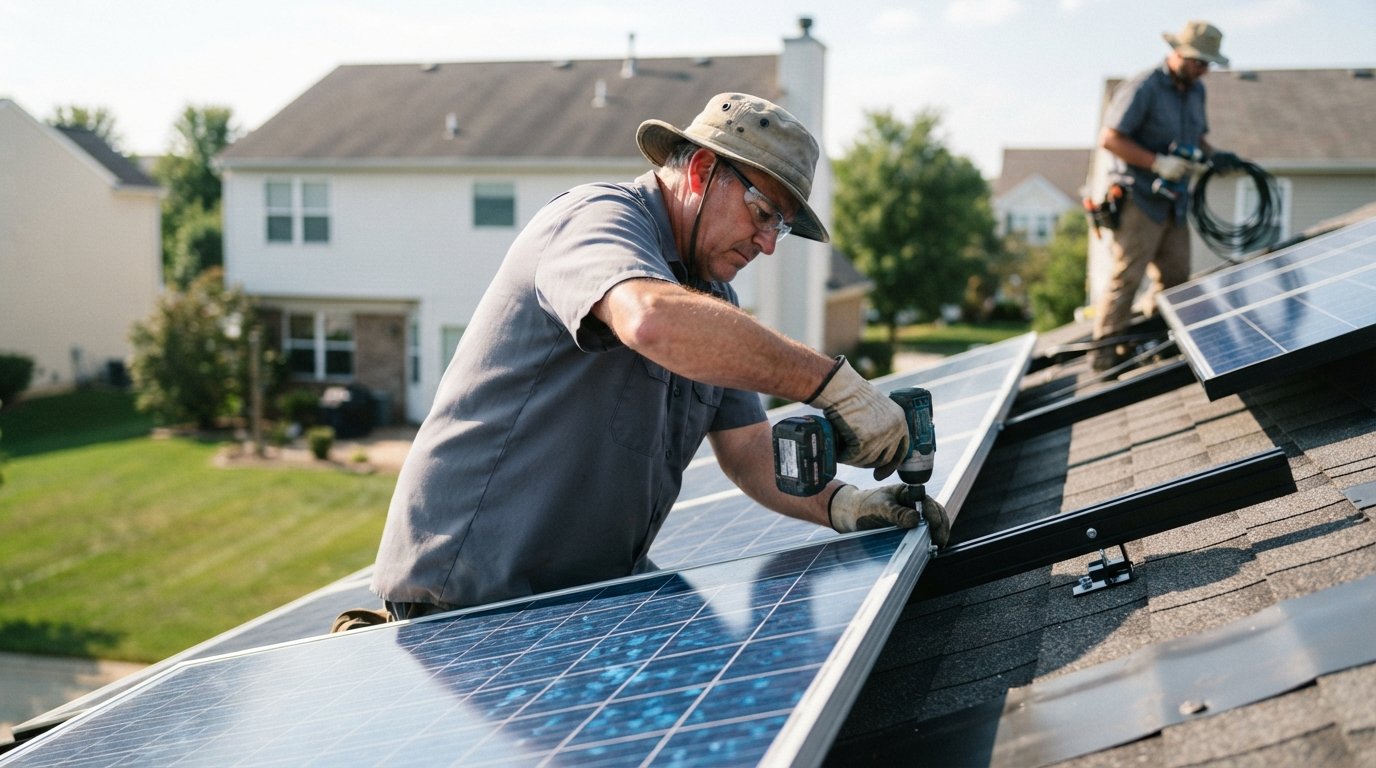
Polycrystalline Solar Panels: A Smart Choice for Homeowners
Learn how polycrystalline solar panels offer a budget-friendly path to energy savings, making solar power accessible for more homeowners.

By Alex Carter
Learn more about Solar Panel Installation and Repair for guides, costs, and what to expect.
Compare Solar Panel Installation and Repair Pros Near You

Enter your ZIP code to compare top-rated local professionals and request free quotes.
When you start exploring solar energy for your home, one of the first decisions you will face is choosing the right type of solar panel. The market is dominated by two main technologies: monocrystalline and polycrystalline. While monocrystalline panels often grab headlines for their high efficiency, polycrystalline solar panels remain a highly practical, budget-friendly option that delivers reliable performance for many American households. Understanding the specific advantages, trade-offs, and ideal use cases for polycrystalline technology is essential for making an informed investment in your home's energy future. This guide provides a comprehensive look at polycrystalline panels, helping you decide if they are the right fit for your property, energy goals, and budget.
What Are Polycrystalline Solar Panels?
Polycrystalline solar panels, often called multi-crystalline panels, are a type of photovoltaic (PV) panel that converts sunlight into electricity. Unlike their monocrystalline counterparts, which are made from a single, pure silicon crystal, polycrystalline panels are created by melting multiple silicon fragments together. This manufacturing process is simpler and less wasteful, which directly translates to lower production costs and a more affordable price tag for the end consumer.
The distinctive appearance of polycrystalline panels is a direct result of this manufacturing method. You will notice that they have a characteristic blue, speckled look, rather than the uniform black or dark blue of monocrystalline panels. This is because the multiple silicon crystals reflect light differently, creating a mosaic-like pattern. While some homeowners prefer the sleek, uniform look of monocrystalline panels, many find the textured blue appearance of polycrystalline panels perfectly acceptable, especially when they are roof-mounted and not a primary focal point of the home's exterior.
In terms of performance, polycrystalline panels have a lower efficiency rating than monocrystalline, typically ranging from 15% to 17% compared to 17% to 20% or higher for monocrystalline. This means they generate slightly less electricity per square foot of panel. However, for homes with ample roof space, this difference is often negligible, and the cost savings can be significant. The technology is mature and well-proven, with millions of installations worldwide demonstrating its reliability and longevity over decades.
Key Advantages of Polycrystalline Panels
Choosing polycrystalline solar panels offers several distinct benefits that make them an attractive option for many homeowners. These advantages go beyond just the upfront cost and can impact your overall solar experience. Here are the primary reasons to consider this technology:
- Lower upfront cost: The manufacturing process is less expensive, making the panels themselves more affordable. This can significantly reduce the total cost of your solar system, making it easier to start saving on electricity bills sooner.
- Less manufacturing waste: The production process uses more of the silicon ingot, resulting in less waste compared to the Czochralski process used for monocrystalline panels. This makes them a more environmentally friendly choice in terms of production.
- Good performance in high temperatures: Polycrystalline panels generally have a better temperature coefficient than some monocrystalline panels, meaning their performance degrades less in very hot climates. This can be a notable advantage for homeowners in states like Texas, Arizona, and Florida.
- Proven, reliable technology: Polycrystalline has been used in solar power for decades. The technology is mature, and the panels are known for their durability and consistent performance over their 25 to 30 year lifespan.
- Widely available: Because they are a popular budget-friendly option, polycrystalline panels are readily available from many manufacturers and installers, making it easy to source them for your project.
These benefits make polycrystalline panels an excellent entry point into solar energy. The lower cost can free up budget for other important system components, such as a higher-quality inverter or additional battery storage, which can ultimately have a greater impact on your energy independence and savings than a marginal increase in panel efficiency.
Efficiency and Performance: What to Expect
It is important to set realistic expectations about the efficiency of polycrystalline solar panels. Efficiency is the measure of how much sunlight a panel can convert into usable electricity. As mentioned, polycrystalline panels typically offer an efficiency between 15% and 17%. In practical terms, this means you will need to install more panels to generate the same amount of power as you would with a smaller number of high-efficiency monocrystalline panels.
For example, to offset a monthly electricity usage of 1,000 kWh, you might need around 20 polycrystalline panels, while a higher-efficiency monocrystalline system could achieve the same output with 18 panels. This difference in panel count will affect the total roof area required and the overall system size. If your roof has limited south-facing space with minimal shading, this could be a deciding factor. However, if you have a larger roof with plenty of usable area, the need for a few extra panels is unlikely to be a problem.
Modern polycrystalline panels have seen significant improvements in performance. They perform well in a variety of lighting conditions, including diffuse light on cloudy days. Their temperature coefficient, which indicates how much output drops as the panel heats up, is competitive. In hot climates, the performance gap between polycrystalline and monocrystalline narrows, making the cost difference even more compelling. A reputable solar installer will perform a detailed site assessment and use software to model the expected annual energy production for your specific roof, allowing you to compare systems accurately.
Comparing Polycrystalline and Monocrystalline Panels
To make the best decision, you need a clear, side-by-side comparison of the two main solar panel types. This will help you weigh the pros and cons based on your unique priorities, such as budget, roof space, and aesthetic preferences. The table below summarizes the key differences:
Key Differences:
- Efficiency: Monocrystalline panels are more efficient (17-20%+) than polycrystalline (15-17%).
- Cost: Polycrystalline panels are significantly cheaper to produce and purchase.
- Appearance: Monocrystalline panels are uniformly black, while polycrystalline panels have a blue, speckled look.
- Temperature Coefficient: Polycrystalline panels often perform slightly better in very high temperatures, though the difference is small.
- Space Efficiency: Because they are more efficient, monocrystalline panels require less roof space to produce the same amount of power.
In summary, if your primary concern is maximizing energy production from a limited roof area and you prefer a sleek, uniform aesthetic, monocrystalline panels are the superior choice. On the other hand, if you are working with a tighter budget, have ample roof space, and are not concerned about the blue color, polycrystalline panels offer the best value for your investment. For most homeowners, the cost savings of polycrystalline can be invested elsewhere, such as in a larger system to offset more of your energy usage, which is often a smarter financial move than buying a smaller, more efficient system.
Ideal Use Cases for Polycrystalline Panels
Given their characteristics, polycrystalline panels are particularly well-suited for certain situations. Understanding these scenarios can help you determine if they are the right fit for your home. They are an ideal choice for:
- Homes with large, unobstructed roofs: If you have ample roof space, the reduced efficiency is less of a concern, allowing you to take full advantage of the cost savings.
- Budget-conscious buyers: For homeowners for whom the initial cost is a major factor, polycrystalline panels provide a lower barrier to entry, making solar power accessible to more people.
- Hot climates: In states with high ambient temperatures, the better temperature coefficient of polycrystalline panels helps maintain consistent performance, making them a smart choice in the summer heat.
- Ground-mounted systems: Because ground-mounted arrays are not limited by roof space and aesthetics are less of a concern, polycrystalline panels are a popular and cost-effective option for these installations.
- Large-scale commercial projects: For businesses with expansive flat roofs or ground space, the lower cost per watt makes polycrystalline panels an economically attractive option for large installations.
Essentially, if your goal is to maximize the financial return on your investment by generating the most electricity for the least amount of money, and you have the space to accommodate a few extra panels, polycrystalline is a compelling choice. It is a pragmatic, no-frills solution that focuses on delivering clean energy at the most affordable price point.
Are Polycrystalline Panels Right for Your Home?
Deciding if polycrystalline panels are the right choice requires an honest assessment of your home and energy needs. Start by evaluating your roof. Measure the available space and note any obstructions like chimneys, skylights, or vents. A south-facing roof is ideal, but east and west-facing roofs can also work well. If you have a substantial amount of usable roof space, polycrystalline panels can easily generate enough power to meet your needs.
Next, consider your electricity consumption. Review your past year of utility bills to understand your average monthly and annual usage. This will tell you how many kilowatt-hours (kWh) you need to generate. A solar installer can use this information to design a system that will offset a certain percentage of your usage, often aiming for 100% or more. By comparing the cost of a system with polycrystalline panels versus one with monocrystalline panels, you can see the total cost difference and how it affects your payback period.
Finally, think about your long-term goals. Are you planning to stay in your home for the next 10 to 20 years? Solar is a long-term investment, and while your savings will begin immediately, the full financial benefit is realized over time. Polycrystalline panels are built to last, and with a solid warranty, you can expect reliable performance for decades. If you are looking for a dependable, cost-effective way to reduce your carbon footprint and protect yourself from rising electricity rates, polycrystalline panels are a trustworthy and economically sound option.
How to Get Started with Polycrystalline Panels
If you have decided that polycrystalline panels could be a good fit, the next step is to connect with a qualified solar installer. A professional installer can provide a precise assessment of your property, recommend the best panel type for your specific situation, and offer a detailed quote. The process is straightforward:
- Request free quotes: Use a service like NewSolarQuotes to get multiple, no-obligation quotes from vetted, certified installers in your area. This allows you to compare pricing and system designs side-by-side.
- Schedule site assessments: Each installer will visit your home to inspect your roof, electrical panel, and assess your energy needs. They will take measurements and discuss your goals.
- Compare proposals: Review each proposal carefully. Look at the total cost, the specific equipment (panel brand, model, inverter), the estimated annual production, and the warranty terms.
- Check financing options: Discuss payment options with the installers. You can pay in cash, take out a solar loan, or explore a lease or power purchase agreement (PPA). They can help you understand which option best fits your financial situation.
- Choose and schedule installation: Once you select the best quote, the installer will handle the permitting, ordering of equipment, and schedule the installation. The process usually takes just a few days.
Getting multiple quotes is crucial. It ensures you are getting a fair price and allows you to ask informed questions. NewSolarQuotes simplifies this process by connecting you with pre-screened professionals who are committed to quality workmanship. They focus on matching you with solar specialists, not general contractors, ensuring your system is designed and installed correctly from the start.
Polycrystalline solar panels represent a smart, pragmatic investment for many homeowners. They offer a compelling balance of cost and performance, making solar energy accessible to a wider audience. By understanding their benefits and limitations, you can move forward with confidence, knowing you have chosen a technology that will provide clean, affordable energy for your home for years to come. The most important step is to get started, and a free quote comparison is the best way to begin your journey toward energy independence.