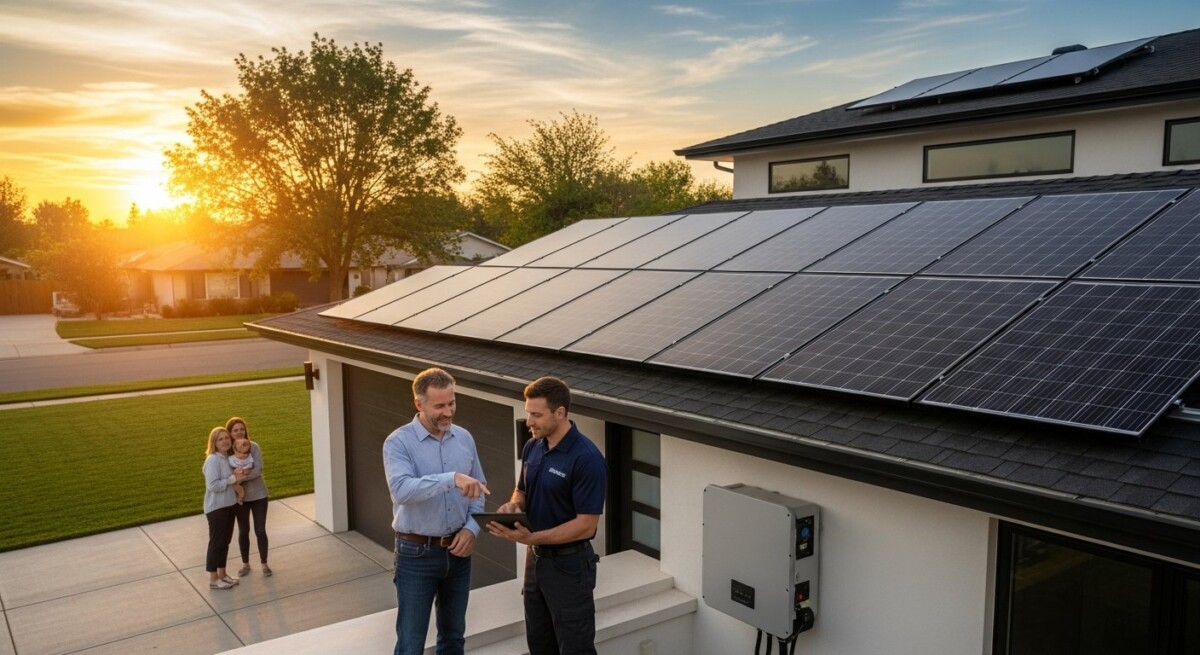
Every month, you open your electricity bill and feel a familiar frustration. Rates keep climbing, and there is no end in sight. That is why so many homeowners now search for “solar installation near me” , they want to cut costs and gain control over their energy future. Switching to solar power can lower your monthly bills and reduce your reliance on the grid, but the process can feel overwhelming if you do not know where to start.
This guide walks you through everything you need to know about residential solar, from how panels work to what installation really costs. By the end, you will feel confident comparing quotes and choosing a system that fits your home and budget.
Understanding Solar Installation Near Me
Solar installation refers to the process of mounting photovoltaic (PV) panels on your roof or property so they can convert sunlight into usable electricity for your home. When you search for “solar installation near me,” you are looking for local professionals who handle the design, permitting, mounting, wiring, and connection of your system to the utility grid or a battery storage unit.
Here is the simple version: panels capture sunlight and produce direct current (DC) electricity. An inverter converts that DC power into alternating current (AC), which your home appliances use. Any extra power you generate flows back to the grid, often earning you credits through net metering.
More homeowners are considering solar because the technology has become more efficient and affordable over the past decade. Paired with federal tax credits and local rebates, solar is no longer a luxury , it is a practical home improvement that pays for itself over time.
Why Solar Energy Is Becoming More Popular
Electricity prices have risen steadily across the country, and many utility companies project further increases. Solar gives you a way to lock in a lower, predictable energy cost for decades. Instead of paying the utility company every month, you generate your own power and only pay for what you use beyond that.
Environmental concerns also drive the shift. Homeowners want to reduce their carbon footprint without sacrificing comfort. Solar panels produce clean energy with no emissions, making them one of the easiest ways to make a positive environmental impact right from your rooftop.
Beyond savings and sustainability, solar offers energy independence. When you install panels , especially with battery backup , you are less vulnerable to grid outages and rate hikes. That peace of mind is a powerful motivator for families looking to protect their household budget.
If you are considering solar power for your home, comparing installation quotes can help you understand your options. Request a free solar quote or call +1-833-312-1106 to learn more.
Common Questions Homeowners Have About Solar
Most homeowners share the same concerns before they commit to solar. The biggest is cost: how much will a system actually set me back? The answer depends on your home size, energy usage, and local incentives, but the average residential system ranges from $15,000 to $25,000 before tax credits. After the federal solar tax credit (30%), that figure drops significantly.
Roof suitability is another top question. Not every roof is ideal, but most can accommodate panels. Your installer will evaluate your roof’s age, material, angle, and shading to determine if it is ready for solar. If your roof needs replacement soon, it is often wise to do that first.
System performance also worries people: what happens on cloudy days or at night? Panels still generate power in diffuse sunlight, just at a reduced rate. Net metering or battery storage covers your needs when the sun is not shining.
- How much does solar installation cost?
- Is my roof suitable for solar panels?
- How long does installation take?
- Will solar work in cloudy or cold climates?
- What happens if I move after installing solar?
- How long do solar panels last?
How Solar Panel Installation Works
The installation process is more straightforward than most homeowners expect. A typical residential project takes one to three days of on-site work, but the overall timeline , from initial consultation to system activation , usually spans four to eight weeks. That includes design, permitting, and utility approvals.
Your installer handles almost everything. They assess your home, design a system that matches your energy needs, pull the necessary permits, and coordinate with your utility company for interconnection. On installation day, a crew mounts the panels, runs wiring, installs the inverter, and connects everything safely.
- Home energy assessment , Your installer reviews past utility bills and evaluates your roof to size the system correctly.
- System design , Engineers create a layout that maximizes sun exposure and meets local code requirements.
- Permits and approvals , The installer secures building permits and submits interconnection paperwork to your utility.
- Panel installation , Crews mount racking, attach panels, run conduit, and install the inverter and meter.
- System activation , After final inspection and utility approval, your system is turned on and starts generating power.
Speaking with experienced installers can help you determine the best solar solution for your home. Compare solar quotes here or call +1-833-312-1106 to explore available options.
Signs Your Home May Be Ideal for Solar
Not every home is perfectly suited for solar, but many are. The strongest indicator is good sun exposure , a south- or west-facing roof that gets direct sunlight for most of the day. If your roof is shaded by tall trees or nearby buildings, your panels will produce less energy, though ground-mounted systems can sometimes solve that problem.
High electricity bills are another clear sign. If you pay more than $100 per month for electricity, solar will likely pay for itself within six to ten years. Long-term homeowners benefit most because solar adds value to the property and the savings compound over time.
- Your roof receives strong, direct sunlight for most of the day.
- Your monthly electricity bills are consistently high.
- You have adequate roof space facing south or west.
- You plan to stay in your home for at least five to seven years.
- Your roof is in good condition and less than 10 years old.
- Your state or utility offers net metering or solar incentives.
What Affects Solar Installation Costs
System size is the biggest cost driver. A larger system that covers 100% of your energy needs costs more upfront than a smaller offset system, but it also saves more money over time. The typical home needs a 5 kW to 10 kW system, which translates to roughly 15 to 30 panels.
Equipment quality matters too. Premium panels and microinverters cost more but often produce more power and last longer. Installation complexity , such as a steep roof, multiple stories, or older electrical panels , can add labor costs. Finally, local incentives and rebates vary by state and utility, directly reducing your out-of-pocket expense.
The cost of solar installation varies depending on your home and energy needs. Request personalized solar quotes or call +1-833-312-1106 to see what options are available.
Tips for Choosing a Reliable Solar Installer
Choosing the right installer is just as important as choosing the right equipment. A reputable company will guide you through the process, handle permits, and stand behind their work. Look for installers who have been in business for several years and hold certifications like NABCEP (North American Board of Certified Energy Practitioners).
Warranties are a key trust signal. A good installer offers a workmanship warranty of at least 10 years, while equipment warranties typically cover panels for 25 years. Reading customer reviews on third-party sites like Google and the Better Business Bureau can also reveal how a company handles support and service issues.
- Review the installer’s experience and years in business.
- Check the workmanship warranty and equipment warranty terms.
- Read customer reviews on Google, Yelp, and the BBB.
- Compare at least three quotes before making a decision.
- Ask about financing options and leasing versus owning.
- Verify that the installer handles all permits and utility paperwork.
Long-Term Benefits of Installing Solar Panels
The most immediate benefit is lower electricity bills. Once your system is paid off, the electricity it produces is essentially free. Over 25 years , the typical panel lifespan , a well-sized system can save you $20,000 to $50,000 or more, depending on local electricity rates and sun exposure.
Solar also increases your home’s resale value. Studies show that homes with solar panels sell for a premium compared to similar non-solar homes. Buyers recognize the value of lower utility costs, making your property more attractive on the market.
Beyond finances, solar gives you energy independence. You are less affected by rate hikes and grid failures. And every kilowatt-hour you generate from sunlight reduces the demand for fossil fuels, lowering your household’s carbon footprint. It is a practical investment that pays dividends in savings, security, and sustainability.
Frequently Asked Questions
How much does solar installation near me cost?
The average residential solar system costs between $15,000 and $25,000 before incentives. After the 30% federal tax credit, that drops to $10,500,$17,500. Your final price depends on system size, equipment quality, roof complexity, and local labor rates. Comparing quotes from multiple local installers gives you the clearest picture of pricing in your area.
How long does it take to install solar panels?
The physical installation usually takes one to three days. However, the full process , including design, permits, utility approvals, and final inspection , typically takes four to eight weeks. Your installer will manage the timeline and keep you updated at each step.
Will solar panels work on a cloudy day?
Yes, solar panels still generate electricity on cloudy days, though at a reduced rate , typically 10% to 25% of their full capacity. Net metering credits or battery storage help cover your energy needs when sunlight is limited. Modern panels are designed to capture diffuse light, so even overcast climates can benefit.
What happens if I sell my home with solar panels?
If you own your system outright, it can increase your home’s resale value. If you have a solar lease or power purchase agreement (PPA), the new owner may need to assume the contract. Many buyers view solar as a valuable upgrade, especially when they understand the energy savings.
How long do solar panels last?
Most solar panels come with a 25-year performance warranty and continue producing power well beyond that, though at a slightly reduced efficiency. Inverters typically last 10 to 15 years and may need replacement during the system’s lifetime. Proper maintenance , like occasional cleaning , helps maximize longevity.
Do I need a battery with my solar system?
No, a battery is optional. Without a battery, you remain connected to the grid and use net metering to get credit for excess power. A battery provides backup power during outages and allows you to store solar energy for evening use. Batteries add cost but increase energy independence.
What government incentives are available for solar?
The federal solar tax credit (Investment Tax Credit) allows you to deduct 30% of your system cost from your federal taxes. Many states and utilities also offer rebates, performance payments, or property tax exemptions. Your installer can help you identify all applicable incentives in your area.
How do I find the best solar installer near me?
Start by getting at least three quotes from licensed, insured, and experienced installers. Check online reviews, ask for references, and verify certifications like NABCEP. A trustworthy installer will walk you through the process transparently and answer all your questions without pressure.
Solar energy is a smart investment for homeowners who want to reduce their electricity bills, increase their home’s value, and contribute to a cleaner environment. By taking the time to compare local installation quotes, you can find a system that fits your budget and energy needs. Start your research today , your future self will thank you.