Every month, you open your electricity bill and wonder if there is a better way. You are not alone. Rising energy costs have pushed millions of homeowners to explore solar power as a way to take control of their expenses. Understanding what affects solar installation cost is the first step toward making a smart investment in your home and your future.
Solar panels convert sunlight into electricity, reducing your reliance on the power grid and lowering your monthly bills. By learning what drives the price of a system, you can make informed decisions and avoid overpaying. This article breaks down the key cost factors so you can compare solar installation quotes with confidence.
Understanding what affects solar installation cost
Solar installation cost refers to the total price you pay to have solar panels installed on your home. This includes the equipment, labor, permits, and any additional components needed to make the system work. The final number depends on your specific situation, which is why no two quotes will look exactly the same.
At its core, a solar system captures sunlight through photovoltaic (PV) panels. An inverter converts the direct current (DC) electricity into alternating current (AC) that powers your home. The size of the system, measured in kilowatts (kW), directly affects the cost because larger systems require more panels and more labor.
Homeowners across the United States are turning to solar because it offers a predictable energy cost over time. Instead of paying fluctuating utility rates, you generate your own power. This shift toward energy independence is one of the main reasons solar adoption continues to grow each year.
Why Solar Energy Is Becoming More Popular
Electricity rates have risen steadily over the past decade, and many homeowners feel the pinch. Solar energy provides a hedge against future price increases. Once your panels are installed, the fuel,sunlight,is free.
Environmental concerns also play a major role. Solar power produces no greenhouse gas emissions during operation, which helps reduce your carbon footprint. For families who want to leave a cleaner planet for their children, solar is a practical choice.
Long-term savings are the biggest motivator. Most solar systems pay for themselves within 6 to 10 years through lower electricity bills. After that, the electricity you generate is essentially free for the remaining life of the system, which often exceeds 25 years.
If you are considering solar power for your home, comparing installation quotes can help you understand your options. Request a free solar quote or call 1-800-SOLAR-01 to learn more.
Common Questions Homeowners Have About Solar
Before making a decision, most homeowners want clear answers to a few key questions. How much does solar actually cost? Will my roof support panels? And will the system perform well in my climate?
These concerns are valid, and a professional installer can address them during a home assessment. The good news is that solar technology has advanced significantly, making systems more efficient and affordable than ever.
- How much does a solar system cost? The average residential system ranges from $10,000 to $30,000 before incentives, depending on size and location.
- Is my roof suitable for solar? South-facing roofs with minimal shading and good structural condition are ideal.
- Will solar work in cloudy or cold climates? Yes, panels still generate electricity on overcast days and actually perform better in cooler temperatures.
- How long do solar panels last? Most panels come with a 25-year performance warranty and remain functional for 30 years or more.
- What happens if I move? Solar can increase your home’s resale value, and some systems are transferable to a new owner.
How Solar Panel Installation Works
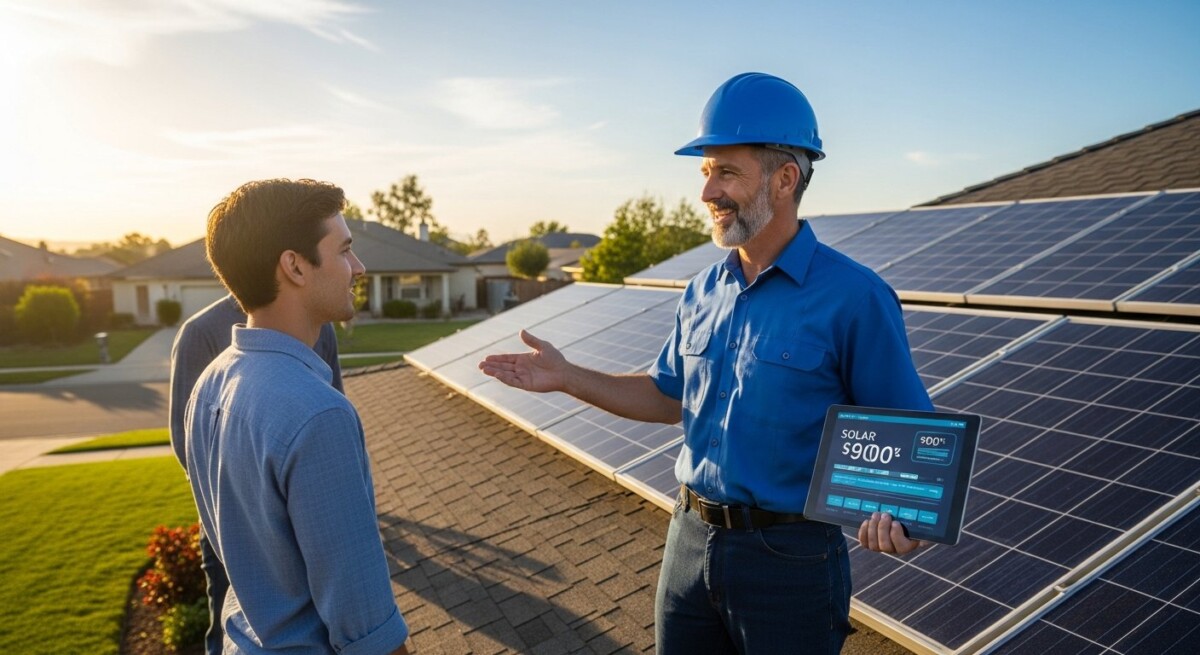
The installation process is straightforward when handled by a qualified team. It begins with a home energy assessment, where an installer reviews your electricity usage, roof condition, and sunlight exposure. This step ensures the system is sized correctly for your needs.
After the assessment, the installer designs a custom system and handles the necessary permits. The actual installation typically takes one to three days. Once the panels are mounted and connected, the system is activated and begins generating power immediately.
- Home energy assessment , Review your utility bills and roof condition.
- System design , Create a layout that maximizes sunlight capture.
- Permits and approvals , Secure local permits and utility interconnection approval.
- Panel installation , Mount the panels, inverter, and wiring on your roof.
- System activation , Turn on the system and monitor performance.
Speaking with experienced installers can help you determine the best solar solution for your home. Compare solar quotes here or call 1-800-SOLAR-01 to explore available options.
Signs Your Home May Be Ideal for Solar
Not every home is equally suited for solar, but many properties can benefit. The most important factor is sunlight exposure. Homes with a roof that faces south, west, or east and receives direct sunlight for most of the day will generate the most electricity.
High electricity bills are another strong indicator. If you pay more than $100 per month on average, solar can likely reduce your costs. Additionally, if you plan to stay in your home for at least five more years, the long-term savings become significant.
- Strong sunlight exposure , Minimal shading from trees or neighboring buildings.
- High electricity bills , Monthly bills above $100 make solar more attractive.
- Suitable roof space , At least 300 square feet of unshaded roof area.
- Long-term home ownership plans , You intend to stay for 5,10 years to maximize savings.
- Good roof condition , Roof should be in good shape and less than 10 years old.
What Affects Solar Installation Costs
Several factors influence the final price of a solar system. The size of the system is the most obvious,larger systems cost more because they require more panels, more racking, and more labor. A standard 6 kW system costs less than a 10 kW system, but the larger system will save you more money over time.
Equipment quality also matters. Premium panels and inverters are more efficient and come with better warranties, but they also cost more upfront. Installation complexity plays a role too. A simple roof that is easy to access will cost less than a steep, complex roof with multiple angles.
Local incentives and net metering policies can significantly reduce your out-of-pocket cost. The federal solar tax credit allows you to deduct 30% of the system cost from your taxes. State and utility rebates vary, so it pays to research what is available in your area.
The cost of solar installation varies depending on your home and energy needs. Request personalized solar quotes or call 1-800-SOLAR-01 to see what options are available.
Tips for Choosing a Reliable Solar Installer
Finding a trustworthy installer is just as important as choosing the right equipment. A good installer will conduct a thorough assessment, explain your options clearly, and provide a transparent quote. They should also handle all permits and paperwork on your behalf.
Warranties are a key sign of quality. Look for a workmanship warranty of at least 10 years and equipment warranties that cover panels and inverters for 25 years. Reading online reviews and asking for references can give you confidence in your choice.
- Review installer experience , Look for companies with at least 3,5 years in business and hundreds of installations.
- Check warranties , Ensure workmanship, panel, and inverter warranties are clearly stated.
- Read customer reviews , Check Google, Yelp, and the Better Business Bureau for feedback.
- Compare multiple quotes , Get at least three quotes to understand the market rate and avoid overpaying.
Long-Term Benefits of Installing Solar Panels
Lower electricity bills are the most immediate benefit. Over 25 years, the average homeowner saves between $10,000 and $30,000 by going solar. These savings can be used for other priorities, such as home improvements, education, or retirement.
Solar also increases your home’s value. Studies show that homes with solar panels sell for about 4% more than comparable homes without them. Buyers are willing to pay a premium for lower utility costs and energy independence.
Beyond financial gains, solar reduces your environmental impact. A typical home solar system offsets roughly 3 to 4 tons of carbon dioxide each year,equivalent to planting more than 100 trees annually. You also gain peace of mind knowing you are less affected by grid outages and rate hikes.
How does roof orientation affect solar installation cost?
Roof orientation impacts how efficiently the panels capture sunlight. South-facing roofs are ideal, but east- and west-facing roofs can also work well. If your roof is not optimally oriented, the installer may need to add more panels to meet your energy needs, which increases the total cost. A professional assessment will help you understand whether your roof orientation will affect pricing.
What is the average cost of solar panels in 2025?
The average cost of a residential solar system in 2025 ranges from $2.50 to $3.50 per watt before incentives. For a typical 6 kW system, that means a total cost between $15,000 and $21,000. After the federal tax credit of 30%, the net cost drops to $10,500 to $14,700. Prices vary by state and installer, which is why comparing quotes is essential.
Do solar panels work during a power outage?
Standard grid-tied solar systems shut down during a power outage for safety reasons. If you want backup power, you need a battery storage system, such as the Tesla Powerwall or LG Chem RESU. Batteries add $7,000 to $15,000 to the total installation cost but provide energy independence during blackouts.
How long does it take for solar panels to pay for themselves?
The payback period for solar panels typically ranges from 6 to 10 years. This depends on your electricity rates, system cost, available incentives, and how much sun your home receives. In states with high electricity rates and strong incentives, payback can be as short as 5 years. After that, your electricity is essentially free for the remaining life of the system.
Can I install solar panels myself to save money?
DIY solar installation is possible but not recommended for most homeowners. Improper installation can lead to roof leaks, electrical hazards, and voided warranties. Additionally, many incentives and net metering programs require professional installation. Hiring a certified installer ensures the system is safe, efficient, and eligible for all available rebates.
What size solar system do I need for my home?
The size of your solar system depends on your annual electricity usage. A typical home uses about 10,000 kWh per year, which requires a 6 to 8 kW system. Your installer will calculate the exact size based on your past utility bills and your roof’s sunlight exposure. Oversizing slightly can account for future energy needs, such as an electric vehicle.
Are there government incentives for solar in 2025?
Yes, the federal solar investment tax credit (ITC) allows you to deduct 30% of your solar installation cost from your federal taxes. Many states offer additional rebates, tax credits, or performance-based incentives. Some utilities also provide net metering, which credits you for excess power sent back to the grid. Check the Database of State Incentives for Renewables and Efficiency (DSIRE) for programs in your area.
Does solar increase home insurance premiums?
Adding solar panels may slightly increase your homeowner’s insurance premium, typically by $10 to $20 per year. The panels add value to your home, so you should increase your coverage limit accordingly. Most standard policies cover solar panels as part of the dwelling, but it is a good idea to notify your insurance provider after installation.
Understanding what affects solar installation cost puts you in control of your energy future. By comparing quotes from multiple installers, you can find a system that fits your budget and maximizes your long-term savings. Solar power is an investment in lower bills, energy independence, and a cleaner environment. Start exploring your options today by requesting free quotes from certified professionals in your area.