Your monthly electricity bill seems to climb higher every year, and you are starting to wonder if there is a better way. Many homeowners in your situation begin searching for a solar lease vs loan comparison to find the most affordable path to clean energy. The idea of reducing energy bills and becoming less dependent on the power grid is more appealing than ever. Understanding these two financing options is the first step toward making a smart investment in your home.
Understanding Solar Lease vs Loan Comparison
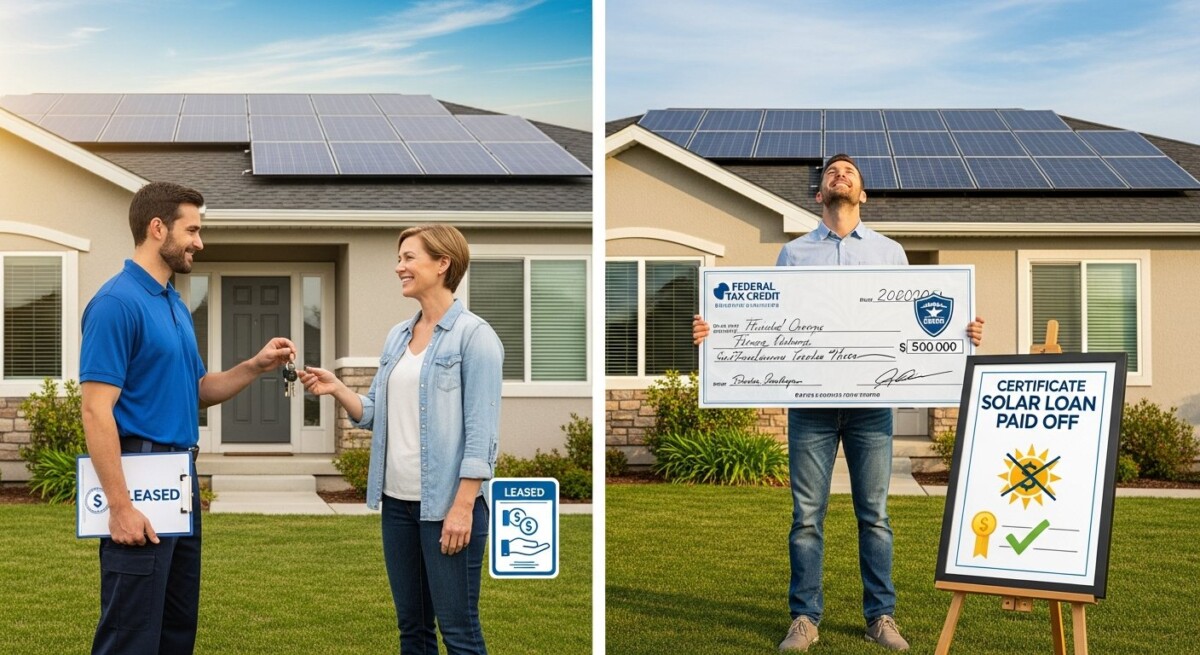
A solar lease and a solar loan are two different ways to pay for a solar panel system. With a lease, you do not own the equipment; you pay a fixed monthly fee to use the electricity the panels produce. A loan, on the other hand, lets you own the system after you pay off the borrowed money.
More homeowners are considering solar energy because it offers a way to lock in lower electricity rates and protect against future price hikes. A solar lease vs loan comparison helps you weigh immediate affordability against long-term ownership. Leases require little to no upfront money, while loans often qualify you for federal tax credits and other incentives.
How a Solar Lease Works
When you sign a solar lease, a third-party company installs and maintains the panels on your roof. You pay a set monthly amount, usually lower than your previous utility bill, for the power generated. The leasing company keeps the tax credits and incentives, which is why your monthly payments are lower.
How a Solar Loan Works
A solar loan is a financial product that covers the cost of purchasing and installing your own system. You make monthly payments until the loan is paid off, typically over 5 to 20 years. Once the loan is repaid, your electricity is essentially free except for minimal maintenance costs.
Why Solar Energy Is Becoming More Popular
Rising electricity prices are pushing more homeowners to explore solar power. The average cost of grid electricity has increased steadily over the past decade, and there is no sign of it slowing down. Solar panels offer a hedge against those rising rates by generating your own power.
Environmental concerns also play a big role. Many people want to reduce their carbon footprint and contribute to a cleaner planet. Solar energy produces no emissions and reduces dependence on fossil fuels.
Long-term savings are another powerful motivator. While the initial cost of solar can seem high, the payback period has shortened as equipment prices have dropped. Over 20 to 25 years, a well-designed system can save you tens of thousands of dollars on electricity.
If you are considering solar power for your home, comparing installation quotes can help you understand your options. Request a free solar quote or call (800) 555-0199 to learn more.
Common Questions Homeowners Have About Solar
Many people worry about the upfront installation cost of solar panels. Leases and loans make solar accessible without paying the full system price all at once. Roof suitability is another frequent concern, but most roofs with good sunlight exposure can support panels.
System performance is also top of mind. Modern solar panels are highly reliable and come with warranties that guarantee power output for 25 years or more. Professional installers design each system to match your home’s energy needs and roof conditions.
- How much will solar really save me each month?
- Will my roof need repairs before installation?
- What happens if I sell my home with a solar lease?
- How long does it take to recoup the cost of a solar loan?
- Do I need a battery for my solar system to work?
- Are there government incentives available in my state?
How Solar Panel Installation Works
Installing solar panels is a straightforward process when you work with experienced professionals. The entire project usually takes a few weeks from start to finish, with most of the physical work completed in one to three days. A certified installer handles everything from design to permitting to final connection.
Understanding the steps helps you feel confident about the process. Each stage is designed to ensure your system is safe, efficient, and compliant with local codes. Your installer will guide you through every phase and answer any questions along the way.
- Home energy assessment , An installer reviews your past electricity bills and inspects your roof.
- System design , The team creates a custom layout based on your roof’s size, angle, and sunlight exposure.
- Permits and approvals , The installer handles all paperwork with your local government and utility company.
- Panel installation , Crews mount the racking system, attach the panels, and connect the wiring.
- System activation , After final inspection, the utility company gives permission to turn on your system.
Speaking with experienced installers can help you determine the best solar solution for your home. Compare solar quotes here or call (800) 555-0199 to explore available options.
Signs Your Home May Be Ideal for Solar
Not every home is equally suited for solar panels, but many are. The most important factor is strong, direct sunlight for most of the day. Homes with south- or west-facing roofs typically capture the most energy.
High electricity bills are another strong indicator. If you pay more than $100 per month on average, solar can likely reduce your costs. Suitable roof space and a roof in good condition also make installation easier and more affordable.
- Strong sunlight exposure , Your roof receives at least four to five hours of direct sun daily.
- High electricity bills , Your monthly energy costs are above average for your area.
- Suitable roof space , You have at least 300 square feet of unshaded roof area.
- Long-term home ownership plans , You plan to stay in your home for at least five to seven years.
What Affects Solar Installation Costs
The size of your solar system is the biggest factor in determining total cost. Larger homes with higher energy usage need more panels, which increases the price. Equipment quality also matters,premium panels and inverters cost more but often deliver better efficiency and longer warranties.
Installation complexity can add to the expense. Roofs with steep slopes, multiple angles, or challenging materials require more labor. Local incentives and rebates can significantly lower your out-of-pocket costs, sometimes by 30 percent or more.
The cost of solar installation varies depending on your home and energy needs. Request personalized solar quotes or call (800) 555-0199 to see what options are available.
Tips for Choosing a Reliable Solar Installer
Choosing the right installer is just as important as choosing the right equipment. A professional company will conduct a thorough site evaluation and provide a clear, detailed quote. They should also explain the differences between a solar lease and a solar loan so you can make an informed decision.
Look for installers with strong reputations and verifiable experience. Ask about their training, certifications, and the brands of equipment they use. Reading customer reviews and checking references can give you confidence in your choice.
- Review installer experience , Look for companies with at least five years in business and hundreds of installations.
- Check warranties , Ensure the installer offers a workmanship warranty of at least 10 years.
- Read customer reviews , Check platforms like Google, Yelp, and the Better Business Bureau.
- Compare multiple quotes , Get at least three estimates to understand pricing and options.
Long-Term Benefits of Installing Solar Panels
Lower electricity bills are the most immediate and obvious benefit of going solar. Most homeowners see a reduction of 50 to 90 percent in their monthly energy costs starting from the first full billing cycle. Over the life of the system, those savings add up to a substantial amount.
Installing solar panels also increases your home’s resale value. Studies show that homes with solar systems sell for a premium compared to similar homes without them. Buyers recognize the value of lower utility bills and energy independence.
Beyond personal finances, solar energy reduces your environmental impact. A typical residential system offsets several tons of carbon dioxide each year, equivalent to planting hundreds of trees. You also gain energy independence, protecting yourself from future rate hikes and grid outages.
Is a solar lease or a solar loan better for me?
A solar lease is better if you want no upfront cost and prefer predictable monthly payments. A solar loan is better if you want to own the system, qualify for tax credits, and maximize long-term savings. Your choice depends on your financial goals and how long you plan to stay in your home.
Can I get a solar loan with bad credit?
Some lenders offer solar loans for borrowers with lower credit scores, though interest rates may be higher. Credit unions and local banks sometimes have more flexible terms than national lenders. Improving your credit score before applying can help you secure better rates.
What happens to a solar lease if I sell my house?
When you sell a home with a solar lease, the new buyer can take over the lease payments. Many leases are transferable, and some buyers find the lower electricity bills attractive. You can also choose to buy out the lease before selling.
Does solar work during a power outage?
Standard grid-tied solar systems shut down during a power outage for safety reasons. If you want backup power, you need a solar battery system that can operate independently. Batteries add to the cost but provide energy security during blackouts.
How long do solar panels last?
Most solar panels come with a performance warranty of 25 to 30 years. Panels continue to produce electricity beyond that period, though at a slightly reduced efficiency. With proper maintenance, panels can last 30 years or longer.
Are there government incentives for solar in 2025?
The federal solar Investment Tax Credit (ITC) offers a 30 percent tax credit for systems installed through 2032. Many states and local utilities offer additional rebates, tax exemptions, or performance-based incentives. Your installer can help you find and apply for available incentives.
Will solar panels damage my roof?
Professionally installed solar panels do not damage your roof when installed correctly. Installers use mounting systems that penetrate the roof only where necessary and seal those points properly. Most reputable companies offer a roof penetration warranty to protect against leaks.
How much maintenance do solar panels need?
Solar panels require very little maintenance,usually just occasional cleaning to remove dust, leaves, or snow. Rain typically does a good job of keeping panels clean in most climates. It is wise to have your system inspected every few years to ensure everything is working properly.
Choosing between a solar lease and a loan is an important decision, but the most important step is getting started. Compare quotes from multiple certified installers to see what works best for your home and budget. With the right information and professional guidance, you can reduce your electricity bills, increase your home’s value, and contribute to a cleaner energy future.