
Solar Loan Dealer Fees: What to Know Before Signing
Understanding solar loan dealer fees before signing can save you thousands. Call (833)-212-3715 for expert guidance on comparing solar loan offers and avoiding hidden costs.

By Andy Pearson
Learn more about Solar Panel Installation and Repair for guides, costs, and what to expect.
Compare Solar Panel Installation and Repair Pros Near You
Enter your ZIP code to compare top-rated local professionals and request free quotes.
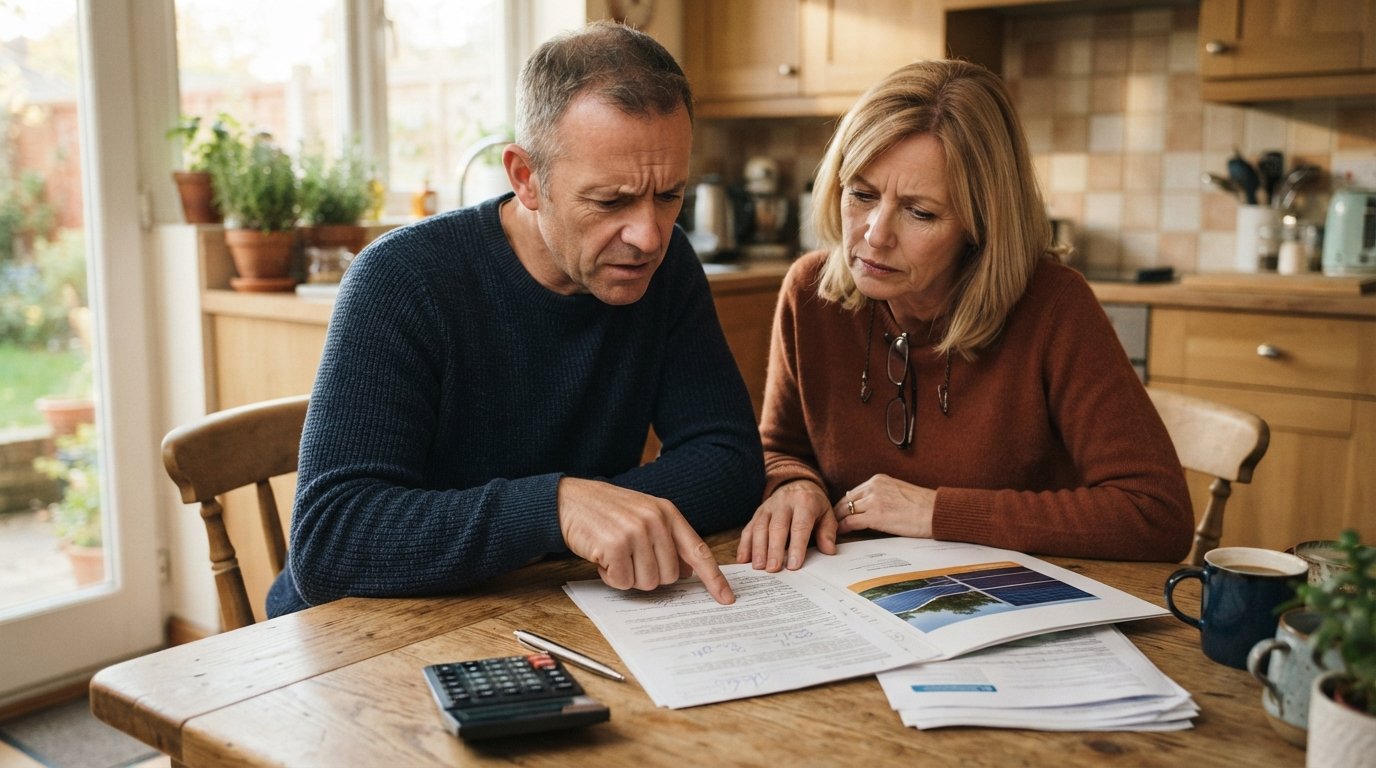
You are sitting at the kitchen table with a solar proposal that promises a 1.99 percent interest rate and no money down. The salesperson says you will save thousands over the life of the system. But buried in the fine print is a line item called a dealer fee that could add thousands of dollars to your loan balance before you ever generate a single kilowatt hour. Understanding solar loan dealer fees before signing is the single most important step you can take to protect your wallet and ensure you are comparing apples to apples when evaluating solar financing offers.
The Hidden Cost That Inflates Your Solar Loan
A dealer fee is a charge that lenders impose on solar installers for originating a loan. Installers typically pass this cost on to you, the borrower, by rolling it into the loan amount. The result is that the advertised interest rate looks attractively low, but the actual amount you finance is significantly higher than the cash price of the system. This is not necessarily illegal or unethical, but it is frequently undisclosed or downplayed during the sales process.
Why do dealer fees exist? Lenders argue that they need to cover the cost of underwriting, servicing, and the risk associated with unsecured solar loans. They also use dealer fees to buy down the interest rate, creating those eye catching 0.99 percent or 1.99 percent offers that salespeople love to advertise. The higher the dealer fee, the lower the rate the lender can offer. It is a trade off that benefits the lender and the installer, but it often leaves the homeowner paying more in the long run.
To put this in perspective, consider a solar system with a cash price of $20,000. If you choose a loan with a 1.99 percent interest rate and a 25 percent dealer fee, the amount financed jumps to $25,000. You are now paying interest on $25,000 instead of $20,000, and your monthly payment reflects that inflated principal. Even though the rate is low, the total cost of the loan is substantially higher than the sticker price of the system.
How a 1.99 Percent Loan Can Cost More Than a Higher Rate Option
The math is counterintuitive for many borrowers. A lower interest rate feels like it must be the better deal, but when dealer fees are involved, the opposite is often true. Let us walk through a concrete example to illustrate this point clearly.
Suppose you are comparing two loan offers for the same $20,000 solar system. Offer A advertises a 1.99 percent interest rate with a 25 percent dealer fee. Offer B advertises a 7.99 percent interest rate with a 3 percent dealer fee. At first glance, Offer A looks far more attractive because the rate is so much lower. But look at the numbers over a 25 year term.
- Offer A: Loan amount becomes $25,000 (the $20,000 system plus a $5,000 dealer fee). At 1.99 percent over 25 years, the monthly payment is approximately $106, and the total repaid is about $31,800.
- Offer B: Loan amount becomes $20,600 (the $20,000 system plus a $600 dealer fee). At 7.99 percent over 25 years, the monthly payment is approximately $159, and the total repaid is about $47,700.
In this scenario, Offer A actually results in lower total repayment despite the higher dealer fee, because the interest rate is so much lower. However, the monthly payment is also lower, which can be appealing. But now consider a different scenario where the dealer fee is even higher, say 35 percent, and the rate is 0.99 percent. The loan amount balloons to $27,000, and the total repaid might exceed $34,000. Meanwhile, a credit union loan at 6.5 percent with no dealer fee would finance $20,000 and result in total repayment of around $40,500. In this case, the high dealer fee loan still wins on total cost, but the gap narrows.
The key takeaway is that you cannot evaluate a solar loan based on the interest rate alone. You must look at the total amount financed, the monthly payment, and the total repayment over the life of the loan. A loan with a higher rate but a much lower dealer fee can sometimes be the better deal, especially if you plan to pay off the loan early or if the dealer fee pushes your loan balance above the fair market value of the system.
For a deeper dive into how system costs break down, including equipment, labor, and permitting, see our guide on understanding solar system cost breakdown for homeowners. That article explains the components that make up the cash price so you can better identify when a loan is inflating your costs.
Comparing Dealer Fee Structures Across Loan Products and Lender Types
Not all solar loans are created equal. Dealer fees vary widely depending on the lender, the loan product, and even the installer's markup. Understanding these differences can help you ask the right questions and avoid overpaying.
Here is a breakdown of common loan types and their typical dealer fee structures:
- Standard solar loans from specialized lenders: These often carry dealer fees ranging from 5 percent to 25 percent or more. The fees are higher for lower interest rate products. Some lenders offer no fee options with higher rates, but those are less commonly promoted by salespeople because the monthly payment is higher.
- Credit union and bank loans: These typically have no dealer fees because they are not arranged through the installer. You apply directly with the financial institution, and the installer is paid in full at closing. The interest rates may be higher, but the loan amount is based on the cash price of the system.
- FHA and VA backed loans: These government backed options sometimes have lower dealer fees, but they come with stricter requirements and may not be available for all solar installations. They are worth exploring if you qualify.
- Property assessed clean energy (PACE) financing: PACE loans are repaid through your property tax bill and may have different fee structures. Dealer fees can still be present, so review the disclosure carefully.
The lender type matters because specialized solar lenders often partner with installers and build dealer fees into their business model. They provide fast approvals and attractive rates, but the cost is baked into the loan. Credit unions and banks, by contrast, tend to offer more transparent pricing but may have longer approval times and less flexible underwriting.
It is also worth noting that dealer fees can vary by state and by the size of the system. Some lenders charge higher fees in states with higher default rates or weaker consumer protection laws. Always ask for a detailed loan estimate that breaks out the dealer fee separately from the system cost.
Questions to Ask Installers and Lenders Before Signing
Before you sign any solar loan agreement, you need to arm yourself with the right questions. The goal is to uncover the dealer fee, understand how it affects your loan, and compare offers on a level playing field. Here are the most important questions to ask.
- What is the exact dealer fee on this loan? Ask for the specific dollar amount and the percentage of the system cost. If the installer or lender cannot or will not provide this, that is a red flag.
- What is the cash price of the system? This is the price you would pay if you bought the system outright without financing. Compare this to the loan amount to see how much the dealer fee is inflating your costs.
- What is the total amount financed? Make sure you understand the principal balance of the loan, not just the monthly payment. The dealer fee is often rolled into this amount.
- What is the total repayment over the life of the loan? Multiply the monthly payment by the number of payments to get the total. Compare this across offers to see which one truly costs less.
- Are there any prepayment penalties? If you plan to pay off the loan early, you need to know if there are penalties. Some loans with high dealer fees also have prepayment penalties that make it expensive to refinance or pay off early.
In addition to these questions, ask for the loan estimate in writing. Federal law requires lenders to provide a loan estimate within three business days of your application. Review it carefully and look for the dealer fee, origination charges, and any other fees that may be rolled into the loan. If something does not look right, ask for clarification before you sign.
It is also wise to get quotes from multiple installers and lenders. The solar market is competitive, and you may find that one installer offers a much lower dealer fee than another for the same equipment. Do not assume that the first offer you receive is the best one.
For a broader perspective on solar energy and financing options, you can explore resources like SolarEnergy.ai, which offers industry insights and tools to help homeowners make informed decisions.
How to Spot a Dealer Fee in Your Solar Contract
Dealer fees are not always labeled as such. They may appear under different names depending on the lender. Common terms include origination fee, loan fee, financing charge, or simply an adjusted system price. Sometimes the dealer fee is not itemized at all; instead, the installer presents a financed price that is higher than the cash price without explaining why.
To spot a dealer fee, start by comparing the cash price to the financed price. If the financed price is significantly higher, the difference is likely the dealer fee plus any other financing costs. Ask the installer to explain the difference in writing. A reputable installer will be transparent about the fees and will provide a breakdown.
Another approach is to request a loan estimate from the lender directly. This document will show the loan amount, interest rate, and all fees. Look for lines labeled origination charges or lender fees. These are the dealer fees by another name. If the loan estimate shows a loan amount that is higher than the cash price of the system, the difference is the dealer fee.
Finally, be wary of any salesperson who discourages you from reading the fine print or who rushes you to sign. A legitimate solar professional will welcome your questions and will provide clear answers. If you feel pressured, walk away and get another quote.
The Long Term Impact of Dealer Fees on Your Solar Investment
Dealer fees do not just affect your monthly payment; they affect the overall return on your solar investment. A higher loan balance means you are paying interest on a larger sum, which reduces the net savings from your solar system. In some cases, a high dealer fee can erase the financial benefits of going solar altogether, especially if the system does not produce as much energy as projected.
Consider this: if you finance a $20,000 system with a 25 percent dealer fee, you are effectively paying $25,000 for the system. If the system saves you $1,500 per year on electricity, it will take over 16 years to break even on the inflated cost, compared to 13 years on the cash price. That is a significant difference, and it does not even account for the interest you are paying.
Moreover, if you decide to sell your home before the loan is paid off, the remaining balance of the loan (including the dealer fee) may need to be paid off from the sale proceeds. This can reduce your equity and make it harder to sell. Some buyers may be reluctant to assume a solar loan with a high balance, even if the system is valuable.
Understanding solar loan dealer fees before signing is therefore not just about saving a few dollars per month; it is about protecting your overall financial picture and ensuring that solar is truly a good investment for you. Take the time to compare offers, ask questions, and read the fine print. Your future self will thank you.
If you are ready to explore solar financing options and want to compare quotes from certified installers, NewSolarQuotes can help. Their free quote request system connects you with local professionals who can provide transparent pricing and explain all fees upfront. Visit NewSolarQuotes to get started and make an informed decision about your solar investment.
Learn more about Solar Panel Installation and Repair for guides, costs, and what to expect.
Compare Solar Panel Installation and Repair Pros Near You
Enter your ZIP code to compare top-rated local professionals and request free quotes.