
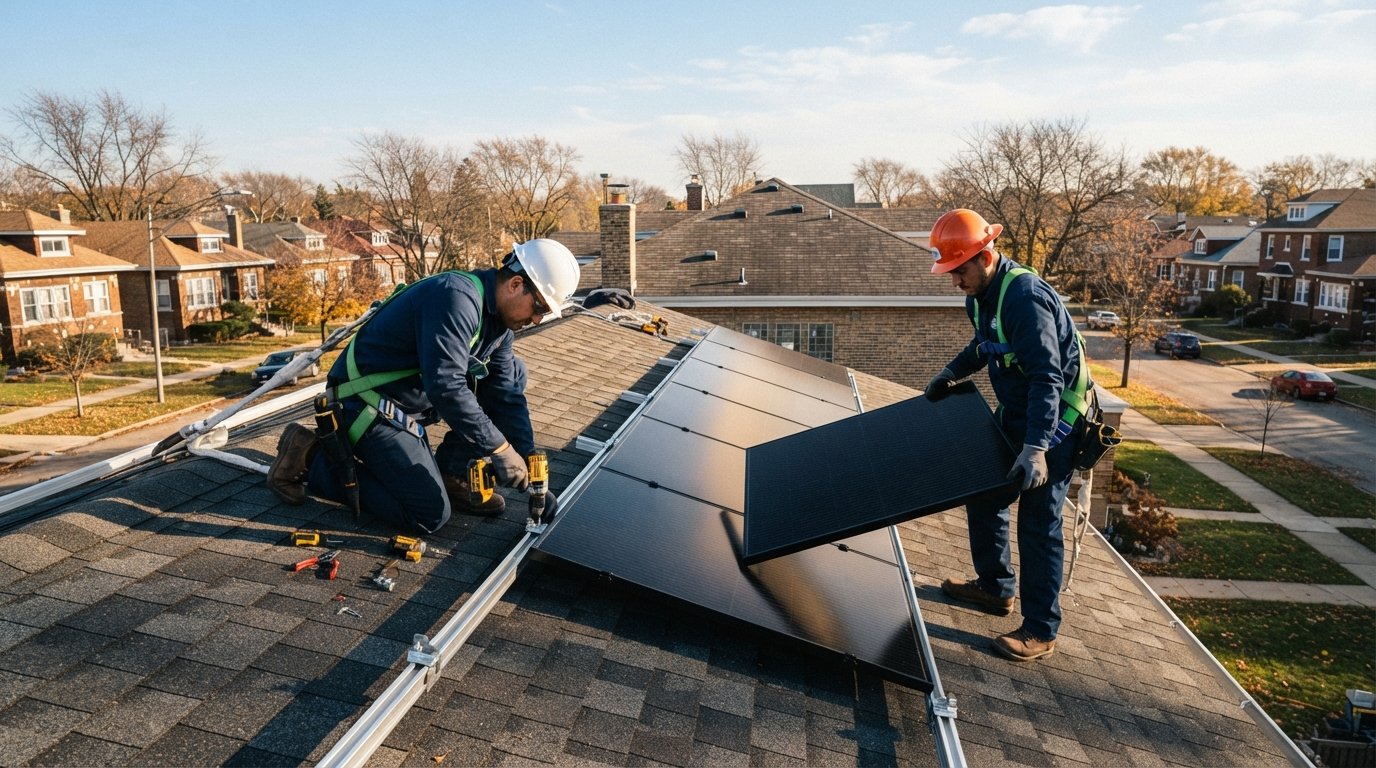
Solar Panel Installation Chicago: Costs, Incentives, And Rules
Solar panel installation in Chicago costs $18K to $30K before incentives. Federal and state credits can cut your net cost by nearly half.
By Scott Thompson
Learn more about Solar Panel Installation and Repair for guides, costs, and what to expect.
Compare Solar Panel Installation and Repair Pros Near You
Enter your ZIP code to compare top-rated local professionals and request free quotes.
Chicago's solar market is booming, and for good reason. With rising electricity rates from ComEd and a strong push for clean energy across Illinois, more homeowners are exploring solar panel installation in Chicago. But before you sign a contract, you need to understand the real costs, the incentives that can slash your upfront investment, and the local rules that govern installation in Cook County. This guide breaks down everything you need to know about solar panel installation Chicago costs incentives and local rules, so you can make a confident, informed decision.
How Much Does Solar Panel Installation Cost In Chicago?
The cost of solar panel installation in Chicago depends on several factors: system size, panel type, roof complexity, and whether you add battery storage. As of 2026, the average residential solar system in Chicago ranges from $18,000 to $30,000 before incentives. That translates to roughly $2.50 to $3.50 per watt installed. A typical 6 kilowatt (kW) system, which can cover most of an average home's electricity needs, falls near the lower end of that range.
Your final price will vary based on the equipment you choose. Premium panels from brands like SunPower or Panasonic cost more but offer higher efficiency and better warranties. Standard panels from Canadian Solar or Trina are more budget-friendly. Inverter choice also matters: string inverters are cheaper, while microinverters or power optimizers add $1,000 to $2,000 but improve performance in shaded conditions.
Chicago's climate and utility landscape influence costs in unique ways. The city gets about 4 peak sun hours per day on average, which is lower than sunnier states like Arizona or California. That means you may need a slightly larger system to meet your energy goals, which increases the total price. However, Illinois has some of the best solar incentives in the Midwest, which can dramatically reduce your net cost.
Here is a quick breakdown of typical cost components for a 6 kW system in Chicago:
- Solar panels and inverters: $9,000 to $13,000
- Mounting hardware and wiring: $2,000 to $3,500
- Labor and installation: $4,000 to $7,000
- Permitting and inspection fees: $500 to $1,500
- Optional battery storage: $8,000 to $15,000
After the federal solar tax credit and Illinois-specific incentives, your net cost could drop to $10,000 to $18,000. That is a significant savings, and it is why so many Chicago homeowners are making the switch. To get a personalized estimate, you can use our solar panel installation business guide to compare quotes from certified local installers.
Federal, State, And Local Solar Incentives In Chicago
Illinois is one of the most solar-friendly states in the country, and Chicago residents can take advantage of a stacked set of incentives. The most important is the federal Investment Tax Credit (ITC), which allows you to deduct 30 percent of your total system cost from your federal taxes. This credit has been extended through 2032, giving you plenty of time to plan. For a $25,000 system, that is a $7,500 credit, a massive boost.
On the state level, the Illinois Shines program (also known as the Adjustable Block Program) offers Solar Renewable Energy Credits (SRECs). When your system generates electricity, you earn SRECs that you can sell to utilities. Over 15 years, these credits can add up to thousands of dollars. The exact value depends on your system size and the current market price for SRECs.
Chicago and Cook County also have property tax incentives. Illinois offers a special assessment for solar energy systems, which means your property's assessed value will not increase due to your solar installation. You will not pay higher property taxes just because you added solar. Additionally, ComEd offers net metering, which credits you for excess electricity you send back to the grid. Under Illinois' net metering rules, you receive a one-to-one credit on your bill for each kilowatt-hour you export.
Here are the key incentives you should know about:
- Federal Solar Investment Tax Credit (ITC): 30 percent of system cost
- Illinois Shines SRECs: Earn credits for 15 years
- ComEd Net Metering: Full retail credit for excess power
- Illinois Property Tax Special Assessment: No increase in property taxes
- State sales tax exemption: No sales tax on solar equipment
These incentives can reduce your net cost by 40 to 50 percent when combined. It is important to verify current program details, as funding for Illinois Shines can fluctuate. Always check with your installer or the Illinois Power Agency for the latest information.
Local Rules And Permitting For Solar In Chicago
Before you can install solar panels in Chicago, you need to navigate local permitting and inspection requirements. The City of Chicago Department of Buildings oversees solar permits, and the process typically takes two to four weeks. Your installer will usually handle the paperwork, but you should understand what is involved. A standard permit application includes structural drawings, electrical diagrams, and a site plan. The fee is based on the project value, usually a few hundred dollars.
Chicago has specific zoning and building codes that affect solar installations. For example, panels must be set back from the roof edge for fire safety, and you may need a structural engineer's report if your roof is older or has unusual framing. Historic districts like Old Town or Wicker Park have additional design review requirements. If your home is a designated landmark, you may face stricter rules on panel visibility from the street.
After installation, your system must pass an electrical inspection by the City of Chicago and a final inspection by ComEd before you can activate net metering. Your installer should coordinate these steps. It is also wise to notify your homeowner's insurance company, as most policies cover solar panels, but you want to confirm your coverage limits.
Common local requirements include:
- Building permit from the Chicago Department of Buildings
- Electrical permit and inspection
- Structural review for roofs older than 20 years
- Fire setback compliance (typically 3 feet from roof edges)
- Historic district design review, if applicable
Working with a certified local installer is the best way to ensure compliance. They know the Chicago code inside and out and can handle any surprises. For more guidance on choosing the right installer, you can refer to our SolarEnergy.ai platform, which offers expert resources and tools for homeowners.
Financing Options To Cover Your Solar Investment
Even with incentives, solar is a significant purchase. Fortunately, Chicago homeowners have several financing paths. A cash purchase offers the best long-term return because you avoid interest and own the system outright. Many homeowners use a home equity loan or line of credit, which often has lower interest rates than personal loans.
Solar loans are another popular option. These are unsecured or secured loans designed specifically for solar, with terms of 5 to 20 years. Some lenders offer zero-down loans, allowing you to start saving immediately. The monthly loan payment is often lower than your current electric bill, making it cash-flow positive from day one.
Leases and power purchase agreements (PPAs) are also available in Illinois. With a lease, you pay a fixed monthly amount to rent the system. With a PPA, you pay for the electricity the system produces. These options require no upfront cost, but you do not own the system and may not qualify for the full tax credit. That credit goes to the third-party owner.
When comparing financing, focus on the total cost over time, not just the monthly payment. A lower interest rate can save you thousands. Also, ask about any dealer fees that may be baked into the loan. A trustworthy installer will be transparent about all fees.
How To Choose A Solar Installer In Chicago
The success of your solar project hinges on the quality of your installer. Chicago has dozens of solar companies, but not all are created equal. You want a company that is licensed, insured, and experienced with Chicago's unique permitting and inspection processes. Look for certifications from the North American Board of Certified Energy Practitioners (NABCEP), which indicates a high level of professionalism.
Start by getting quotes from at least three installers. Compare not just price, but also equipment quality, warranty terms, and customer reviews. Ask for references from recent local projects. A good installer will perform a site assessment, analyze your energy usage, and design a system that meets your specific needs. They should also explain all available incentives and help you apply for them.
Be wary of high-pressure sales tactics or estimates that seem too good to be true. Solar is a long-term investment, and you want a partner who will be around to honor warranties. Check if the company has a local office and how long they have been in business. Online reviews on Google, Yelp, and the Better Business Bureau can reveal red flags.
Finally, ask about monitoring and maintenance. Most systems come with monitoring apps that let you track production. Inverters may need replacement after 10 to 15 years, so understand your warranty coverage. A reputable installer will offer a workmanship warranty in addition to manufacturer warranties.
Is Solar Worth It In Chicago?
Yes, solar is absolutely worth it for many Chicago homeowners. While the city's solar potential is moderate compared to the Southwest, the combination of high electricity rates, strong incentives, and net metering makes solar a smart financial move. Most systems pay for themselves in 7 to 10 years, and then you enjoy free electricity for decades.
Beyond the financials, solar increases your home's value. Studies show that homes with solar sell for a premium, and they sell faster. You also reduce your carbon footprint, contributing to a cleaner environment for your community. With Illinois aiming for 100 percent clean energy by 2050, solar is a forward-looking investment.
To maximize your savings, take advantage of every incentive and choose a high-quality installer. The process may seem complex, but with the right guidance, it is manageable. Start by getting multiple quotes and asking plenty of questions. Your future self will thank you.